Hook and Loop Patch Specification: Fit and Test Requirements
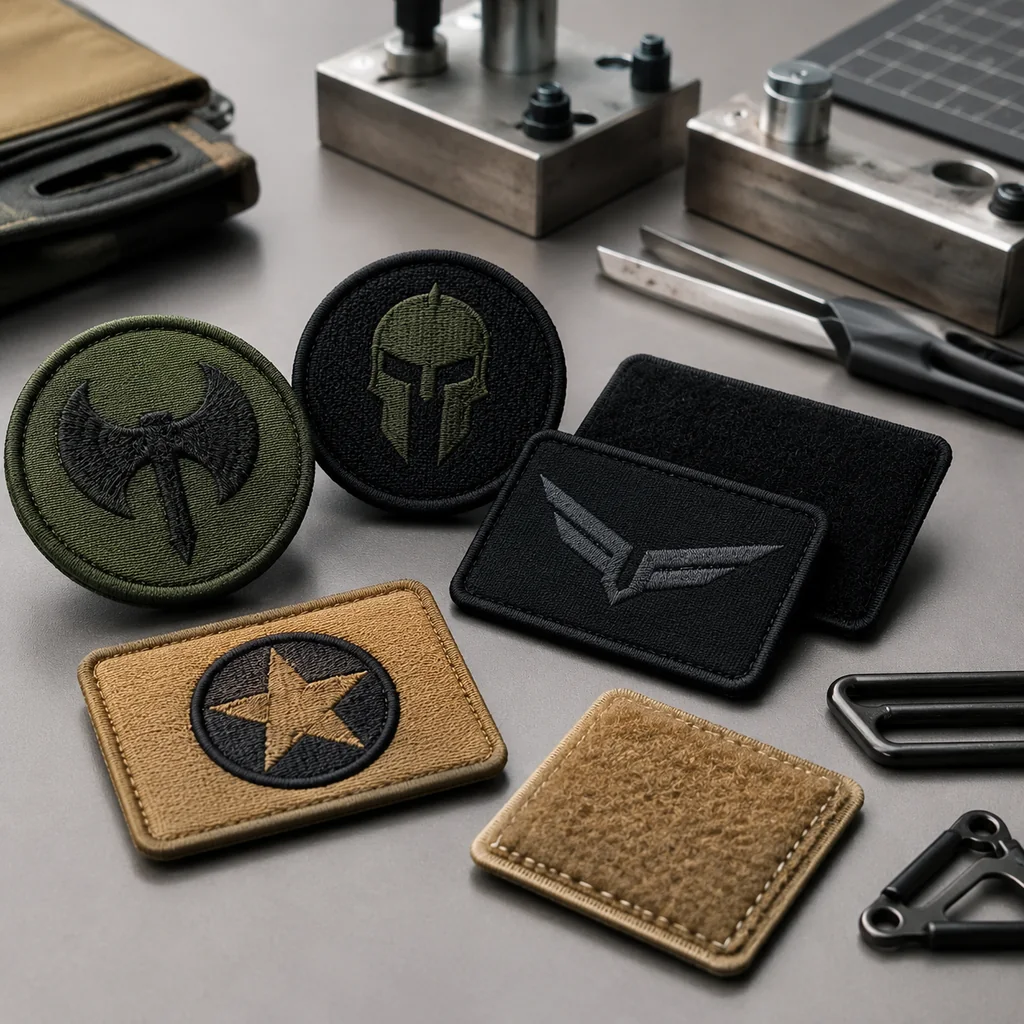
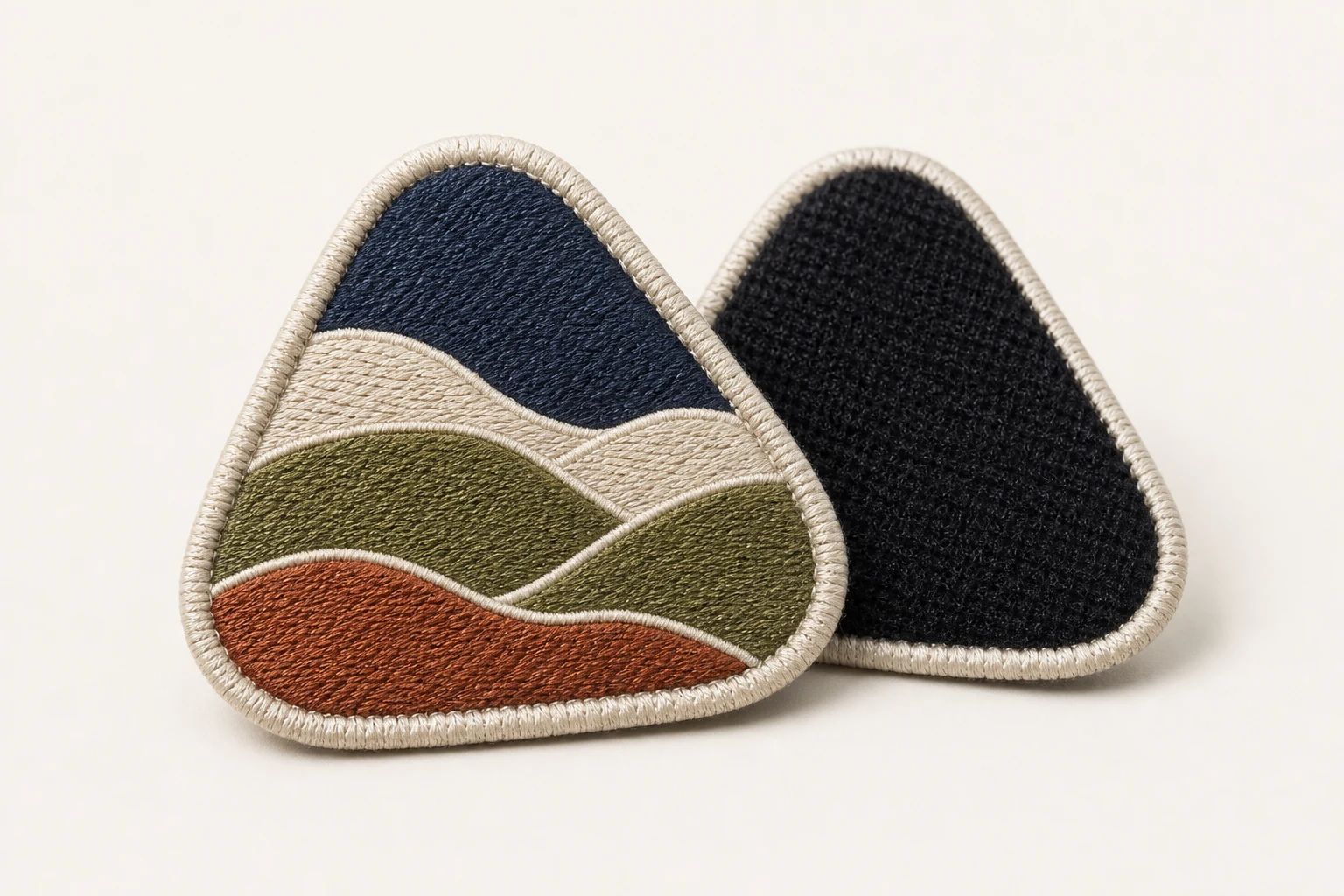
Specify a hook and loop patch as a matched interface, not as a patch backing alone. Approve the finished patch outline, hook-backed area, and receiving loop panel together. State the patch construction, exact finished dimensions, border treatment, loop-panel dimensions and placement, sample requirements, and acceptance criteria in one controlled document. The supplied product information confirms hook-and-loop as an available backing and lists standard patch sizes of 2-4 inches, back patches up to 12 inches, a 100-piece MOQ per design, 5-7 days for samples, and 12-20 days for bulk production. It does not provide hook density, loop-panel dimensions, border stitch counts, tolerances, or pull-test results. Buyers must define those requirements for the program and obtain supplier confirmation before bulk release.
Treat the Patch and Loop Panel as One Specification
A patch can have approved artwork and still fail in use when its hook backing does not fit or engage the receiving loop panel. This risk increases when the patch supplier and the uniform, bag, cap, or equipment supplier are working from separate drawings. Control the patch and receiving panel as one physical interface, even when they are purchased from different suppliers.
The supplied product information lists hook-and-loop as an available backing for custom patches and identifies tactical and morale patches as a use case. It does not state that a separate receiving loop panel is included with a patch order. It also does not identify hook coverage, hook density, loop-panel material, loop-panel dimensions, or attachment performance. A generic request for hook-and-loop backing is therefore not a complete fit specification.
- Identify the patch design, artwork revision, construction, finished outline, and finished dimensions.
- State the required hook-backed area on the reverse, including its shape and whether it covers the full usable reverse of the patch.
- Specify the receiving loop panel separately: finished dimensions, shape, placement, supply owner, and whether it comes from the patch supplier or another program supplier.
- Name the required border treatment and require supplier confirmation that it is suitable for the selected patch construction.
- Use the same controlled drawing revision for the patch face, backing layout, and receiving loop-panel layout.
- State packaging, pack quantity, documentation, and loop-panel supply scope separately because the supplied product facts do not define them.
Choose the Patch Face Before Finalizing the Backing
Hook-and-loop is an attachment method, not a patch-face construction. Select the patch type based on the artwork, intended use, and program appearance that must be approved before bulk production. The listed product range includes embroidered patches with 50-100% coverage, woven patches, PVC rubber, printed or dye-sublimated patches, chenille, and leather. Polyester is listed as the standard thread for embroidered work, with metallic, glow-in-dark, and neon options also available.
| Patch construction | Supported product fact | Buyer decision |
|---|---|---|
| Embroidered | Available with 50-100% coverage; up to 9 thread colors are listed | Specify 50% coverage when twill should remain visible, or 100% coverage when no twill ground should show. Approve thread colors and coverage on the sample. |
| Woven | Uses thinner threads on a loom; unlimited colors are listed | Consider woven construction where artwork includes fine detail or small text that embroidery could blur. Approve legibility at the ordered patch size. |
| PVC rubber | Listed for outdoor and tactical gear and capable of 2D or 3D molded detail | Approve the intended molded detail, color treatment, finished outline, and backing arrangement in the sample. |
| Printed or dye-sublimated | Listed for photographic full color, gradients, and complex artwork; unlimited colors are listed | Use this construction where thread cannot reproduce the approved artwork. Control print approval, finished dimensions, and edge treatment together. |
| Chenille or leather | Available patch types | Request a sample showing the selected material, border, finished outline, and hook-backed area together. |
Buyers sourcing custom military morale patches can use PVC rubber where the approved design and tactical application call for molded detail. Embroidered, woven, and printed constructions remain available where the artwork or required appearance calls for another treatment. The hook-and-loop backing choice does not eliminate the need to approve face material, color treatment, dimensions, and edge construction.
Dimension Both Sides of the Interface
Start with the finished patch size. The listed typical patch size is 2-4 inches, with back patches available up to 12 inches. Put the exact finished width and height on the drawing, or provide a controlled shaped-outline drawing with reference dimensions and stated measurement points. Then dimension the receiving loop panel independently. Its cut size cannot be inferred from a nominal patch size, particularly when a shaped outline or border reduces the usable hook-backed area.
| Interface field | What the product facts establish | What the buyer must define |
|---|---|---|
| Patch size | Typical patches are 2-4 inches; back patches can be up to 12 inches | Exact finished dimensions, outline drawing, measurement points, and permitted tolerances. |
| Hook backing | Hook-and-loop is an available backing | Required hook-backed area, outline, coverage, and any required fastener material, grade, or approved equivalent. |
| Hook density | No density value or measurement method is supplied | A density requirement where needed, its unit of measure, measurement method, sampling plan, and acceptance limit. |
| Loop panel | No loop-panel material, dimensions, or supply scope are stated | Finished dimensions, shape, location, material or controlled panel reference, and supply owner. |
| Engagement performance | No performance figure or test result is supplied | The test method, receiving-loop condition, direction of force, conditioning requirements, sampling plan, and pass/fail criterion. |
Avoid ordering a 2 inch hook-and-loop patch without a drawing. That wording leaves open whether 2 inches refers to width or height, the actual outline, the hook-backed area, and the loop panel that receives it. A usable hook and loop patch specification identifies both sides of the interface and assigns ownership for each component.
Set Sample and Pull-Test Evidence Before Bulk Release
The product information offers free digitizing and a sewn-out sample before bulk production. Use the sample as an approval gate for the complete patch build, not only as an artwork preview. The supplied facts do not provide a pull-test method, force value, cycle count, hook density, loop-dimension tolerance, border stitch count, or stated pass result. Any quantitative requirement must be defined by the buyer for the program and confirmed by the supplier before the order is released.
- Approve a sewn-out sample before authorizing bulk production.
- Measure the finished sample at the drawing's stated reference points and compare it with the ordered patch dimensions.
- Test the sample on the specified loop panel or a controlled representative panel from the uniform or equipment program.
- Inspect the required hook-backed area, face construction, colors, artwork revision, border type, and finished outline.
- For hook density, require the supplier to state the applicable measurement method and report or control the buyer-requested value.
- For pull testing, provide the test setup, force direction, fixture or loop-panel condition, number of samples, and buyer-defined pass/fail requirement.
- Record sample exceptions in writing and update the production drawing or specification before bulk release.
A pull test should evaluate the actual matched system. Testing a patch against unspecified loop material cannot establish performance on the program's garment or equipment panel. Where repeat removal matters, define any required cycle or re-engagement evaluation and obtain supplier confirmation that the requested method can be performed.
Control the Border and Edge Condition
The stated border options are merrowed, also described as an overlock edge, and hot-cut or laser-cut. Select one by name in the purchase order instead of relying on a general reference image. The selected border should match the approved finished outline and be confirmed by the supplier as compatible with the chosen patch construction and backing layout.
| Border option | Supported terminology | Approval points |
|---|---|---|
| Merrowed border | Merrowed or overlock edge | State the border requirement and inspect continuity, appearance, loose-thread condition, and conformity to the approved outline. |
| Hot-cut or laser-cut border | Hot-cut or laser-cut edge | State the edge requirement and inspect the completed perimeter, finished dimensions, and compatibility with the specified backing layout. |
Border stitch requirements apply to sewn or merrowed constructions, while edge-condition criteria are more appropriate for hot-cut or laser-cut constructions. The supplied facts identify border options but provide no stitch count, edge tolerance, or durability result. State the inspection points and acceptance limits that apply to the selected construction, then obtain supplier confirmation before production.
Build the Schedule Around the Sample Gate
The MOQ is 100 pieces per design. The listed planning range is 5-7 days for a sample and 12-20 days for bulk production. Treat these as product-range planning information rather than an order-specific promise. A sample review that does not include the selected hook backing and receiving loop-panel condition can allow an interface problem to reach bulk production.
- Freeze artwork, patch type, finished dimensions, backing layout, border, and loop-panel drawing before sample submission.
- Allow the listed 5-7 days for the sample, plus internal time for measurement, fit review, test-evidence review, and written approval.
- Release bulk only after the sewn-out sample and required interface evidence meet the buyer's acceptance criteria.
- Plan bulk timing from the listed 12-20 day range after approval, while obtaining an order-specific production confirmation.
- Keep quantities separate by design because the stated MOQ applies per design.
- Use the listed FOB range of $0.25-$2.20 per piece only as broad sourcing context. Confirm pricing for the selected construction, size, backing, quantity, and order terms.
Release a Complete Procurement Checklist
Issue one approval package to the patch supplier, garment or equipment supplier, and receiving team. The package should make the physical interface, acceptance evidence, and production-release decision unambiguous.
- Patch design name, artwork revision, ordered quantity, and confirmation of the 100-piece-per-design MOQ.
- Patch construction: embroidered, woven, PVC rubber, printed or dye-sublimated, chenille, or leather.
- For embroidered patches, the required 50% or 100% coverage and approved thread colors where applicable.
- Finished size, shaped-outline drawing where needed, measurement points, and buyer-defined tolerances.
- Required hook-and-loop backing, including hook-backed area, outline, coverage, and any buyer-defined fastener requirement.
- Matching loop-panel dimensions, shape, placement, supply owner, and controlled representative panel for sample evaluation.
- Buyer-defined hook-density requirement, loop-panel tolerance, pull-test method, test conditions, sampling plan, and acceptance criteria.
- Border requirement, relevant border-stitch or edge-condition acceptance criteria, and the retained approved sample as a visual reference.
- Sewn-out sample approval record, the 5-7 day sample planning window, and the 12-20 day bulk planning range.
- Packaging and packout instructions, stated separately because the supplied product facts do not define them.
Send the completed hook and loop patch specification with final artwork and the receiving loop-panel drawing for sample review. Release bulk only after the sewn-out sample is approved against the program's defined interface and test requirements. The product order path is /products/custom-patches.html.
Ready to get this made?
Send your sketch, target quantity and ship-date. Detailed quotation in 12 hours.