Western Belt Buckles: Die-Cast Relief, Enamel, and Antique Finish
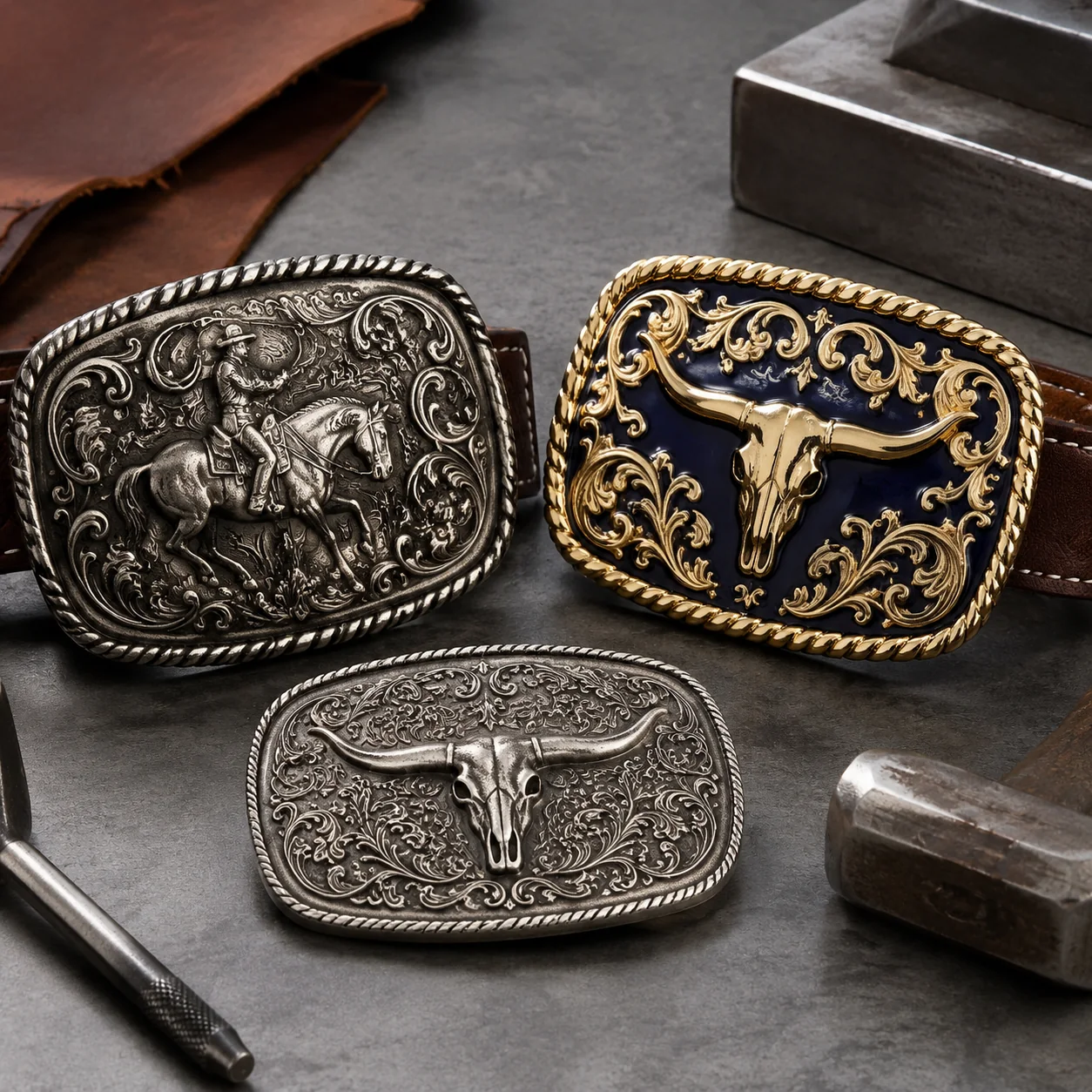
To make custom belt buckles that remain readable on a moving wearer, start with a 3-4 inch face and choose zinc-alloy die casting when deep 3D relief is the priority. Use antique or dual-tone finishes to emphasize western scrollwork and cast depth. For clean corporate or award logos, use hard enamel color. Specify the integrated snap-fit loop for a 1.5 inch (38 mm) belt unless the program requires the available 1.75 inch option.
Start With Reading Distance
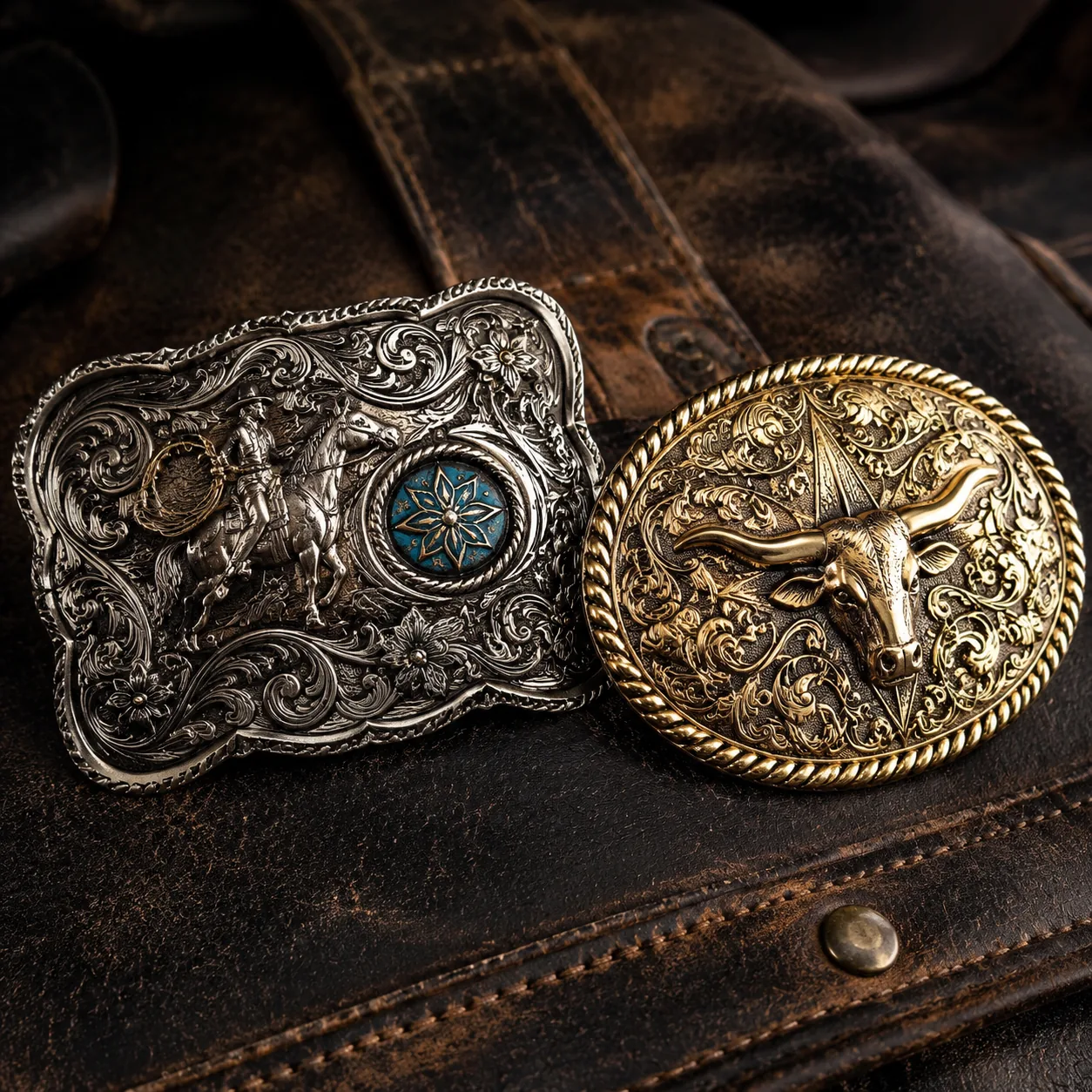
The practical answer to how to make custom belt buckles is to decide what must remain recognizable while the buckle is worn before choosing decorative effects. The supplied buckle format uses a standard 3-4 inch face, with oval, rectangle, shield, and custom-shape options. This gives western brands and rodeo buyers room for deep die-cast relief, rope-edge details, enamel color, and contrasting finishes without giving every element equal visual weight.
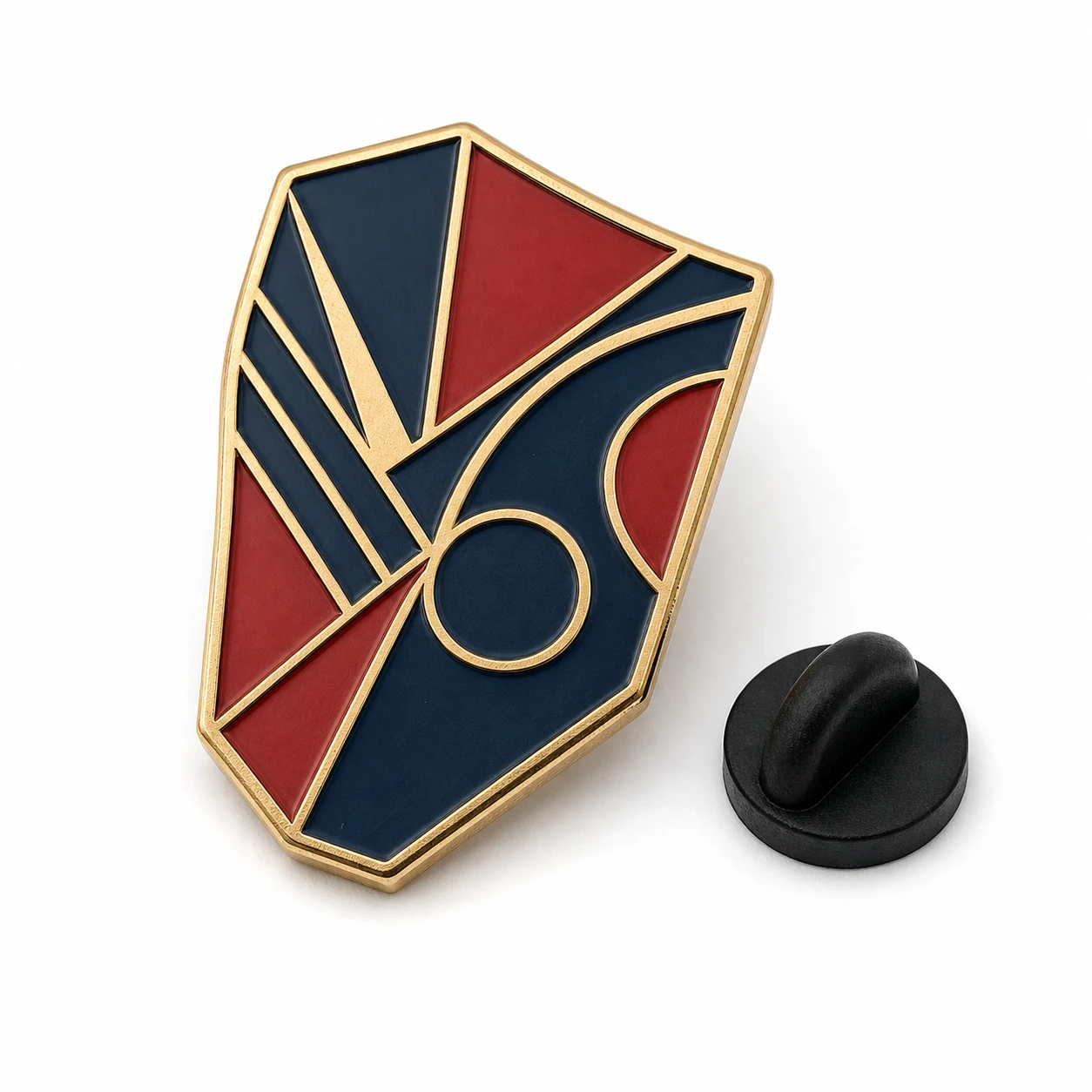
For custom western belt buckles, the readable hierarchy is usually the central mark or award message first, followed by scrollwork, border treatment, and finish contrast. The product information describes buckles as oversized challenge-coin-style pieces with deep relief, antique oxidizing, or bright plating so detail can read across a room. That supports a relief-led direction for rodeo and cowboy work. For a corporate or award buckle, the stated direction is cleaner: use a logo in hard enamel rather than relying on dense 3D scrollwork.
Choose the Build Around the Design Role
Zinc-alloy die casting is identified as the best base-metal option for deep 3D relief. Brass is also available, but the supplied facts do not make comparative claims about brass relief, wear, weight, or appearance. Select zinc alloy when the design depends on pronounced sculpted depth. Treat brass as an available alternative that requires design-specific confirmation instead of assuming it will produce the same result.
| Design priority | Build direction supported by the product facts | Relevant options | Decision trade-off |
|---|---|---|---|
| Western or rodeo scrollwork | Use zinc-alloy die casting when deep 3D relief is the priority. | Oval, shield, rectangle, or custom face; rope edge; antique or dual-tone finish. | This direction prioritizes sculpted relief and finish contrast over a clean enamel-led logo. |
| Corporate logo buckle | Keep the design clean and use hard enamel color for the logo. | Zinc alloy or brass; bright gold, bright silver, gunmetal, or antique finishes. | Hard enamel is supported for clean logos, but the supplied facts do not provide line-width or color-count limits. |
| Trophy or champion buckle | Use the larger end of the stated face-size range for an award-focused piece. | Up to a 4 inch face, rope edge, gold and silver two-tone finish, and optional set stones. | A larger face creates more room for an award layout, while the stated standard range begins at 3 inches. |
| Standard snap-belt program | Specify the integrated snap-fit loop for the standard belt format. | Fits 1.5 inch (38 mm) snap belts; 1.75 inch is available on request. | The standard loop is for 1.5 inch belts, so a 1.75 inch requirement must be stated at quotation. |
Design the Relief Before Adding Color
Deep 3D die-cast relief is the core construction choice for a western buckle with sculptural elements. Build the artwork around clear raised and recessed areas, then decide where enamel improves recognition. Available decoration options include 3D die-cast relief, soft enamel color, hard enamel color, dual-tone plating, and rope edge. These options can be combined, but their order of priority matters: the buckle should first work as a metal relief object, then use color and finish to reinforce the design.
This is particularly important for a buckle worn in motion. The product narrative links deep relief and antique oxidizing or bright plating to detail that reads at distance. A western design can put scrollwork, a cowboy or rodeo theme, and a central emblem into the cast relief, then use antique brass, antique silver, antique copper, or dual-tone plating to distinguish the depth. A logo-led award design can reduce competing decorative elements and reserve hard enamel for the brand mark or award graphic.
The supplied specification does not provide numerical relief-height requirements, minimum line widths, minimum text sizes, enamel-fill tolerances, or approved artwork rules. Do not convert the phrase deep 3D relief into an unverified numeric requirement. For artwork with small lettering or dense ornament, submit the design and request confirmation of how it will translate into the selected relief, enamel, and finish combination.
Select Finish for Contrast, Not Just Color
Finish is an operating part of the visual specification, not merely a final cosmetic choice. Available finishes are antique brass, antique silver, antique copper, bright gold, bright silver, and gunmetal. The product narrative specifically connects antique oxidizing and bright plating with readable cast detail. For western and rodeo pieces with detailed relief, antique finishes and dual-tone plating align with the stated style direction. For clean corporate and promotional buckles, bright finishes can be paired with hard enamel logos.
Name the finish in the purchase specification rather than using a general instruction such as metal color. Antique brass, antique silver, antique copper, bright gold, bright silver, and gunmetal are distinct listed choices. Dual-tone plating is also a listed decoration option, and the narrative specifically describes gold and silver two-tone treatment for larger trophy-style buckles. Where a project uses enamel, specify whether the requested treatment is soft enamel or hard enamel in addition to the plating choice.
The supplied facts do not state plating thickness, a finish-wear test method, handling conditions, corrosion performance, or a cosmetic acceptance standard. They also do not establish that one finish is more abrasion-resistant than another. Procurement teams should not make finish-life commitments from the available information. If finish wear is a contractual concern, obtain the required test method and acceptance criteria separately before releasing the order.
Specify the Back and Belt Fit Explicitly
The stated construction includes an integrated snap-fit loop on the back for the standard format. It fits standard 1.5 inch (38 mm) snap belts. This dimension should appear in the order specification because the product information also offers a 1.75 inch option on request. A buckle face can be correct in appearance yet unsuitable for the intended belt if the belt-width requirement is omitted.
The available facts identify the loop but do not provide a prong specification, prong dimensions, attachment details, pull testing, or fit tolerances. Buyers who need a defined prong configuration should request confirmation rather than assume it is included in the standard description. No packaging format, unit packing count, carton detail, inspection plan, or defect classification is stated either. Those items should not be treated as included merely because the buckle material, face size, finish, and loop are specified.
Plan Cost, Quantity, and Timing Together
The published price range is $1.20-$6.50 per piece FOB. It is a range, not a fixed quotation, so a procurement request should connect the target quantity to the selected size, base metal, relief, enamel, plating, and edge treatment. The stated minimum order quantity is 100 pieces per design. Separate face designs should therefore be planned as separate design quantities rather than assumed to share one 100-piece minimum.
Tooling is stated as a one-time die fee of $100-$300, waived above 1,000 pieces. The sample lead time is 7-10 days and bulk lead time is 18-28 days. Use these as the supplied production timings while recognizing that the facts do not state shipping time, artwork-revision time, approval time, or the date from which the lead-time clock starts. For a new western buckle, the die is part of the purchasing decision because the relief is formed through the die-casting process.
The product narrative states that the die is archived for five years for color-identical reorders. For a repeat program, retain the design, finish, enamel choice, belt-loop width, and original order reference so the reorder request identifies the intended configuration. The archive statement concerns the die and stated color-identical reorder capability; it does not provide broader terms for future pricing, freight, packaging, or finish performance.
Use This Release Checklist
- Set the face size within the stated 3-4 inch range and name the intended shape: oval, rectangle, shield, or custom.
- Choose zinc-alloy die casting when deep 3D relief is the design priority, or identify brass as the requested available alternative.
- State whether the visual priority is western relief and scrollwork, a trophy layout, or a clean hard-enamel logo.
- Name each requested decoration: 3D relief, soft enamel, hard enamel, dual-tone plating, rope edge, or an applicable combination.
- Name the finish precisely: antique brass, antique silver, antique copper, bright gold, bright silver, or gunmetal.
- Specify the integrated snap-fit loop for a 1.5 inch (38 mm) belt, or state the 1.75 inch belt requirement.
- Set quantity at or above the 100-piece MOQ for each design and account for the stated $100-$300 one-time die fee unless ordering above 1,000 pieces.
- Plan around the stated 7-10 day sample lead time and 18-28 day bulk lead time.
- Request written details for any required prong specification, finish-wear requirement, packaging, inspection, or acceptance criteria because these are not supplied in the product facts.
Turn the Design Into a Quote-Ready Specification
For western brands and rodeo event buyers, the strongest supported build is usually a 3-4 inch buckle whose main motif is carried by deep die-cast relief, supported by an antique or dual-tone finish and an integrated loop matched to the belt width. Use hard enamel where a clean corporate or award logo needs clear color, and reserve rope edges, larger trophy proportions, and two-tone treatment for designs that need added visual presence. Send the design, target quantity, selected face size, belt width, material preference, decoration, and finish for a quote; the supplied product information states a 12-hour quote response.
Ready to get this made?
Send your sketch, target quantity and ship-date. Detailed quotation in 12 hours.