Reusable Name Badge Systems for Growing Multi-Location Teams
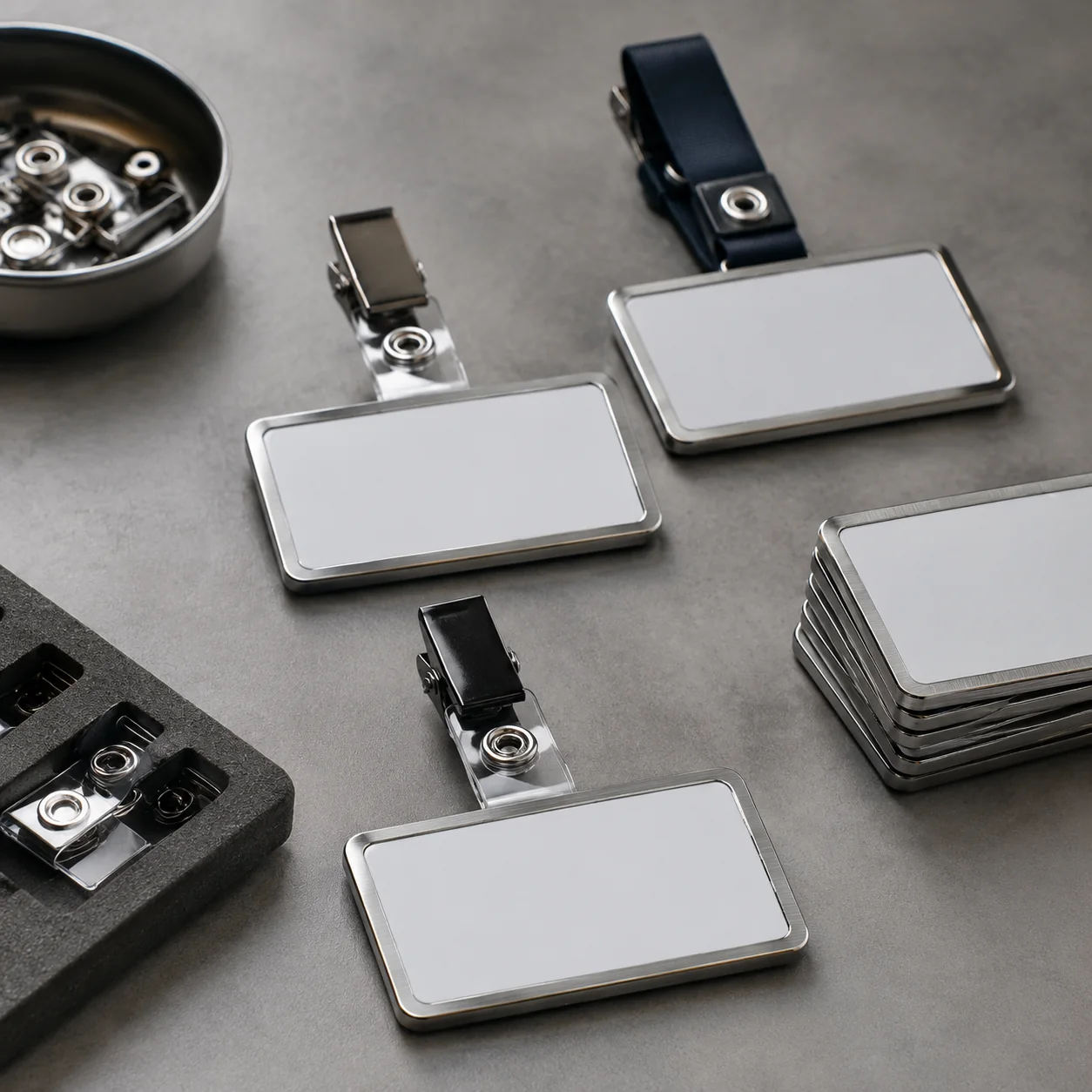
For multi-location teams with changing staff, choose a reusable name badge system that separates the replaceable name insert from the permanent logo shell. Approve the shell, logo treatment, finish, attachment, and insert-to-window fit as one assembly, then manage employee names as replaceable data. Use permanently engraved or printed badges for stable roles where the finished name treatment justifies replacing the complete badge when a name changes.
Choose the System Around Staff Turnover
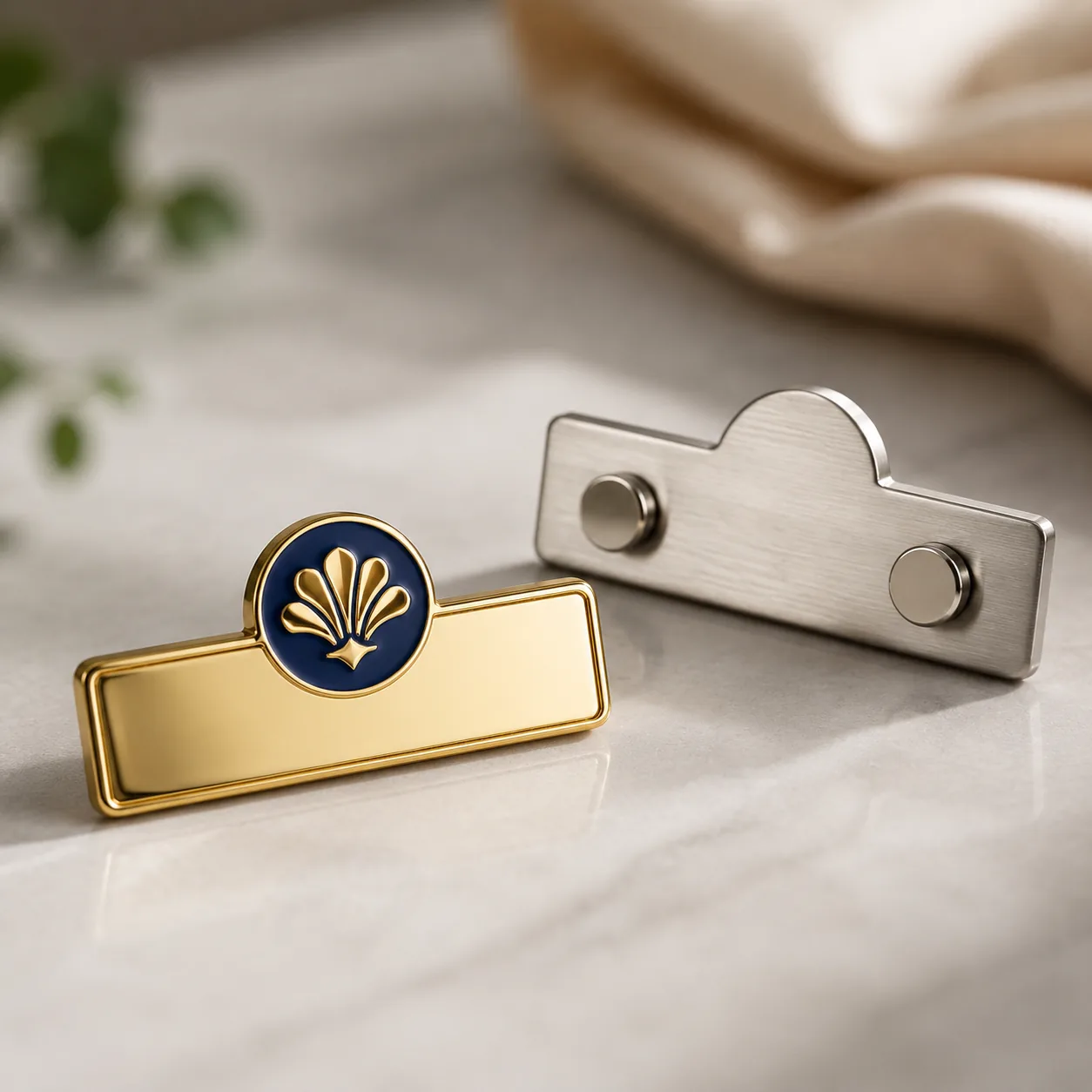
A reusable name badge system divides the product into two purchasing components: a branded shell that remains consistent and a printed name card that can be changed. This is usually the more practical architecture for multi-location hospitality, retail, healthcare, front desk, and corporate teams when employees change roles or locations. Permanently personalized badges remain appropriate for stable teams or positions where an engraved or printed name is part of the intended presentation.
| System | Best fit | Main advantage | Main trade-off |
|---|---|---|---|
| Reusable window-insert shell | Teams with regular name changes, transfers, or temporary staff | The printed name card slides out while the branded shell stays in service | Insert dimensions and fit must remain controlled across locations |
| Permanently engraved or printed badge | Stable roles and premium individual presentation | Each finished badge carries the assigned employee name | A name change requires a complete replacement badge |
| Mixed program | Organizations with permanent front desk staff and changing event or support teams | Each role receives an appropriate level of personalization | Procurement must maintain separate specifications and reorder rules |
Do not select the architecture from unit price alone. The stated category range is $0.45-$3.50 per piece FOB, but that range covers engraved metal, enamel-logo metal, full-color printed, and reusable window-insert products. Request separate quotations for the complete reusable badge, replacement inserts, and any permanently personalized version under consideration. The supplied product facts do not establish standalone insert pricing.
Control the Insert-to-Shell Interface
Insert fit is the defining control point for a reusable badge. The supplied specifications give a typical complete badge size of 60-80 mm wide by 18-25 mm tall, but they do not provide a standard window size, card thickness, or numerical insert tolerance. Buyers should approve those details from a dimensioned drawing and a physical assembled sample instead of assigning an unsupported generic tolerance.
- Record the complete shell dimensions and visible window dimensions as separate values.
- Specify the finished width, height, and thickness of the name card after printing and cutting.
- Check that the insert can be changed without bending or visibly marking the approved shell.
- Use the longest expected employee names in the sample set so text is not clipped by the window.
- Check whether short and long names remain visually aligned within the approved layout.
- Confirm that the insert stays seated during normal wear and does not shift into a position that obscures the name.
- Retain the approved insert artwork, dimensions, material, and cutting method as references for every location.
A fit problem can originate in the shell opening, the card dimensions, the cutting process, or a combination of these factors. Sample approval should therefore cover the assembled product rather than reviewing the shell and insert independently. If locations will print replacement cards themselves, the procurement file should include the approved card dimensions, material, printing setup, and name layout. Confirm that local-printing workflow with the supplier because it is not defined in the supplied product facts.
Lock the Shell Material and Finish
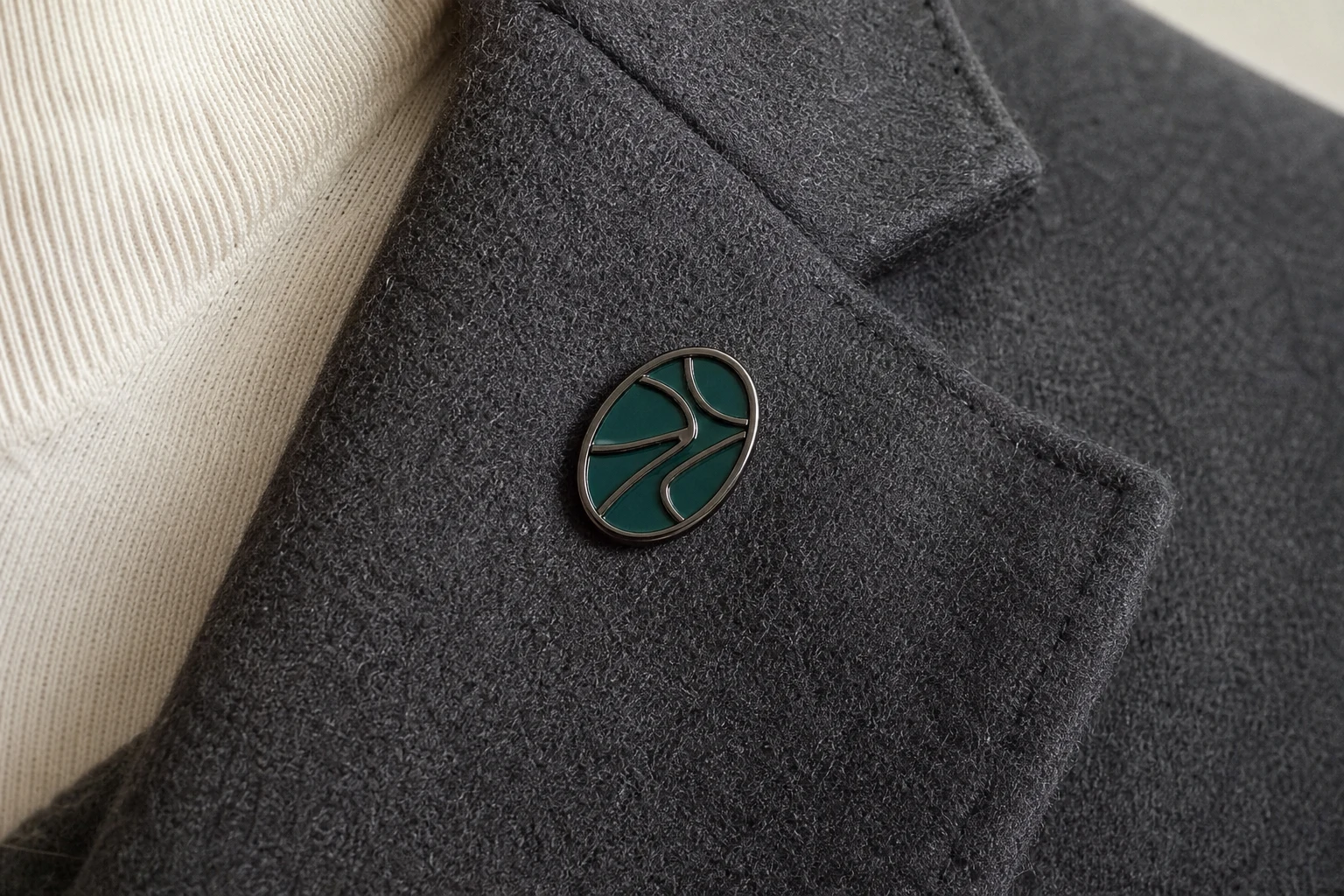
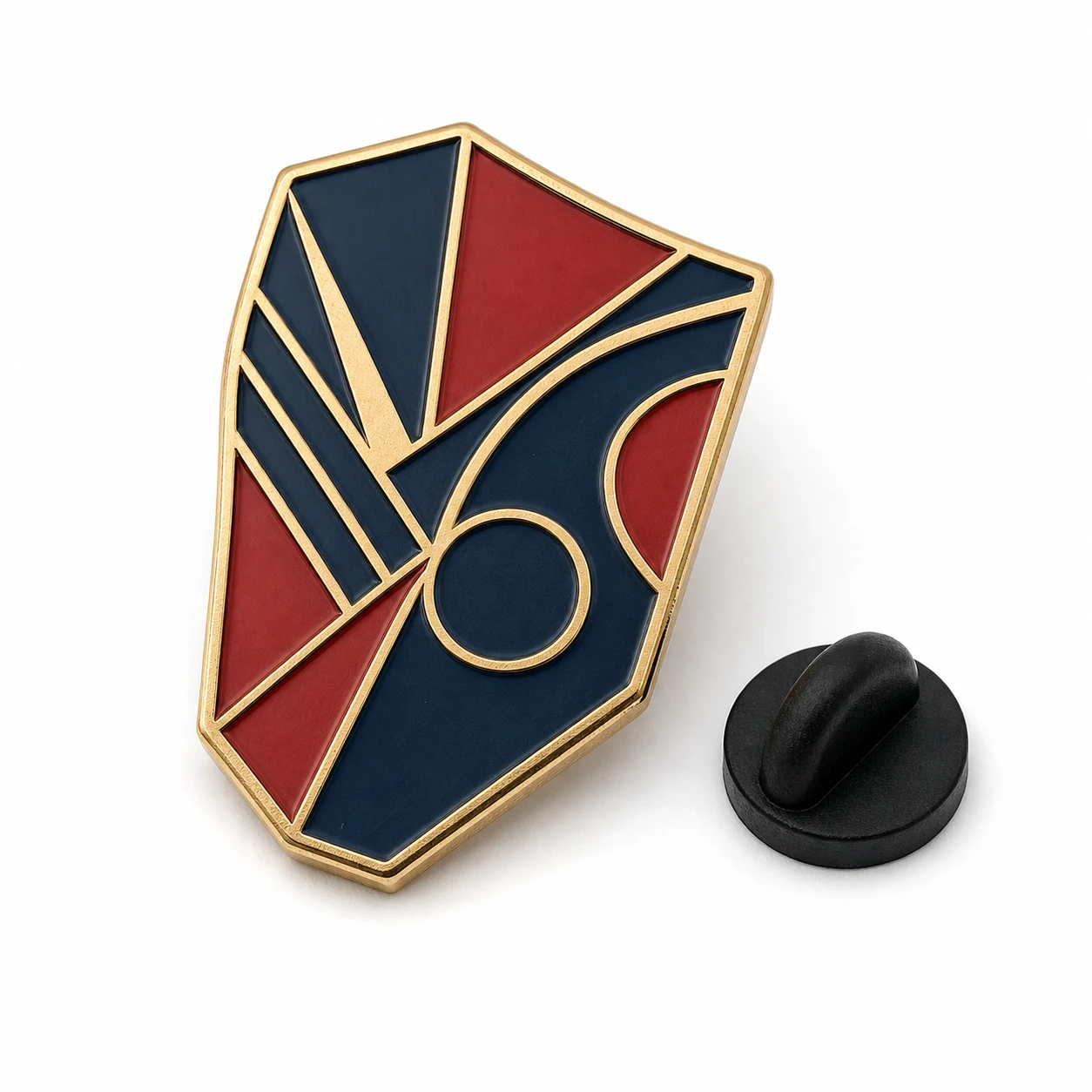
The shell carries the visual identity across every location, so its base material, logo method, plating, and surface treatment should be controlled specifications. Available base materials are brass, zinc alloy, stainless steel, aluminum, and printed acrylic. Listed finishes include gold, silver, rose gold, matte black, and brushed steel, with an optional epoxy dome. Confirm the availability of a specific material-and-finish combination rather than assuming every listed finish can be applied to every base.
| Configuration | Supported specification | Procurement implication |
|---|---|---|
| Premium permanently personalized badge | Brass shell, hard-enamel logo, rose-gold plating, and glossy epoxy dome over the name | Approve the complete visual combination and do not assume this name treatment is interchangeable with a reusable insert |
| High-volume event badge | Full-color printed aluminum | The supplied facts identify this as a lower-unit-cost route for event tags |
| Alternative metal shell | Zinc alloy or stainless steel with a confirmed available finish | Request a sample because the supplied facts do not rank the appearance or durability of these materials |
| Printed construction | Printed acrylic is available as a base material | Keep its artwork and finish approval separate from a plated metal program |
For multi-location continuity, avoid describing the finish only as gold, silver, or black in the purchase order. Record the base material, logo process, confirmed finish, optional epoxy dome, overall size, and approved artwork revision together. Listings for personalized name badges with magnetic backs can conceal these construction differences even though they materially affect what each location receives. For a reusable window badge, also confirm where any epoxy treatment will be applied so the approved construction does not interfere with insert replacement.
Evaluate Magnetic Pull on the Actual Uniform
Magnetic backs are identified in the supplied facts as the most requested option for hospitality and corporate uniforms. They hold without piercing the fabric of a blazer or polo. However, no numerical pull-force value, magnet configuration, or test method is supplied. Procurement teams should not invent a force threshold or assume that every garment thickness creates the same holding condition.
- Test the sampled magnetic badge on each representative uniform fabric and layer combination.
- Check the badge in its intended horizontal orientation rather than testing only the loose magnet components.
- Include normal wearer movement and record whether the badge shifts, rotates, or detaches.
- Repeat the check with the approved shell material, size, insert, and attachment because the complete assembly is the relevant test item.
- Inspect the garment after the trial instead of relying only on the general fabric-safe description.
- Retain one approved attachment sample with the shell and insert references.
For heavier garments or badges that are swapped often, available alternatives include bulldog and alligator clips. Butterfly clutch pins and safety pins are also listed attachment options. These attachments pierce or grip clothing differently from a magnetic back, so selection should follow the actual uniform and operating workflow rather than a company-wide assumption. Record attachment changes as specification changes because they affect how the complete badge is worn.
Use Sampling as the Approval Gate
The stated sample lead time is 5-7 days, followed by a stated bulk production lead time of 10-18 days. Use the sample stage to approve the complete system: shell artwork, logo treatment, material, finish, insert fit, name legibility, and attachment. Approving only an artwork rendering leaves the physical insert interface and attachment performance unverified.
- Measure the sampled badge against the approved overall and window dimensions.
- Compare logo placement, colors, and layout with the approved design.
- Inspect the specified finish across the visible shell.
- Insert and remove the changeable name card several times during the buyer review.
- Check the shortest and longest sample names for alignment and visibility.
- Confirm that the insert remains seated after normal handling and wear.
- Test the magnetic back, clip, or pin on the uniform for which it was selected.
- Record the approved sample, artwork revision, material, finish, dimensions, insert specification, and attachment under one item code.
The 10-18 day bulk period should be planned after sample approval rather than treated as a substitute for it. The supplied lead times do not state transport duration, destination delivery, or time required for buyer revisions. International buyers should place those activities outside the quoted production window when building an internal rollout schedule. Confirm any required delivery date in the quotation instead of inferring it from production lead time alone.
Build Reorders Around the Shell Design
The stated MOQ is 100 pieces per logo-shell design, while employee names can be personalized per piece. That supports a coordinated rollout in which one shell design carries many individual names. It does not establish an MOQ, price, or lead time for replacement inserts or small replacement-badge orders. Request those terms before committing to the reusable architecture, especially when locations will reorder independently.
| Change event | Controlled item | Buyer action |
|---|---|---|
| Employee name change | Printed insert | Issue the approved name data and retain the existing shell where it remains suitable |
| Employee transfer between locations | Insert and location assignment | Confirm that both locations use the same shell design before reassigning it |
| Logo or brand update | Permanent shell artwork | Create a new controlled design and confirm how the 100-piece logo-shell MOQ applies |
| Finish or attachment change | Shell construction | Treat the change as a separate specification rather than mixing it into the existing item |
| Lost complete badge | Shell, insert, and attachment | Order or issue a complete replacement under the approved configuration |
Maintain a name list with a unique site identifier, employee name, badge system, attachment, and artwork revision. Separate insert-only demand from complete-badge demand when collecting site forecasts. This prevents a request for ten new names from being interpreted automatically as ten new branded shells and makes the cost of each change type visible. Also define who may approve spelling changes, new shell orders, and obsolete artwork revisions.
Send a Complete Multi-Location RFQ
A usable quotation needs more than a total headcount. It should show which locations share a logo shell, which roles use reusable inserts, and which roles receive permanently engraved or printed names. The following checklist keeps the commercial comparison tied to the supported product options.
- Logo artwork and the revision that applies to each location or business unit.
- Quantity by shell design, noting the stated 100-piece MOQ per logo-shell design.
- Complete badge dimensions within or outside the typical 60-80 mm by 18-25 mm range.
- Reusable window-insert, laser-engraved name, or printed-name construction.
- Visible window and finished insert dimensions for each reusable design.
- Base material selected from brass, zinc alloy, stainless steel, aluminum, or printed acrylic.
- Logo method selected from soft enamel, hard enamel, or print where applicable.
- Confirmed finish selected from gold, silver, rose gold, matte black, or brushed steel.
- Whether an optional epoxy dome is required and where it will be applied.
- Magnetic back, butterfly clutch pin, bulldog or alligator clip, or safety pin.
- Name list by location, including representative long names for sampling.
- Required sample approval date and bulk completion date.
- Separate pricing, MOQ, and lead time for complete badges and replacement inserts.
- Any site sorting, labeling, or packaging requirement, stated separately because no packaging specification is included in the supplied facts.
Compare quotations on matched configurations. A printed aluminum event badge should not be evaluated as though it were equivalent to a brass badge with hard enamel, rose-gold plating, and an epoxy dome. Confirm that the quoted amount uses the same FOB basis as the supplied $0.45-$3.50 per-piece range. Keep freight, destination charges, and services outside the stated product facts separate when comparing total program costs.
Take the Next Procurement Step
Choose reusable inserts for roles with recurring name changes and permanent personalization for stable roles where the finished name treatment is part of the presentation. Then submit the logo, location quantities, staff name list, shell material, finish, dimensions, attachment, and insert workflow through /products/name-badges.html. Request an assembled reusable sample with representative names and test it on the actual uniforms before releasing the bulk order. The supplied facts state that quotations can be returned within 12 hours, samples take 5-7 days, and bulk production takes 10-18 days.
Ready to get this made?
Send your sketch, target quantity and ship-date. Detailed quotation in 12 hours.