Promotional Fridge Magnets with Logos: What Makes Them Useful
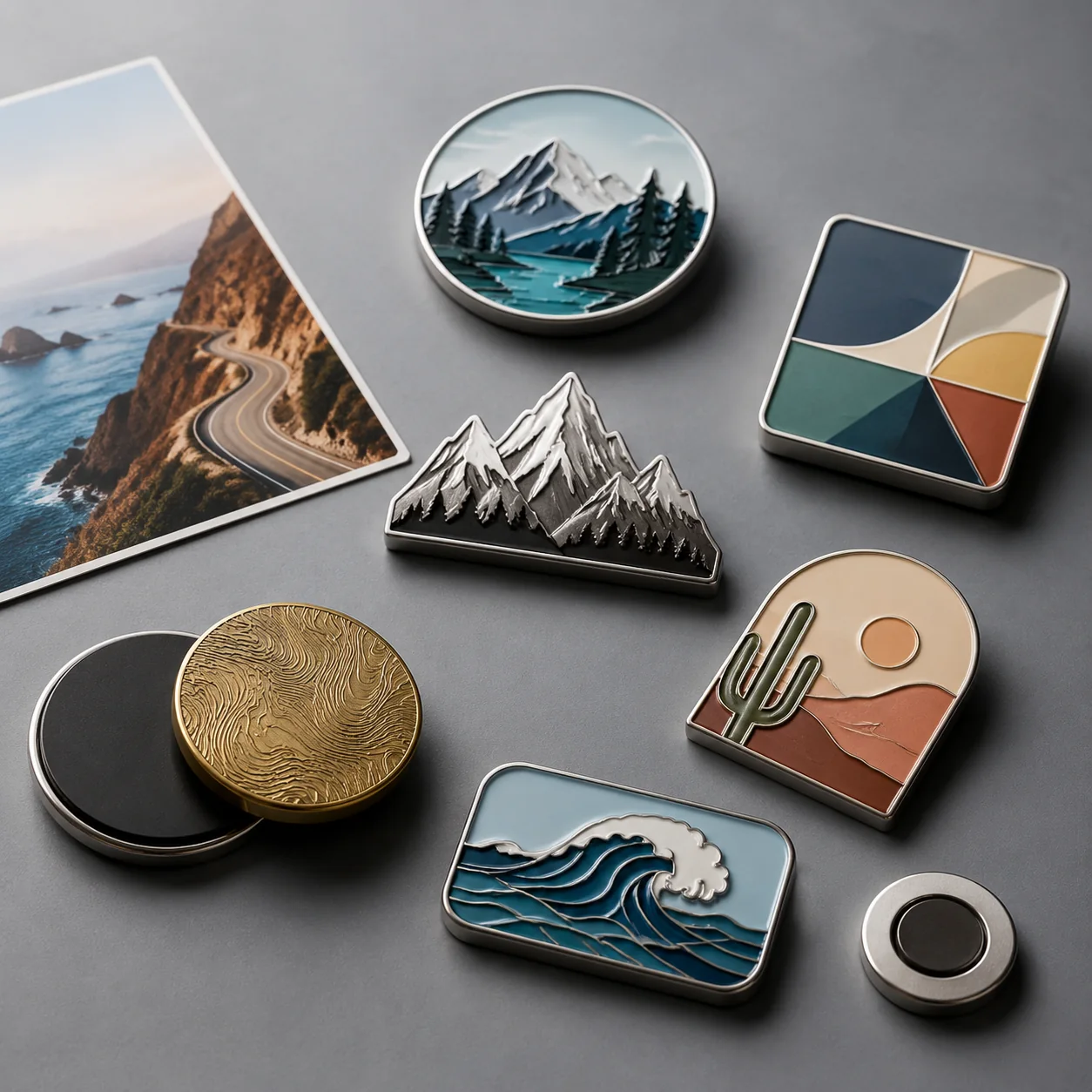
Promotional fridge magnet utility design works when the magnet gives recipients a practical or personal reason to keep it visible after the handout. For distributors and local business marketers, that usually means a readable contact, takeout, calendar, reference, or photo format; a magnet option suited to the intended hold; and packaging matched to distribution or retail handling. The best choice is not automatically the most premium material. It is the material, size, artwork, magnet option, and pack-out that fit the campaign's job, quantity, and budget.
Start With The Job, Not The Shape
A promotional fridge magnet earns display space when it performs a small job repeatedly. A restaurant magnet can help a customer reorder. A real estate magnet can keep an agent's contact details within reach. A calendar or reference magnet can be consulted over time. A photo or destination magnet can remain because the recipient values the image or memory. The utility should be agreed before choosing a shape, material family, or premium feature.
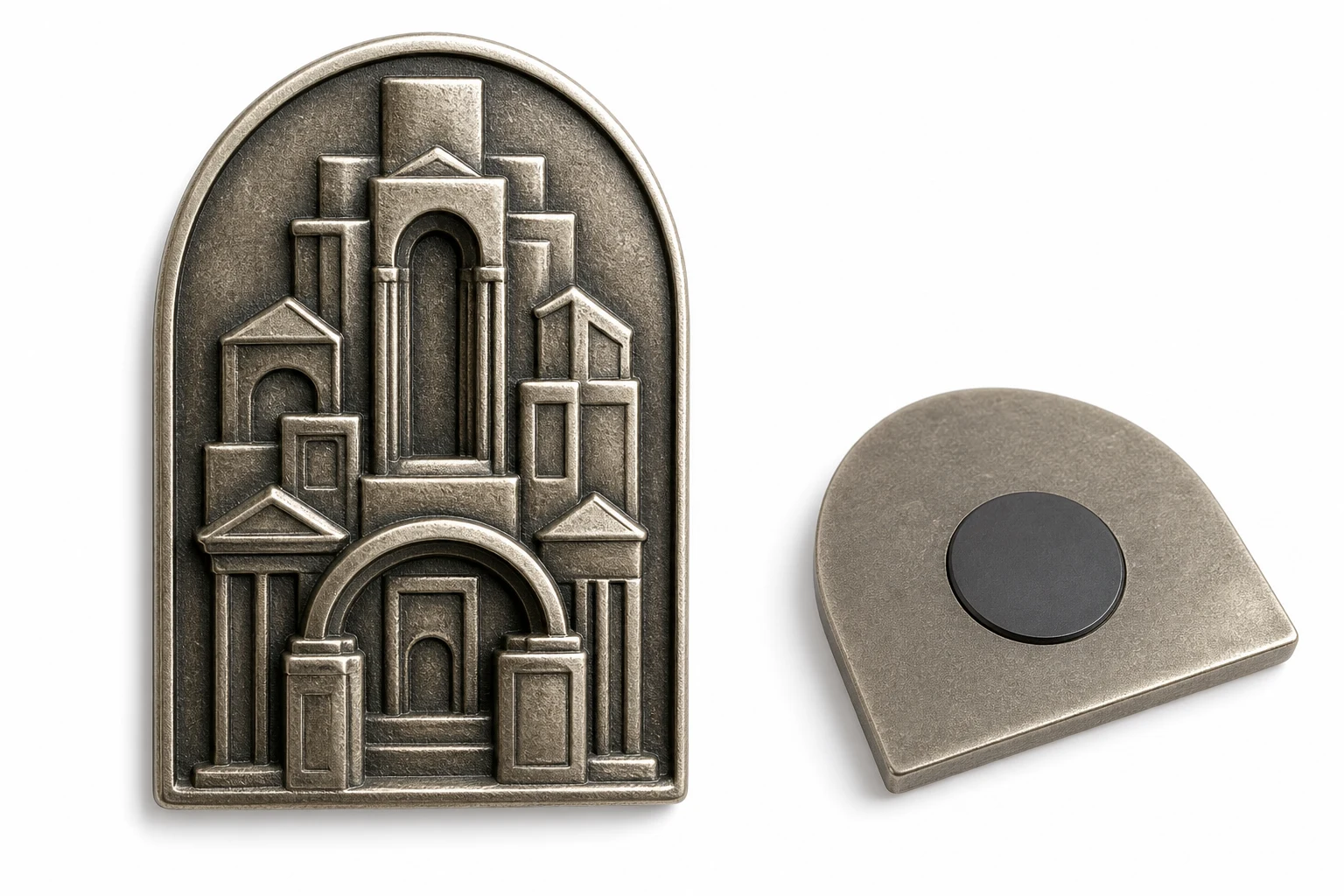
The available product families serve different purposes. PVC soft rubber is commonly used for tourist souvenirs. Resin dome suits photo magnets and magnified photo artwork. Die-cast metal is the premium gifting route. Printed tin is the low-cost promotional route. Each family can carry a logo, but a logo alone does not determine whether the item will stay on a fridge. The buyer should first identify the reason the recipient will keep it.
This matters especially for high-volume orders. Fridge magnets are a high-volume, low-margin category, and most buyers order 1,000 to 20,000 pieces. The category economics work best when a buyer commits to a single design so tooling can keep running efficiently. For tourist retail, however, visual variety within a product line can support repeat purchase. These are different commercial models and should not be specified in the same way.
| Buyer Goal | Useful Format Direction | Product Family To Consider | Primary Decision Check |
|---|---|---|---|
| Low-cost local campaign | Simple logo, phone number, offer, or takeout prompt | Printed tin | Keep the layout simple enough to remain legible at the final size |
| Photo-led gift or destination memory | Photo with city, place, or customer text | Resin dome | Approve image crop and text hierarchy at the final size |
| Tourist retail souvenir | Landmark, mascot, or destination-led die-cut design | PVC soft rubber | Plan for the PVC MOQ of 300 pieces and the need for product-line variety |
| Premium client gift | Compact logo or commemorative design | Die-cast metal | Use the premium route only when perceived value supports it |
| Magnet intended to hold more than itself | Calendar, reference, or paper-holding format | A suitable family with the neodymium option | State the intended hold requirement and confirm it before production |
Choose A Utility Format Before Decoration
For most local campaigns, a decorative logo-only magnet has limited reasons to remain displayed unless the recipient already has a strong connection to the brand. A more useful approach is to give the magnet one clear function. Restaurant takeout magnets can prioritize the restaurant name and ordering contact. Real estate giveaways can prioritize the agent name, phone number, and service area. Trade show magnets need a short follow-up message rather than a crowded company profile. Photo gift services can make the image the main reason for retention, with city or destination text as supporting information.
Calendar and reference formats can extend display life because users may consult them repeatedly. They also impose strict space and legibility limits. Typical sizes range from 40 mm to 100 mm, with rectangle, round, and custom die-cut options. A compact 40 mm magnet may suit a simple reminder or logo, but it leaves limited room for a calendar grid, contact block, or detailed service information. A larger rectangle provides more usable layout area, while a round or custom die-cut shape may reduce the predictable area available for small text.
- Use a calendar format only when the calendar is readable at the chosen final size.
- Use a contact magnet when the recipient needs to call, reorder, visit, or book.
- Use a photo format when the image itself gives the recipient a reason to retain the magnet.
- Use a die-cut souvenir format when shape contributes directly to destination or retail appeal.
- Use a premium metal format when perceived value is more important than the lowest unit cost.
A calendar should also be treated as time-bound content. Buyers should decide whether the magnet is intended for a defined calendar period or whether its contact and reference value must remain useful after that period ends. This prevents a campaign from relying on a format that becomes less relevant immediately after its primary date range.
Make Print Legibility A Procurement Requirement
Print legibility is central to promotional fridge magnet utility design. The supplied product information does not define print processes, minimum type sizes, or resolution requirements. Buyers should therefore not assume that every artwork file will remain readable on every material, shape, or size. Require artwork approval at the actual final dimensions, including the final shape and information hierarchy.
Start the artwork with the one action or memory the recipient should retain. For a restaurant, that may be the restaurant name and ordering contact. For a real estate agent, it may be name, phone number, and service area. For a photo gift service, it is usually the image first, followed by city or destination text. For a trade show giveaway, a short message and web destination may be enough. Every additional slogan, icon, border, decorative texture, or legal line competes for limited layout area.
Separate brand approval from production approval. A logo can be correct in a digital brand file and still be unsuitable for a small physical magnet. Before the purchase order is finalized, check that priority text is readable at the final size, that no important information falls into an irregular die-cut area, and that the layout remains clear on the selected product family. Resin dome projects need particular attention to photo crop because this family is used for magnified photo artwork. Printed tin layouts should remain disciplined because printed tin is the low-cost promotional option.
Specify Magnet Pull By The Intended Use
Magnet strength should be chosen according to what the magnet needs to do. Standard ferrite is the default option. Neodymium is offered for thick fridge doors and multi-page hold. A small contact magnet that only needs to display itself may suit standard ferrite. A calendar, reference magnet, or other format intended to hold additional paper may require the neodymium option.
Backing construction also belongs in the specification. The standard backing is a glued flexible magnet sheet. Premium versions can use an inset neodymium disc. Buyers should state the practical task in the RFQ rather than requesting only a stronger magnet. For example, a restaurant reorder magnet may only need self-display, while a local service calendar may be intended to hold papers as well.
No pull-force or holding-capacity values are supplied for these products. Do not define the requirement only as strong magnet pull. State whether the magnet must hold itself, be used on a thick fridge door, or hold multiple pages, then obtain confirmation for the final size, backing construction, and intended use before production. This is particularly important where the utility claim depends on paper-holding performance.
| Hold Requirement | Supported Magnet Option | Appropriate Use | Procurement Risk |
|---|---|---|---|
| Self-display only | Standard ferrite | Simple logo reminder, restaurant contact, or event giveaway | Paying for additional strength that does not improve the campaign's use |
| Thick fridge door | Neodymium option | Applications involving the supplied stronger option for the intended surface | Selecting the default option without confirming the intended application |
| Multi-page hold | Neodymium option | Calendar, reference, or paper-holding use | The magnet may not perform the utility that justified the format |
| Premium specification | Inset neodymium disc | Premium gifting or a higher-value presentation | Adding complexity when standard backing is sufficient |
Match The Specification To Order Economics
The stated price range is $0.10 to $1.80 per piece FOB. That range shows why the specification must be controlled before quoting. Material family, size, shape, magnet backing, magnet option, and packaging can affect the commercial result. Buyers should select the features that support the intended display value instead of requesting every premium option by default.
MOQ is also material-dependent. Resin and metal have a stated MOQ of 100 pieces. PVC has a stated MOQ of 300 pieces. The supplied information does not state a separate MOQ for printed tin, so that requirement should be confirmed in the quotation rather than assumed from another material family. Resin or metal can therefore be considered for smaller premium gift batches, while PVC is suited to orders that can meet its stated minimum.
The stated lead time is 10 to 20 days. Buyers should allow additional internal time for artwork review, revisions, and approval of packaging details before the required event or distribution date. A trade show giveaway should not be treated as a generic stock item while its final shape, artwork, and magnet specification remain open.
Control Pack-Out And Retail Handling
Packaging affects how magnets are received, distributed, and merchandised. Poly-bag is the default packaging. Hangtag and retail header card are optional. Poly-bag may suit a trade show handout or local branch distribution. Tourist souvenir shops may need a hangtag or retail header card for shelf and hanging display. Photo gift services may choose packaging that supports presentation of the keepsake.
Pack-out should be discussed alongside the final size and shape. A 100 mm rectangle, round magnet, and custom die-cut magnet may have different handling needs in a campaign or retail program. Carton dimensions, unit weights, and packing quantities are not supplied product facts, so buyers should request them in the quote package instead of estimating them. The available packaging choices that can be specified now are poly-bag, hangtag, and retail header card.
- Confirm poly-bag, hangtag, or retail header card packaging.
- State whether units are for handout, retail shelf, mailed gifts, or local branch distribution.
- Request packing details for the selected final size and shape.
- Confirm that campaign teams can count, sort, and distribute units without repacking.
- For retail programs, confirm that the selected packaging supports the intended shelf or hanging presentation.
Use This Checklist Before The Purchase Order
The purchase order should lock the specification that determines whether the magnet is useful after the campaign. A concise checklist reduces the risk of receiving an item that looks acceptable but is too small to read, unsuitable for the intended hold, or poorly matched to the distribution method.
- Material family: PVC soft rubber, resin dome, die-cast metal, or printed tin according to the intended use.
- Size and shape: a typical 40 mm to 100 mm size, in rectangle, round, or custom die-cut form.
- Magnet option: standard ferrite for default self-display, or neodymium for thick fridge doors or multi-page hold.
- Backing: glued flexible magnet sheet as standard, or an inset neodymium disc for premium versions.
- Artwork approval: final-size proof covering readability, image crop, contact details, and calendar or reference content.
- Quantity: confirm the applicable MOQ, including 100 pieces for resin or metal and 300 pieces for PVC.
- Timing: plan around the stated 10 to 20 day lead time, plus proof review and internal approval time.
- Packaging: poly-bag by default, with hangtag or retail header card when presentation or merchandising requires it.
- Commercial fit: compare the target budget with the stated $0.10 to $1.80 per piece FOB range.
Final Recommendation For Distributors
For most distributors and local business marketers, the strongest promotional fridge magnet is a readable, single-purpose format rather than a crowded miniature advertisement. Restaurant takeout magnets, real estate contact magnets, calendar reminders, and photo-led destination magnets can earn display space when their information hierarchy is clear and their magnet option matches the intended use. Printed tin supports low-cost promotions, resin dome supports photo magnets, PVC soft rubber supports souvenir-style variety, and die-cast metal supports premium gifting.
Prepare an RFQ for promotional fridge magnets through /products/fridge-magnets.html that states the intended use, product family, size, shape, magnet option, backing, quantity, lead-time target, packaging choice, and final-size artwork approval requirement. That information gives the supplier a basis to quote a magnet designed to remain useful after the campaign rather than become a disposable handout.
Ready to get this made?
Send your sketch, target quantity and ship-date. Detailed quotation in 12 hours.