Medal Ribbon Specification Guide: How to Avoid Last-Minute Rework
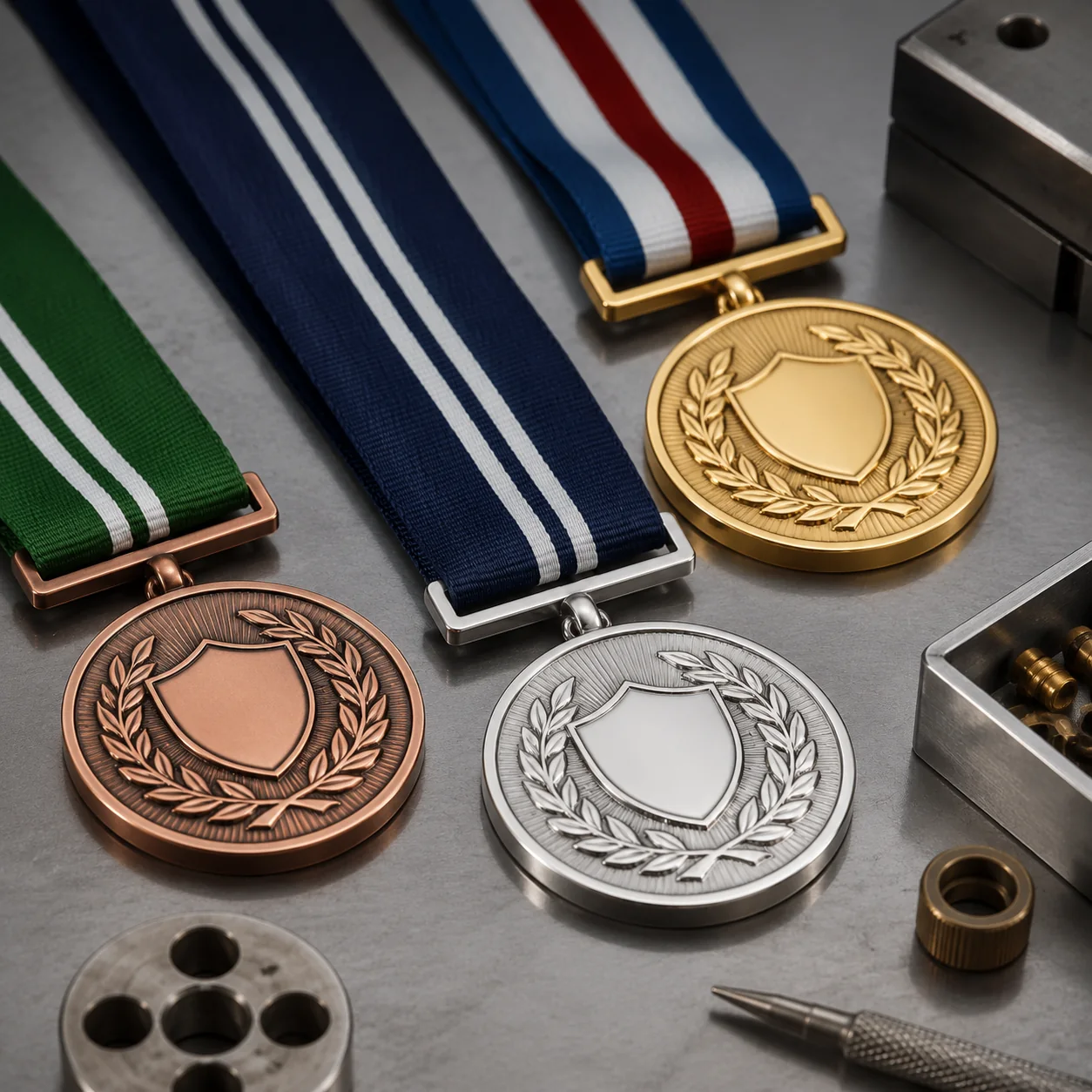
Match the ribbon specification to the audience, expected wear duration, branding requirements, and selected medal body. Choose an exact width within the supported 22-38 mm range, then specify dye sublimation for full-color edge-to-edge graphics, woven construction for a premium textured finish, or silk-screen printing for simpler artwork. Before bulk production, approve the finished length, hand feel, edges, medal balance, attachment, unit packaging, and carton schedule. Ribbon material, finished length, clasp type, tolerances, and carton configuration are not defined in the supplied product facts and must be confirmed by the supplier.
Start With Audience and Wear Duration
A medal ribbon is both a wearing component and a branding surface. It supports the medal, touches the recipient, and remains visible during presentation, photography, and post-event wear. Event production and procurement teams should specify it at the same time as the medal size, metal, decoration, plating, and packaging.
Begin by defining how recipients will use the award. A medal worn only during a formal presentation may place greater emphasis on appearance and presentation packing. A race or tournament medal that recipients may wear for longer requires closer sample review for finished length, hand feel, edge finish, attachment, and the balance between ribbon width and medal weight. Because the supplied product facts do not quantify these characteristics, treat them as approval points rather than assumptions.
The custom medal range covers marathons, running races, sports tournaments, schools, corporate recognition, martial arts, gymnastics, charity events, and fun runs. Available base metals include zinc-alloy, brass, iron, and copper. Standard medal sizes are 2 inch, 2.5 inch, and 3 inch, with custom sizes up to 5 inch. Standard thickness is 3 mm, while premium heavy medals can be 4-6 mm. As medal size or thickness increases, reviewing the complete medal-and-ribbon assembly becomes more important.
Lock Ribbon Width Before Artwork
The supported ribbon width range is 22-38 mm. Select an exact width before finalizing artwork because width determines the available printed or woven area and affects the visual proportion between the ribbon and medal. Artwork developed for one width should not be assumed to transfer unchanged to another.
A wider ribbon provides more room for sponsor names, event graphics, and repeated logos. A narrower ribbon keeps more visual emphasis on the medal. Neither option is automatically correct. Base the decision on the amount of artwork, required logo visibility, medal size, audience, and expected wear duration. Compare the proposed width on both the artwork proof and physical sample rather than prescribing an unsupported width by event type.
Ribbon width should be a controlled RFQ and purchase-order field, not only an artwork note. State the medal dimensions, ribbon width in millimeters, decoration method, required finished length, attachment requirement, and packaging option together. Ask the supplier to confirm the finished ribbon length and dimensional tolerances because neither is defined in the supplied specifications.
Select the Construction and Decoration Method
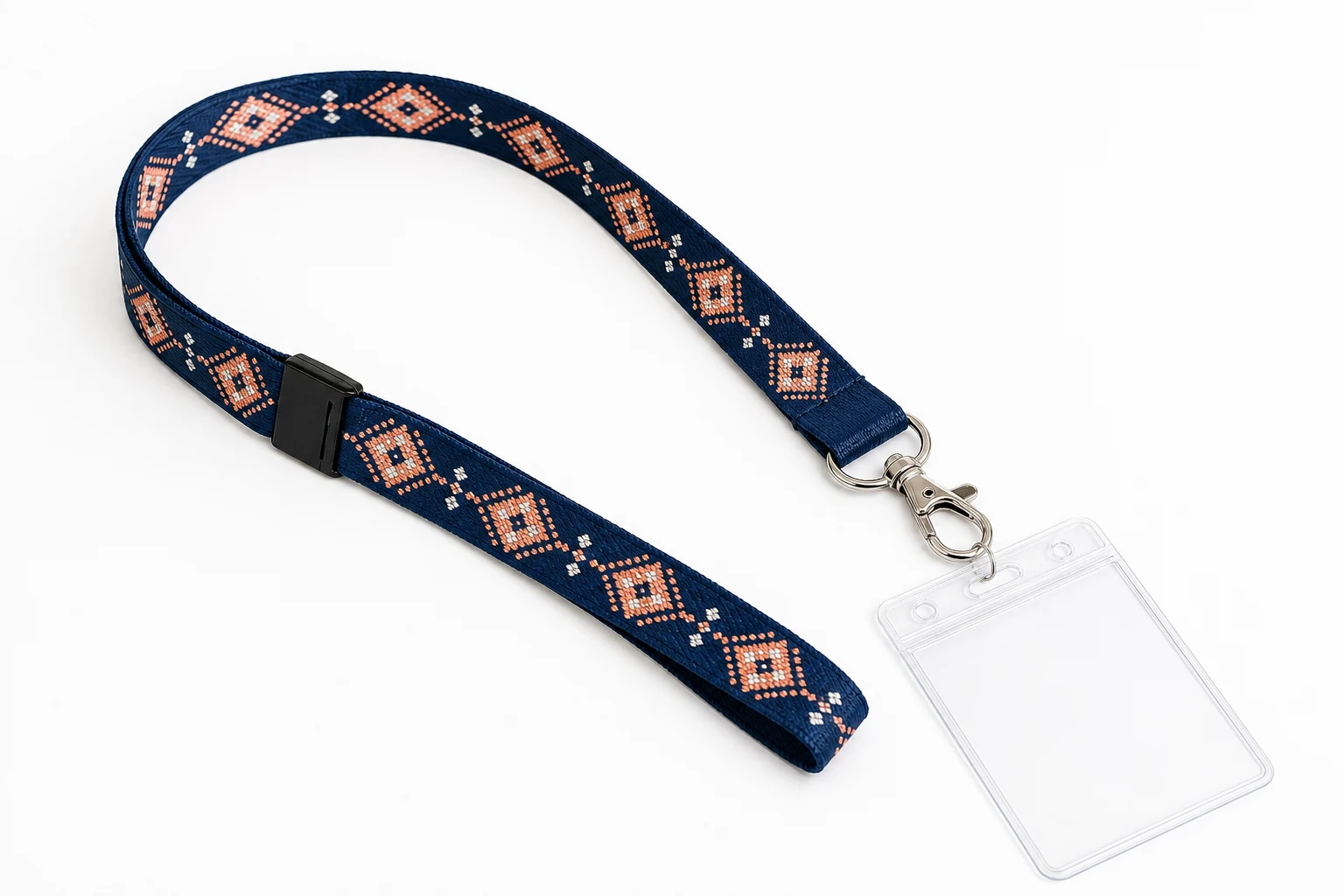
The supported ribbon options are full-color dye sublimation, woven construction, and silk-screen printing. Dye sublimation supports full-color edge-to-edge graphics. Woven ribbon provides a premium textured finish. Silk-screen printing is available for simpler printed artwork. The product facts do not define fiber composition, weave density, ribbon thickness, edge construction, or finished loop length, so these details must be confirmed separately.
| Decision point | Recommended direction | Approval risk | RFQ wording |
|---|---|---|---|
| Audience and wear duration | Match presentation-only or longer-wear use to a reviewed physical sample | Appearance alone does not confirm length, hand feel, balance, or attachment performance | State the audience, event type, expected wear duration, and required sample checks |
| Ribbon width | Choose an exact width within 22-38 mm before artwork approval | Changing width can alter logo scale, spacing, and visual balance | Ribbon width: specified value in millimeters |
| Dye sublimation | Use for full-color edge-to-edge artwork | Detailed artwork requires proofing and physical sample review at actual width | Full-color dye-sublimated neck ribbon with edge-to-edge artwork |
| Woven | Use when texture and perceived finish are priorities | Fine artwork may require adaptation for woven production | Woven neck ribbon with supplier-confirmed artwork adaptation |
| Silk-screen | Use for simpler printed graphics | The term printed ribbon does not identify the required process | Silk-screen printed neck ribbon with approved artwork |
| Clasp and attachment | Require the supplier to document the complete proposed assembly | No clasp type or attachment construction is defined in the supplied facts | Clasp, attachment, hardware finish, and operation subject to sample approval |
| Packing | Select the unit package, then approve the final carton schedule | Unit packaging affects packed dimensions, weight, and carton arrangement | Confirm unit pack, units per carton, carton dimensions, gross weight, and markings |
Match the Method to Artwork Risk
Choose dye sublimation when the ribbon must reproduce full-color event art, multiple sponsor colors, or graphics that run to the edges. Review the design at the selected physical width rather than relying only on an enlarged screen proof. The approval should show logo size, repeat interval, orientation, edge treatment, and the relationship between the joined ribbon and medal attachment.
Choose woven ribbon when texture and a premium finish are more important than reproducing unrestricted full-color detail. Woven artwork may require simplification, but the supplied product facts do not provide minimum line, text, or detail limits. Require the supplier to adapt the artwork for weaving and submit it for approval. Assess critical small text and logo details on the physical sample.
Name silk-screen printing explicitly when it is required. A purchase order that says only printed ribbon is ambiguous because both dye sublimation and silk-screen printing are available. Record the selected method consistently across the quotation, artwork proof, sample approval, and purchase order to prevent a process change during production.
Coordinate the Ribbon and Medal Body
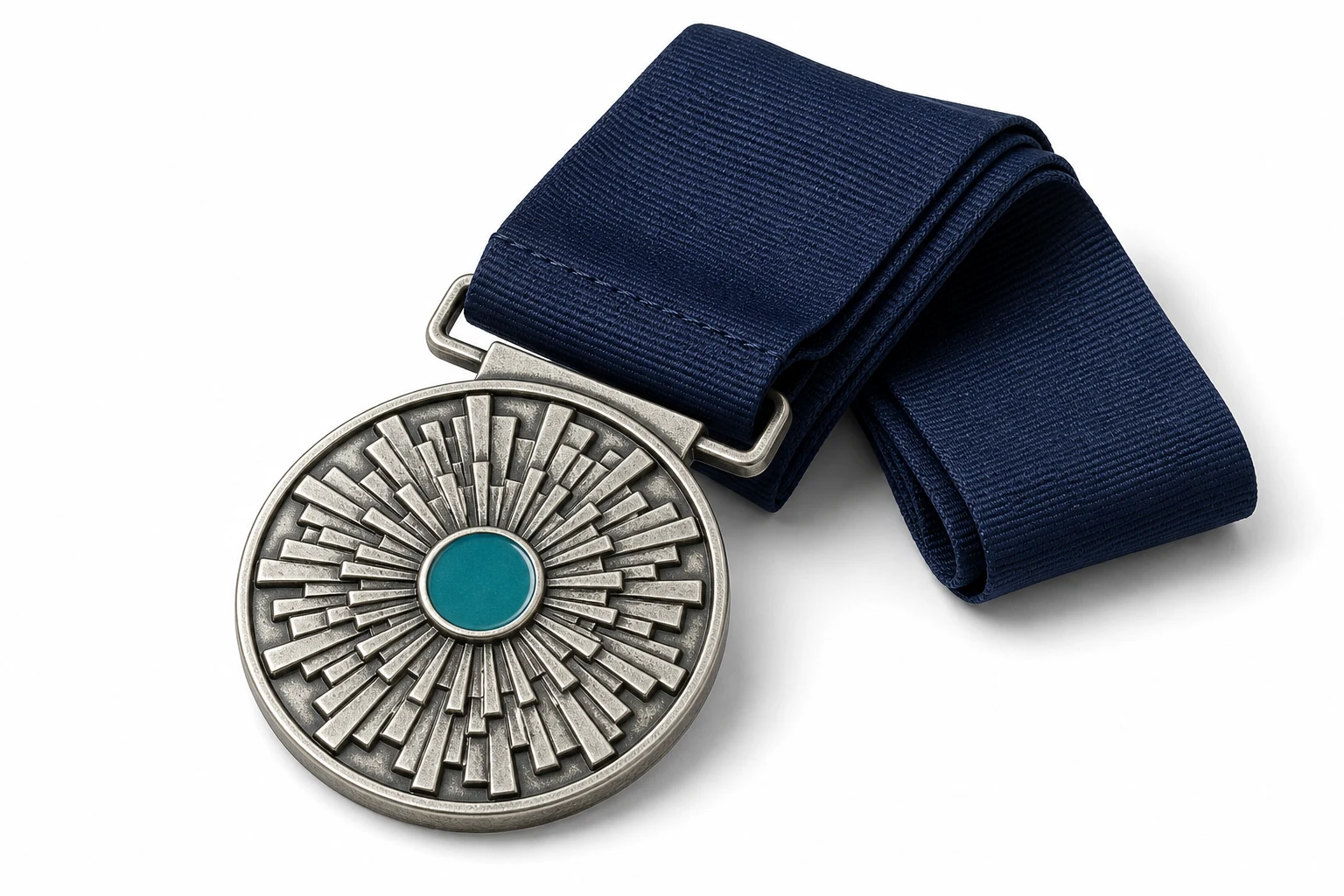
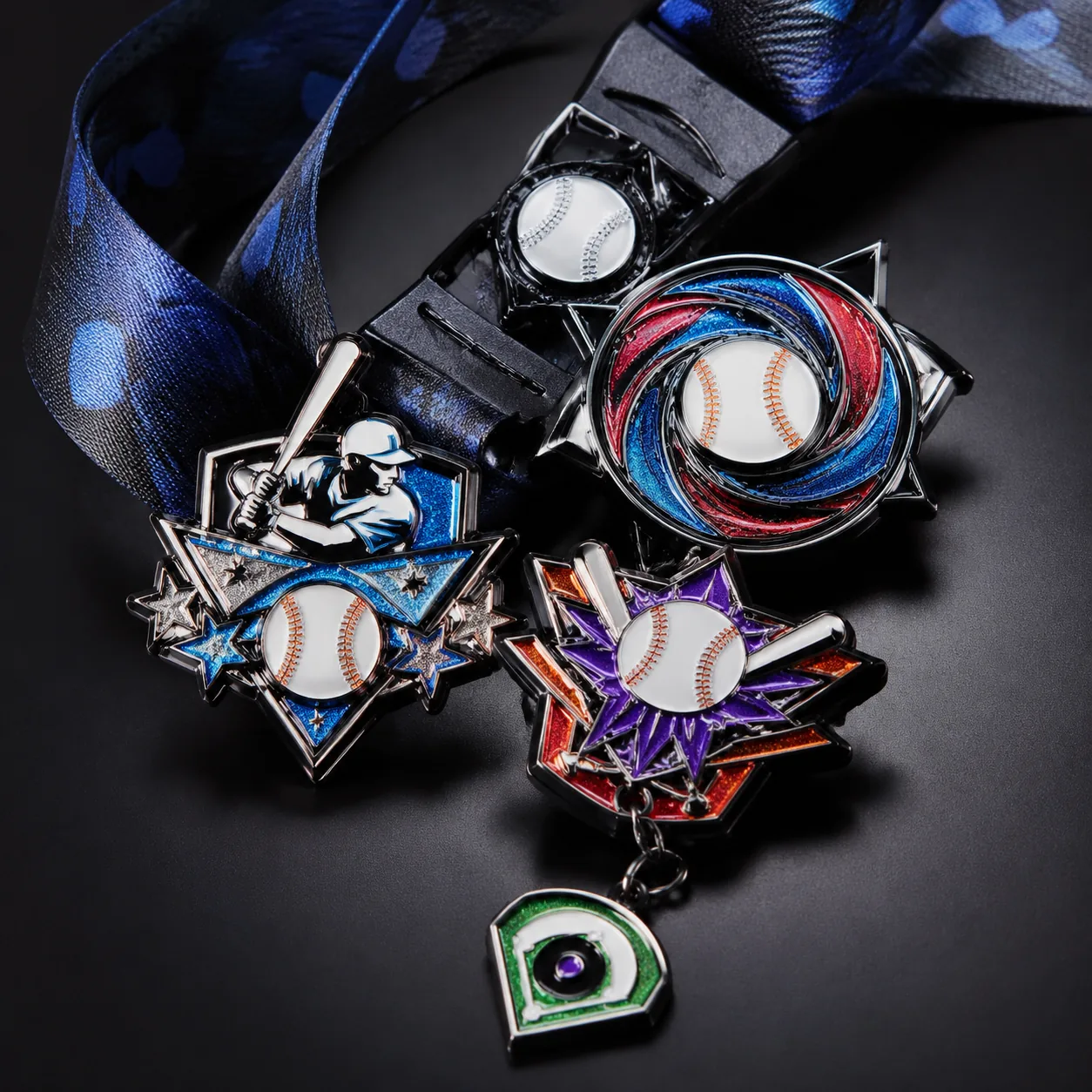
Approve the medal body and ribbon as one assembly. Available medal decoration includes die-struck relief, 3D sculpt, soft enamel, hard enamel, and offset print inserts. Plating options include gold, silver, bronze or copper, antique gold, antique silver, antique bronze, dual-tone, and gunmetal. These choices establish the visual weight and finish that the ribbon must complement.
Zinc-alloy is the default base metal and the stated best option for 3D casting. It can reproduce sculpted elements such as athletes, mascots, and year dates. A detailed medal face may benefit from a more controlled ribbon layout, while a simpler antique-relief medal may leave more room for event color and sponsor content on the ribbon. These are design directions to validate through proofs and samples, not fixed production rules.
For podium sets, gold, silver, and bronze versions can be produced from one die and plated three ways, so the set does not require separate tooling for each finish. The ribbon remains a separate specification decision. State whether all placements use one ribbon design or different artwork, and ask the supplier how ribbon variants will be treated against the MOQ of 100 pieces per design.
Make Clasp and Attachment Approval Explicit
The supplied product facts do not identify a clasp, detachable fitting, or medal attachment method. Do not assume that a clasp is included or that a particular mechanism will be used. Require the supplier to show the complete proposed ribbon assembly in the quotation, artwork approval, construction drawing, or sample.
The physical sample should confirm how the recipient puts on and removes the medal, whether any clasp or detachable component operates as intended, how the ribbon joins the medal, whether the medal hangs in the correct orientation, and how visible hardware is finished. This review is especially important for a 4-6 mm premium heavy medal or a custom size beyond the standard range, but it should remain an approval requirement for every order.
Record the approved assembly with photographs or a uniquely identified signed sample, then cite that reference in the purchase order. Wording such as clasp and attachment per approved sample is useful only when the sample reference is clear and the approved item is retained for comparison with bulk production.
Define Unit and Carton Packing
The default unit packaging is a poly-bag. Optional packaging includes a velvet pouch, gift box, or presentation case. Select the package according to the handout workflow and required presentation. Confirm whether each medal is packed individually and how the ribbon will be arranged inside the package because the supplied facts do not define unit quantity or packing orientation.
Confirm carton packing after medal size, thickness, ribbon width, attachment, and unit packaging are settled. The supplied data does not state units per carton, inner-pack quantity, carton dimensions, net weight, gross weight, or carton markings. Do not add estimated carton figures to the purchase order. Require the supplier to submit a final packing schedule for approval.
The schedule should identify the purchase order and design references, variant quantities, units per inner pack if used, units per carton, carton count, dimensions, net and gross weight, and required markings. If medals must be separated by event, team, school, placement, or delivery location, state that requirement before packing is finalized.
Use an RFQ Checklist for Ribbon Specifications
- State the event type, audience, handout method, and expected wear duration.
- State the medal size: 2 inch, 2.5 inch, 3 inch, or custom up to 5 inch.
- State the thickness: 3 mm standard or 4-6 mm for a premium heavy medal.
- State the base metal: zinc-alloy, brass, iron, or copper.
- State the decoration: die-struck relief, 3D sculpt, soft enamel, hard enamel, or offset print insert.
- State the plating finish and quantity required for each finish.
- Specify an exact ribbon width within the supported 22-38 mm range.
- Specify dye sublimation, woven construction, or silk-screen printing.
- Provide artwork showing required colors, logo order, orientation, and repeat layout.
- Require supplier confirmation of ribbon material, finished length, edges, and dimensional tolerances.
- Require a documented clasp and medal attachment proposal before sample approval.
- Choose poly-bag, velvet pouch, gift box, or presentation case packaging.
- Require a final schedule covering unit packing, carton quantities, dimensions, weights, and markings.
- State quantity by medal finish and ribbon artwork, then confirm how variants apply to the 100-piece MOQ per design.
- Use the stated 7-10 day sample and 18-25 day bulk lead times as planning inputs, subject to supplier confirmation.
- Ask the supplier to define when each lead time begins and whether shipping time is excluded.
Set the Approval Path Before Production
A production-ready brief combines the medal and ribbon in one controlled specification. The approval path should cover medal artwork, medal finish, ribbon width, decoration method, ribbon artwork, finished length, complete assembly, clasp or attachment, unit packaging, and carton schedule. Record each accepted element against a dated proof or uniquely identified physical sample before authorizing bulk production.
The custom medal range is stated at $0.60-$4.50 per piece FOB, with an MOQ of 100 pieces per design, a sample lead time of 7-10 days, and a bulk lead time of 18-25 days. Final pricing, production timing, shipping terms, and variant treatment depend on the approved configuration and must be confirmed in the quotation. Submit the complete RFQ, artwork, quantities, packaging choice, and required delivery date through /products/custom-medals.html.
Ready to get this made?
Send your sketch, target quantity and ship-date. Detailed quotation in 12 hours.