How to Source a Custom Pin Factory in China (Without Getting Burned)
The two failure modes
There are two ways a Chinese sourcing project goes wrong: (1) you pick a trader (a middleman with no production capacity) thinking you’re working with a factory, or (2) you pick a real factory but their production capability doesn’t match what they advertised. This guide covers how to avoid both.
Trader vs factory: how to tell the difference
On Alibaba, almost everyone claims to be a manufacturer. In reality, traders outnumber factories by about 5:1 in the custom pin category. Here’s how to verify:
- Ask for a factory video tour. Real factories will send you a 5-10 minute walkthrough of their workshop within 24 hours. Traders will delay, send stock footage, or refuse.
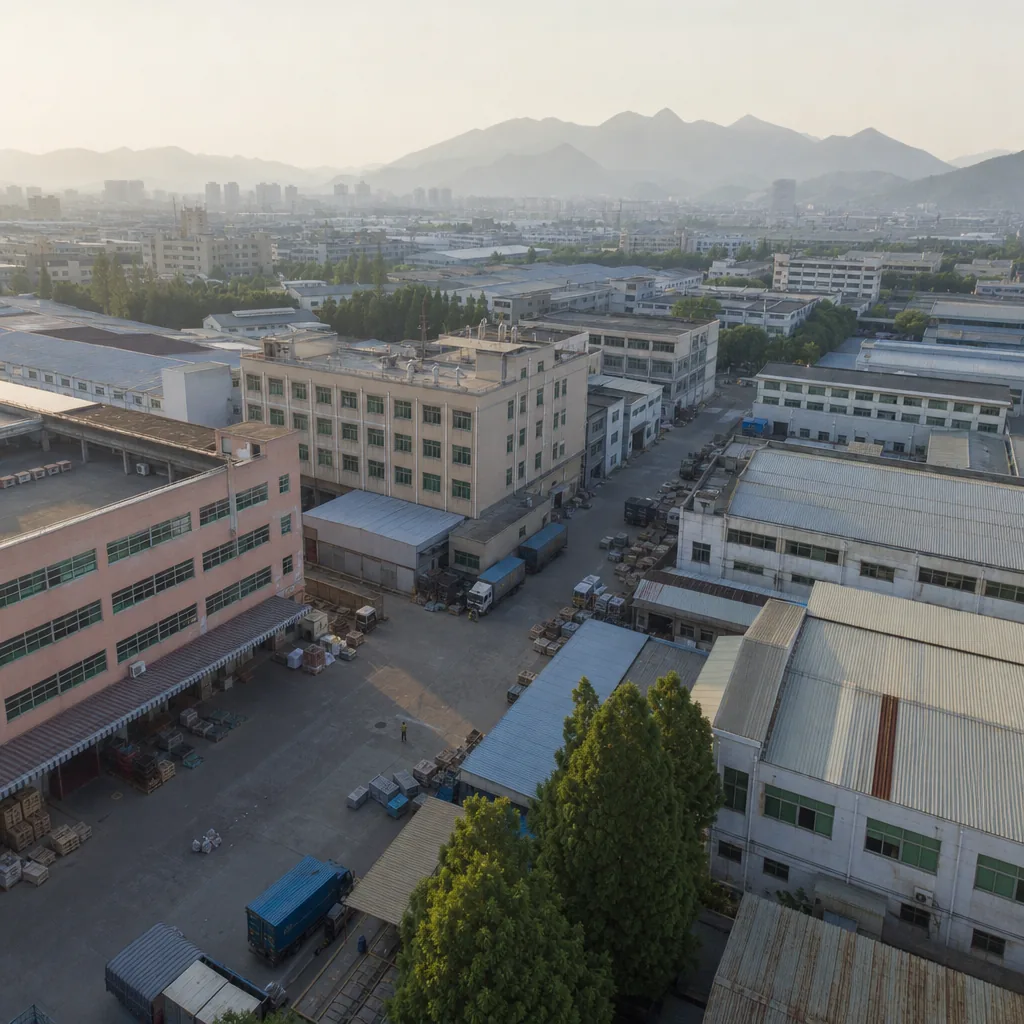
- Check the address. Real factories are in industrial zones (e.g. Yiwu International Commodity Industry Zone, Dongguan Pin Industry Park). Traders are often in office buildings or residential districts.
- Ask process-specific questions. “What’s your kiln temperature for soft enamel?” (180°C). “What plating thickness do you offer?” (0.5-5μm). A trader can’t answer these without checking with their supplier.
- Verify business registration. Real factories have a Chinese Business License showing manufacturing scope. Ask for the certificate; you can verify it on China’s National Enterprise Credit Information system.
Audit checklist
Once you’ve narrowed to 2-3 candidate factories, run this checklist before committing:
- ISO 9001 certification: The basic quality-management standard. Ask for the certificate.
- SGS or Sedex audit report: Independent third-party verification of operational scale and labor practice.
- REACH / RoHS / CPSIA test reports: Required for EU and US markets. Should be lab-issued and product-specific.
- Client references: Ask for 2-3 references in your region (US, EU, AU) that you can email directly.
- Sample order behavior: The biggest tell. Order a single sample at full price and see how it goes — communication quality, lead time accuracy, packaging care.
Payment terms that protect you
Standard Chinese factory payment terms are 30% deposit / 70% balance before shipment. Variations:
- Trade Assurance (Alibaba): Your money is held by Alibaba until you confirm receipt. Lowest risk for first orders, but Alibaba takes a small fee.
- Letter of Credit: Bank-issued guarantee — your bank pays the factory only when shipping documents are presented. Worthwhile for orders $20,000+.
- PayPal: Buyer-protected, but factories charge 4-5% extra to cover PayPal fees. Reasonable for small orders <$3,000.
- T/T (wire transfer): No buyer protection. Only use after you’ve verified the factory through other means and built trust through small orders.
Red flags
Walk away from any factory that:
- Refuses to send a factory video tour
- Quotes 30-50% below all other factories (likely substituting materials or using a different factory)
- Promises lead times under 10 days for orders above 500 pcs (likely outsourcing)
- Demands 100% prepayment for a first-time order
- Won’t provide independently verifiable ISO 9001 or SGS documents they claim to hold
- Has no English-language website or only an Alibaba storefront
How to verify after production
Before paying the 70% balance, you have leverage. Use it:
- Request shipping carton labels and master packing list
- Request 50-100 high-resolution photos of finished product from random positions in the batch
- Optionally schedule a 3rd-party inspection (SGS, BV, TUV) at $300-500/inspection — they go to the factory, randomly sample your batch, and email you a defect report
Before approving any supplier, ask which ISO 9001, SGS, REACH or RoHS documents apply to the order, then verify the issuer, date, product scope and facility name. Send ZheCraft your requirements so the quotation can list the documentation and inspection scope you need.
Ready to get this made?
Send your sketch, target quantity and ship-date. Detailed quotation in 12 hours.