Spinners, Danglers, and Sliders in Trading Pins: When to Use Each
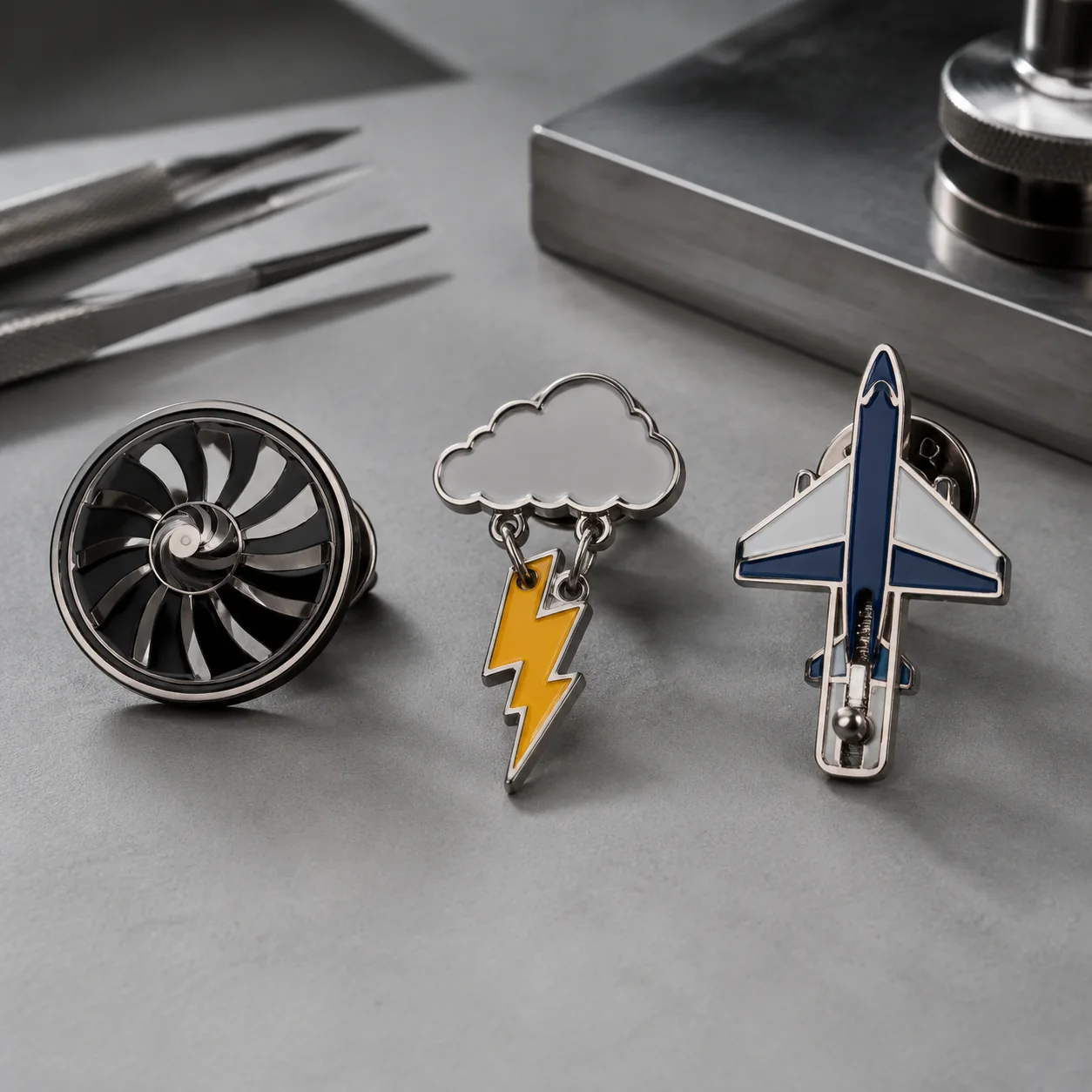
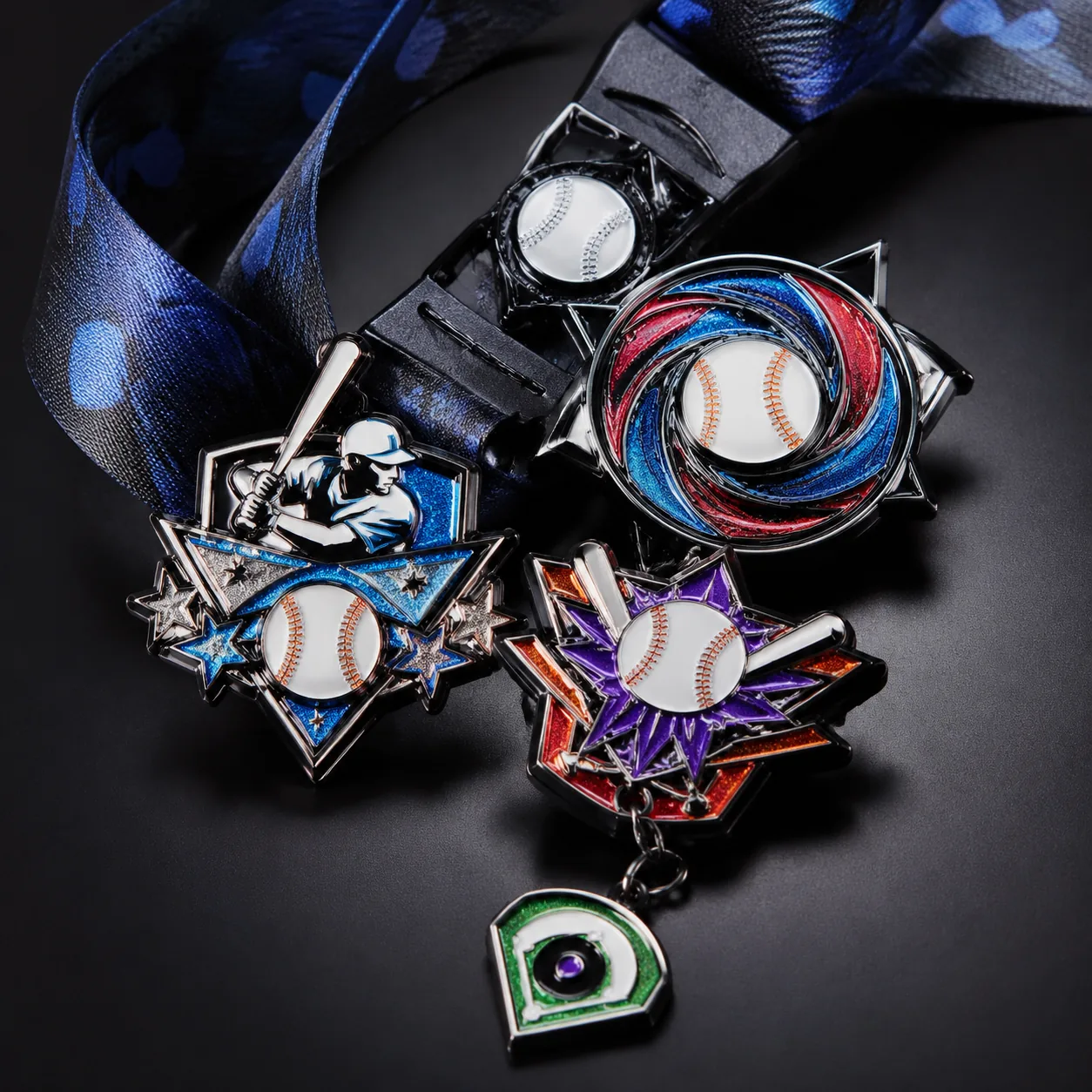
For most custom baseball trading pins, choose a spinner when motion is central to the artwork and the approved proof and sample show clear rotation space. Choose a dangler when the design needs a separate lower message and the hanging connection is acceptable on the sample. Choose a slider only when the artwork provides a clear travel path and the sample moves without sticking or contacting important decoration.
What Buyers Are Really Choosing
In trading pin spinners vs danglers, the practical decision is not simply which upgrade appears more eye-catching. Baseball and softball program buyers need to add movement without crowding the artwork or introducing a connection that is difficult to inspect. Custom trading pins are available in stated sizes from 1.5 inch to 2.5 inch, which gives teams more room than a standard lapel pin for bold artwork and an added feature. That added area also makes moving-part clearance, balance, and back attachment placement more important.
Soft enamel is the standard decoration for custom trading pins. Offset print and glitter enamel are also available, along with upgrades such as glow-in-dark effects, spinners, sliders, danglers, bobble-heads, stained-glass cutouts, and blinking LEDs. The base artwork should remain recognizable before a motion feature is added. A moving element should support the team identity, tournament message, or season theme rather than conceal it.
Start by assigning one clear job to the upgrade. A spinner can make a central ball, mascot, number, or emblem the focal point. A slider can show directional movement within the design. A dangler can carry information below the main pin that would otherwise make the primary shape too dense. When a design already includes a mascot, team name, year, sponsor, and tournament reference, one well-defined feature is generally easier to review than several competing effects.
Spinner, Slider, and Dangler Comparison
| Feature | Best use | Main trade-off | Sample and inspection focus |
|---|---|---|---|
| Spinner | A central ball, mascot, number, or emblem that benefits from visible rotation | Needs open space around the moving element | Confirm it rotates without contacting visible enamel, metal borders, or printed detail |
| Slider | An element that moves along a defined visual path | The travel area must remain clear and readable | Confirm it moves through the intended path without sticking or forcing |
| Dangler | A lower piece for a team name, sponsor, year, tournament, or slogan | Adds a hanging connection and more vertical footprint | Confirm the lower element hangs cleanly, remains legible, and has an acceptable connection on the approved sample |
This comparison is a design and inspection guide, not a published mechanical specification. The supplied product facts do not state required clearance dimensions, joint pull ratings, or a formal test method for motion features. Buyers should use the artwork proof and sample to establish acceptance expectations for the selected design before authorizing bulk production.
Use a Spinner When Motion Is the Focal Point
A spinner is most appropriate when the moving element is meant to draw attention first. A baseball, softball, mascot head, player number, or team emblem can work well when the surrounding artwork leaves a clear rotation zone. Within the supported 1.5 inch to 2.5 inch size range, avoid placing critical lettering, narrow borders, or small printed details where the spinner may pass over them. The proof should show the spinner position clearly enough for the buyer to identify which elements may be covered during rotation.
The spinner should reinforce the design rather than compete with it. Soft enamel provides the standard color structure, while glitter enamel can add contrast where it supports the team identity. Offset print is available, but small printed detail merits careful proof review when it is close to a moving element. Buyers should also review back attachment placement because an off-center feature can affect how the finished pin presents on a lanyard or garment.
Use a Dangler When You Need a Second Message
A dangler is useful when the main pin cannot carry every required message cleanly. Team identity can remain on the primary shape while the lower element carries a season year, tournament name, sponsor line, player number, or short slogan. This can preserve larger, more readable artwork on the main pin while adding movement and a distinct trading-pin profile.
The trade-off is the lower connection. Treat it as a functional review point, not only a decorative detail. On the sample, check whether the lower piece has room to hang and move without obscuring required text or repeatedly contacting the main pin. Review the overall hanging footprint as well as the stated base-pin size so the finished piece remains practical to display with other trading pins.
Use a Slider Only With a Clear Path
A slider is appropriate when movement across a defined path is part of the visual idea. It may suit a ball moving across a field line or a mascot traveling through a graphic zone. Unlike a spinner, the movement is directional, so the surrounding artwork needs room along the complete path rather than only around a central pivot area.
Do not approve a slider solely because it adds motion. The moving element should remain recognizable at each intended position, and it should not hide important lettering or decoration. The proof should make the travel path clear, and the sample should confirm that the feature moves as expected before the buyer approves bulk production.
Specification Details That Control Risk
The stated product specification gives buyers fixed points for an RFQ: soft enamel is standard; offset print and glitter enamel are available; size is 1.5 inch to 2.5 inch; and thickness is 1.2mm to 1.5mm. Listed finish options are gold, silver, black nickel, antique, and dyed-black, with dyed-black popular for contrast. Butterfly clutch is the standard attachment, with rubber clutch also available. MOQ is 100 pieces per design, and the listed price range is $0.45 to $2.50 per piece FOB.
- Set the base size within the supported 1.5 inch to 2.5 inch range before adding motion.
- Confirm soft enamel, offset print, and glitter enamel areas on the proof.
- Select plating deliberately, including dyed-black when contrast is the design goal.
- Use one primary motion feature unless the approved layout clearly supports more.
- Mark areas that must remain free of moving parts, text conflicts, and visible contact.
- Review back attachment placement for how the pin will present when worn or displayed.
- Allow the stated 5 to 7 days for a sample and 15 to 22 days for bulk production.
- Confirm that every design version meets the 100-piece MOQ.
Inspection Points Before Bulk Approval
The inspection focus for motion trading pins is clearance, connection condition, balance, and finish appearance. Because no load rating or standardized joint-strength result is supplied, do not represent a spinner, slider, or dangler as having a specific strength capacity. Instead, define the expected feature behavior in the approved proof and use the sample to determine whether the construction and appearance are acceptable for the program's intended trading use.
Check clearance by operating the feature through its intended movement. Rotate a spinner and look for contact with visible decoration. Move a slider along its full path and look for binding. Let a dangler hang naturally and check whether it covers required information or contacts the main pin in a way that affects the visible finish. Separately inspect the selected back clutch and its placement, since the back attachment and the motion connection are different parts of the finished pin.
- Verify that the selected feature, artwork, plating, and attachment match the approved proof.
- Confirm spinner rotation does not visibly scrape, block, or cover critical design elements.
- Confirm slider movement across the intended path does not stick or require force.
- Confirm that the dangler hangs below the main pin without covering required text.
- Review the motion connection for visible condition and consistency on the sample.
- Check whether the pin hangs awkwardly when supported by the back attachment area.
- Review the approved finish appearance for gold, silver, black nickel, antique, or dyed-black.
- Confirm order quantity and design count against the 100-piece-per-design MOQ.
Cost and Timing Implications
The listed price range for custom trading pins is $0.45 to $2.50 per piece FOB. Spinners, sliders, and danglers are listed upgrades, but the supplied facts do not support a fixed per-feature price. Request final pricing against the complete specification: size, decoration, plating, attachment, quantity, and selected upgrades. When cost control matters, ask for the same artwork to be quoted with and without the proposed motion feature.
The stated sample lead time is 5 to 7 days, followed by 15 to 22 days for bulk production, with rush options before season. Count backward from the date pins must be in hand for a Cooperstown trip, Disney-area tournament, Little League event, or travel-team season. Motion designs need sample-review time because a clearance, legibility, or balance issue may require an artwork revision before bulk approval.
Recommended Buying Decision
Choose a spinner when the moving element is the visual focus and the sample confirms open rotation clearance. Choose a dangler when the program needs a separate lower message and accepts the added need to inspect the hanging connection and total footprint. Choose a slider when the artwork has a clear, readable travel path and the sample shows the element moves without sticking. If the design is already dense, bold soft-enamel color, glitter enamel, or dyed-black contrast may add more value than another moving part.
For many baseball and softball programs, a practical specification is a 1.5 inch to 2.5 inch soft-enamel trading pin, 1.2mm to 1.5mm thick, with one primary motion upgrade, a defined finish, and the selected back attachment. Tie the upgrade to a clear purpose: spinner for focal action, slider for directional movement, and dangler for extra information. This keeps the feature decision connected to artwork readability and sample inspection rather than novelty alone.
Prepare an RFQ for custom baseball trading pins at /products/trading-pins.html with artwork, target size, plating, attachment, quantity, tournament deadline, and one selected motion option. Request a sample and approve moving-part clearance, connection condition, balance, and finish appearance before bulk production begins.
Ready to get this made?
Send your sketch, target quantity and ship-date. Detailed quotation in 12 hours.