Pet ID Tag Engraving Layout: Space for Names and Contact Details
Use the largest practical tag within the typical 20-35 mm range, reserve the most visible face for the pet name, and use double-sided engraving to separate the name from an owner phone number. Do not approve copy from character count alone: the selected shape, size, decoration, and attachment all need to be specified before the layout is confirmed.
Set the Information Hierarchy First
A pet ID tag engraving layout should begin with the information a finder needs to identify the pet and contact its owner. The supplied product format supports a practical two-part structure: a pet name on one face and an owner phone number on the other. For pet retailers, veterinary distributors, groomers, and in-store engraving programs, this gives store associates and customers a clear default when they select variable engraving data.
The goal is not to force the greatest possible number of lines onto a small tag. It is to retain a readable hierarchy after the selected shape, size, and finish are applied. Put the item intended to be read first on the most immediately visible face, then assign the contact detail to the reverse when double-sided engraving is selected. Treat additional information as a separate layout decision, not as automatic overflow.
Character height should be an approval requirement, not an assumed production value. The available product facts do not provide a minimum character height, safe engraving area, font specification, or maximum character count. A name, phone-number format, spacing, punctuation, and tag geometry all affect the finished result. Buyers with an internal typography standard should include it in the request; other buyers should submit representative inscription data for review on the selected tag configuration.
- Put the pet name and owner phone number in priority order before choosing decorative treatments.
- Use the exact inscription format, including spaces, punctuation, and country or area-code conventions, for layout review.
- Keep the name and phone number as distinct information groups so one or two sides can be used deliberately.
- Do not set one universal character limit for every available tag shape.
Choose Tag Geometry Before Locking the Copy
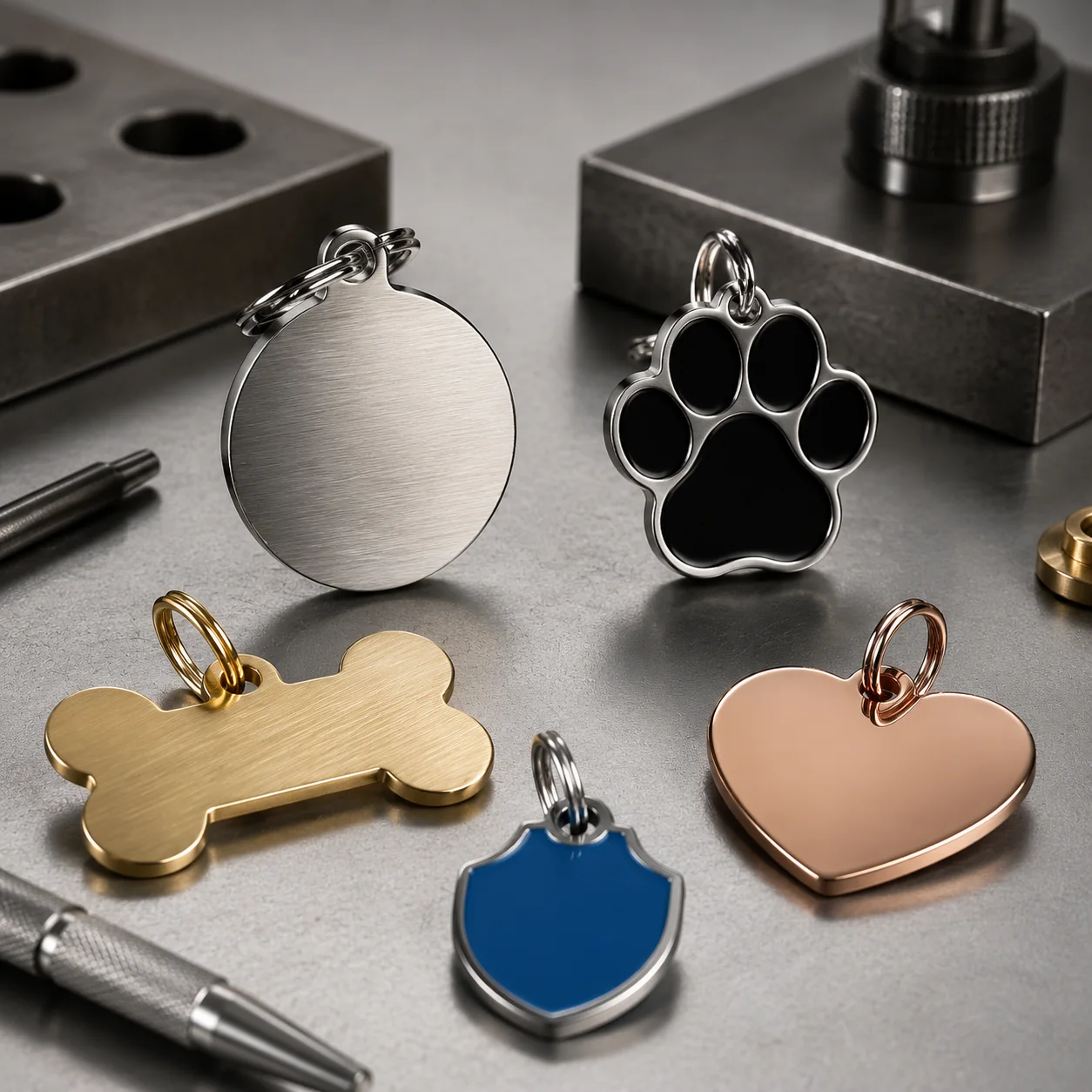
Typical tag sizes are 20-35 mm, with small, medium, and large options for collar size. Available shapes include bone, round, heart, tag, paw, and custom die-cut outlines. These outside dimensions and silhouettes do not create a universal engraving-capacity chart. A round tag, a long bone outline, and a custom die-cut shape present different text fields, even where their overall dimensions are similar.
Select the intended outline and size before finalizing the inscription. A smaller tag may suit a smaller collar, while a larger option provides a different overall field for the same name and phone number. Do not infer usable engraving dimensions from the outside measurement alone. The supplied facts do not include engineering drawings, attachment-point dimensions, margins, or shape-specific text templates.
| Layout priority | Geometry decision | Buyer instruction |
|---|---|---|
| Compact identification | Choose an outline and size within the typical 20-35 mm range after reviewing the actual inscription. | Provide the exact pet name and owner phone number; do not approve by character count alone. |
| Standard retail assortment | Choose bone, round, heart, tag, or paw, then assign the relevant small, medium, or large collar option. | Keep a consistent information hierarchy, but confirm each tag size separately. |
| Brand-led silhouette | Use a custom die-cut outline where the shape is part of the product identity. | Request a layout review using the final outline and required identification text. |
| Two-sided layout | Choose the shape and size with the front and reverse copy at the same time. | Give each side a defined purpose instead of using the reverse as unplanned overflow. |
For personalized pet id tags for dogs, an effective assortment is one where the expected name and phone-number formats can be handled consistently. Decorative variety can support merchandising, but artwork approval should still be based on the final shell design, tag size, and variable inscription data.
Use Two Sides to Separate Names and Numbers
Single-sided and double-sided engraving are both available. Single-sided engraving can suit an order with limited approved identification content, provided the selected size, shape, and text have been reviewed together. Double-sided engraving is the more direct option when the program requires both a pet name and an owner phone number, because it separates those two core information groups across the available faces.
| Configuration | Information structure | Decision trade-off |
|---|---|---|
| Single-sided engraving | Place only the approved identification content on one face. | All information shares one surface, so the exact text and selected geometry need review together. |
| Double-sided engraving | Use one face for the pet name and the other for the owner phone number. | The two core fields are separated, but each side still needs an intentional layout. |
| Branded epoxy-dome front | Use an epoxy-dome printed front for full-color pet-brand artwork where that decoration is selected. | Define which face carries artwork and which face carries identification before ordering. |
| Soft enamel presentation | Use soft enamel color fill where a branded color treatment is required. | Do not treat a color treatment as proof of text capacity; review the inscription layout separately. |
The supplied facts specifically identify a name-plus-phone arrangement for double-sided tags. If a buyer requires information beyond those two fields, the available facts do not establish readable fit. Submit the additional copy for confirmation on the final tag size and outline before making it part of a standard SKU.
This structure also supports controlled kiosk and retail workflows. Blank shells can be supplied in bulk, while names are engraved per piece. Order instructions should identify the standardized shell artwork separately from the variable name and phone-number data, with each record matched to the correct tag design.
Match Material and Decoration to the Product Program
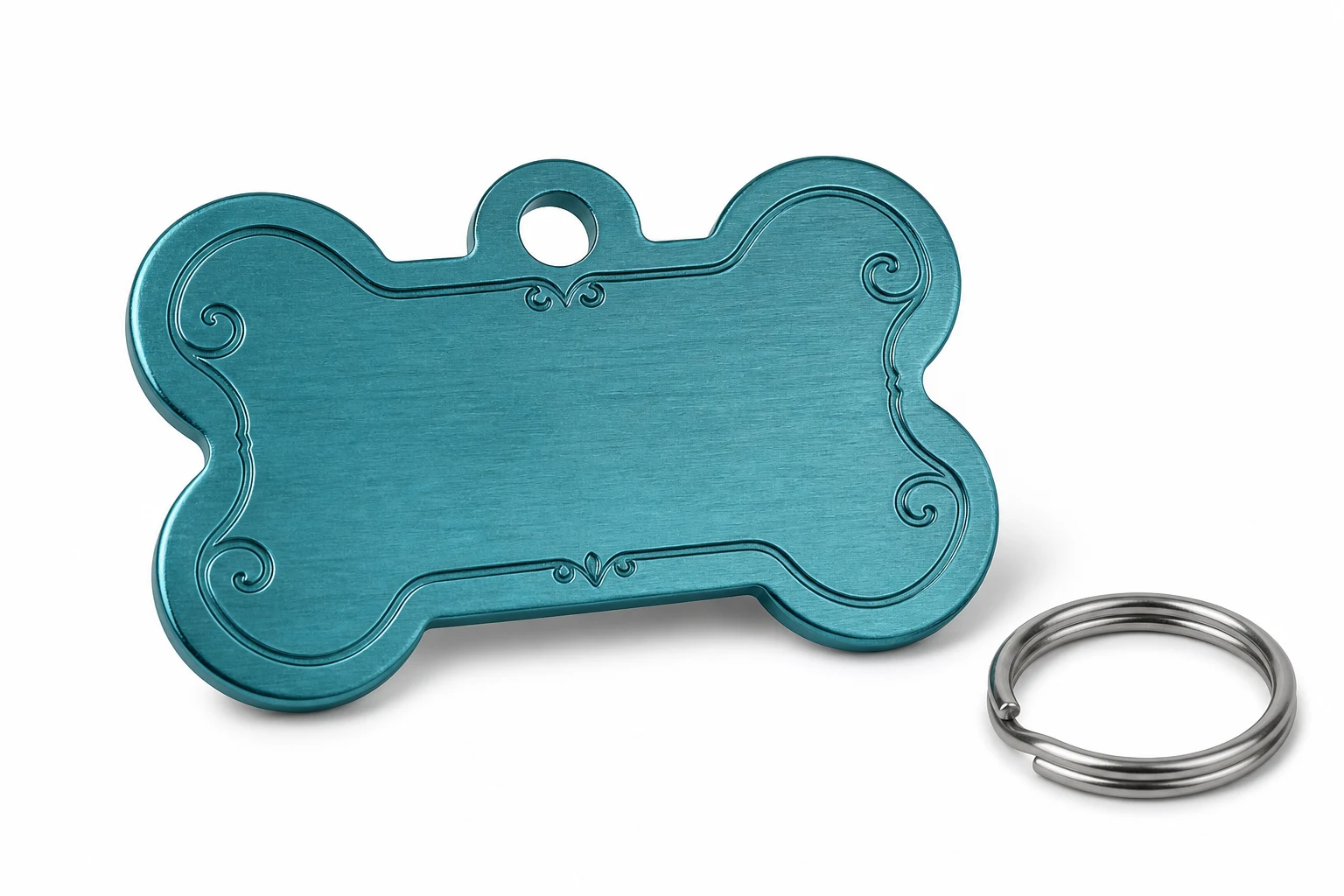
Available materials are stainless steel, brass, anodized aluminum in color, and zinc-alloy with enamel. The material decision should support the program's appearance, collar use, and price position without replacing the need for inscription review. Stainless steel and brass are described as more premium in feel and resistant to wear from a busy collar. Anodized aluminum is described as light, rust-proof, and available in eight collar-matching colors.
| Material or treatment | Supported product fact | Layout implication |
|---|---|---|
| Anodized aluminum | It is light, rust-proof, and available in eight collar-matching colors. | Select the color as part of the SKU, then review the final name and phone layout on the selected size. |
| Stainless steel or brass | Both are available materials and are described as more premium in feel and resistant to wear from a busy collar. | Confirm the selected shape, size, and wording before completing the specification. |
| Zinc-alloy with enamel | It is an available material and finish combination. | Define the readable identification layout independently from the enamel presentation. |
| Deep laser engraving | It is an available decoration method. | Specify the approved content and whether engraving is single-sided or double-sided. |
| Epoxy-dome print or glitter | Both are available decoration options; an epoxy-dome printed front is identified for full-color artwork. | Assign decorative artwork to a defined face before placing name and phone information. |
Do not calculate a configuration-specific unit price from the published $0.20-$1.40 per piece FOB range. The available facts do not allocate price by material, size, shape, decoration, attachment, side count, or individual engraving data. Use the range as an initial sourcing reference and request a quote for the complete specification.
Specify the Attachment With the Artwork
Attachment is part of the tag specification. The default option is a split ring, with S-hook, screw-on, and slide-on collar styles also available. Select the attachment for the intended collar presentation and include it in the same SKU record as the shape, size, material, decoration, and engraving sides.
The supplied facts do not provide split-ring gauge, attachment dimensions, slide-on collar measurements, screw-on dimensions, or compatibility limits. Do not add those details to product copy or purchase documentation without separate confirmation. When the tag must work with a specific collar format, state that requirement and request confirmation for the chosen attachment.
- State split ring when the default attachment is required.
- Specify S-hook, screw-on, or slide-on collar style when the program needs an alternative.
- Keep the selected attachment tied to the relevant shell design and tag-size SKU.
- Request confirmation for any collar-specific compatibility requirement.
Build a Procurement-Ready Engraving Specification
A controlled specification lets retailers, veterinary distributors, pet brands, and engraving kiosks source blank shells without losing control of individual engraving data. The stated MOQ is 100 pieces per design for blank shells, while names can be engraved per piece. The shell design is therefore the MOQ unit, while the inscription can vary from tag to tag.
Listed lead times are 4-6 days for a sample and 10-15 days for bulk production. Use these as planning inputs, then confirm the production schedule for the selected configuration. The available facts do not state whether those periods include freight, retail packaging, data preparation, or buyer-specific handling requirements.
- Record the shape: bone, round, heart, tag, paw, or custom die-cut outline.
- Record the finished tag size within the typical 20-35 mm range and the intended collar-size category.
- Select stainless steel, brass, anodized aluminum, or zinc-alloy with enamel.
- Select deep laser engraving, soft enamel color fill, epoxy-dome print, glitter, or the approved combination.
- Specify single-sided or double-sided engraving and the exact content for each face.
- Provide representative and final pet-name and owner-phone data, including punctuation and spacing.
- Record split ring, S-hook, screw-on, or slide-on collar style.
- State the blank-shell quantity by design and confirm each design meets the 100-piece MOQ.
- Use the 4-6 day sample and 10-15 day bulk ranges for planning, then confirm the order-specific schedule.
- Add any required packing, labeling, and incoming-inspection requirements separately.
Submit One Complete Layout Request
Submit one complete configuration rather than a general request for more engraving space. Provide the chosen outline, target size within the 20-35 mm range, material, decoration, side count, attachment, and actual name and phone-number format. For double-sided engraving, label the intended content for each face. For branded programs, state whether an epoxy-dome printed front or enamel-focused presentation is required.
For personalized pet id tags for dogs, start the product inquiry at /products/pet-id-tags.html with the blank-shell design quantity and individual engraving-data approach. Use the 100-piece MOQ per blank-shell design and the published sample and bulk lead-time ranges to frame the order. Request layout confirmation against the final geometry before approving production, and treat packing, labeling, inspection, and collar-compatibility requirements as separate specifications.
Ready to get this made?
Send your sketch, target quantity and ship-date. Detailed quotation in 12 hours.