Patch Detail Limits: Thread, Weave, and Molded PVC at Small Sizes
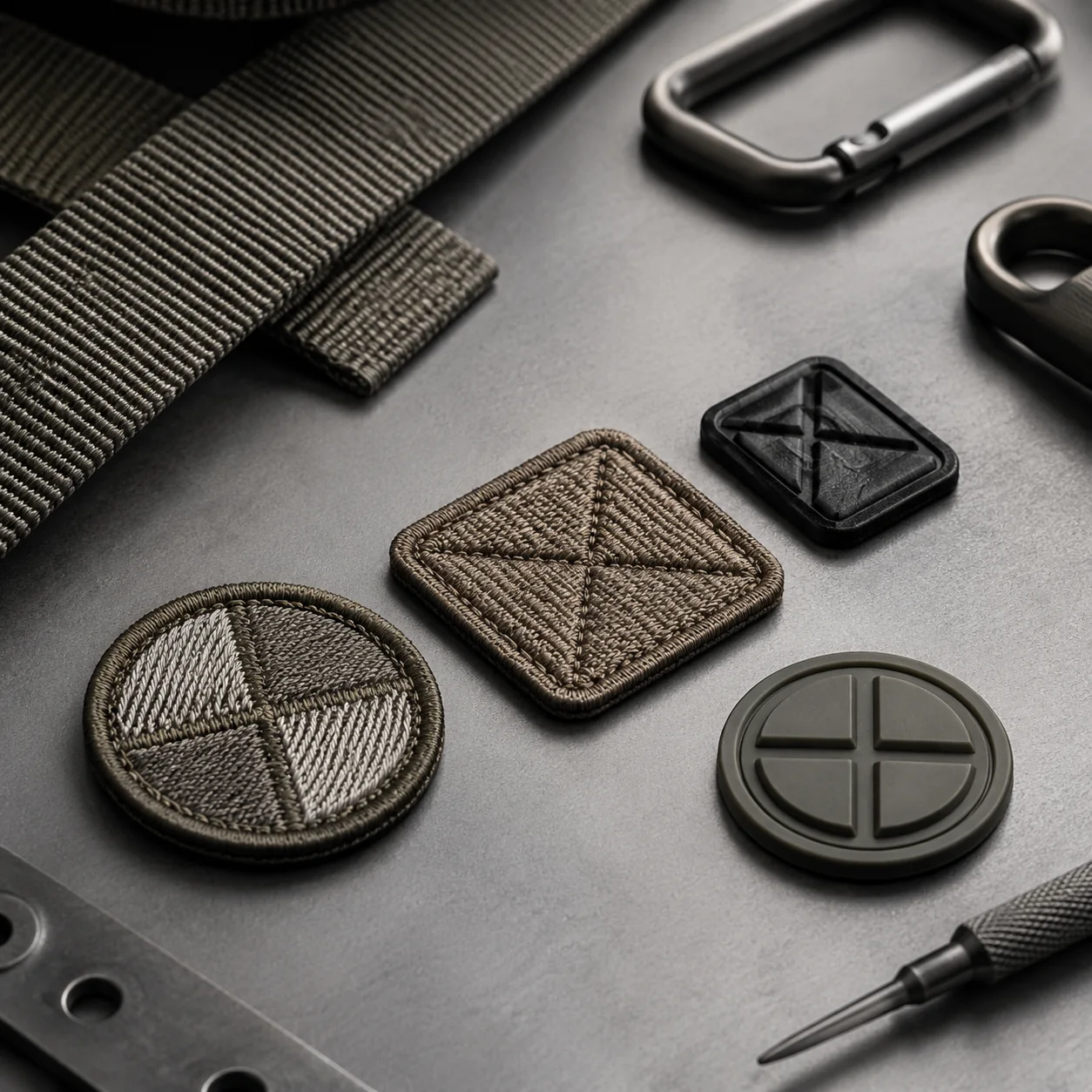
The supplied specifications do not define a universal numerical patch minimum detail size, so small lettering or line art should not be approved from a size claim alone. When preserving fine detail is the primary decision, review woven patches first because their thinner loom threads resolve much finer detail and small text than embroidery. Select PVC rubber when crisp 2D or 3D molded relief and outdoor or tactical use are the priority, and select dye-sublimated patches for photographic full color, gradients, or complex artwork. Confirm the final result with a supplier-approved production sample before bulk production.
Choose Construction Before Setting Detail Expectations
A patch minimum detail size is not a single number that applies across every construction. The available product specifications identify embroidered, woven, PVC rubber, printed or dye-sublimated, chenille, and leather patches, but they do not publish a universal minimum stroke width, letter height, spacing rule, or molded-relief tolerance. For apparel brands and clubs, the first procurement decision is therefore construction, followed by artwork review at the intended finished patch size.
For small lettering and fine line art, woven is the evidence-led first construction to review. The product facts state that woven patches use thinner threads on a loom and therefore resolve much finer detail and small text than embroidery would. Embroidery remains a core option when the desired result is thread stitched onto a twill backing, but its coverage choice changes the visible surface: at 50% coverage, the logo remains visible on twill; at 100% coverage, no backing shows. PVC rubber is the choice for a molded patch with crisp 2D or 3D detail, while dye-sublimation is the route for photographic full color, gradients, and complex artwork that thread cannot reproduce.
Use the standard 2-4 inch patch range as the starting format for review, or specify a larger format when appropriate, since back patches can be made up to 12 inches. Do not treat the standard size range as proof that every letterform will remain clear. The final artwork, construction, border choice, and approved sample must be reviewed together.
Construction Comparison for Small Lettering and Line Art
| Construction | Best-supported detail decision | Relevant stated features | Trade-off to manage |
|---|---|---|---|
| Embroidered | Use when the patch should have a stitched thread-on-twill appearance rather than when the smallest text is the leading requirement. | Polyester thread is standard. Embroidered patches can use 50-100% coverage and up to 9 thread colors. | At 50% coverage, the logo is visible on twill; at 100% coverage, no backing shows. Woven is stated to resolve finer small text. |
| Woven | Use for small lettering and fine detail that embroidery would blur. | Thinner threads are used on a loom. Colors are unlimited for woven patches. | The decision prioritizes woven detail and color capacity instead of an embroidered coverage level. |
| PVC rubber | Use for crisp molded 2D or 3D detail, especially for tactical or outdoor-oriented patch programs. | PVC rubber patches are described as waterproof, UV-stable, dishwasher-tough, and capable of crisp 2D or 3D molded detail. | The artwork must be planned as molded relief rather than selected for photographic full-color reproduction. |
| Printed or dye-sublimated | Use when gradients, photographic full color, or complex artwork are more important than a thread-based interpretation. | Dye-sublimated patches provide photographic full color and can reproduce gradients and complex artwork that thread cannot reproduce. Colors are unlimited for printed patches. | This construction solves color and image complexity through printing rather than woven thread detail or molded relief. |
Embroidery: Coverage Is Part of the Detail Decision
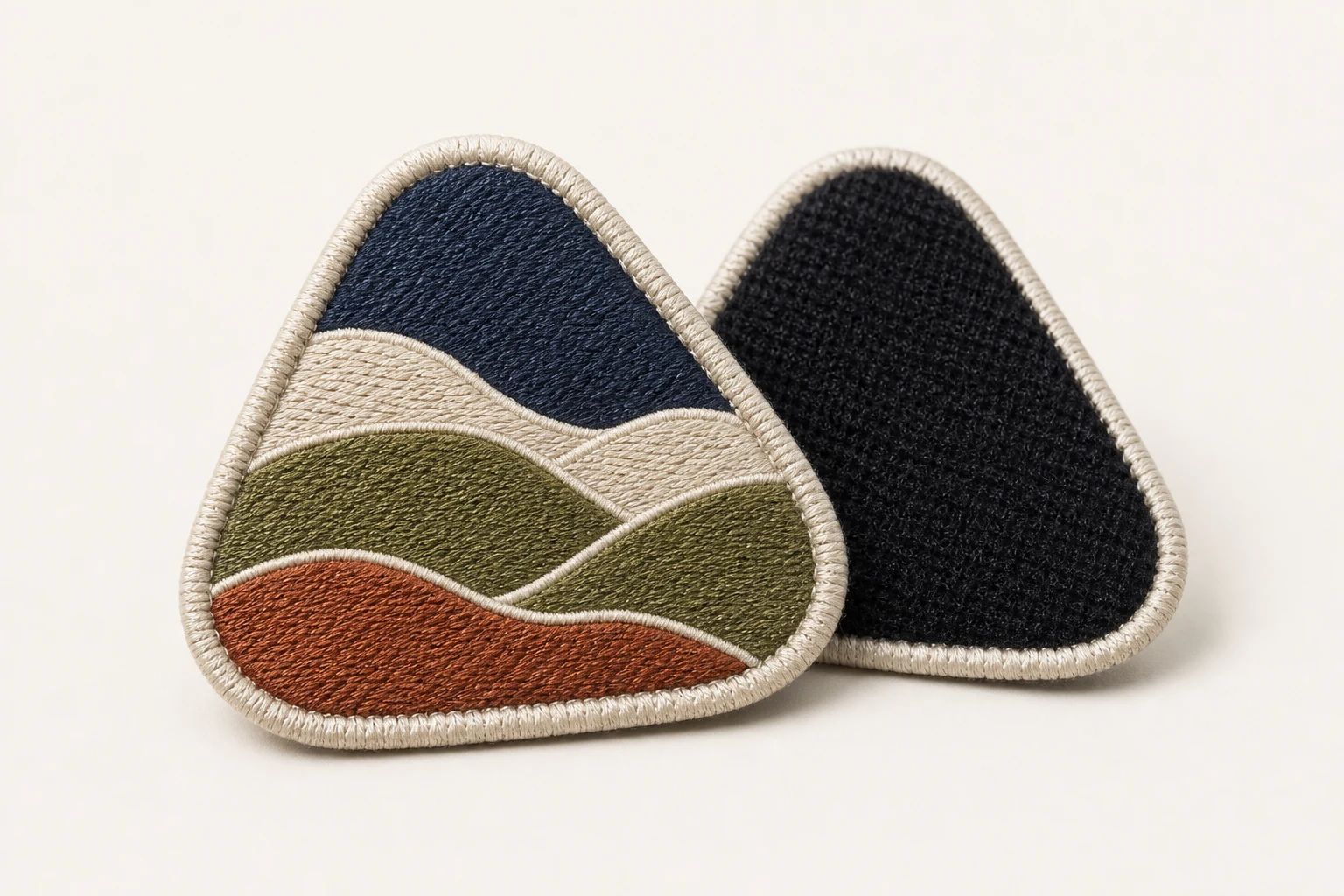
Embroidery is described as the workhorse construction: thread is stitched onto a twill backing. Its 50-100% coverage range gives buyers a visual specification to lock before sampling. A 50% coverage patch leaves the twill visible around the logo, while a 100% coverage patch leaves no backing showing. This is a meaningful appearance decision for uniform, workwear, cap, jacket, bag, club vest, and fashion patch programs.
It is also the main reason not to use a generic patch minimum detail size across constructions. The supplied facts directly distinguish embroidery from woven work: woven patches resolve much finer detail and small text that embroidery would blur. If an embroidered design contains small lettering, narrow separated elements, or line art that must stay distinct, compare the digitized embroidered interpretation against a woven alternative rather than assume that increasing thread coverage will create woven-level resolution.
Color planning belongs in the same discussion. Embroidered patches support up to 9 thread colors, with polyester as the standard thread and metallic, glow-in-dark, and neon thread options available. Those thread choices describe the available visual materials, but they do not replace artwork review. If a design needs more than nine colors, gradients, or photographic imagery, the supplied specifications point toward woven or printed construction, both of which have unlimited colors.
Woven Patches Are the Direct Route for Fine Text
For the specific decision of preserving small lettering and fine line art, woven patches have the strongest stated advantage. They use thinner threads on a loom, and the product description explicitly says they resolve much finer detail and small text that embroidery would blur. That makes woven the first construction to review when a club badge includes a compact name, a garment label needs small legible information, or a logo relies on thin internal lines.
Woven construction also allows unlimited colors under the supplied specifications. That removes the embroidered limit of up to nine thread colors, but it does not eliminate the need to establish the exact final artwork and finished size. Provide the intended patch dimensions and ask for the design to be evaluated as woven at those dimensions. The supplied facts mention free digitizing and a sewn-out sample before bulk production; confirm the applicable sample process and approval criteria with the supplier for the selected construction.
Chenille and leather are included among the available patch types, but the supplied facts do not describe their small-text or fine-line performance. An evidence-led specification should therefore not assign them a minimum-detail capability that has not been provided. Use them only after obtaining a construction-specific artwork review rather than treating them as equivalents to woven, embroidery, PVC rubber, or dye-sublimation for this decision.
PVC Relief and Dye-Sub Color Solve Different Artwork Problems
PVC rubber should be selected for a different visual and use-case requirement: crisp 2D or 3D molded detail. The stated product characteristics also make it relevant to outdoor and tactical gear because it is waterproof, UV-stable, and dishwasher-tough. For custom morale patches intended for swappable tactical placement, PVC can be specified with a hook-and-loop backing.
Molded relief should be specified as an intentional part of the design. The available facts support crisp 2D or 3D detail, but they do not provide a numerical minimum for relief widths, recessed lines, or tiny lettering. Identify which artwork elements are intended to be raised or recessed, then use the approved sample stage to verify that the molded interpretation retains the required information.
Dye-sublimated patches answer another design problem: photographic full color, gradients, and complex artwork that thread cannot reproduce. Where the artwork depends on tonal transitions or an image rather than discrete thread or molded shapes, dye-sub is the supported choice. It also has unlimited colors. The trade-off is not a published quality ranking between methods; it is a choice between the specific result each construction is described to produce: stitched thread, woven fine detail, molded relief, or printed full-color imagery.
Set Size, Border, and Artwork Review as One Specification
Typical patch size is 2-4 inches, while back patches can reach up to 12 inches. Record both intended width and height in the request because a design that works at a larger back-patch format should not automatically be treated as suitable for a small cap, uniform, tactical, or club patch. The supplied information does not state a numerical conversion between finished size and readable lettering, so finished dimensions must be part of the artwork decision rather than a later purchasing detail.
The border must be named as well. Available choices are a merrowed, or overlock, edge and a hot-cut or laser-cut edge. These are different edge specifications, so do not leave the border implied by an artwork file. The facts do not quantify how either border changes a minimum line or text limit. For a design with artwork close to the perimeter, provide the intended border choice when requesting the sample and check the edge treatment on the approved interpretation.
Artwork simplification should be a controlled response, not a default instruction. First determine whether woven construction can preserve the small text, whether PVC relief is the desired effect, or whether dye-sublimation better represents the full-color artwork. Simplify only elements that remain unclear in the selected construction and finished size. This avoids stripping useful brand or club information from an artwork file before the construction has been matched to the problem.
Practical Buyer Checklist Before Bulk Approval
- State the finished patch width and height. Use the 2-4 inch standard range as a reference point, or specify a back-patch format up to 12 inches.
- Identify every small lettering group and fine line that must remain recognizable in the final patch.
- Choose the construction first: embroidered for a thread-on-twill patch, woven for finer small text, PVC rubber for 2D or 3D molded detail, or dye-sublimated for photographic full color, gradients, and complex artwork.
- For embroidery, state whether the requirement is 50% coverage with visible twill or 100% coverage with no backing showing.
- Count embroidered thread colors against the stated limit of up to 9. Use the unlimited color capacity of woven or printed patches when the artwork requires it.
- Specify the edge as merrowed or hot-cut or laser-cut rather than leaving the border open.
- Select the backing for the use: iron-on heat-seal for one-time application, hook-and-loop for swappable morale patches, sew-on for jackets and bags that receive heavy laundering, or adhesive where required.
- Request and approve a production sample before bulk production. The supplied facts mention free digitizing and a sewn-out sample; confirm the process for the selected patch construction.
- Confirm the order quantity meets the 100-piece MOQ per design and plan around the stated 5-7 day sample lead time and 12-20 day bulk lead time.
- Use the stated category price range of $0.25-$2.20 per piece FOB as context, while requesting a final specification-based quotation for the chosen patch build.
Move From Artwork to an Approval-Ready Patch Request
Submit the artwork with finished dimensions, the small lettering and line-art elements marked as critical, the selected construction, border, and backing. For a detail-led decision, request woven first when small text is central; request PVC when molded 2D or 3D relief and tactical durability are central; and request dye-sublimation when photographic color or gradients are central. Start the specification request for custom morale patches at /products/custom-patches.html, then approve the applicable production sample before authorizing the 100-piece-or-more bulk order.
Ready to get this made?
Send your sketch, target quantity and ship-date. Detailed quotation in 12 hours.