Money Clip Spring Tension Test: Material, Bend Radius, and Cycle Tests
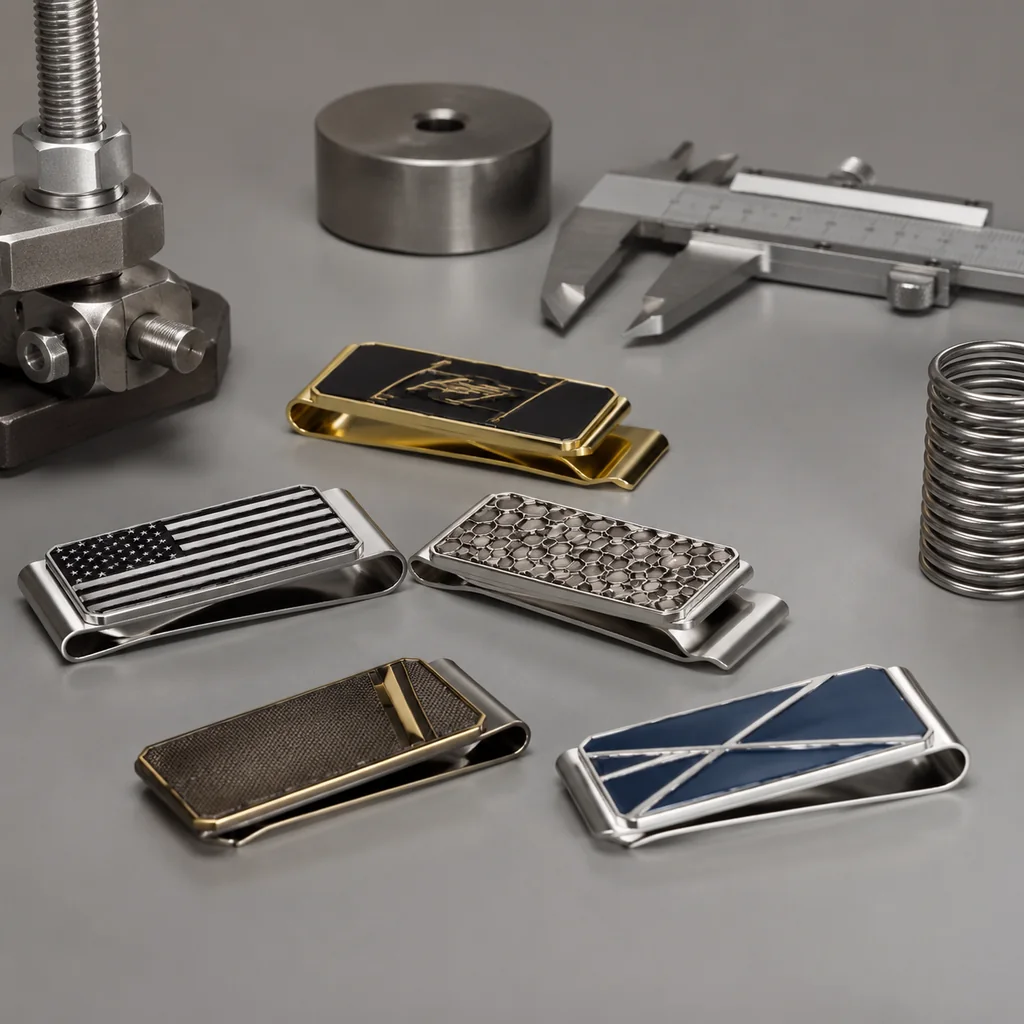
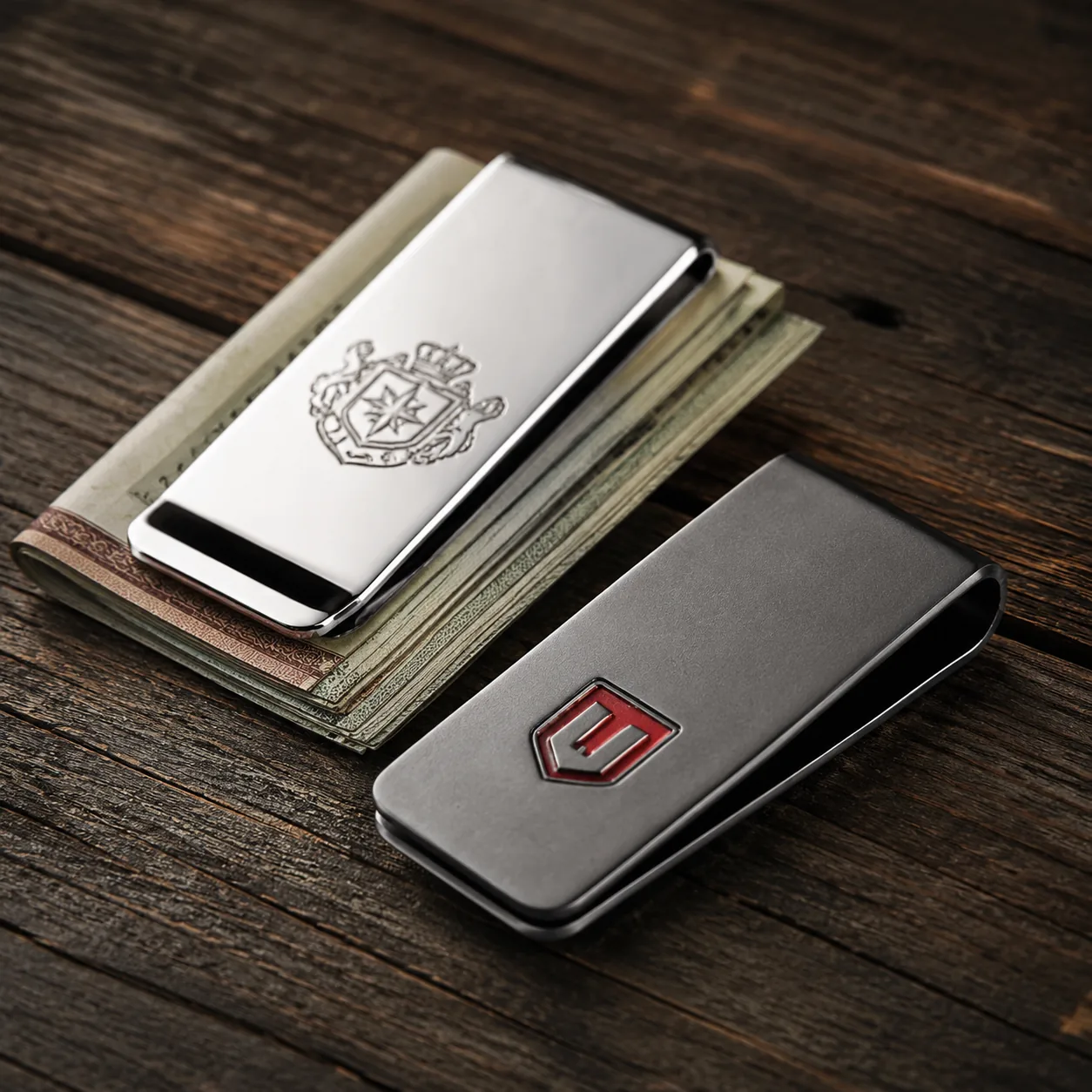
A money clip spring tension test should confirm that a production-intent clip holds defined light, nominal, and maximum note stacks without unacceptable permanent deformation. Measure the initial mouth gap, load and unload each defined stack, repeat the agreed cycle sequence, and compare the recovered gap and retention performance with numeric acceptance limits. Record the finished material thickness, inside bend radius, clip style, edge condition, and finish appearance. Stainless steel is the preferred starting point in this range when spring tension is the priority, but the final grade, material condition, thickness, geometry, and decoration still require testing.
What Buyers Need to Decide
The key decision is whether a personalized money clip can hold different note stacks without taking an unacceptable permanent set. A sample that feels strong during one handling check may still remain open, lose retention, mark the notes, or show finish damage after repeated loading. Approval should therefore compare measurable pre-test and post-test conditions.
Define the intended use before requesting samples. A slim executive gift may carry a light stack, while a retail accessory may encounter thicker stacks and more frequent handling. Specify low, nominal, and maximum stack conditions by both note count and measured compressed thickness. Recording thickness as well as count reduces variation caused by currency, paper condition, wear, and humidity.
Material Thickness and Spring Behavior
Available base metals include stainless steel, brass, and zinc-alloy. Stainless steel is the preferred option in this range when spring tension is the priority. However, stainless steel is a family of materials rather than a complete engineering specification. Ask the supplier to record the proposed grade or alloy designation, material condition or temper where available, finished thickness, and thickness tolerance on the approved drawing or sample record.
Thickness strongly affects stiffness, but a thicker clip is not automatically better. Excessive stiffness can make note insertion difficult, while insufficient stiffness can reduce retention. Bend geometry, free gap, contact length, material condition, and forming consistency also affect performance. Brass should be validated in the final geometry when a warmer plated appearance is preferred. A zinc-alloy listing alone does not establish that a component is suitable for repeated flexing.
| Program priority | Starting specification | Evidence required before approval | Main trade-off |
|---|---|---|---|
| Reliable spring hold | Stainless steel folded or tension clip | Final grade or condition if available, thickness, bend radius, residual gap, and cycle results | High stiffness can increase insertion effort if the geometry is not balanced |
| Warm gold or rose-gold presentation | Brass in the final plated finish | Spring-back and finish inspection on the production-intent sample | Appearance cannot substitute for recovery evidence |
| Zinc-alloy construction | Supplier-defined final construction | Identify the load-bearing component and test that exact assembly | The base-metal category does not establish spring suitability |
| Magnetic closure | Magnetic clip | Separate closure-alignment and retention tests | Magnetic hold is not evidence of metal spring-back |
Bend Radius, Clip Style, and Spring-Back
A folded spring clip depends on the relationship between material thickness, inside bend radius, leg length, free gap, and contact point. A very tight bend may increase forming strain and the risk of cracking or finish distress. A larger bend changes the profile and contact geometry. No universal bend radius can be specified responsibly without knowing the alloy, material condition, thickness, and forming process.
Require the supplier to state or measure the finished inside bend radius and thickness instead of approving the side profile from a photograph. The typical product size is 50 mm x 17 mm, but a size change can alter leverage, stiffness, artwork space, and handling. Test a revised size as a new construction.
A single-bar tension clip should be checked for contact pressure, insertion effort, note retention, and scraping at the contact edge. A folded spring clip also requires close inspection at the main bend. For either style, record spring-back as recovery after the agreed stack is removed, using the same measurement location and recovery interval for every reading.
A magnetic clip requires a separate protocol because its holding force comes primarily from the magnetic closure. It can be evaluated for closure alignment and note retention, but it should not be reported as passing a spring-recovery test unless a separate flexing component is being assessed.
Money Clip Spring Tension Test Method
Use multiple production-intent samples made with the proposed bulk metal, finish, decoration, and forming process. Set the sample quantity and acceptance rule before testing. One favorable unit cannot demonstrate production consistency.
- Assign each sample an identifier and record its metal, clip style, finish, decoration, and overall dimensions.
- Measure finished thickness on an accessible flat area and record the inside bend radius or approved profile.
- Measure the initial free mouth gap at a defined datum, using the same instrument and orientation for every reading.
- Inspect the bend, contact area, edges, plating, enamel, print, and engraving before loading.
- Prepare low, nominal, and maximum stacks with controlled note count, material, orientation, and compressed thickness.
- Insert each stack to a defined depth without opening the clip beyond the specified maximum condition.
- After the agreed dwell time, remove the stack, wait for the defined recovery interval, and remeasure the mouth gap.
- Repeat the sequence for the specified cycle count, then reassess retention, edge condition, finish, and decoration.
Where suitable equipment is available, measure insertion or withdrawal force in newtons using a controlled travel rate and consistent stack material. Otherwise, use a documented retention fixture or orientation test. A subjective hand-feel rating may supplement these results, but it should not replace dimensional or retention criteria.
Cycle Testing and Acceptance Criteria
Define each cycle by its opening amplitude, insertion depth, dwell time, release method, and recovery interval. Test every comparison sample with the same sequence. Because no certified cycle life is stated for this product range, the buyer and supplier must agree on the cycle count. A completed screening test can support order approval, but it does not by itself establish a service-life guarantee.
Set numeric tolerances from the intended function and approved sample. Report residual set as the post-test mouth gap minus the initial gap. After maximum-stack cycling, repeat the retention check with the low stack. This final check helps identify a clip that still holds a thick stack but has become too loose for light use.
| Characteristic | What to record | Acceptance basis |
|---|---|---|
| Permanent set | Initial and post-test mouth gap at the same datum | Buyer-approved maximum change |
| Retention | Pre-test and post-test results on each defined stack | Agreed minimum force or fixture result |
| Bend integrity | Cracks, distortion, or localized stress marks | No unacceptable structural damage |
| Finish condition | Scratching, flaking, discoloration, or exposed base metal | Approved visual limit under defined lighting |
| Consistency | Results for every tested unit | Agreed sample acceptance rule rather than one best result |
Edge Finish, Decoration, and Appearance
Inspect edges before direct handling. Use consistent lighting and magnification where needed, followed by a controlled cloth-snag check or another documented burr-inspection method. Once the part is confirmed free from hazardous burrs, assess the user-facing edges and inner contact edge for comfort. The clip should not cut, snag, or visibly mark the agreed note material during normal insertion.
Mirror polish can reveal scratches and waviness, while matte brushed, gunmetal, black, gold, and rose-gold finishes may reveal stress or wear differently. After cycling, inspect the bend and contact areas for coating cracks, bright edge exposure, abrasion, and color change. Approval of one finish does not establish that every other finish will perform identically.
Test laser engraving, die-struck relief, soft or hard enamel, and offset print on finished samples. Keep deep engraving, raised detail, and enamel boundaries away from the highest-strain bend and primary contact surface unless that exact placement passes testing. For variable initials or dates, verify legibility, position, orientation, and consistency across representative personalized pieces.
Cost, MOQ, Lead Time, and Packaging
The planning price range is $0.70-$4.20 per piece FOB. Treat this as a range rather than a guaranteed price. Confirm the named FOB port, quote validity, order quantity, base metal, finish, decoration, personalization, tooling, packaging, inspection, and any costs excluded from the unit price.
The stated MOQ is 100 pieces per design. Confirm whether changes in logo, finish, personalization format, or packaging create separate designs or minimums. Variable initials or dates may be produced within one run, but the data format, proofing process, production sequence, and replacement policy should be agreed before production.
Planning lead times are 7-10 days for a sample and 15-22 days for bulk production. Confirm what event starts each period, such as artwork approval, deposit, or sample approval. The schedule should also allow time for tension testing and a revised sample if thickness, bend geometry, finish, or edge quality does not meet the agreed criteria.
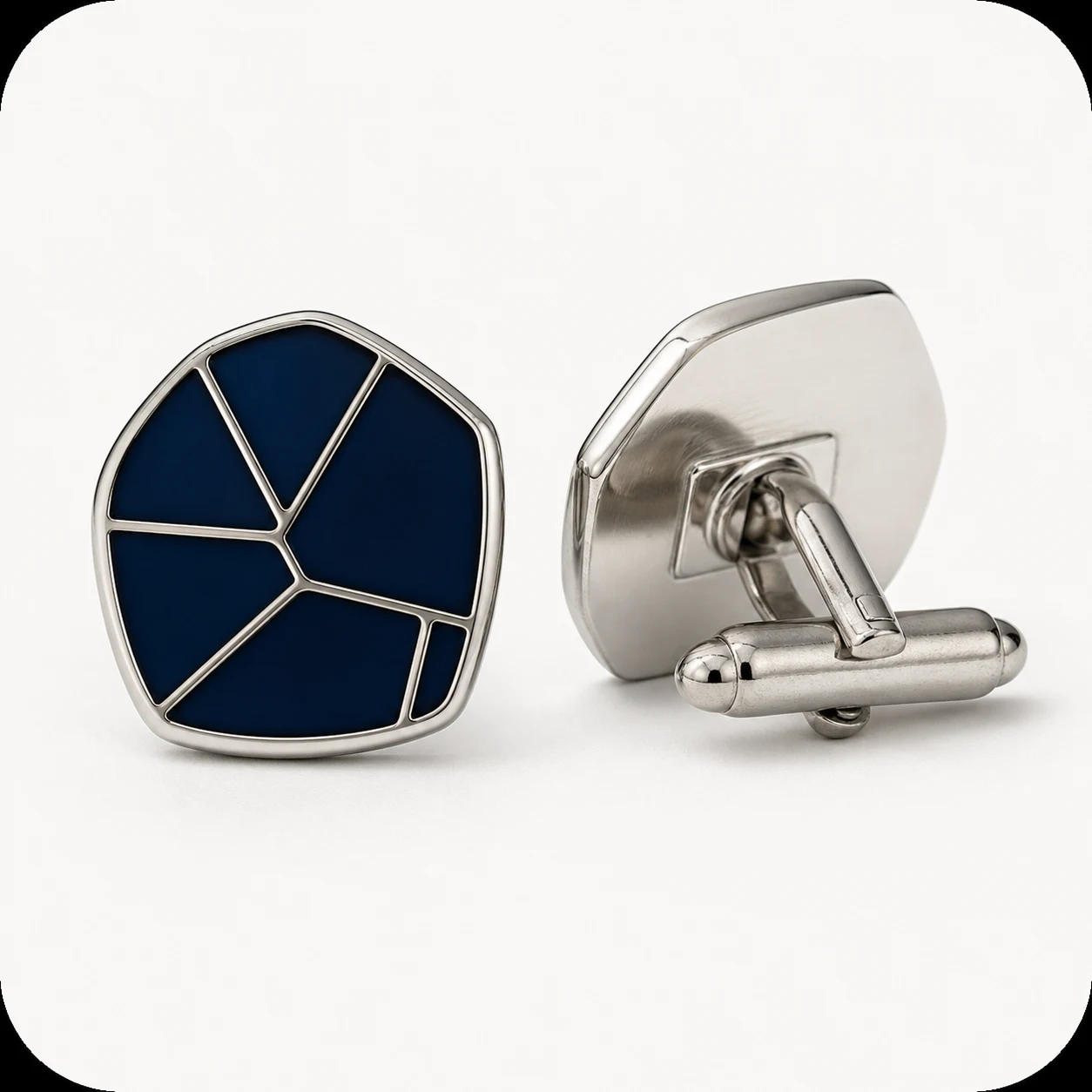
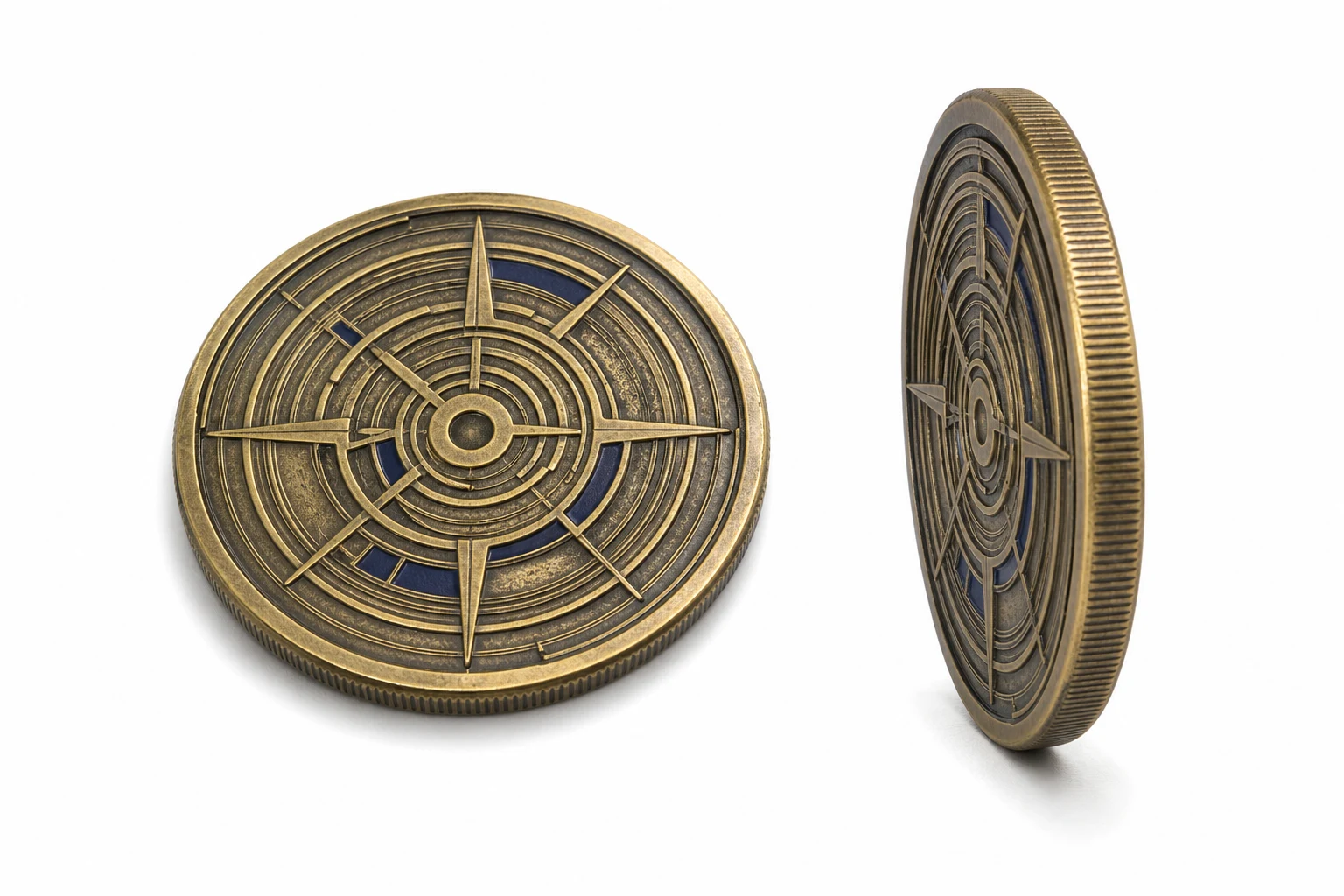
Default packaging is a poly-bag, with a slim gift box available as an option. Approve the packaging with the final sample because contact during transit can affect polished or plated surfaces. An archived die can support repeat geometry or artwork, but it does not by itself guarantee identical plating or enamel color. Retain an approved master sample for reorders and coordinated sets with custom cufflinks or challenge coins.
Bulk Approval Checklist
Attach the test method and approved sample record to the purchase order so production and inspection teams apply the same requirements.
- Define the low, nominal, and maximum note stacks by count and measured compressed thickness.
- Document the base metal, available grade or condition, finished thickness, and thickness tolerance.
- Record the clip style, 50 mm x 17 mm reference size or approved alternative, free gap, and bend radius.
- Fix the test sample quantity, cycle count, dwell time, recovery interval, and measurement datum.
- State the maximum residual mouth-gap change and minimum retention result numerically.
- Confirm that the maximum opening condition does not exceed the approved use case.
- Set post-cycle acceptance limits for edges, bend integrity, finish, and decoration.
- Include final decorated and personalized samples in testing where applicable.
- Identify an approved master sample for appearance and reorder comparisons.
- Confirm the MOQ of 100 pieces per design and check the quote against the FOB planning range.
- Confirm sample and bulk lead-time triggers in writing.
- Approve poly-bag or slim gift-box packaging, including protection for finished surfaces.
- Agree on bulk inspection sampling, defect classifications, and rejection handling before shipment.
For a tension-critical program, begin with a stainless steel sample and compare alternatives only in their final geometry and finish. Review personalized money clip options at /products/money-clips.html, then submit the logo, quantity, finish, packaging choice, personalization data, and test conditions with the request for quote. Use the 7-10 day sample stage to complete spring-back, cycle, edge, and appearance checks before releasing the 15-22 day bulk order.
Ready to get this made?
Send your sketch, target quantity and ship-date. Detailed quotation in 12 hours.