Magnetic Lapel Pins for Suits: Retention Without a Permanent Hole
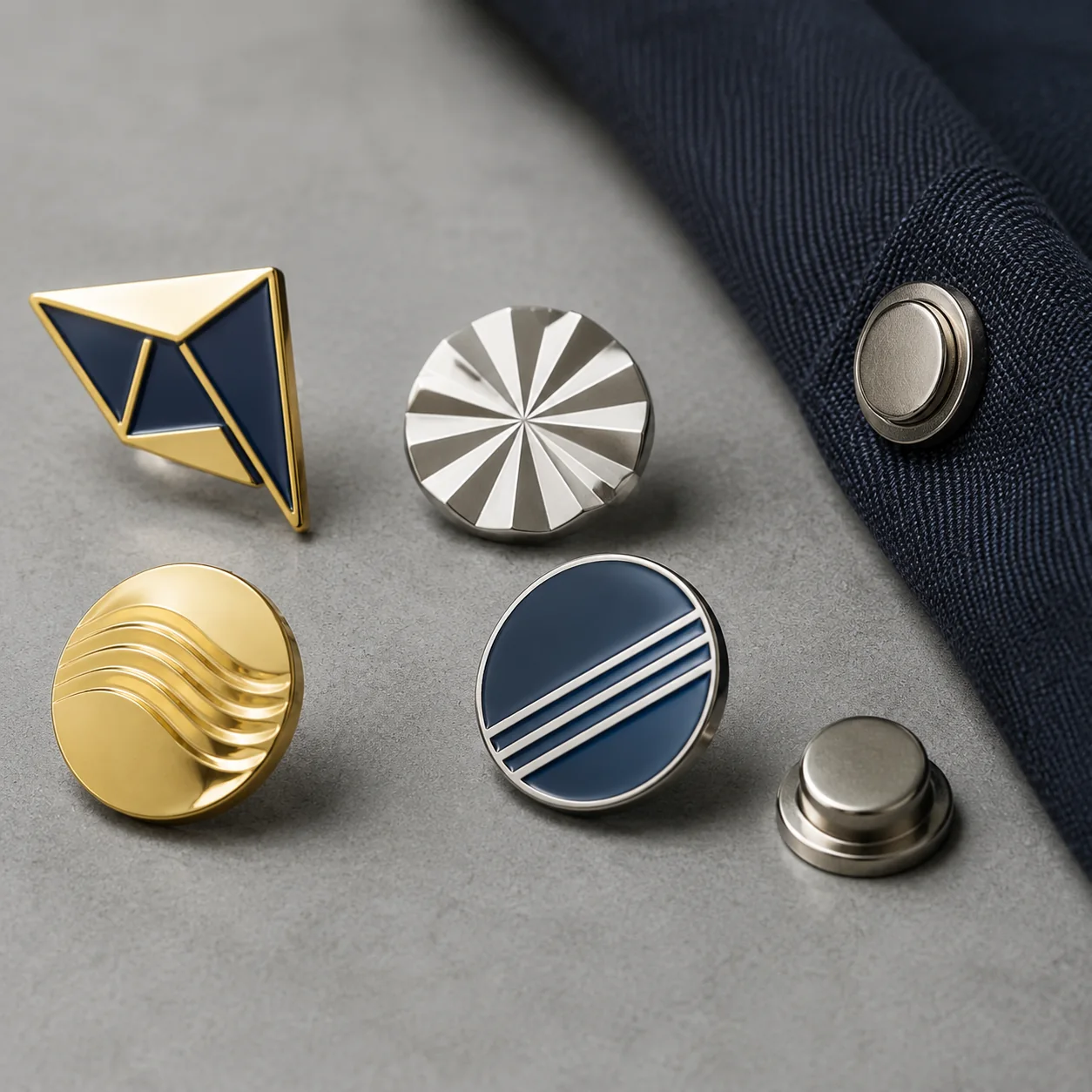
Magnetic lapel pins are appropriate when protecting suit or uniform fabric matters more than using a permanent mechanical attachment. The supplied product information says the magnetic backing holds securely through normal motion while avoiding a permanent fabric hole. It does not state a magnet grade, holding-force value, pin weight limit, steel-plate specification, or wear-test method. Buyers should approve the attachment on the intended garment and obtain any required technical evidence for the exact design before production.
Make the Attachment Decision First
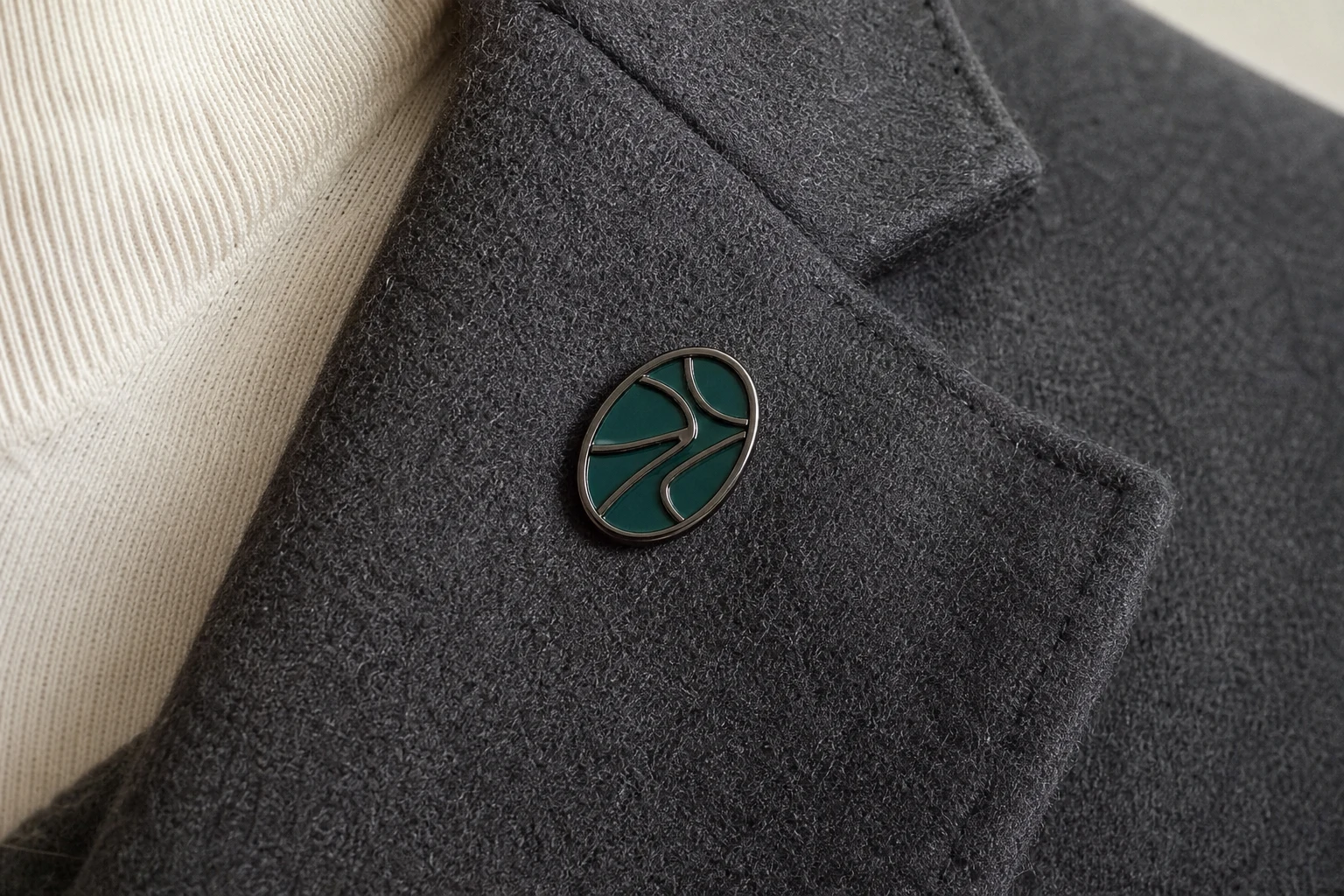
For hospitality uniforms, executive recognition, diplomatic settings, and wedding-party gifts, a magnetic lapel pin addresses a specific presentation need: the wearer can display a small metal mark without piercing the lapel. The supplied product information describes magnetic backs as holding securely through normal motion without leaving a permanent fabric hole. Butterfly clutches and screw-backs are also available, but use a pierced or more permanent attachment approach.
This makes magnetic lapel pins relevant where garment condition is part of the program standard. Hotel and restaurant teams may need employees to wear a mark repeatedly while keeping jackets presentable. Executive gift buyers may want recipients to wear a recognition pin on a suit without committing to a puncture. In both cases, the attachment should be judged against the actual garment, pin design, and wearing routine rather than treating the word magnetic as a complete performance specification.
The available facts support selecting a garment-friendly magnetic attachment. They do not support a quantified claim about magnetic lapel pin holding force. No magnet grade, magnet dimensions, magnet count, pin weight, counterplate construction, steel-plate material, or test method is provided. Do not place any of those details in a purchase order as confirmed specifications unless the supplier provides them for the approved design.
What the Available Evidence Establishes
The supplied information establishes a product intended for formal clothing. Lapel pins are described as small, discreet items for suits, jackets, and uniforms. Typical sizes are 10 mm to 25 mm, with a slim 1.0 mm to 1.5 mm profile; the product lede describes a typical thickness of 1.2 mm. These dimensions help distinguish lapel pins from larger promotional pins, but dimensions alone do not prove retention performance.
- Supported: magnetic backs are offered and are described as avoiding fabric damage.
- Supported: magnetic backs are described as holding securely through normal motion.
- Supported: magnetic backs cost about $0.40 more per pin than a butterfly clutch.
- Not supplied: a magnetic holding-force value, pull-force result, or pin weight limit.
- Not supplied: magnet grade, magnet size, magnet arrangement, or magnet count.
- Not supplied: a steel-plate or counterplate material specification.
- Not supplied: a named plating wear test, abrasion test, corrosion test, or pass-fail criterion.
This distinction matters in procurement. A buyer can use the available facts to choose a removable, garment-protecting attachment direction and set an initial budget expectation. The same buyer should not convert a general statement about secure normal-motion wear into a quantified retention promise. When retention is critical, request design-specific evidence during sampling and preserve the accepted construction with the approved sample record.
Compare Magnetic, Butterfly, and Screw-Back Options
| Attachment | Supported Product Information | Garment and Display Trade-Off | Commercial Consideration |
|---|---|---|---|
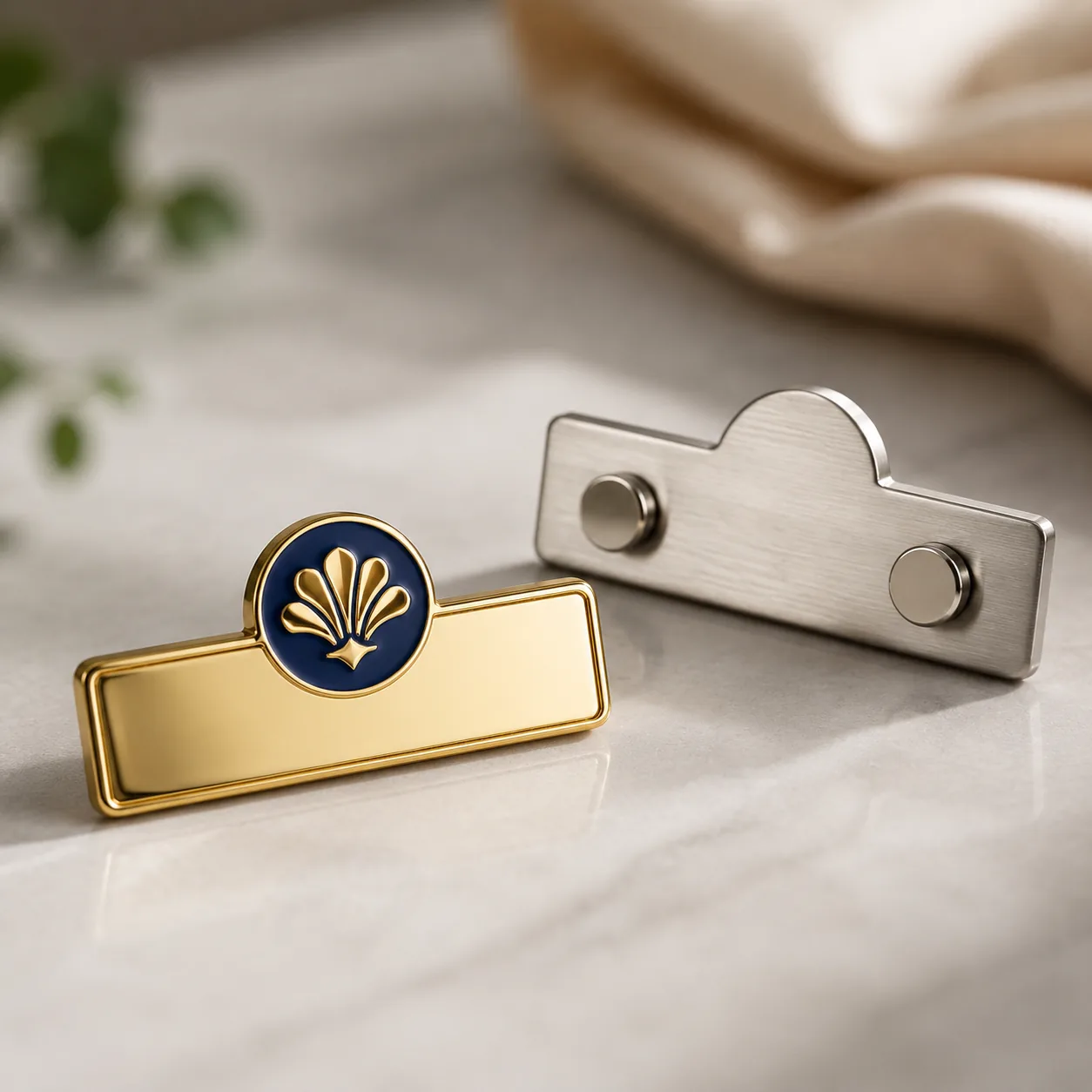
| Magnetic | Does not pierce fabric and is described as holding securely through normal motion. | Best aligned with protecting suits, jackets, and uniforms from a permanent hole. Numeric holding force is not supplied. | Costs about $0.40 more per pin than a butterfly clutch. |
| Butterfly clutch | Offered as an attachment option. | Uses a piercing attachment rather than the no-fabric-damage magnetic option. | Serves as the stated price comparison point for the magnetic premium. |
| Screw-back | Offered for permanent display. | More suitable where a permanent attachment approach is acceptable. | No relative price difference or holding-performance comparison is supplied. |
The comparison should follow the wearing purpose, not unit price alone. A $0.40 per-piece difference may be meaningful in a large uniform rollout, but can be justified where avoiding visible garment holes reduces objections from staff or recipients. Conversely, screw-backs and butterfly clutches remain valid choices where piercing is acceptable. The supplied information does not establish that either alternative has a specific holding-force advantage on a particular fabric.
For hospitality programs, define the choice in operational terms. Select a magnetic attachment when the priority is a removable formal mark that preserves the garment. Select a butterfly clutch or screw-back only when a pierced or permanent attachment is acceptable under the uniform policy. This keeps the decision within the available product evidence.
Control Alignment During Sample Approval
Holding force is not the only visible outcome. Buyers also need the logo, crest, or recognition mark to remain acceptably positioned on the lapel. The supplied facts do not identify an anti-rotation feature, attachment geometry, or alignment test. A magnetic backing may protect the garment, but the final design still needs to be assessed on the clothing used in the program.
Use the formal proportions as the starting point. Lapel pins are typically 10 mm to 25 mm and 1.0 mm to 1.5 mm thick, so artwork should be reviewed at the intended production size rather than only on an enlarged proof. A small pin can look appropriate on a suit lapel while making fine decoration, edge quality, and plating consistency more noticeable. Approve the physical sample with the planned size, finish, and attachment combination.
- State the final pin size in millimeters in the order specification.
- State the selected thickness within the available 1.0 mm to 1.5 mm slim-profile range.
- Identify the attachment as magnetic, butterfly clutch, or screw-back.
- Review the sample on the actual jacket or uniform fabric.
- Confirm the mark remains acceptably presented after normal wearer movement.
- Keep the approved attachment and finish associated with the approved physical sample.
This process does not create an unsupported performance claim. It creates a controlled approval point for the buyer outcome that matters: a discreet lapel mark that remains presentable on the garments used in the program.
Specify Material, Decoration, and Plating Carefully
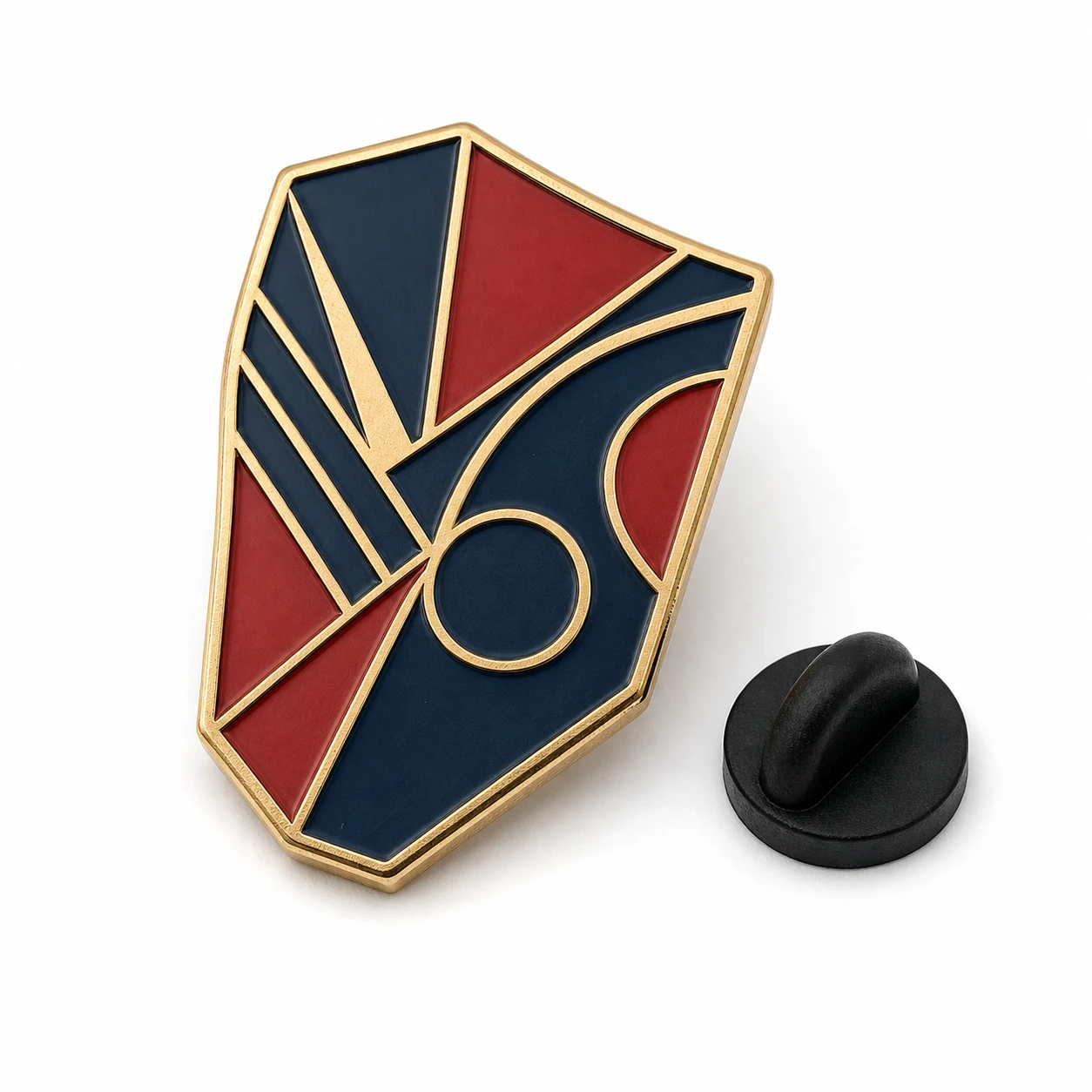
The supplied narrative describes brass as the usual base metal for these dressier lapel pins. Available decoration options are hard enamel, soft enamel, and die-struck. Hard enamel is identified as the preferred choice for a premium feel, while soft enamel and die-struck designs remain available. Gold, silver, and rose-gold are the most popular plating choices for suit pairing.
For hospitality and executive-gift buyers, these choices should reinforce the purpose of the pin. A small formal mark benefits from a finish that reads clearly at close range and coordinates with the intended dress code. The supplied facts support hard enamel as the premium-feel option and identify gold, silver, and rose-gold as popular choices. They do not establish that any decoration or plating selection changes magnetic retention.
| Specification Area | Available Choices or Facts | Buyer Decision |
|---|---|---|
| Base metal | Brass is described as the usual base metal. | Record brass only when it is quoted and selected for the approved design. |
| Decoration | Hard enamel, soft enamel, and die-struck are available; hard enamel is preferred for a premium feel. | Use hard enamel where the program requires the stated premium-feel option. |
| Plating | Gold, silver, and rose-gold are the most popular choices for suit pairing. | Select plating to suit the apparel and approved presentation. |
| Wear testing | No named test method or result is supplied. | Do not claim plating wear-test performance without supplier evidence. |
The product narrative positions high-grade gold, silver, and rose-gold plating as suitable for daily wear. For procurement records, that positioning is not a substitute for a defined wear-test protocol because no method, duration, environment, or acceptance threshold is supplied. Where a program requires evidence of plating durability, request the relevant test information before presenting a durability claim internally or externally.
Match the Format to Hospitality and Gift Programs
Hospitality and corporate programs often need a pin that is smaller, slimmer, and dressier than a promotional item. Supported use cases include executive and board recognition, hotel and restaurant staff uniforms, fraternal organizations, diplomatic or political use, wedding-party gifts, and award programs. Magnetic attachment is particularly relevant when the pin will be worn on fabric that the organization or recipient does not want permanently pierced.
For boardroom-tier executive gifts, the supplied recommendation is hard enamel on rose-gold-plated brass presented in a small black velvet box. The narrative gives a cost of $1.50 per piece and a perceived retail value of about $25 to $50 for that configuration. This is a recommended presentation, not a universal price commitment. The broader stated FOB range is $0.40 to $1.80 per piece, so buyers should request a quote for the exact size, decoration, plating, attachment, and packaging.
Treat packaging as part of the presentation specification when the pin is a gift rather than a uniform issue. The small black velvet box is the only named packaging format in the supplied facts. Define any different packaging in the RFQ rather than assuming it is included in the FOB unit price or in the stated magnetic-backing premium.
Use Sampling to Resolve Missing Force Data
A buyer cannot derive magnetic lapel pin holding force from the stated size range, thickness range, decoration choice, or plating. Nor can the buyer infer a numeric rating from the statement that the magnetic backing holds securely through normal motion. Retention depends on construction details not included in the supplied information, including the magnet specification and the mating plate or counterplate specification.
Make a physical sample the approval gate for the precise configuration being purchased. Review the selected magnetic backing on the intended garment or uniform with the final pin size, thickness, decoration, and plating. Observe both appearance and retention during the normal movement relevant to the program. Where a numeric threshold or documented test is required, obtain that evidence from the supplier and confirm it meets the buyer's internal requirement before bulk approval.
- Request the proposed magnetic attachment construction for the exact approved pin design.
- Ask whether magnet grade, magnet dimensions, magnet count, and counterplate or steel-plate material can be specified.
- Ask for the pin weight for the selected size, material, decoration, plating, and backing.
- Ask what evidence supports the normal-motion retention statement for the proposed configuration.
- Ask whether plating or wear testing has been performed and request the method and result where required.
- Approve the actual sample on the intended suit, jacket, or uniform fabric before authorizing production.
- Document approved size, thickness, decoration, plating, attachment, and packaging together.
Set Commercial Boundaries Before the Order
The stated MOQ is 100 pieces, the stated lead time is 12 to 20 days, and the stated FOB price range is $0.40 to $1.80 per piece. These figures provide a planning range, but they do not replace a quote for a specific magnetic lapel pin. The quote should identify whether the selected magnetic backing, finish, and any gift packaging are included.
For magnetic attachment, the only stated premium is about $0.40 per pin relative to a butterfly clutch. This is useful for a direct attachment comparison, but should not be used to estimate other configuration changes. The supplied facts do not state price effects for different pin sizes, plating selections, decoration types, screw-back attachment, or black velvet-box packaging.
Keep order language factual. Specify the selected 10 mm to 25 mm size, the 1.0 mm to 1.5 mm slim thickness, decoration type, plating, attachment, and packaging. State the MOQ, target delivery schedule, and approved sample reference. Avoid unsupported wording such as a named magnet grade, quantified pull force, steel-plate composition, permanent alignment claim, or defined plating-test result unless it has been separately confirmed.
Send a Controlled RFQ
Issue an RFQ for the exact magnetic lapel pin configuration: final size, slim thickness, brass construction where selected, hard enamel, soft enamel, or die-struck decoration, chosen gold, silver, or rose-gold plating, magnetic backing, and required packaging. Include the 100-piece MOQ and 12-to-20-day planning window. Request design-specific confirmation of attachment construction, pin weight, any counterplate or steel-plate details, and available wear-test evidence. Approve production only after the physical sample confirms the expected non-piercing attachment and keeps the mark acceptably presented during the program's normal use.
Ready to get this made?
Send your sketch, target quantity and ship-date. Detailed quotation in 12 hours.