Lapel Pin Size Guide: Proportion for Suits and Uniforms
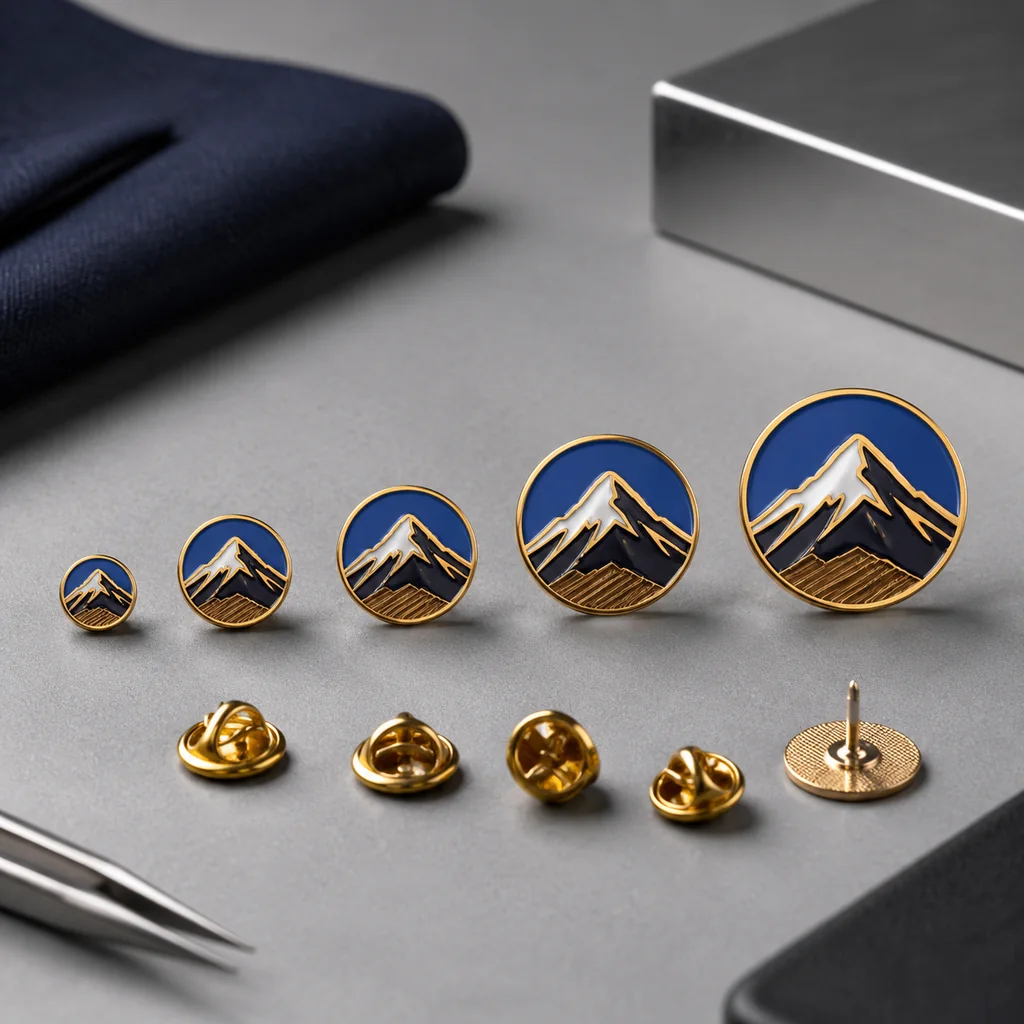
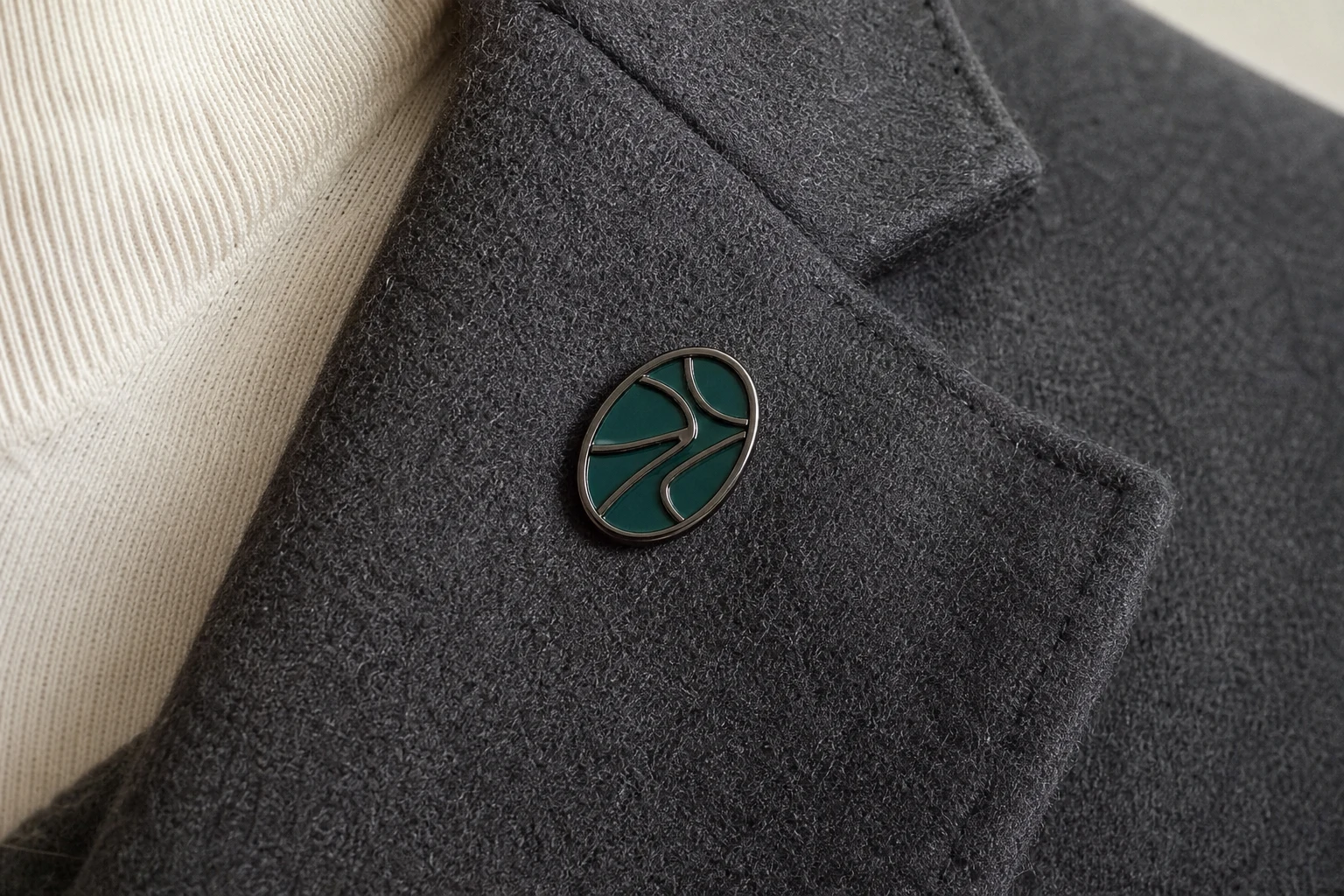
For suits, jackets, and uniforms, use a lapel pin size between 10mm and 25mm. A 12mm to 20mm pin is the practical default for discreet corporate and fashion applications, while 18mm to 25mm provides more visibility for hospitality and staff uniforms. Keep the pin slim at 1.0mm to 1.5mm thick, then select the attachment and finish based on garment value, wearing frequency, and presentation requirements.
Direct Size Recommendation
A lapel pin should be visible without overwhelming the garment. For suits, hospitality uniforms, executive recognition, diplomatic events, wedding parties, fraternal organizations, and award programs, the supported working range is 10mm to 25mm. This is smaller than many promotional pins because lapel pins are intended to be discreet, slim, and dressier on tailored clothing.
For most corporate programs, start with a 12mm to 20mm metal lapel pin. This provides enough face area for a simple emblem, initials, compact logo, or recognition mark while respecting the lapel line of a suit jacket. Choose 10mm to 15mm for simple artwork and highly formal settings. Move toward 20mm to 25mm when the pin needs greater presence on a hotel, restaurant, or staff uniform.
Specify thickness together with diameter. The supported thickness range is 1.0mm to 1.5mm, and 1.2mm is a slim reference point. Keeping the body within this range helps the pin sit close to the garment and maintain a restrained appearance. For executive gifts, finish and presentation can contribute more to perceived value than increasing the pin size.
Size by Garment and Viewing Need
Size should reflect where and how the pin will be worn. A suit lapel pin is usually noticed in close conversation, while a uniform pin may need to be recognized by guests, visitors, or colleagues from farther away. The supplied product facts do not establish a universal viewing-distance threshold, so buyers should select size based on the program's practical recognition need.
For formal suits, executive wear, ceremonies, and diplomatic settings, a 10mm to 18mm pin generally keeps the mark controlled. The objective is recognition rather than advertising. A larger size can still suit formal clothing when the artwork is restrained and the finish is appropriate.
For hospitality and restaurant uniforms, 18mm to 25mm can be appropriate when the pin identifies affiliation, rank, service recognition, or program participation. When name badges are also used, keep the lapel pin as the smaller, secondary visual signal.
| Buying scenario | Practical size direction | Reason | Main trade-off |
|---|---|---|---|
| Executive or board recognition | 12mm to 18mm | Discreet and appropriate for formal suits | Artwork must remain simple |
| Hotel or restaurant staff uniforms | 18mm to 25mm | Provides more presence in guest-facing settings | Can compete with name badges if overdesigned |
| Diplomatic or political wear | 10mm to 20mm | Keeps the mark formal and controlled | Fine detail may be less apparent |
| Wedding party gifts | 12mm to 20mm | Works with jackets without dominating the outfit | Very subtle artwork may have limited presence |
| Fraternal or award programs | 15mm to 25mm | Allows more face area for a crest or award symbol | Larger sizes require careful finish selection |
Diameter and Artwork Complexity
The available product facts do not establish minimum line widths, text sizes, color limits, or artwork tolerances. Buyers should not assume every design will work at the smallest diameter. As a practical sourcing rule, use greater caution when selecting a 10mm to 15mm pin for a detailed design.
Simple symbols, initials, and compact marks are better candidates for 10mm to 15mm. A crest, seal, or multi-element mark often benefits from the additional face area available at 18mm to 25mm. Before increasing size, simplify unnecessary artwork detail to preserve the discreet character expected from a lapel pin.
For fashion accessory buyers, proportion also affects perceived value. A 25mm pin can look intentional when its shape, finish, and decoration are balanced. The same size can look promotional when it carries too many visual elements. A 12mm pin can feel refined with gold, silver, or rose-gold plating and a slim profile, but it may offer too little presence for staff recognition.
- Use 10mm to 15mm for simple marks, initials, compact symbols, or very formal wear.
- Use 15mm to 20mm as a balanced corporate default when discretion and visibility both matter.
- Use 20mm to 25mm for uniforms, award programs, or designs that need more face area.
- Treat 25mm as the upper end of the typical range, not as the automatic default.
- Confirm artwork suitability and minimum-detail requirements with the supplier before production.
Thickness and Profile
The supported lapel pin thickness range is 1.0mm to 1.5mm, with 1.2mm identified as a slim reference point. Profile matters because a pin worn on a suit, jacket, or uniform should not look unnecessarily bulky against the fabric.
The product information positions lapel pins as smaller, slimmer, and dressier than broader promotional pins. It does not provide garment pull-test data, pin weight limits, or attachment-load testing. Buyers with garment-performance requirements should request relevant specifications or test methods from the supplier, especially for high-value tailoring or daily uniform programs.
Include thickness in the RFQ rather than specifying only diameter. A 20mm pin with a slim 1.2mm body can present differently from a 20mm pin with a heavier construction. Reviewing diameter and thickness together makes supplier quotations more comparable and protects the intended garment proportion.
| Specification item | Supported range or option | Buyer decision |
|---|---|---|
| Typical size | 10mm to 25mm | Choose according to garment, visibility need, and artwork complexity |
| Corporate default | 12mm to 20mm | Use the smaller end for formal suits and the larger end when more presence is needed |
| Thickness | 1.0mm to 1.5mm | Keep the profile slim and dressy |
| Slim reference | 1.2mm | Use as a reference when the pin should sit close to the fabric |
| MOQ | 100 pcs | Plan event, recognition, pilot, or department quantities around this minimum |
| Lead time | 12 to 20 days | Allow artwork approval time before the production window begins |
Attachment and Fabric Impact
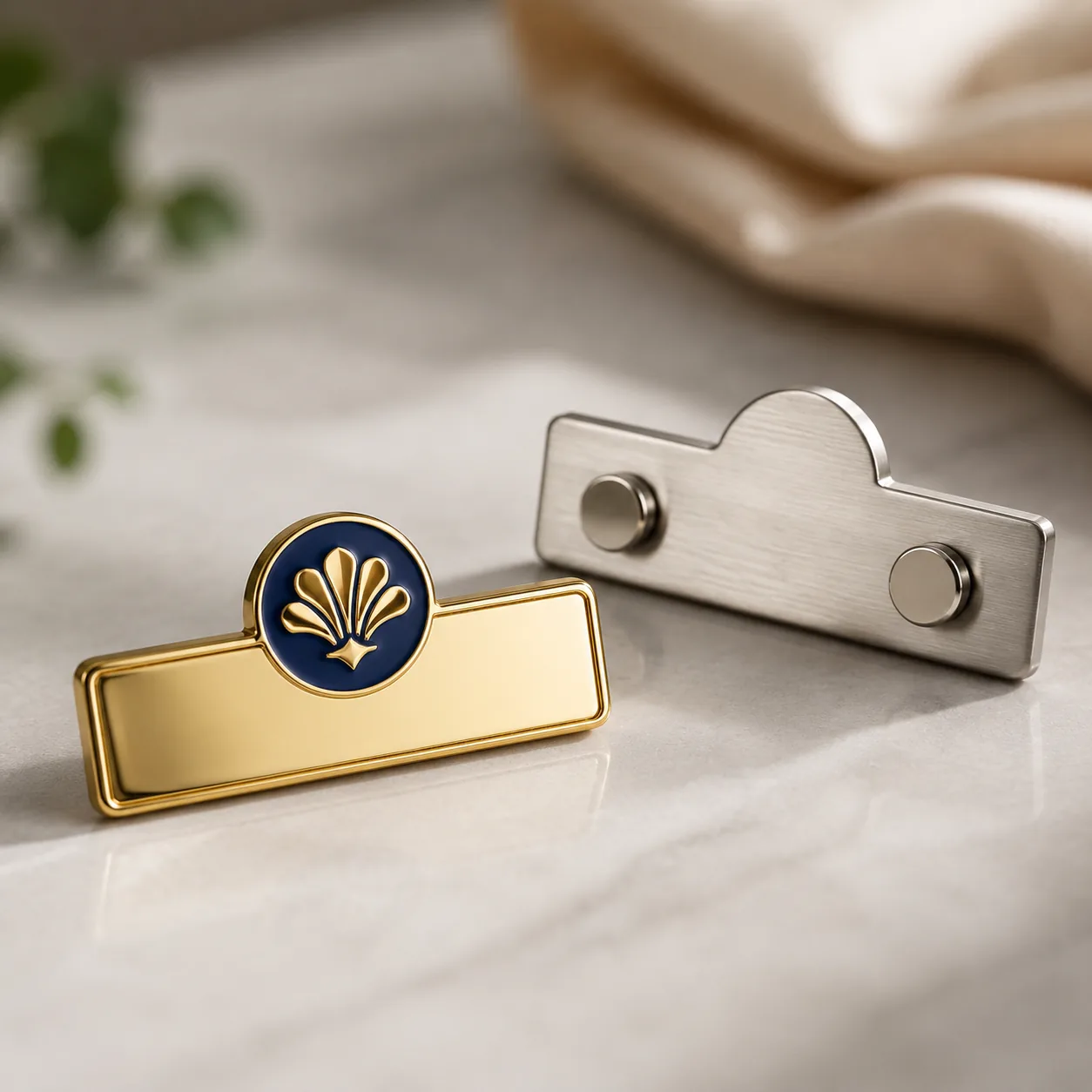
Attachment affects both garment impact and buyer acceptance. The supported options are magnetic backs, butterfly clutches, and screw-backs. Magnetic backs are preferred by hospitality and corporate clients because they do not pierce fabric. They are particularly relevant for suits, issued uniforms, rented garments, and tailored clothing where avoiding a permanent hole is a priority.
The stated cost trade-off is that a magnetic back costs about $0.40 more per pin than a butterfly clutch. For executive recognition, that premium may be justified when garment protection and presentation matter. For a staff rollout, compare the added unit cost with uniform replacement practices, appearance standards, and expected wearing frequency.
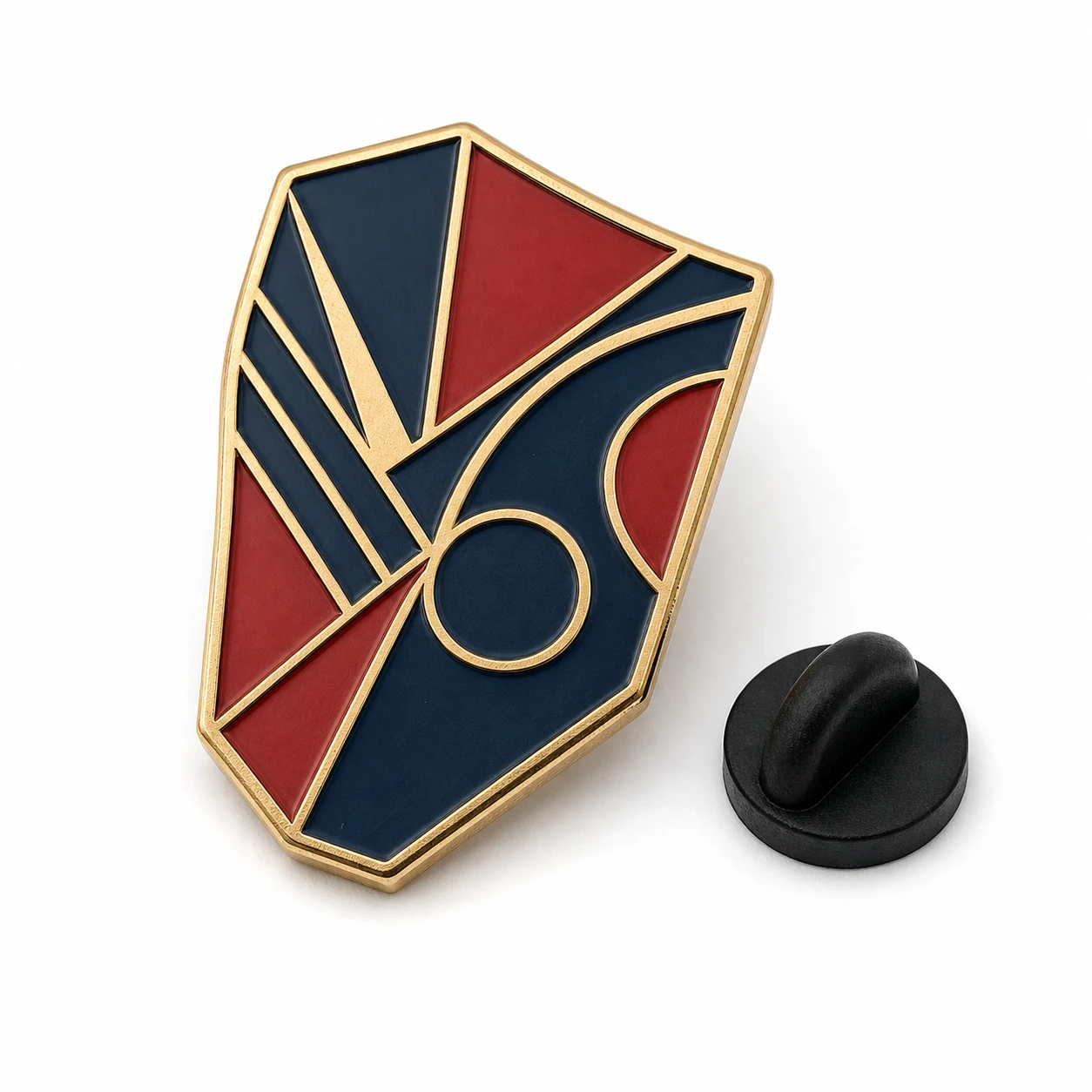
Butterfly clutches suit orders where fabric piercing is acceptable and budget is a stronger constraint. Screw-backs are available for permanent display and are more relevant where the pin will remain in place rather than move between garments. Confirm attachment retention requirements with the supplier for frequent movement, thick fabrics, or safety-critical wear conditions.
| Attachment | Best fit | Procurement advantage | Trade-off |
|---|---|---|---|
| Magnetic | Suits, hospitality uniforms, corporate wear | Does not pierce fabric | Costs about $0.40 more per pin than butterfly clutch |
| Butterfly clutch | Budget-sensitive orders where piercing is acceptable | Simple and lower cost than magnetic | Pierces the garment |
| Screw-back | Permanent display | Suitable when the pin is not frequently removed | Less convenient for changing garments |
Finish, Material, and Premium Feel
The product information describes brass as the usual base metal and identifies gold, silver, and rose-gold plating as popular choices for suit pairing. Finish can contribute more to a premium impression than simply increasing diameter. Specify the plating color in the RFQ and confirm finish-performance expectations with the supplier for daily-wear programs.
Available decoration options are hard enamel, soft enamel, and die-struck. Hard enamel is identified as the preferred option for a premium feel. The supplied executive-gift example is hard enamel on rose-gold-plated brass, presented in a small black velvet box. Its stated cost reference is about $1.50 per piece, with perceived retail value around $25 to $50.
This executive-gift example is a positioning reference rather than a guaranteed retail outcome. Perceived value depends on artwork, finish, packaging, buyer market, and audience. Soft enamel and die-struck remain available where the design, budget, or intended use does not require the premium surface associated with hard enamel.
- Use gold, silver, or rose-gold plating for suit-pairing programs.
- Choose hard enamel when premium feel is a central requirement.
- Consider soft enamel or die-struck when they suit the design and budget.
- Use brass as the expected base metal unless another material is confirmed in the quotation.
- Use a small black velvet box for executive gifting when the presentation format supports the program.
Budget, MOQ, and Lead Time
The supplied FOB price range is $0.40 to $1.80 per piece, with an MOQ of 100 pieces and a stated production lead time of 12 to 20 days. These figures support early sourcing and budget planning, but they are not a final landed-cost or delivery commitment. Size, decoration, plating, attachment, packaging, shipping terms, and final artwork can change the quotation.
The magnetic-back premium is the clearest stated commercial trade-off: about $0.40 more per pin than a butterfly clutch. At the 100-piece MOQ, buyers can quantify that difference early. For larger uniform programs, review the added amount as a total program cost rather than an isolated per-piece increase.
A small black velvet box is specifically associated with the boardroom-tier executive-gift example. It may strengthen the presentation of an award or recognition item, but the supplied facts do not identify alternative packaging formats. Request a separate packaging quotation when the program requires a defined presentation standard.
Buyer Checklist Before RFQ
A reliable RFQ turns the size decision into measurable specifications. Requesting a generic custom lapel pin quote leaves room for suppliers to price different configurations. State the diameter, thickness, attachment, decoration, plating, quantity, use case, and packaging requirement so quotations are comparable.
- State the target diameter in millimeters within the supported 10mm to 25mm range.
- Specify a target thickness within the supported 1.0mm to 1.5mm slim profile.
- Identify the garment type, such as a suit, jacket, hospitality uniform, restaurant uniform, or display item.
- Select magnetic, butterfly clutch, or screw-back attachment before pricing approval.
- Use magnetic backs where avoiding fabric piercing is a priority and the added cost is approved.
- Specify gold, silver, or rose-gold plating where the pin must pair with suits.
- Choose hard enamel for premium feel, or soft enamel or die-struck where appropriate.
- Confirm whether a small black velvet box is required for executive presentation.
- Plan for the 100-piece MOQ and the stated 12 to 20 day production lead time.
- Confirm final price, artwork feasibility, attachment performance, packaging, and delivery timing with the supplier.
Final Buying Decision
For most corporate and fashion accessory buyers, the best lapel pin specification is controlled proportion rather than maximum size: 12mm to 20mm for formal suits and executive wear, and 18mm to 25mm where uniform visibility matters. Keep the profile within the supported 1.0mm to 1.5mm thickness range so the pin remains slim and dressy.
When garment preservation matters, magnetic backing deserves serious consideration because it does not pierce fabric, although it adds about $0.40 per pin compared with a butterfly clutch. For a premium finish, use gold, silver, or rose-gold plating and consider hard enamel. The supplied executive-gift example is hard enamel on rose-gold-plated brass in a small black velvet box.
The final RFQ should fix the measurable choices: diameter, thickness, decoration method, plating color, attachment, quantity of at least 100 pieces, packaging requirement, and target delivery timing. Confirm final artwork feasibility, price, performance requirements, and lead time with the supplier before placing the order.
Ready to get this made?
Send your sketch, target quantity and ship-date. Detailed quotation in 12 hours.