How to Design a Custom Fridge Magnet That Actually Sticks
The hidden complexity of fridge magnets
Fridge magnets look simple — flat, printed, magnetic. But there are a half-dozen design decisions that separate a magnet that sells from one that gets returned. This article covers the ones most designers don’t think about until the first sample arrives.
1. Magnet strength matters more than you think
Modern stainless-steel refrigerator doors are thicker than the laminated metal panels of 20 years ago, which means the standard flexible-magnet backing material struggles to hold pieces against them. We’ve had clients send back “defective” magnets that worked fine on a 1990s fridge but slipped off a 2024 model.
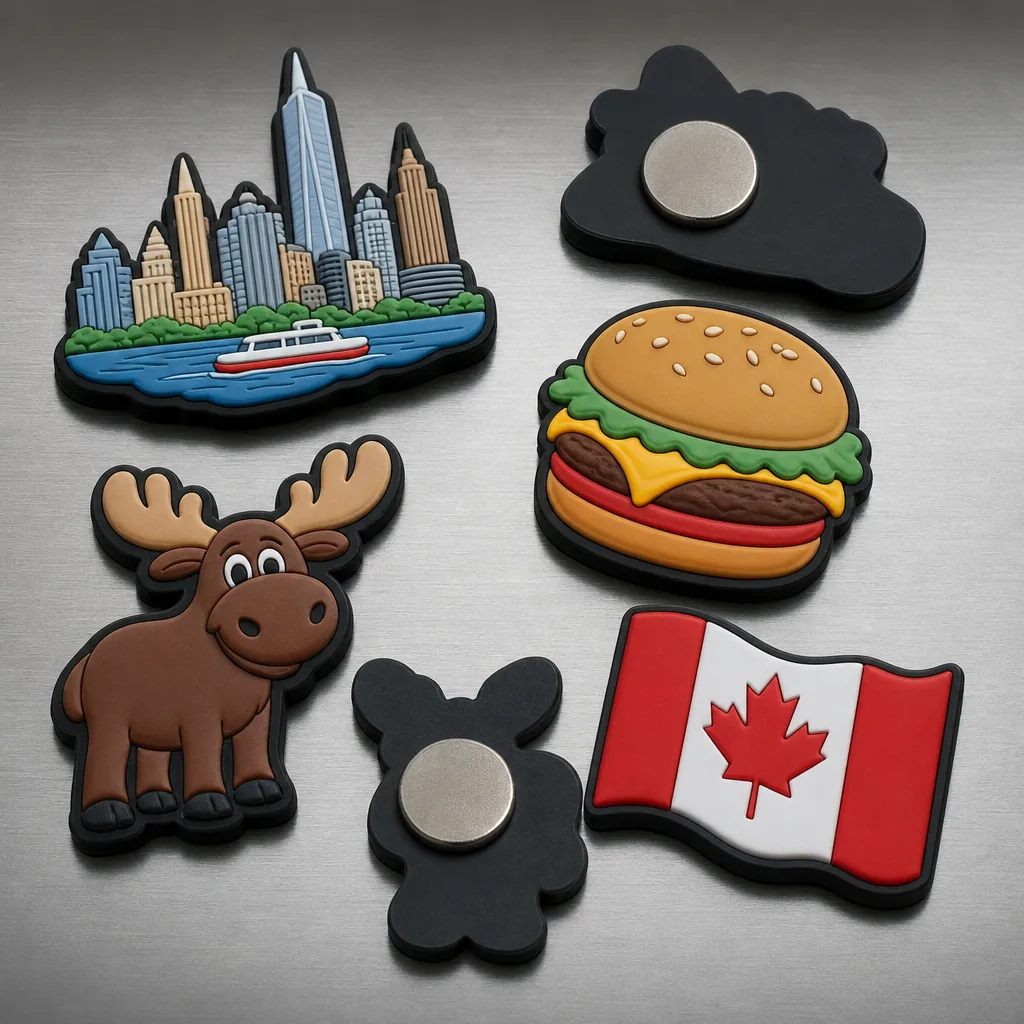
For resin-dome and PVC magnets, we recommend the inset neodymium upgrade — a small but very strong rare-earth magnet embedded in the backing. The total cost adds about $0.20/pc but the holding strength increases 10x. Your customers won’t notice the magnet visually, but they’ll notice that 8 business cards stay pinned even when the fridge door slams shut.
2. Resin dome refraction
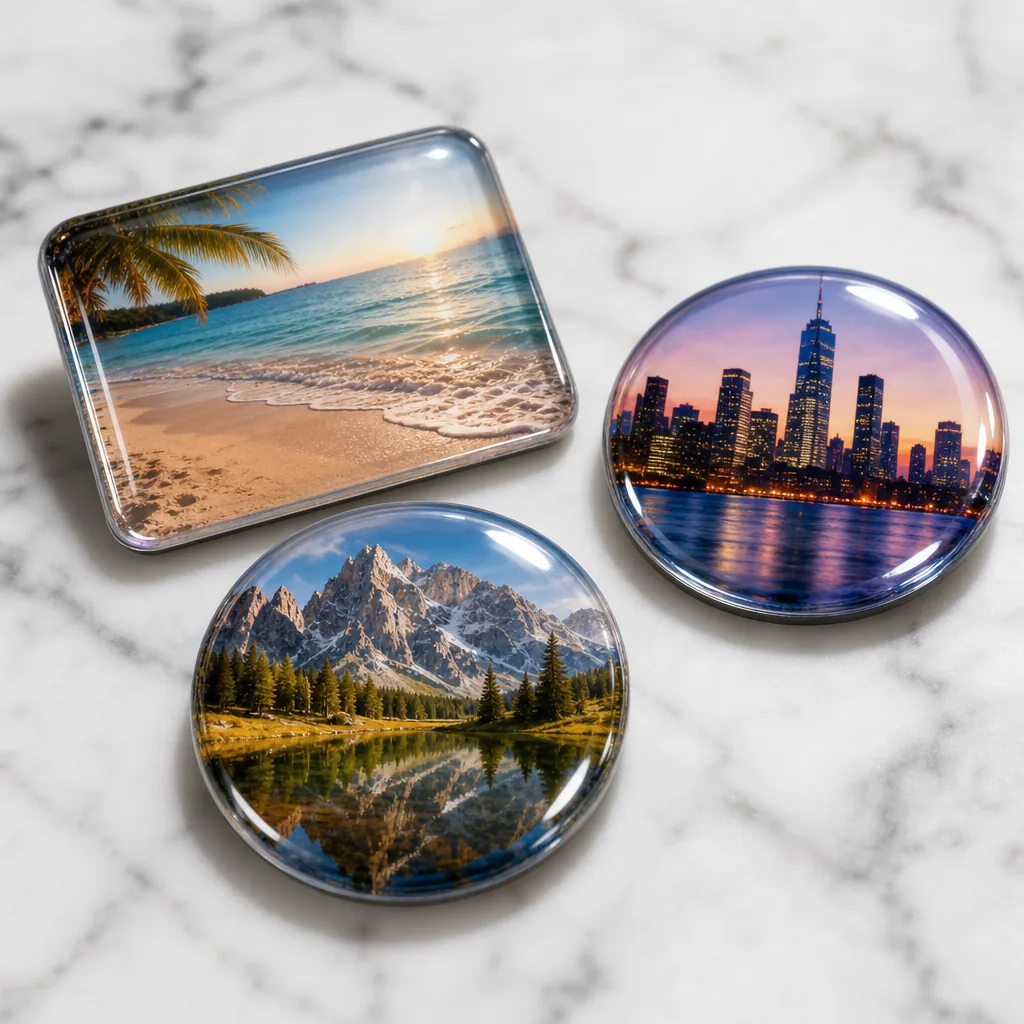
If you’re using the resin-dome format, the clear epoxy on top of your artwork acts like a magnifying lens — the printed design will appear about 1.3-1.5x larger from above. This is great for photo magnets (the customer’s photo looks larger and more impressive) but can ruin typography. Small text that’s legible in the flat artwork can become illegibly large under a thick dome.
Practical rule: design typography 20-30% smaller than you would for a flat printed magnet. Run a paper proof through the dome refraction at our sampling stage so you can see how the dome affects readability before going to bulk.
3. Bleed area
Standard print bleed is 3mm. For die-cut magnet shapes (your magnet outline matches your design outline), you need 5mm bleed because the die-cut process has more tolerance variation than a rectangular cut. A 3mm bleed sometimes leaves visible white edges if the cut drifts.
4. Surface curvature
For 3D PVC magnets (where the magnet has actual relief — landmark silhouettes, mascots, food items), keep your color zones away from the highest relief points. The plastic injection process creates slight color thinning at the apex of any 3D protrusion, which means your bright red landmark might have a slightly washed-out tip.
Workaround: design 3D magnets with the highest-relief features in a single color (so any color thinning matches the rest of the surface). Save multi-color zones for the flatter areas.
5. Shape psychology
Rectangular magnets read as utilitarian (real estate cards, restaurant takeout magnets). Round and oval magnets read as decorative. Die-cut silhouettes (landmarks, animals, food) read as souvenirs and command 2-3x higher retail price points.
If your magnet is meant to be a takeaway giveaway, rectangular minimizes cost. If it’s meant to be sold on a retail shelf, invest in a die-cut shape — the perceived value jump justifies the extra tooling cost.
6. Two-sided printing
Most magnets are single-sided because nobody looks at the back of a magnet. But for travel-souvenir magnets, two-sided printing creates a small premium upcharge ($0.05-0.10/pc) and gives customers a reason to handle and flip the magnet — which significantly increases the chance they buy.
Have a fridge magnet project? Send us your design and we’ll flag any of the issues above and recommend specific changes before you commit to bulk production.
Ready to get this made?
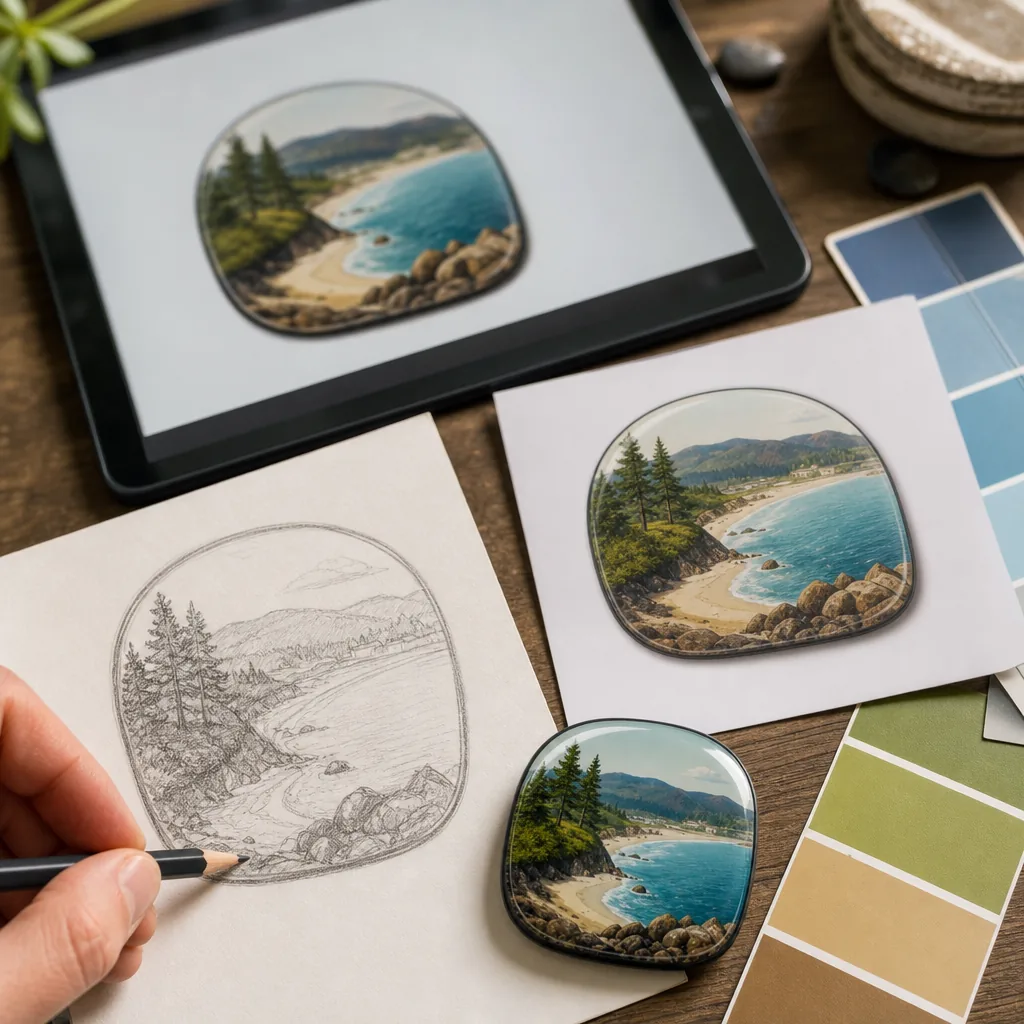
Send your sketch, target quantity and ship-date. Detailed quotation in 12 hours.