Enamel Pin Attachments: Butterfly, Rubber, Magnetic, or Screw-Back
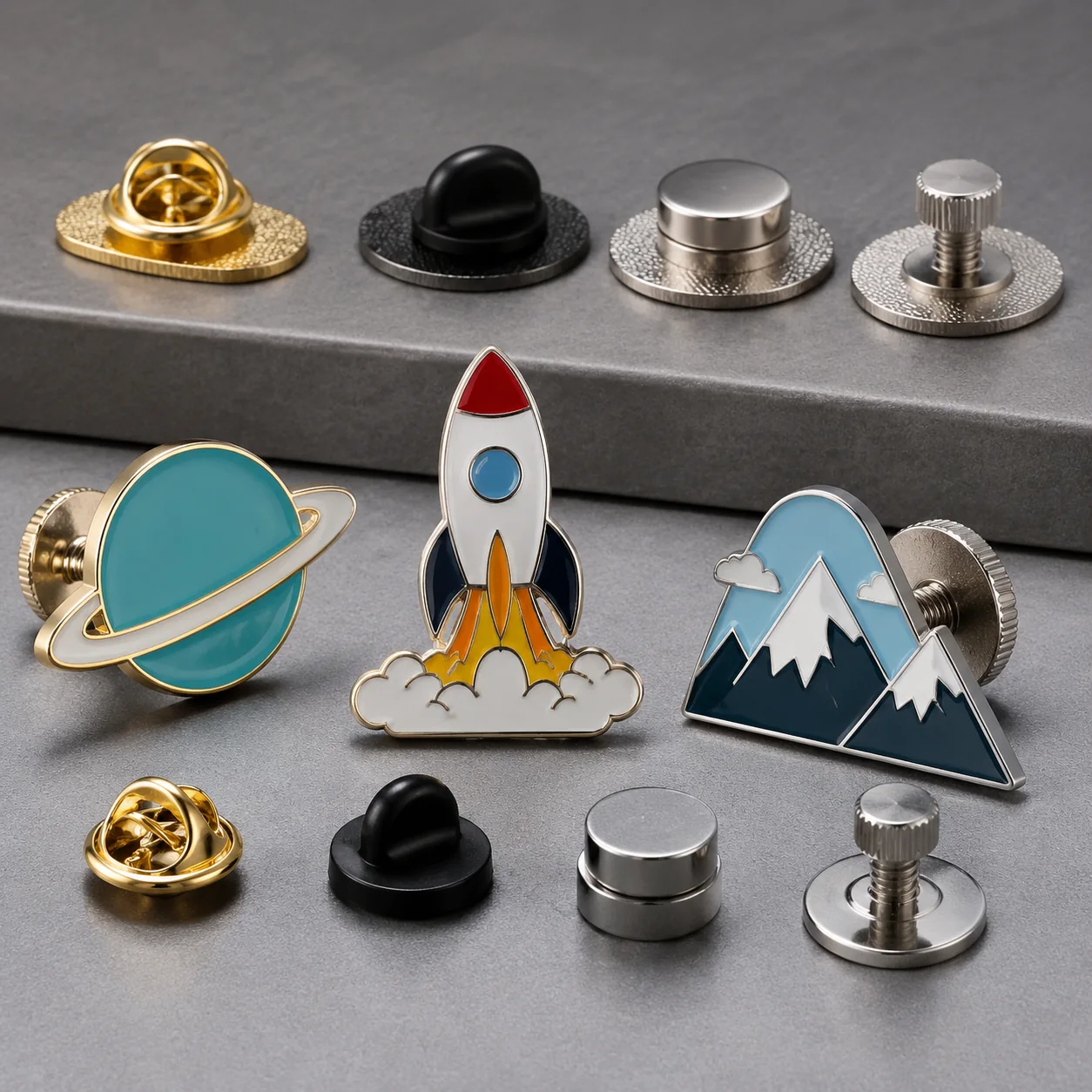
An enamel pin attachment pull test should confirm that the selected backing retains the finished pin in its real use condition without creating another return risk, such as fabric damage, rotation, uncomfortable wear, or packaging failure. Butterfly clutch is the supplied standard attachment, while rubber, magnetic, and safety-pin options are available for specified applications. The supplied product facts do not set a numeric pull-force threshold or standardized test method, so the buyer and supplier must agree the test setup and acceptance criteria before sampling.
Make the attachment decision early
The useful buying question is not which enamel pin attachment is strongest in isolation. It is whether the selected attachment retains the pin in its intended use while protecting the garment, presentation, and wearer experience. Uniform buyers may prioritize fabric risk and repeated wear. Retail buyers need a backing that supports presentation and customer handling. Event buyers may place more weight on fast distribution and simple fitting.
The supplied Enamel Pins specification identifies butterfly clutch as the standard attachment, with rubber, magnetic, and safety-pin attachments available. It does not list screw-back as an available option, and it does not assign a pull-strength rating, attachment-specific price, or pass criterion to any backing. A screw-back should therefore not be quoted as an available option unless the supplier confirms it. Requests and approval criteria should be based on the listed attachment choices and confirmed before the sample is made.
Compare the available attachments
| Attachment | Best starting use | Supported product fact | Approval focus |
|---|---|---|---|
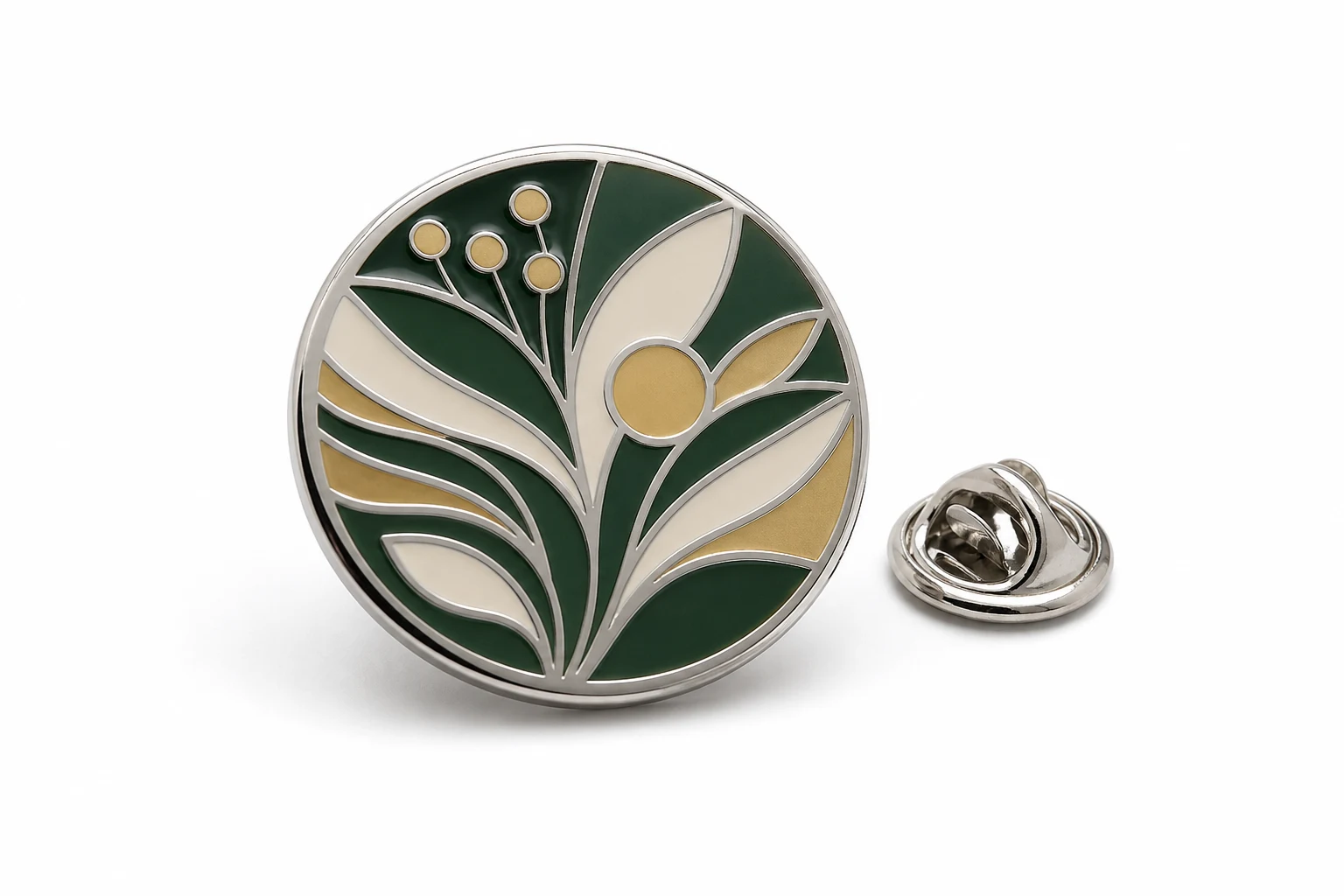
| Butterfly clutch | General enamel pins, brand merch, retail, and event use | Standard attachment in the supplied specification | Confirm retention, ease of fitting, rear layout, and behavior on the intended material |
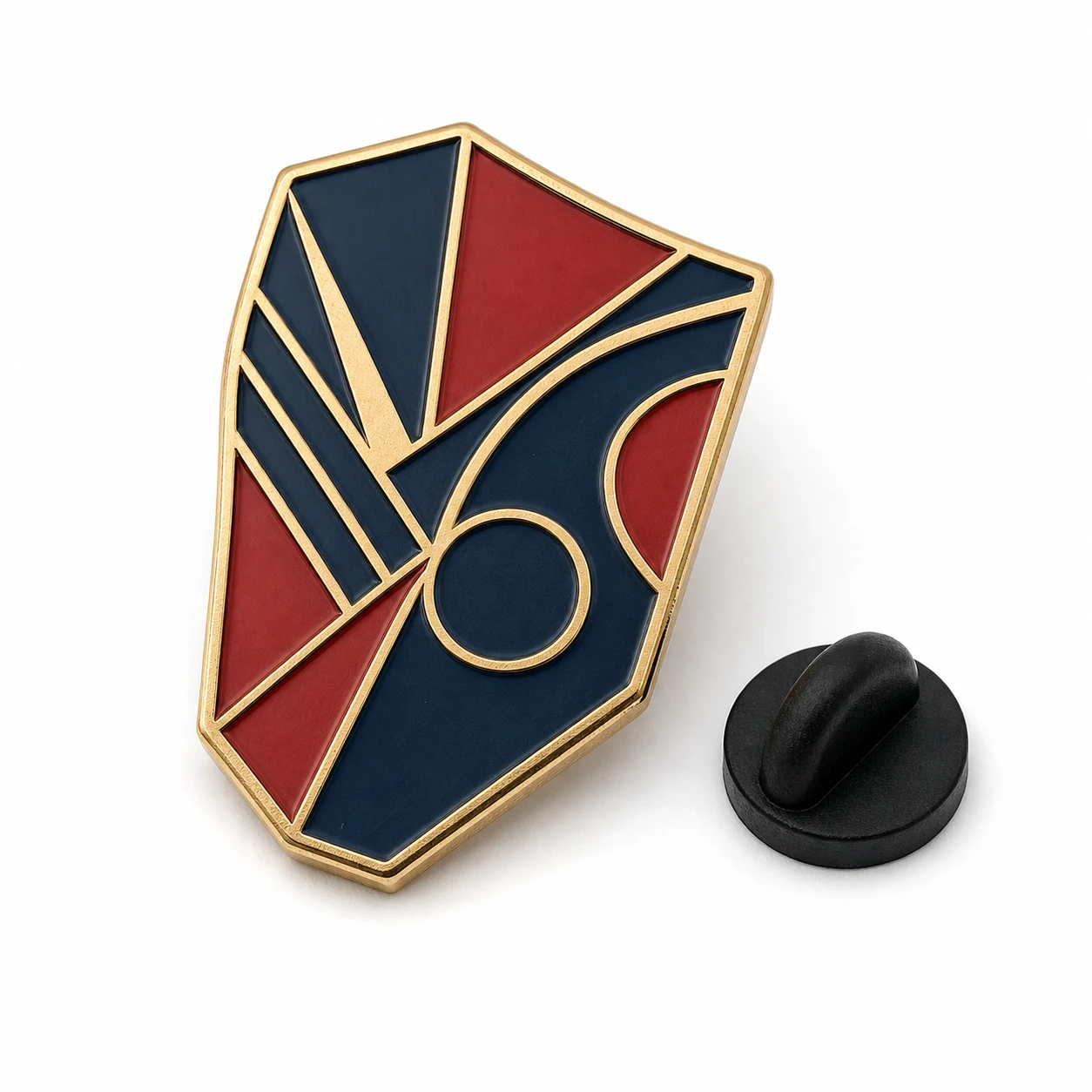
| Rubber backing | Orders requesting an alternative to the standard clutch | Available attachment option | Confirm the specified backing construction, retention after handling, wearer contact, and packing fit |
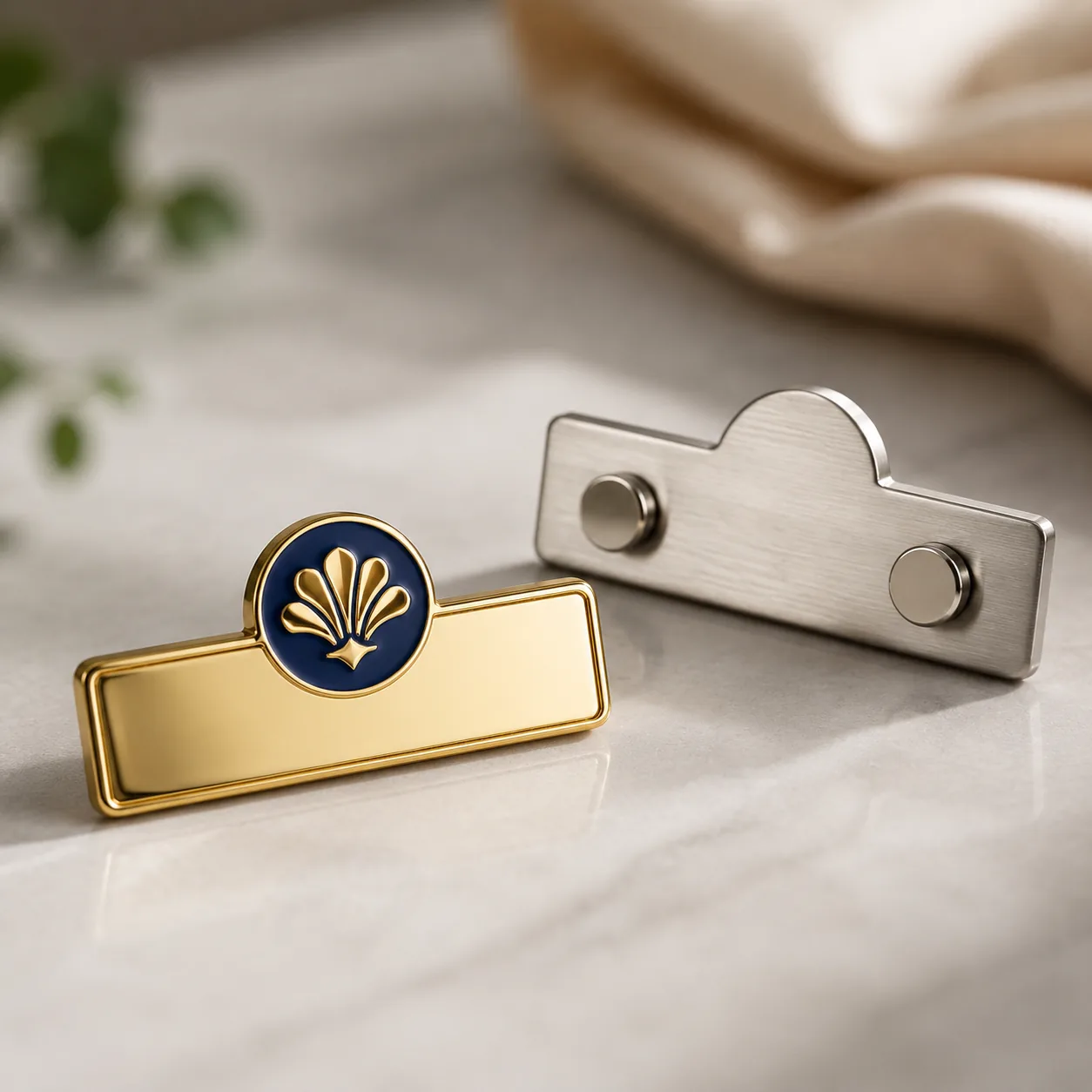
| Magnetic backing | Puncture-sensitive garment applications after suitability review | Available attachment option | Test through the actual fabric stack and confirm suitability for the intended wear environment |
| Safety-pin attachment | Badge-style, event, or other applications that need this fastening format | Available attachment option | Confirm rear orientation, fitting operation, wearer interaction, and whether the face remains correctly positioned |
Butterfly clutch is the clean quotation baseline because it is the stated standard. That does not make it the automatic choice for every order. Rubber, magnetic, and safety-pin options should be requested when they address a defined use requirement, then compared under the same sample conditions. The supplied facts do not rank these enamel pin attachments by strength, comfort, security, or cost. Those points need to be verified in the buyer's sample review rather than assumed.
Define the pull test before sampling
An enamel pin attachment pull test is useful only when it reflects the actual application. A simple pull on an unattached sample may not show how the attachment behaves through a uniform fabric, on a lanyard, on a retail display card, or after packing movement. State the intended use condition before the supplier prepares the sample.
The product facts do not provide a numeric force threshold, test fixture, direction of force, sample quantity, cycle count, or compliance standard. If the buyer needs a measured pull-force result, those details must be confirmed with the supplier and written into the RFQ or sample acceptance plan. Compare results only when the test method and sample condition are the same.
- Name the attachment: butterfly clutch, rubber, magnetic, or safety-pin.
- State the intended condition: garment, lanyard, display card, gift pack, or another specified material.
- Provide the actual fabric type, layer count, or packing arrangement where retention or fabric risk matters.
- Define the handling to be checked, such as fitting, removal, ordinary movement, or distribution handling.
- Set pass conditions for retention, pin alignment, fabric marking, wearer contact, and pack presentation.
- Ask the supplier to confirm any numeric threshold, equipment, and test method before results are used for approval.
A pass should cover the finished buying decision, not attachment resistance alone. A backing that retains the pin but leaves an unacceptable mark on a uniform is not a full pass. Equally, a magnetic option that avoids a through-fabric post but does not retain the pin through the intended garment is not a full pass.
Use fabric and wearer risk as filters
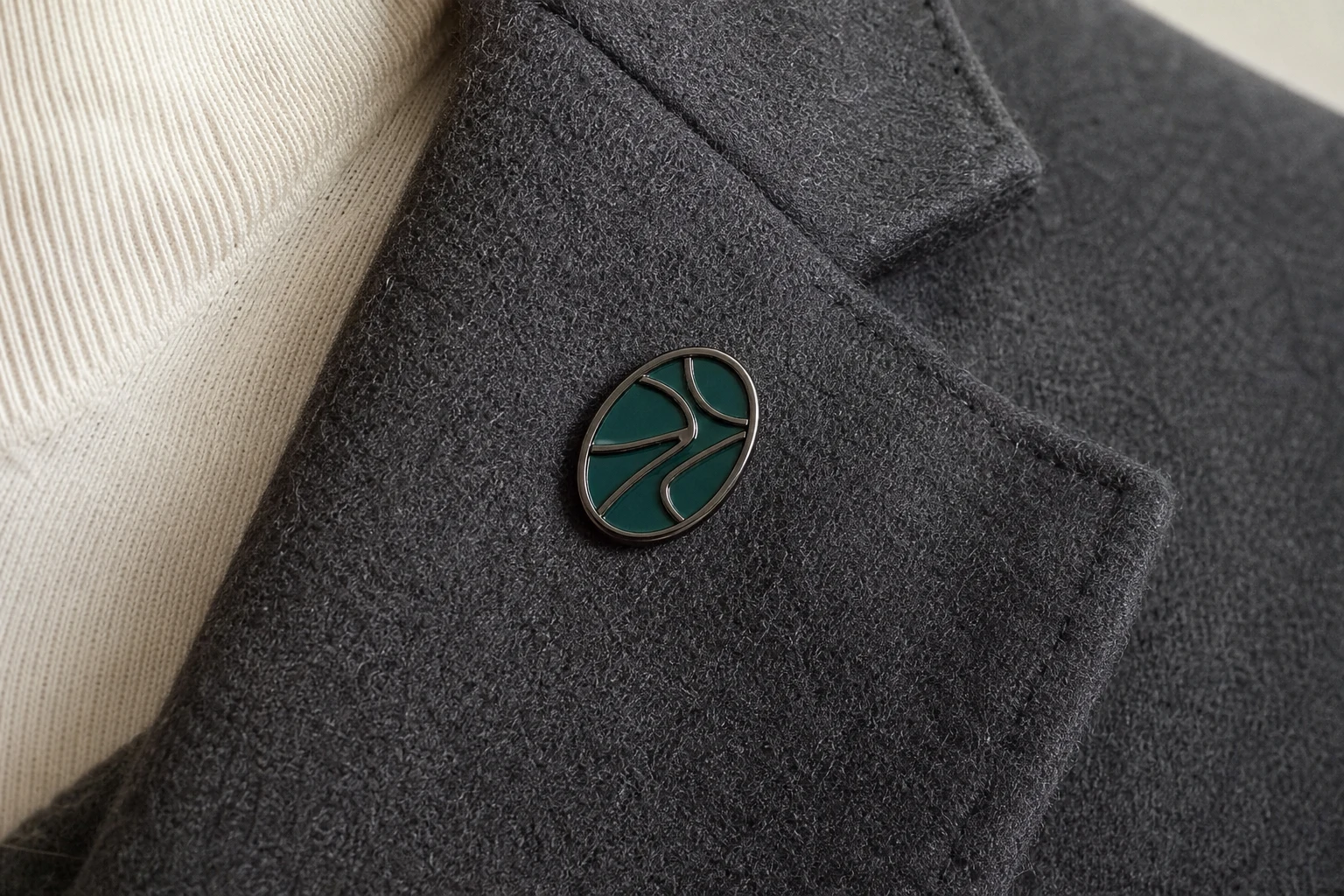
For hospitality uniforms, test against the actual garment rather than a thin sample board. Repeated fitting, removal, movement, and applicable laundering policies can affect the buying decision. Where the buyer needs to avoid a through-fabric post, magnetic backing merits comparison, but retention must be checked through the full intended fabric stack. The buyer should also confirm that magnetic backing is suitable for relevant workplace and wearer-use policies.
For attachments using a post or pinning action, inspect the real material for stretching, visible holes, distortion, and rotation after fitting. Review safety-pin attachment as its own rear configuration: confirm that it can be operated appropriately for the intended application and that the pin face sits in the required orientation after normal movement.
| Buyer scenario | Primary risk | Evidence to request |
|---|---|---|
| Hospitality uniforms | Fabric marking, repeated wear, and movement | Sample test through the actual uniform material and approval of the intended backing |
| Retail brand merch | Customer handling and product presentation | Review the pin fitted to its proposed retail presentation and after normal handling |
| Conference lanyards | Movement, orientation, and rapid issue | Check fitting speed, face alignment, and retention in the intended wearing position |
| Anniversary gifts | Perceived value and finish protection | Review attachment, front finish, and gift presentation together |
| Subscription box add-ons | Packing movement and unboxing condition | Check that the packed construction arrives with the backing and face in acceptable condition |
Separating fabric risk from attachment preference keeps the decision evidence-led. A buyer can prefer magnetic backing for puncture-sensitive uniforms or butterfly clutch for a familiar standard format, but neither preference replaces a sample check in the actual use condition.
Approve rear layout with the finish
Rear layout can determine whether an otherwise suitable attachment holds the pin level. The supplied size range is 0.75-2 inches, or 20-50 mm. The product facts do not specify post count, post placement, rear-bar geometry, or attachment dimensions. Buyers should not assume a rear layout from front artwork alone. Request rear artwork, a drawing, or a physical sample for approval.
Review pin construction with the attachment. Soft enamel is supplied at 1.2 mm and has raised metal lines with recessed glossy wells. Hard enamel is supplied at 1.5 mm and is filled, baked, refilled, baked again, then polished flush. The supplied facts position hard enamel for premium gifting and jewelry-adjacent brands, making finished-sample review of the rear layout, attachment, and front finish particularly important.
- Check whether the face stays level when fitted and moved.
- Check whether the selected attachment remains practical to grasp and operate at the specified pin size.
- Review the rear layout on the physical sample, particularly toward the stated 50 mm upper size.
- Confirm that the front artwork will present in the intended orientation after fitting.
- Inspect the full sample where glitter, glow-in-dark, transparent, metallic, or sandblasted effects are specified.
Price and packaging need separate approval
The supplied price ranges are $0.30-$1.20 per piece for soft enamel and $0.55-$1.80 per piece for hard enamel. They describe the enamel pin type and do not establish an attachment-specific surcharge or total landed cost. Ask the supplier to quote the requested attachment separately from the standard butterfly-clutch baseline so procurement can compare like for like.
The product facts do not define a packaging format, retail card, gift box, polybag, or display method. Packaging must therefore be treated as an open requirement. The backing may affect pack thickness, handling, and the risk of the pin face contacting another surface during distribution.
- Confirm the attachment-specific unit price, tooling implications if any, and minimum-order effect with the supplier.
- Test the approved attachment in the proposed retail, event, gift, or subscription-box packing condition.
- Check that the backing remains with the pin during ordinary packing and distribution handling.
- Inspect protection of the hard-enamel polished surface or specified special effect after packing.
- Keep the approved attachment and packing sample with the order record for consistent reorders.
Write the RFQ around the approval evidence
A complete RFQ lets the supplier quote the actual decision instead of quoting a generic pin. The supplied specification supports brass as the default base metal, copper as an option, up to 8 Pantone colors per design, 12 standard plating finishes, and gold and silver as the most popular plating choices. MOQ is 100 pieces per design. The listed sample lead time is 5-7 days, with bulk production listed at 18-25 days.
- Product and use case: enamel pins for the named uniform, retail, event, gift, or subscription application.
- Finish: soft enamel at 1.2 mm or hard enamel at 1.5 mm.
- Size: specify within the supplied 0.75-2 inch or 20-50 mm range.
- Material and appearance: brass by default or copper, Pantone colors, plating, and any special effects.
- Attachment: name butterfly clutch, rubber, magnetic, or safety-pin explicitly.
- Rear layout: request artwork, drawing, or sample confirmation of the attachment configuration.
- Test plan: state material, handling condition, pass criteria, and any numeric pull-test method or threshold to be confirmed by the supplier.
- Packaging: specify the proposed presentation or require a packing sample for approval.
- Timing: schedule the attachment test in the 5-7 day sample stage before releasing the 18-25 day bulk run.
Approve the backing with the finished pin, not after front artwork approval. Check color, plating, enamel finish, size, rear layout, attachment retention, fabric interaction, and packaging together. For product specifications and an RFQ starting point, use /products/enamel-pins.html. Release bulk production only after the chosen attachment has passed the agreed enamel pin attachment pull test in the real use condition.
Ready to get this made?
Send your sketch, target quantity and ship-date. Detailed quotation in 12 hours.