Custom Trading Pins for Sports Teams: What Actually Affects Cost
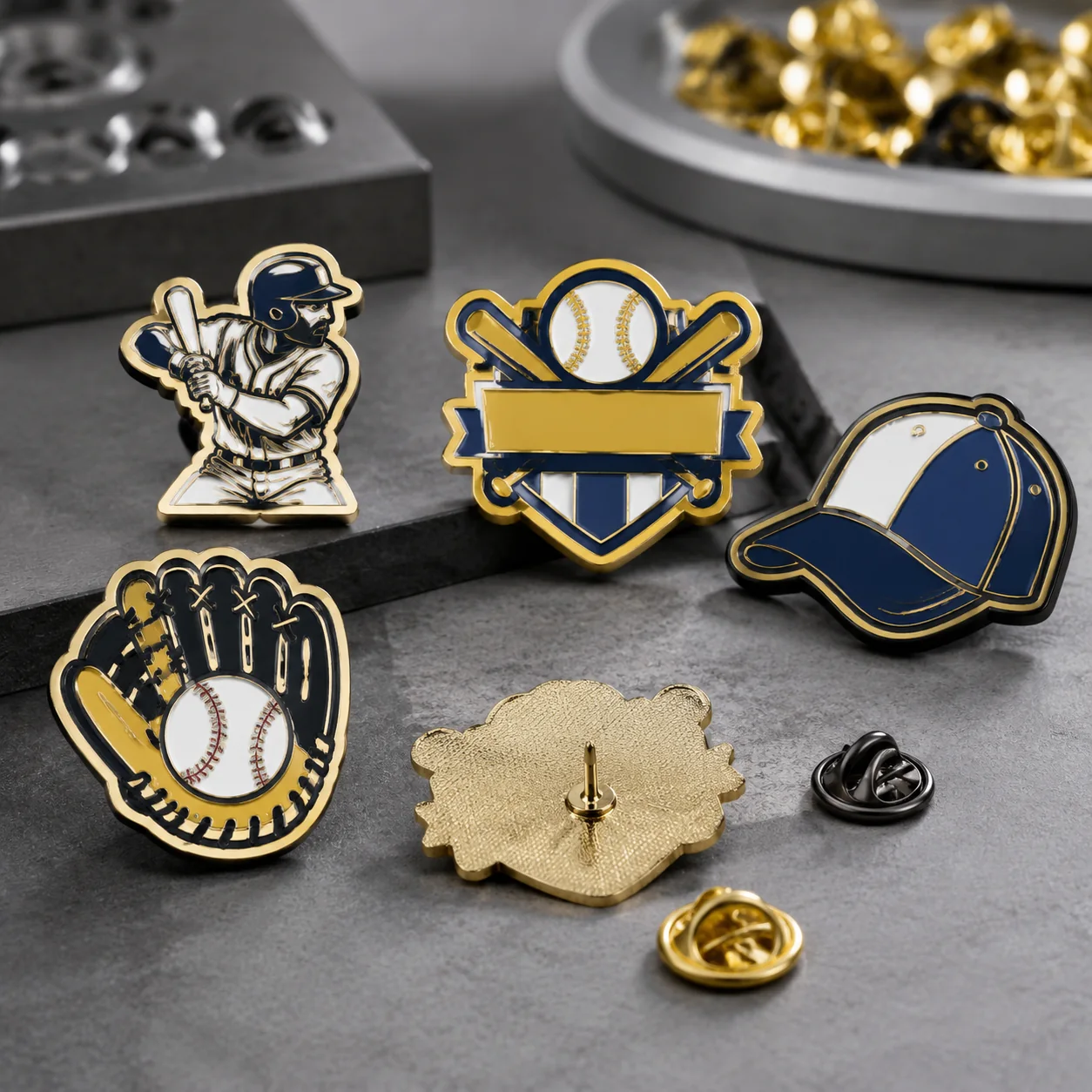
Trading pin cost factors include finished size, decoration, upgrades such as glitter or moving parts, plating, quantity per design, and the production time available before an event. The supplied FOB range for custom trading pins is $0.45 to $2.50 per piece, but no fixed surcharge is provided for any individual feature. Teams should establish a bold, tradeable base design first, then add features that strengthen the design and fit the event schedule.
Start With the Pin Players Will Want to Trade
A tournament trading pin serves a different purpose from a small lapel pin. Baseball, softball, and youth hockey teams use it as a visible team marker and a trading piece on crowded lanyards. The buying decision is therefore not limited to finding the lowest unit price. It is about directing the available budget toward features that make another player notice, remember, and keep the pin.
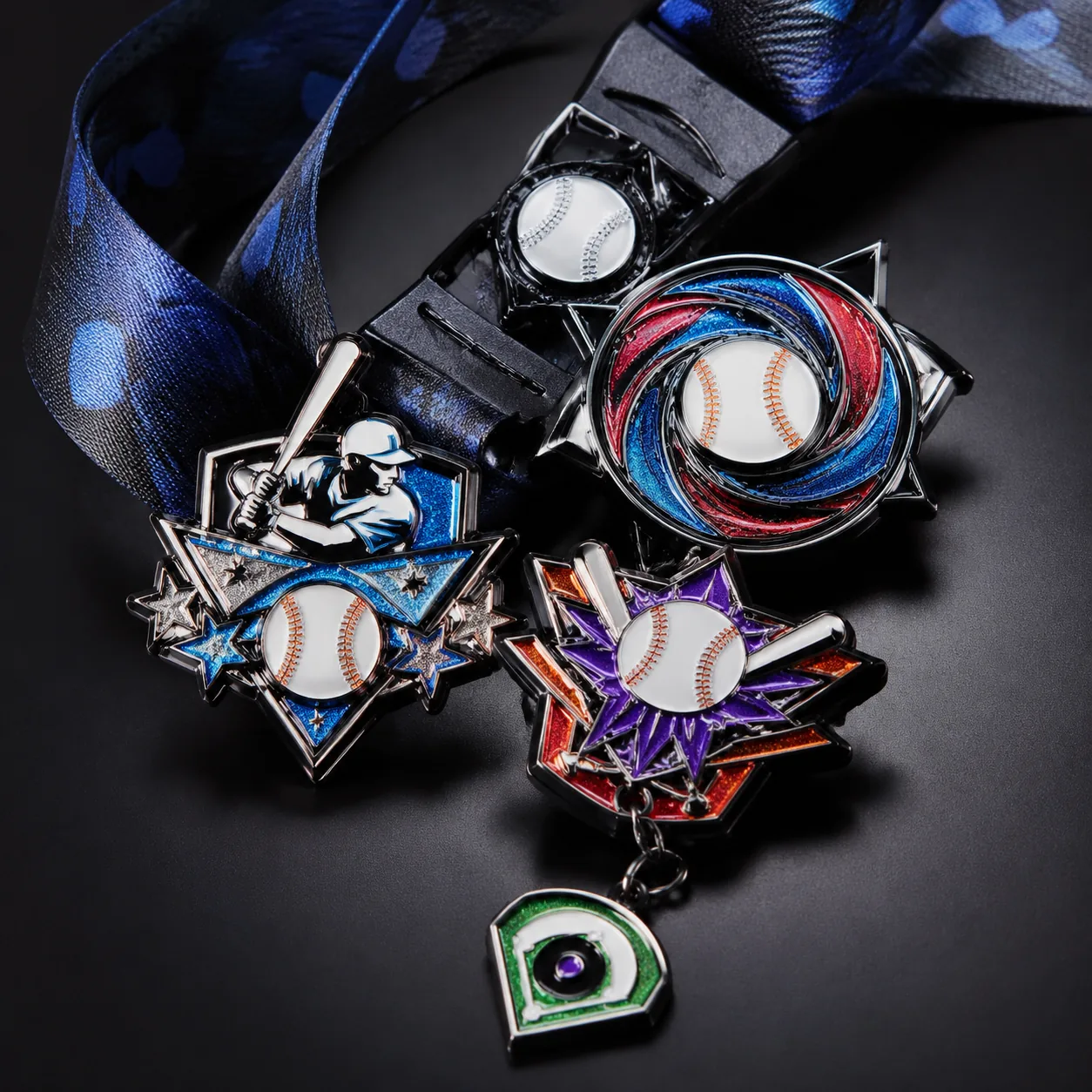
The standard format is a larger soft-enamel pin with bold color. Available sizes are 1.5 inches to 2.5 inches, which is larger than a typical lapel-pin format, and the listed thickness range is 1.2 mm to 1.5 mm. Teams can add offset print, glitter enamel, plating, and upgrades including spinners, sliders, danglers, bobble-heads, stained-glass cutouts, glow-in-the-dark elements, and blinking LEDs.
Build choices around trading impact. A readable team identity, clear color contrast, and a visible silhouette come before novelty. Size and bold soft-enamel color usually create the base visibility. An upgrade should serve the artwork: glitter can highlight a team color, a spinner can animate a ball or mascot, a dangler can carry the event year, and an LED can support a night-game concept. Several effects without a focal point can make the design harder to read and the quote harder to compare.
The Main Trading Pin Cost Factors
The supplied FOB range is $0.45 to $2.50 per piece for custom trading pins. It is a reference range across configurations, not a feature-by-feature price list. The available product information does not assign a fixed dollar amount to a larger size, a plating finish, glitter, or a moving component. Request a quote against one complete written specification instead of estimating a final price by adding assumed upgrade charges.
| Cost factor | Available choices | Buyer decision |
|---|---|---|
| Size | 1.5 inches to 2.5 inches | Use a larger format when lanyard visibility and trade appeal justify it. |
| Decoration | Soft enamel, offset print, glitter enamel | Use soft enamel as the standard base; add print or glitter where the artwork needs that effect. |
| Upgrades | Glow-in-the-dark, spinner, slider, dangler, bobble-head, stained-glass cutout, blinking LED | Choose an upgrade that reinforces the central team or tournament concept. |
| Plating | Gold, silver, black nickel, antique, dyed-black | Choose the finish for contrast with the enamel colors and artwork. |
| Quantity | 100 pieces per design minimum | Plan each design separately because the MOQ applies per design. |
| Lead time | Sample 5-7 days; bulk 15-22 days; rush options before season | Approve the specification early enough to allow for sample and bulk production. |
A quote for a 1.5-inch soft-enamel pin with a butterfly clutch is not directly comparable with a 2.5-inch pin using glitter, dyed-black plating, and a spinner. Both are trading pins, but they have different physical and visual specifications. State the size, decoration, plating, attachment, quantity per design, and every upgrade in each quote request.
Set Size and Decoration Before Adding Effects
Size is both a design and budget decision. A 1.5-inch pin can suit a restrained layout with a simple logo, team name, and season reference. A 2.5-inch pin offers more visual presence for a mascot, large jersey number, ballpark theme, or multi-color artwork. The right choice depends on whether the artwork benefits from more space, rather than on size alone.
Do not select the largest available size automatically. Enlarging a simple logo may not improve its trade appeal as much as using strong color contrast and a considered plating choice. In the other direction, putting a detailed mascot, event name, sponsor reference, and several effects into a small outline can weaken readability. The artwork should determine how much space the pin needs.
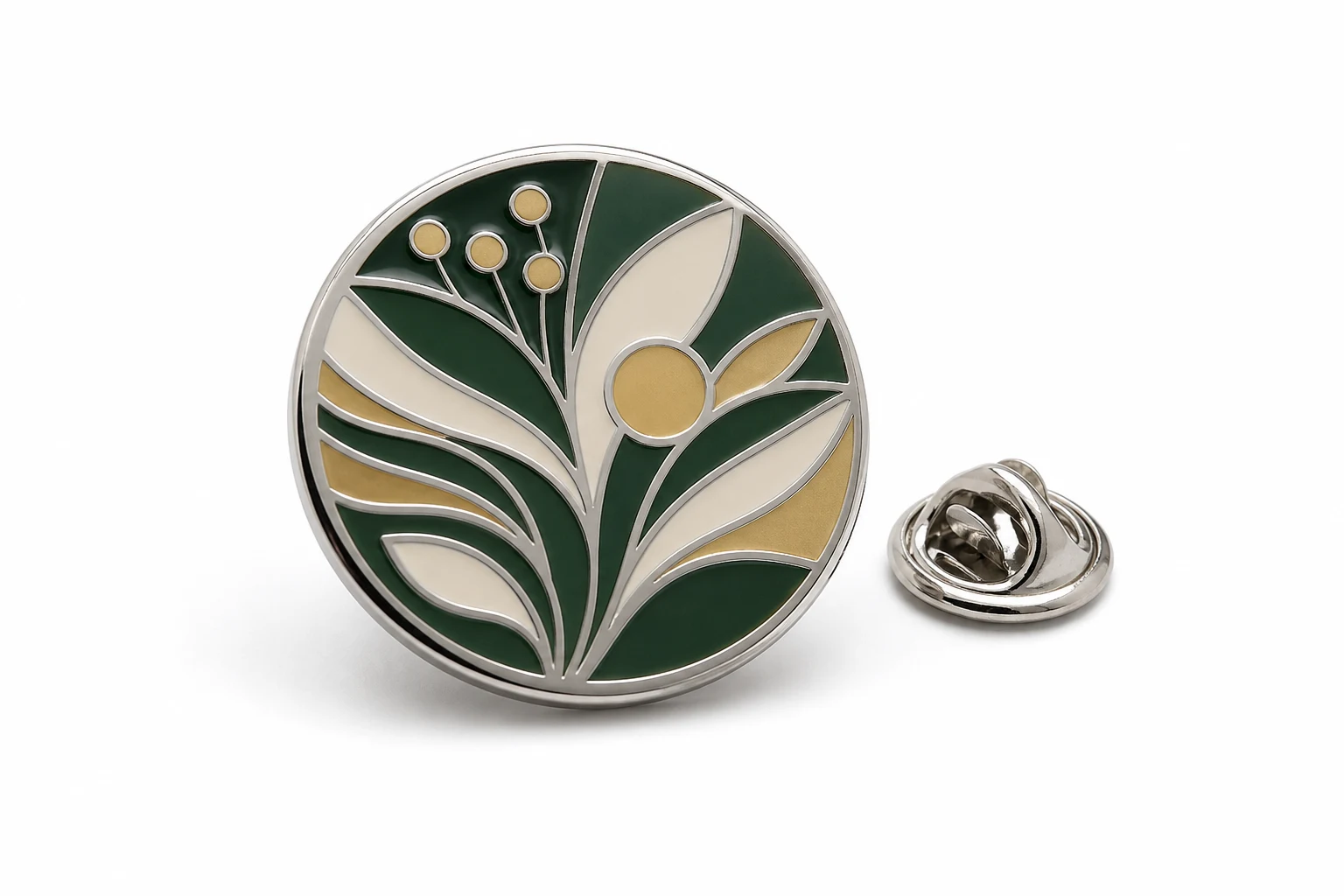
Soft enamel is the standard decoration for trading pins. Offset print and glitter enamel are also available. Glitter works best when it supports an important visible area, such as a team color, star, water detail, or jersey element. Offset print is an option to discuss when the artwork calls for it. Include the requested thickness within the listed 1.2 mm to 1.5 mm range in the quote brief so physical requirements are not left open.
Choose One Memorable Upgrade With a Purpose
Spinners, sliders, danglers, bobble-heads, stained-glass cutouts, glow-in-the-dark elements, and blinking LEDs can make a pin more memorable because they change what a player sees or does with it. They are most effective when they support the main image rather than compete with it.
A spinner can fit a baseball, hockey puck, compass, or mascot detail. A slider can suggest movement. A dangler can separate the main team image from a year, location, or tournament callout. A bobble-head suits a mascot-led concept. Glow and blinking LEDs can be relevant for night games. Stained-glass cutouts work best where the artwork has clear open areas around the effect.
For a cost-conscious tournament program, a strong soft-enamel base pin plus one visible enhancement is usually the clearest purchase brief. A flagship travel-team pin for a major event may justify a more ambitious configuration, but each added feature should be evaluated by whether it improves the pin's appearance and trade value on a lanyard.
Use Plating and Attachment Details to Keep Quotes Comparable
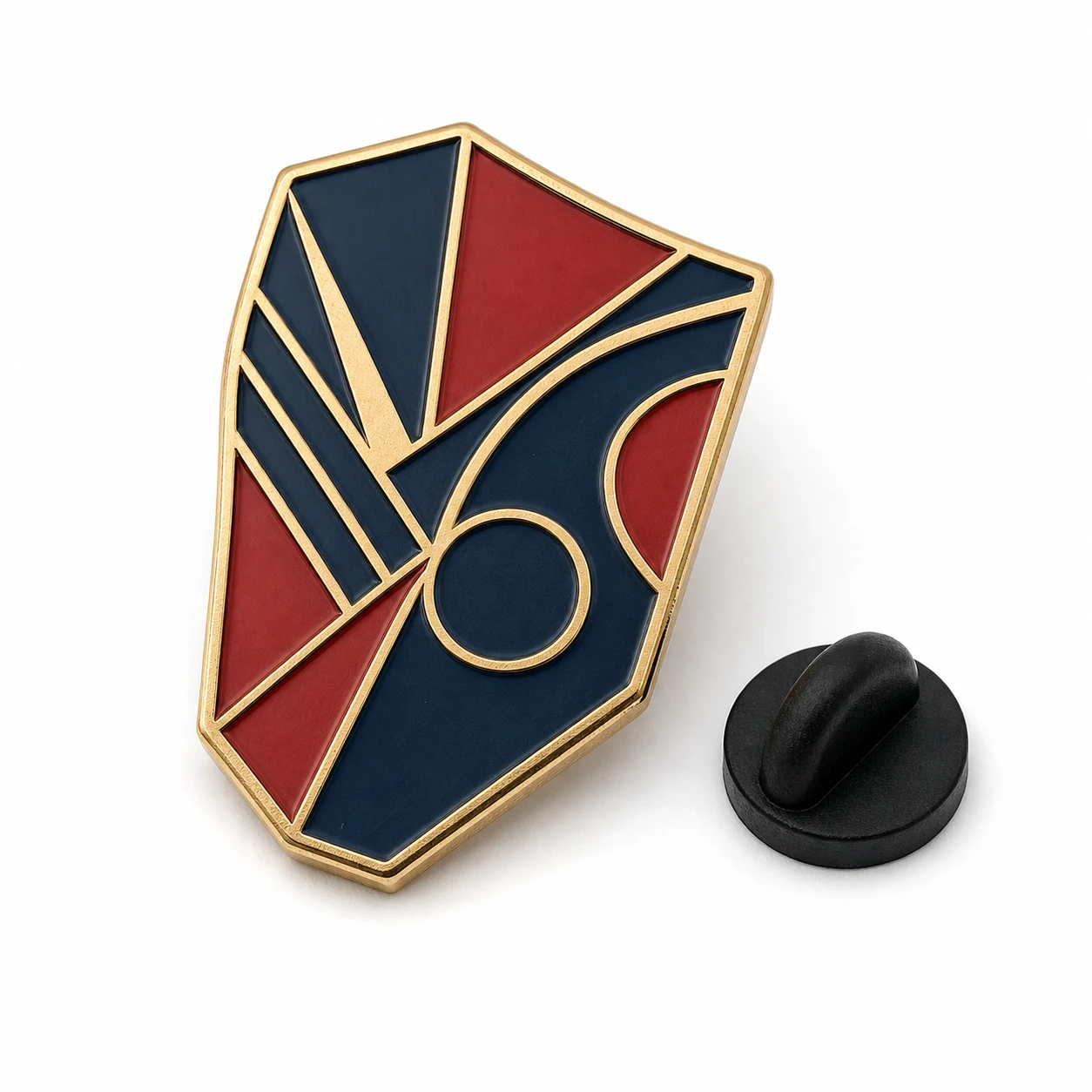
Available plating options are gold, silver, black nickel, antique, and dyed-black. Plating frames the enamel colors and creates the visible metal lines in the design. Dyed-black is identified as popular for trading pins because it can make bright colors stand out. Gold and silver can support a clean metallic look, while antique finishes create a different visual character.
Choose plating alongside the artwork and enamel palette, not after the design is complete. Dark artwork needs enough distinction between outlines and color fields to remain readable. Bright primary colors may benefit from dyed-black framing. No plating is universally best; the correct finish is the one that makes the chosen artwork clearer and more distinctive.
Attachment should also be included in the specification. Butterfly clutch is standard, and rubber clutch is available. The attachment is not listed as a separate cost driver, but leaving it unspecified can make supplier quotes less comparable.
Plan Quantity by Design, Not Only by Team Headcount
The MOQ is 100 pieces per design. This matters when an organization is considering a player pin, coach pin, sponsor pin, and tournament commemorative pin. A total order of several hundred pins does not remove the need to meet the minimum for each separate design. Decide which version is the primary trade piece before commissioning alternate artwork.
Quantity planning should account for players, officials, sponsors, and trading inventory, as well as the importance of the event. The supplied information does not provide quantity-specific price breaks or recommend an order quantity above the 100-piece minimum. Ask for quotes at the actual quantity options under consideration and hold every other specification constant when comparing them.
- Set the primary trading-pin design before funding alternate versions.
- Confirm that every separate design meets the 100-piece MOQ.
- List intended recipients, including players, coaches, sponsors, and trading inventory.
- Request comparable quotes using the same size, finish, attachment, and upgrades.
- Keep a reserve for the event instead of ordering only for roster size.
- Document the approved quantity for each design in the final purchase brief.
Treat Lead Time as a Design Constraint
The stated schedule is 5-7 days for a sample and 15-22 days for bulk production. Rush options are available before season when the schedule is tight. For a Cooperstown trip, Disney-area tournament, Little League event, travel season, or youth hockey tournament, this timeline should shape the approval calendar from the beginning.
The sample step is the point at which the team can assess whether the artwork has become a trade-ready pin. Use it to review size, plating contrast, enamel or print placement, and whether a selected upgrade reads clearly. The supplied schedule does not define rush duration or pricing, so rush availability should be confirmed for the complete specification rather than assumed.
The available information also does not state whether the production periods include artwork approval, shipping, packing requirements, inspection criteria, or acceptance tolerances. Buyers with event-critical dates should obtain those details separately and provide the required event date in the quote request.
Send a Complete Brief for Custom Trading Pin Quotes
A quote-ready brief turns the creative concept into a comparable purchasing decision. Start with the team logo and the event or season message, then state each physical and visual choice. This gives the supplier enough information to quote the selected configuration on the published FOB basis instead of returning a generic range.
- Attach the team logo or artwork and name the tournament, season, or trip.
- Choose a finished size from 1.5 inches to 2.5 inches.
- Include the requested thickness within the listed 1.2 mm to 1.5 mm range.
- Specify soft enamel, offset print, glitter enamel, or the intended combination.
- Name the plating: gold, silver, black nickel, antique, or dyed-black.
- List every requested upgrade, including any spinner, slider, dangler, bobble-head, glow-in-the-dark effect, stained-glass cutout, or blinking LED.
- State butterfly clutch or rubber clutch.
- Provide the quantity for each separate design and confirm the 100-piece minimum.
- Give the required event date and account for the 5-7 day sample and 15-22 day bulk production periods.
- Confirm the FOB basis, rush availability where needed, and any delivery or quality requirements not covered by the product specification.
For sports clubs and tournament organizers, the objective is a custom trading pin with one strong visual identity, enough size to be seen, and upgrades that fans will trade and keep. Finalize artwork early, then request a quote for the exact configuration and quantity rather than an unqualified unit price.
Ready to get this made?
Send your sketch, target quantity and ship-date. Detailed quotation in 12 hours.