Blank Pet Tag Inventory Planning for Retail Engraving
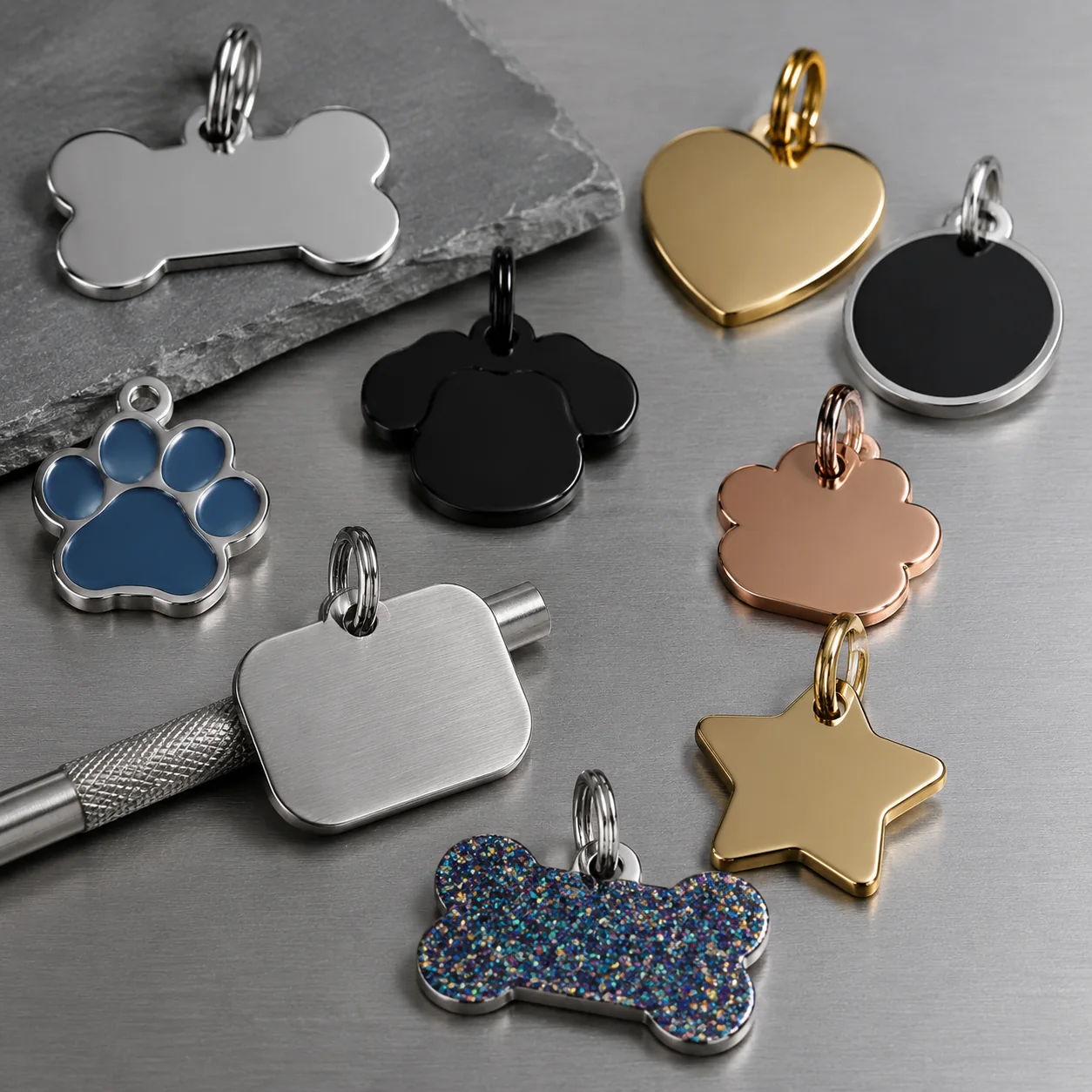
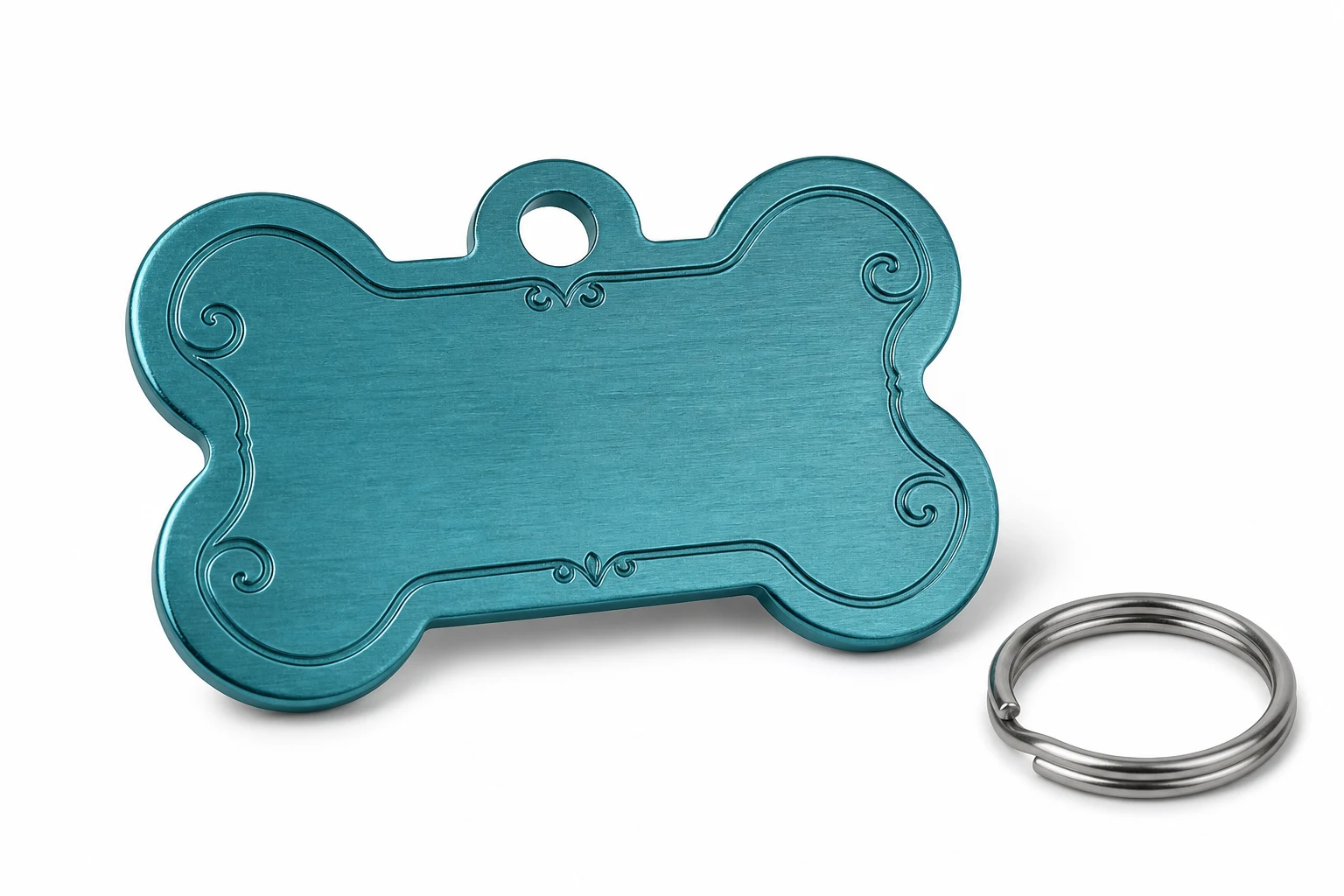
For blank pet tag inventory planning, stock blank shells that can serve many customer orders instead of tying inventory to finished names. Build a controlled mix of bone, round, heart, tag and paw shapes in the typical 20-35 mm size range. Use anodized aluminum for value and color, stainless steel or brass for a more premium metal option, and zinc alloy with enamel where a decorative color face is part of the program. In the RFQ, require approved-sample matching for the engraving face, hole placement, finish and attachment because consistent shells are essential for reliable in-store personalization.
Decide What the Store Should Stock
For engraving kiosks and pet retail chains, blank shells are usually the practical inventory unit. A customer's pet name and phone number change from order to order, while one blank shell can be used for many future orders. This lets the store hold reusable inventory and personalize each piece at the point of sale.
The supplied Custom Pet ID Tags range supports blank shells from 100 pieces per design, with names engraved per piece. Typical tag sizes are 20-35 mm for small, medium and large collar use. Standard shapes are bone, round, heart, tag and paw, with custom die-cut outlines available when a retailer needs a specific branded silhouette.
The buying decision is not whether to offer every available style. It is how to create enough visible choice for personalized dog tags for pets without creating slow-moving SKUs, difficult kiosk setup or too many sample references for incoming inspection.
Build the Shape and Material Matrix
Shape is a major merchandising choice because customers select it before personalization begins. Bone and round shells can form the core range, while heart and paw shapes add giftable or pet-specific variety. The tag shape provides a more conventional ID appearance. Custom die-cut shells should be treated as a separate program decision because the outline needs its own approval and MOQ planning.
| Shape | Inventory role | Planning consideration |
|---|---|---|
| Bone | Core dog-oriented shell | Keep finishes limited at launch to avoid excess variants |
| Round | Universal option for dogs and cats | A simple layout can suit many personalization orders |
| Heart | Giftable or emotional retail option | Use as controlled variety beside core shapes |
| Tag | Traditional ID-focused option | Confirm usable engraving area for the selected size |
| Paw | Pet-specific display option | Check that the outline does not crowd the engraving field |
| Custom die-cut | Brand or chain-specific outline | Approve the physical outline before bulk production |
Material should support a clear retail price ladder. Anodized aluminum is described as light, rust-proof and available in eight collar-matching colors. Stainless steel and brass offer a more premium metal feel and are described as resistant to wear from a busy collar. Zinc alloy with enamel, epoxy-dome print and glitter support decorative or branded styles, but those treatments need to leave sufficient space for the selected engraving layout.
| Material or finish | Use in the program | Buyer consideration |
|---|---|---|
| Anodized aluminum | Value positioning and color choice | Control the color range so stock does not fragment |
| Stainless steel | Premium metal option | Specify size, finish, sides and attachment in the quote |
| Brass | Alternative premium metal look | Treat as a separate approved material option |
| Zinc alloy with enamel | Decorative or branded color face | Confirm where customer personalization will be placed |
| Epoxy-dome print or glitter | Selected visual retail styles | Use only when the decoration supports the product layout |
The supplied MOQ is 100 pieces per design. Before assigning quantities, confirm with the supplier whether each selected shape, size, material, color, front artwork or decoration is treated as a separate design for MOQ purposes. That definition determines whether the proposed assortment is commercially realistic.
Specify Engraving Layout and Sides
Engraving layout is an operational requirement, not only a design choice. The supplied facts state that double-sided layouts can place a pet name on one face and an owner phone number on the other. This is a useful default when the store needs to preserve readable text without compressing all details onto one face.
Single-sided engraving can suit a simpler product or a shell with a decorative branded front. The trade-off is text capacity. The usable engraving field can be much smaller than the outside dimension on narrow, shaped or decorated tags, so buyers should request an approved artwork layout or drawing that shows the intended engraving area for each shell.
- Specify single-sided or double-sided engraving for every SKU.
- For double-sided tags, define the intended name and phone-number faces.
- Confirm that enamel, epoxy-dome print or other decoration does not occupy the required engraving area.
- Map the selected 20-35 mm sizes to the collar-size categories used by the retailer.
- Run the kiosk's actual engraving process on approved samples before authorizing bulk production.
Control Flatness, Hole Placement and Batches
Surface flatness is a primary shell check for an engraving kiosk. The supplied product facts do not provide a flatness tolerance or test method, so the buyer should not assume either one. State that the engraving face must match the approved sample, and add a numeric requirement only when the retailer and supplier have agreed how it will be measured.
Hole placement also needs to be consistent. Split rings are the default attachment, while S-hook, screw-on and slide-on collar styles are also listed. On a split-ring tag, the hole position affects how the tag hangs and how much usable space remains for text. Inconsistent hole locations can make an otherwise consistent engraving layout appear off-center.
| QC point | Required check | Kiosk impact |
|---|---|---|
| Engraving face | Flat, usable face matches the approved sample | Supports repeatable placement and engraving results |
| Hole placement | Location is consistent within the approved shape and size | Protects hanging position and text layout |
| Shape outline | Outline matches the approved sample | Keeps retail display and fixture setup consistent |
| Finish | Color, metal finish, enamel, print or glitter matches the approved sample | Prevents mixed-looking stock within one SKU |
| Attachment | Split ring, S-hook, screw-on or slide-on style matches the order | Ensures the sold tag works with the intended collar use |
Use the approved physical sample as the production reference for each active SKU. Record the shape, material, size, finish, engraving side and attachment on the purchase order. This gives the retailer a practical comparison point when replenishment batches arrive without inventing technical tolerances that the supplied facts do not establish.
Plan MOQ, Lead Time and Reorders
The supplied planning facts are a 100-piece MOQ per blank-shell design, a 4-6 day sample lead time and a 10-15 day bulk lead time. Apply those facts to individual approved designs rather than looking only at the total order quantity. A broad assortment can appear well funded overall while individual variants remain too thin to justify a reorder.
| Planning variable | Supplied fact | Buyer action |
|---|---|---|
| MOQ | 100 pieces per design for blank shells | Keep the launch range narrow enough to support each approved design |
| Sample timing | 4-6 days | Approve engraving behavior, shape, hole placement and finish before bulk |
| Bulk timing | 10-15 days | Set reorder points before stock reaches a store-level shortage |
| Price | $0.20-$1.40 per piece FOB | Compare pricing only after specifications are fixed |
The FOB range is a sourcing reference, not a final landed cost. Freight, duties, local handling, store labor and packaging are not defined by the supplied range. Confirm the quote basis, packaging method, production start point and shipment schedule with the supplier before using lead time or unit price in a retail forecast.
Build a Controlled Opening Assortment
A practical opening assortment should cover value, premium and decorative buying motivations while keeping the core shell pool simple. Start with standard shapes and the material options most likely to support repeated engraving orders. Use the retailer's own sales data or a controlled pilot to decide whether additional sizes, colors, heart shapes, paw shapes or custom die-cuts earn a permanent replenishment slot.
- Use bone and round shapes as likely core candidates for a broad pet retail program.
- Add heart or paw shapes as controlled variety rather than duplicating every finish across every shape.
- Use anodized aluminum where color and value are the priority.
- Use stainless steel or brass for the premium metal portion of the range.
- Reserve enamel, epoxy-dome print, glitter and custom die-cuts for programs with a clear decorative or branding requirement.
- Keep shell inventory blank so the same approved SKU can serve many customer names.
RFQ Checklist for Procurement
The RFQ should turn the available product options into specific, inspectable line items. It should be precise where product facts are supplied and explicit about buyer-defined requirements where the facts do not provide a tolerance, test method or packaging standard.
- Category and use case: Custom Pet ID Tags for in-store personalization.
- Material: stainless steel, brass, anodized aluminum, or zinc alloy with enamel.
- Shape: bone, round, heart, tag, paw, or custom die-cut outline.
- Size: selected dimension within the typical 20-35 mm range.
- Decoration: deep laser engraving, soft enamel color fill, epoxy-dome print or glitter, where required.
- Engraving sides: single-sided or double-sided, with the intended text layout.
- Attachment: split ring by default, or S-hook, screw-on or slide-on collar style.
- MOQ: confirm the 100-piece-per-design basis and the supplier's definition of a design.
- Timing: confirm sample timing against 4-6 days and bulk timing against 10-15 days.
- QC reference: require production to match the approved sample for engraving face, hole placement, outline, finish and attachment.
- Packaging: state the required packing and labeling method because no packaging specification is supplied.
Final Buying Recommendation
For blank pet tag inventory planning, buy a controlled range of blank shells, then engrave names and phone numbers per piece. Prioritize standard shapes, approved materials, a defined engraving layout and sample-based QC before expanding into decorative or custom variants. The strongest first assortment is one that offers visible choice while remaining easy to replenish and inspect.
Issue an RFQ that fixes the shell matrix, selected 20-35 mm sizes, engraving sides, attachment, MOQ basis and sample approval process. Include explicit requirements for the flat engraving face, hole placement and batch consistency. Where a tolerance, test method, packaging format, final price or shipment detail is needed, confirm it with the supplier before releasing the purchase order.
Ready to get this made?
Send your sketch, target quantity and ship-date. Detailed quotation in 12 hours.