Your First China Promo Order: 9 Decisions That Set Cost and Risk
Run the launch kit as one sourcing program, not four unrelated buys
First-time importers often split a promo order across multiple vendors to save a few cents per SKU: one factory for pins, another for keychains, a patch supplier found on a marketplace, a local print shop for backing cards, and a freight forwarder involved only after production finishes. The visible benefit is a lower quoted unit price on one item. The hidden cost is mismatched Pantone shades, inconsistent plating tone, duplicate tooling approvals, incompatible card and bag sizes, and cartons that miss the vessel or air booking because no one owned the full program.
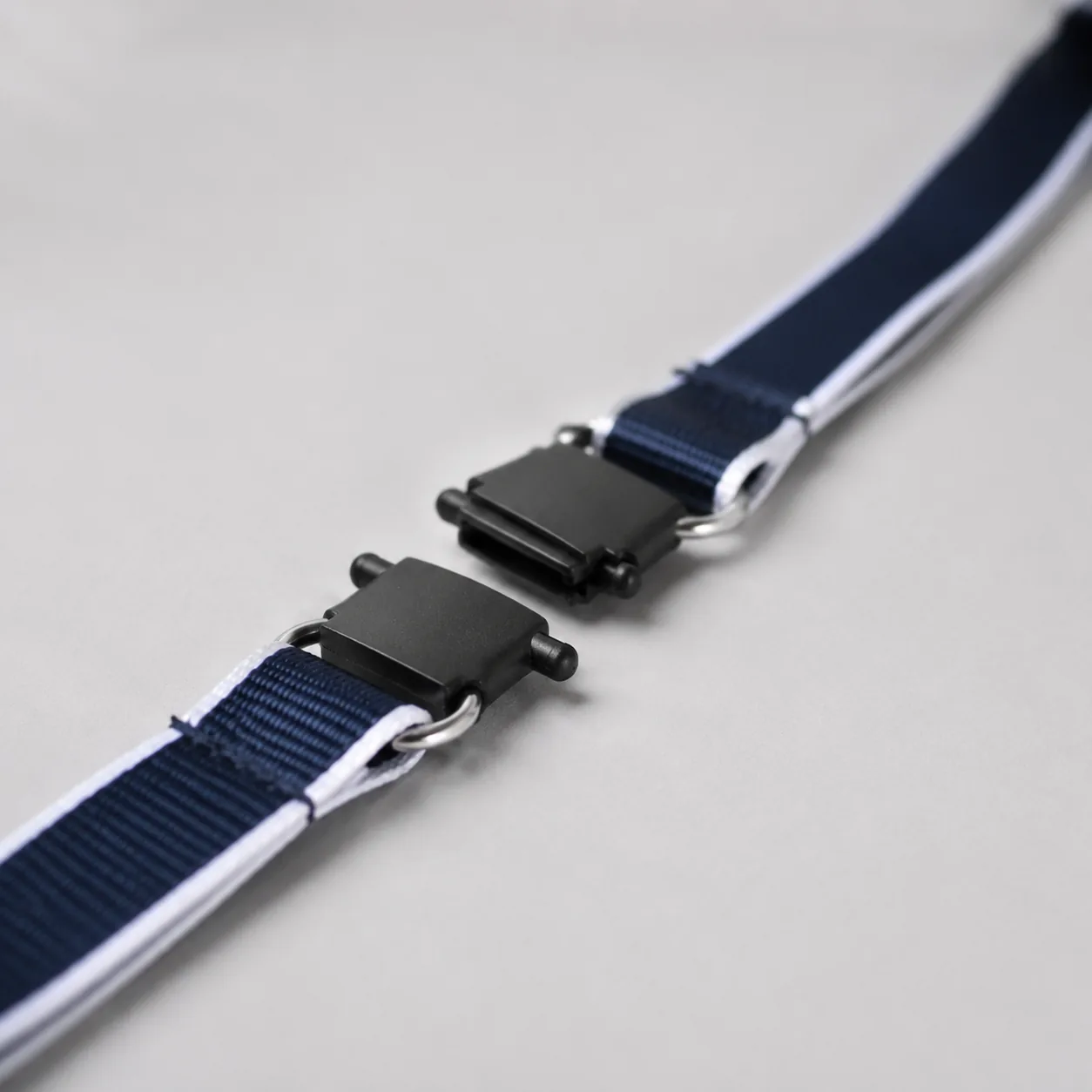
For a first order tied to a non-movable event date, the safer model is one coordinated supplier or one lead vendor managing qualified sub-suppliers under a single written specification package. That package should include artwork references, Pantone Solid Coated calls, packaging standards, inspection rules, carton marks, and one production calendar. In practical terms, think of a 2026 order for 1,000 event welcome kits for a distributor conference in Germany, required in the warehouse in 8 weeks. Each set contains one 32 mm soft enamel pin, one 45 mm zinc alloy keychain, one 70 mm woven patch, and one 20 x 900 mm sublimation lanyard. Each SKU is individually carded and bagged, then packed by SKU for final event assembly at destination.
The first decision is therefore not headline unit cost. It is whether the supplier can control four processes, one approval chain, and one shipping deadline. On a first import order, a vendor that coordinates tooling, proofing, color matching, spare quantity, and final inspection across the full kit is usually lower risk than buying four cheapest quotes independently, even if one pin factory is USD 0.04 cheaper and one patch factory is USD 0.06 cheaper.
Decision 1: Freeze the build before asking for price
Most first RFQs are too vague to price correctly. A logo file and the request for a 'best FOB price' is not a specification. Costs change as soon as thickness, plating, attachment, card size, or bagging method is clarified. That is not necessarily supplier gamesmanship. It usually means the commercial basis was never fixed in the first place.
For this kit, the quote-ready build should be defined at item level and set level. Pin: 32 mm width, iron stamped or brass stamped depending on line detail, 1.5 mm thickness, soft enamel, nickel plating, one 8 mm nail with butterfly clutch, individual 350 gsm art card, and one clear OPP bag. Keychain: 45 mm body size excluding ring, zinc alloy die cast, 2.5-3.0 mm average thickness, split ring plus 25 mm chain, same plating family as the pin, carded and bagged. Patch: 70 mm at widest point, woven construction, 75D or similar fine denier yarn, merrow border for regular outlines or heat-cut edge for irregular shapes, sew-on or iron-on backing. Lanyard: 20 x 900 mm finished size, polyester webbing, dye-sublimation both sides, finished thickness around 1.0-1.5 mm depending on webbing, metal swivel hook, with optional safety breakaway or buckle only if required by venue policy.
Set-level requirements matter just as much. Define exact SKU quantities, reserve stock by item, card dimensions, polybag thickness, carton gross-weight limit, carton mark format, and Incoterm. If the factory quotes before those points are frozen, price movement of 10% to 30% is common because material consumption, scrap allowance, labor content, and inspection time all change.
- State artwork status clearly: concept only, editable vector, or approved proof with Pantone references.
- State exact order quantity and reserve quantity, for example 1,000 sets plus 2% spare pins and 3% spare lanyards.
- State pack-out method in writing: bulk by SKU, individually carded and bagged, or hand-assembled into full kits.
- State the trade term precisely, such as `FOB Ningbo`, `FOB Shenzhen`, or `DDP Germany warehouse`.
- State the inspection baseline up front, such as `AQL 2.5 major / 4.0 minor`, with zero tolerance for critical defects.
Decision 2: Use mature manufacturing routes on the first order
The lowest-risk first import order is rarely the most decorative one. Glitter enamel, glow pigment, transparent fills over texture, dual plating, spinner parts, layered cards, and custom clasps can all be produced in China, but each extra variable increases proofing rounds, setup time, and defect opportunities. If the deadline is fixed, the first order should favor proven export processes with stable yield and short rework cycles.
For quantities from 500 to 3,000 units, a dependable first-order combination is a soft enamel pin, die-cast zinc alloy keychain, woven patch, and sublimation lanyard. These are mature processes with broad supplier capacity in Dongguan, Zhongshan, Wenzhou, and Yiwu clusters, and they generally support predictable sample and production lead times. Hard enamel can look more premium, but on a 32 mm badge it often costs 20% to 45% more than soft enamel and may soften fine interior detail during polishing. For an event kit, soft enamel is usually the better balance of appearance, speed, and cost.
Base material should match the design. Brass is usually better than iron when internal lines drop below about 0.25-0.30 mm or when enclosed spaces are very small, because stamping is cleaner and fill boundaries hold better. Iron is normally more economical for standard 2D shapes. Zinc alloy is preferred for larger keychains, interior cutouts, curved profiles, and shallow 3D relief because die casting handles those geometries more consistently than stamped iron. For patches, woven construction usually holds small text and fine detail better than embroidery, while merrow borders suit regular shapes and heat-cut edges suit irregular silhouettes.
| Item | Recommended first-order spec | Typical MOQ tiers | Sample lead time | Mass lead time | Indicative FOB unit price |
|---|---|---|---|---|---|
| Soft enamel pin | 32 mm, iron stamped, 1.5 mm, nickel plating, butterfly clutch, 350 gsm backing card | 100 / 300 / 500 / 1,000 pcs | 5-7 days | 10-14 days | USD 0.38-0.68 |
| Metal keychain | 45 mm zinc alloy die cast, 2.5-3.0 mm, split ring + 25 mm chain, nickel plating | 100 / 300 / 500 / 1,000 pcs | 6-8 days | 12-18 days | USD 0.82-1.48 |
| Woven patch | 70 mm woven, merrow or heat-cut edge, sew-on or iron-on backing | 100 / 300 / 500 / 1,000 pcs | 4-6 days | 8-12 days | USD 0.24-0.58 |
| Sublimation lanyard | 20 x 900 mm polyester, double-sided print, swivel hook | 100 / 300 / 500 / 1,000 pcs | 3-5 days | 7-10 days | USD 0.40-0.86 |
Decision 3: Write the hidden tolerances that actually drive claims
The specifications that create the most rework are usually not the obvious ones. Buyers remember overall size, logo shape, and plating color. They forget pin-post location, ring closure, patch edge deviation, card slot size, chain drop length, or the bag opening needed to insert the keychain without scratching the card. Those are the details that determine whether the goods look controlled or improvised on arrival.
For event-grade metal promo items, nickel, black nickel, or imitation gold plating is commonly specified at about 0.03-0.08 microns for the decorative top layer. That is suitable for short-cycle promotional use, not for jewelry-grade corrosion resistance. If the item is expected to be handled daily for months, ask for a clear electrophoretic coat or lacquer topcoat and define a minimum salt-spray expectation, typically 24-48 hours for event merchandise and 72 hours if the brand is more durability-sensitive. Without a written requirement, corrosion assumptions are not commercially meaningful.
Tolerance should match the process. Small metal products commonly hold overall size tolerance of +/-0.20 mm to +/-0.40 mm depending on geometry, and thickness tolerance of +/-0.10 mm to +/-0.15 mm. Woven patches often run +/-2 mm on finished outline, especially with heat-cut edges. Lanyard width is usually +/-1 mm, while finished length can vary by +/-5 mm to +/-10 mm depending on fold allowance and stitch position around the hook. If the buyer writes tighter tolerances than the process can hold, the factory either prices extra scrap into the quote or disputes the inspection result unit by unit.
- Pin post position: keep within 1.0 mm of the approved centerline so the badge hangs straight on fabric and on the backing card.
- Backing card slots: allow at least 1.0-2.0 mm clearance over actual post and clutch dimensions to avoid torn cards.
- Split ring closure: no visible gap above 0.3 mm at the cut point under normal visual inspection.
- Polybag specification: 0.04-0.06 mm clear OPP is standard for single-item packing; thinner film tears during hand packing.
- Export carton control: target 12-15 kg gross weight per carton to reduce handling damage and simplify warehouse receiving.
Decision 4: Approve the assembled kit, not only individual samples
Approving one sample per SKU is not enough for a mixed promo order. The common failures happen at the interfaces: the pin post punctures the bag, the keychain overhangs the card, the patch blue reads warmer than the lanyard blue under D50 light, or the selected card stock cracks at the slot after insertion. None of those issues is obvious when items are approved in isolation.
A better control point is a kit-level pre-production mock-up. Request one production-style sample of each SKU plus one assembled mock set using the actual card stock, actual bag size, and proposed orientation. This does not need to be a retail-finished golden sample. The objective is to verify color harmony, fit, card spacing, item orientation, bag clearance, and pack dimensions before all four production lines are released.
This is where an integrated supplier earns its margin. When metal items, textile items, cards, and bagging are coordinated together, the assembled mock-up is often more useful than isolated photo proofs. Correcting chain orientation, card slot placement, or bag dimensions before production may cost one day. Correcting those issues after 1,000 units are complete can cost 2-5 days in rework, plus added inspection time and a real freight risk if the booking window is tight.
Decision 5: Inspect by failure mode, with measurable pass criteria
Inspection should follow how each product fails in real production. Pins usually fail on underfilled enamel, exposed base metal, plating inconsistency, or post misalignment. Keychains fail on burrs, weak ring closure, or front-face scratches from poor polishing control. Patches fail on edge distortion, loose trimming, and unreadable small details. Lanyards fail on blurry print, weak stitching, or hardware defects. A useful inspection plan does not check every SKU the same way; it focuses on the failure mode most likely to create claims.
For a 1,000-set event order, `AQL 2.5 major / 4.0 minor` is a practical baseline. Critical defects should remain zero tolerance: wrong artwork, unsafe sharp points, missing hardware, broken clasps, wrong item count, mixed-SKU packing, or incorrect shipping marks. If the order is retail-facing or the brand owner is highly image-sensitive, some buyers tighten metal products to `AQL 1.5 major`, but that needs to be agreed before production because it increases sorting time and labor cost.
| Product | Highest-risk defect | What to measure | Acceptable baseline |
|---|---|---|---|
| Pin | Underfilled enamel, exposed base metal, misaligned post | Visual face review under neutral light; post position against approved drawing | No exposed base metal in filled areas; enamel level and smooth within normal process texture; post within 1 mm of target |
| Keychain | Open ring closure, sharp burr, plating scar on front face | Hand pull-check on ring assembly; edge touch-check; visual review at 30-40 cm | Ring fully closed; no burr that catches skin or fabric; no obvious front-face scar at normal viewing distance |
| Patch | Distorted edge, loose trim, unreadable fine detail | Flat-lay measurement; edge review; text legibility at actual use distance | Finished size within +/-2 mm; no fraying beyond approved edge style; key text remains legible |
| Lanyard | Blurry print, weak stitch, faulty hook spring | Print clarity review; stitch count and seam check; hook open-close function test | Artwork readable at actual scale; stitching secure with no skipped seam; hook cycles smoothly without burrs |
Decision 6: Compare total landed kit cost, not cheapest unit quote
The cheapest quoted unit is often not the cheapest delivered result. One supplier may offer a pin at USD 0.36 FOB but exclude card insertion, spare quantity, carton labels, and drayage to the forwarder. Another may quote USD 0.44 FOB and include standard carding, polybag insertion, export marks, and cleaner documentation. On a mixed-product order, those handling details matter because every extra handoff adds labor, coordination time, and error risk.
For a 1,000-set order in this scenario, tooling across four product lines typically falls in the range of USD 180-520 total, assuming one die or mold per SKU, standard custom shapes, and no moving parts. A realistic FOB set value usually lands around USD 1.95-3.75 before freight, depending on whether the pin is brass or iron, whether the keychain has 3D relief, whether the patch uses iron-on backing, and whether the lanyard includes breakaway and buckle. Backing cards, barcode labels, OPP bags, and reserve-stock sorting commonly add USD 0.08-0.28 per set. Those are not major numbers individually, but they materially affect quote comparability.
MOQ structure matters too. Factories often advertise 100-piece minimums, but the meaningful price breaks usually appear at 300, 500, and 1,000 pieces. On a kit order, the practical MOQ is the level where all four SKUs can be produced with stable yield and efficient packing. Also confirm overrun and underrun policy. Many factories produce 3%-8% extra loose pieces to protect against defects, but complete sets can only ship to the quantity of the shortest-finished SKU unless reserve stock is deliberately planned.
Decision 7: Build the schedule backward from the warehouse date
The most common timing mistake is counting only factory production days. Real lead time includes quote alignment, proof revision, sample approval, card confirmation, inspection booking, freight booking, and export handoff. For a mixed 2026 promo kit, a realistic timeline is 2-4 days for quote alignment, 2-3 days for artwork proofing, 5-8 days for samples if required, 8-18 days for mass production depending on the slowest SKU, 2-4 days for assembly and packing, and 2-3 days for final inspection and booking release.
Work backward from the in-warehouse date, not from the factory-ready date. If the shipment is under about 10 cartons or below roughly 150 kg chargeable weight, air freight is often the smarter commercial choice even when the rate per kilo is much higher, because the cost of a missed event usually exceeds the freight premium. If sea freight is still preferred, lock final carton count, dimensions, and gross weight early so the booking is based on actual numbers rather than estimates. Rush fees can sometimes recover 2-5 production days, but that should be a deliberate choice, not the routine result of slow approvals.
- Lock artwork, Pantone references, dimensions, and hardware before requesting the final PI.
- Approve one consolidated spec sheet per SKU instead of scattered comments across email and chat.
- Reserve 2 days for backing card approval, orientation photos, and shipping-mark sign-off.
- Request final carton count, carton size, and gross and net weight before booking freight.
- Keep a 3-5 day schedule buffer ahead of event delivery, customs delay, or warehouse intake congestion.
What to do next on a first promo order
Reduce variables first. For an initial China promo order, avoid decorative upgrades that do not add clear brand value, keep each SKU on one proven production route, and ask suppliers to quote both the packed set and each loose SKU. That exposes hidden handling cost early and makes comparisons more useful.
Next, prepare a one-page control sheet for each SKU listing exact size, thickness, material, plating finish, attachment, border style, packaging method, quantity, tolerance, inspection standard, and spare quantity. Then benchmark at least two suppliers against the same written build and the same Incoterm, ideally `FOB`. If both suppliers are quoting the same control sheet, you are comparing process capability and execution discipline rather than guessing from an attractive but incomplete unit price.
Finally, approve a kit-level mock assembly before mass production and confirm who owns cross-SKU coordination of color references, packaging fit, spare quantity, carton packing, and inspection release. Those controls prevent a large share of first-order failures. On a fixed-date launch, the supplier that offers realistic lead times, measurable tolerances, and disciplined inspection is usually worth more than saving a few cents on the hero item.
Have a project? Send your artwork and target quantity and we’ll reply with a detailed quotation within 12 working hours.
Ready to get this made?
Send your sketch, target quantity and ship-date. Detailed quotation in 12 hours.



