Your First 5,000-Piece Pin Import: Timeline, Costs and Risk Points
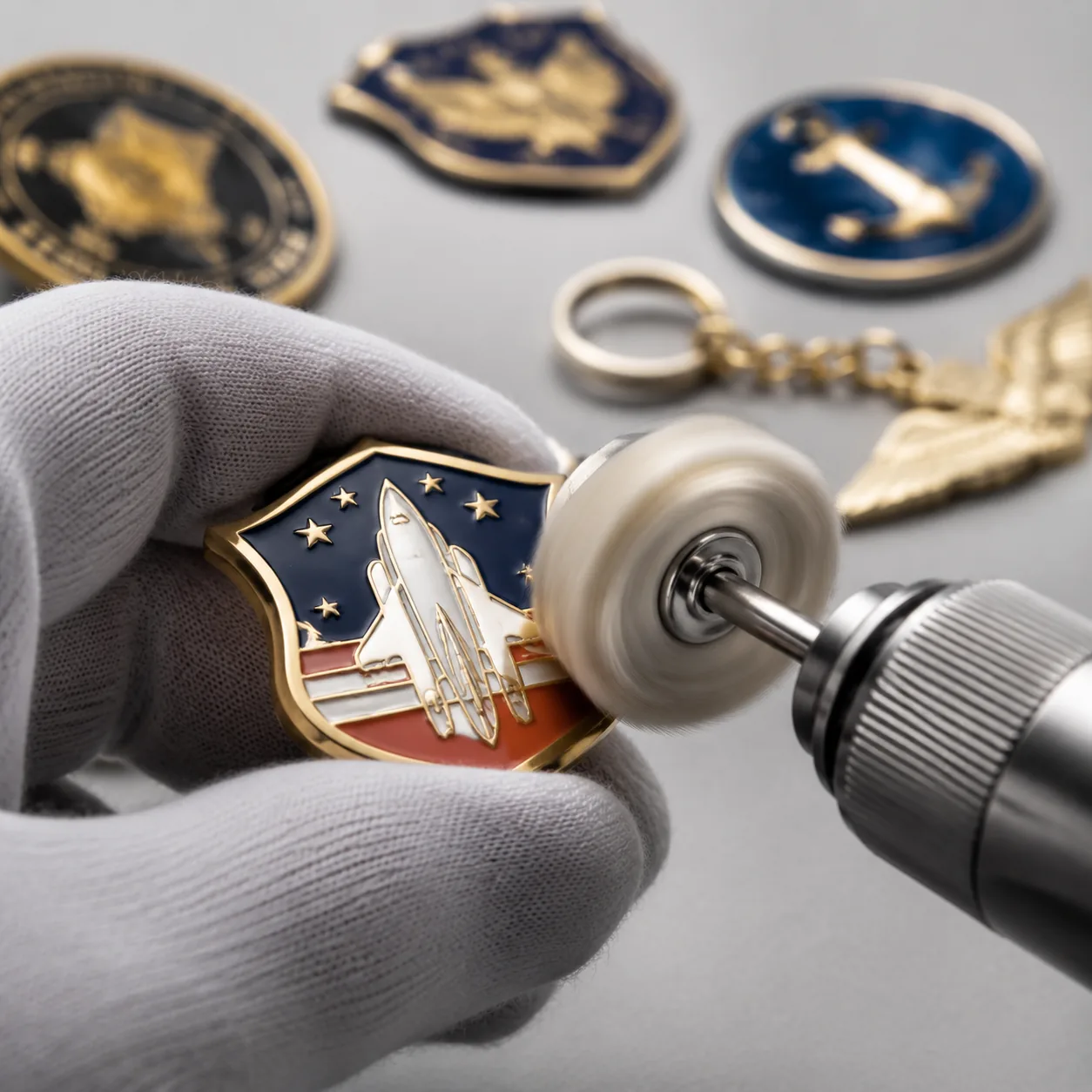
The immovable date—not the artwork—is what makes a first 5,000-piece pin order risky
Most first-time pin imports miss on schedule control, not creative quality. The art gets approved later than planned, engineering questions appear after the quote, and the buyer discovers too late that a metal accessory order includes more variables than the mockup suggested. At 5,000 pieces, tooling, mold correction, plating consistency, hand assembly, backing-card alignment, inspection, and freight mode all affect whether the order ships on time and whether the final cost still makes sense.
Use a realistic baseline. Assume one SKU: 5,000 custom soft enamel lapel pins, 35 x 28 mm irregular outline, zinc alloy die-cast, 2.0 mm nominal thickness, black nickel plating, 5 enamel colors, two butterfly clutches, each pin mounted on a printed backing card and packed in an individual OPP bag. For this build, the commercial decision is not just the FOB unit price. The real question is whether the factory can hit a reliable ex-factory date while holding the agreed physical tolerances, visual standard, and pack-out details.
A workable planning range for this exact build is 28 to 40 calendar days from approved artwork to ex-factory completion. A common breakdown is 2 to 3 days for engineering review and final quote confirmation, 5 to 7 days for pre-production sample making and approval, 12 to 18 days for mass production, and 2 to 4 days for inspection, sorting, rework, and final pack-out. After that, express air is often 3 to 6 days door-to-door, standard air 5 to 10 days, and sea LCL 30 to 45 days door-to-door depending on lane, deconsolidation, and customs handling. If the pins support a launch, fundraiser, or trade-show date, keep at least 7 calendar days of schedule buffer after planned arrival.
Days 1-3: freeze the specification before you ask for final pricing
New buyers often request final pricing from artwork alone, then lose a week to requoting once engineering details appear. A factory can estimate from a rendering, but actual price and lead time move once the dimensions, thickness, post count, card stock, print finish, and packing method are fixed. On a 35 mm irregular pin, increasing thickness from 1.5 mm to 2.0 mm changes alloy usage, die-fill behavior, polishing time, and freight weight. Moving from one post to two posts adds hardware and labor, but on pins wider than about 30 mm it sharply reduces rotation complaints on garments and display cards.
Before issuing a PO, lock the spec sheet in writing: finished dimensions in mm, nominal thickness and tolerance, base metal, process, plating color, number of filled colors, Pantone references, post count and post spacing, clutch type, backing-card size and GSM, print finish, barcode or compliance label requirements, packing method, carton weight limit, inspection standard, Incoterm, and destination country. If any of those stay open, the supplier either quotes defensively or revises price later.
Tolerances should be commercial and measurable. For a zinc alloy die-cast soft enamel pin, body thickness tolerance is commonly +/-0.10 to 0.15 mm, width and height tolerance +/-0.20 mm, and post placement +/-0.50 mm. If the card has pre-punched holes, ask the supplier to match post pitch to hole spacing within +/-0.30 mm on the assembly sample. Decorative black nickel plating on promotional pins is typically thin—often about 0.03 to 0.08 microns—so it should be judged on coverage, shade consistency, and adhesion rather than corrosion resistance. Soft enamel colors should be referenced to Pantone but accepted on a commercial visual-match basis rather than lab-grade exact match.
- Baseline SKU: 35 x 28 mm irregular shape, zinc alloy die-cast, 2.0 mm nominal thickness
- Front finish: soft enamel with polished raised metal lines, 5 Pantone-referenced colors
- Plating: black nickel, decorative finish, full front/edge/back coverage with no exposed base metal on visible cosmetic surfaces
- Hardware: two 8 mm nail posts with butterfly clutches; target post spacing matched to card hole spacing
- Backing card: 90 x 55 mm, 300-350 gsm coated art card, 4C/4C print, matte lamination optional
- Packing: 1 pin on 1 card, 1 set per OPP bag, 100 pcs per inner bag, export cartons under 12 kg gross
- Inspection: ANSI/ASQ Z1.4, normal inspection, single sampling, AQL 2.5 major / 4.0 minor
Days 4-7: choose the manufacturing process from the geometry, not the sales pitch
At 5,000 pieces, suppliers often push hard enamel because it sounds more premium. That is not always the right first-order choice. If the design has several small color islands, cutouts, a highly irregular outline, or moderate relief, soft enamel on die-cast zinc alloy is usually easier to run consistently. It tolerates small line-thickness variation better, handles uneven perimeters well, and typically produces lower reject rates on a first production run.
Hard enamel is a better fit when the art is simpler and flatter: fewer color breaks, cleaner geometry, and a stronger requirement for a smooth, jewelry-like face. Stamped brass or iron can produce crisp boundaries on straightforward badges, but those processes are less forgiving on complex cutouts, heavy relief, or organic silhouettes. The right process should follow the physical design and acceptable defect level, not a sales sheet where every option looks equally easy.
| Spec area | Soft enamel die-cast zinc alloy | Hard enamel stamped brass/iron |
|---|---|---|
| Typical MOQ per design | 100-300 pcs | 100-300 pcs |
| Best use case | Irregular outlines, cutouts, recessed color fields, moderate relief | Cleaner geometry, flatter face, more formal badge look |
| Typical finished thickness | 1.8-2.5 mm | 1.2-1.8 mm |
| Unit FOB at 5,000 pcs, 35 mm | USD 0.50-0.78 pin only | USD 0.68-1.05 pin only |
| Tooling charge | USD 70-160 | USD 80-150 |
| Mass-production lead time after approval | 12-18 days | 14-20 days |
| Common defect risks | Uneven enamel fill, polishing inconsistency, plating shade variation | Surface scratches, chip risk on edges, stricter flatness expectations |
| When not to choose | Mirror-flat premium face required | Design has deep cutouts, heavy 3D relief, or very irregular perimeter |
For the scenario in this article, soft enamel die-cast zinc alloy is the safer commercial choice. At 35 mm with black nickel plating and 5 colors, it usually gives the best balance of manufacturability, outgoing quality, and lead-time reliability for a first import.
Days 8-12: sample approval sets the production standard, so approve against numbers
The sample stage is where schedules usually slip because it is the first time marketing artwork meets process limits. The point is not only to catch obvious mistakes. It is to define the acceptable production standard. If the approved sample has a slightly gray black nickel tone, a shallow enamel corner, or weak clutch fit, that sample becomes the practical reference for the mass run even if the original rendering looked cleaner.
For a first order, request one pre-production sample plus close-up photos showing front, back, edge profile, post spacing, clutch fit, backing card, and bagged assembly. A physical sample often adds 5 to 7 days including courier transit, but it is usually worth it because plating tone, enamel height, edge finishing, and card alignment are difficult to judge accurately from photos. If timing forces photo approval, require side-profile images against a ruler or caliper, not just face-on glamour shots.
Review the sample against measurements, not adjectives. Check width and height with calipers. Measure body thickness at at least two points. Confirm the pin does not rock excessively on a flat plate. On a 35 mm pin, two posts should sit parallel and insert cleanly through the card without tearing the holes. Also assemble and test 10 to 20 complete units using the real card and OPP bag. That is where buyers catch post-hole mismatch, barcode placement issues, bags that are too tight, and card stock that bends under the product weight.
- Measure width/height: 35 mm nominal, tolerance +/-0.20 mm
- Measure thickness: 2.0 mm nominal, tolerance +/-0.15 mm
- Check front warpage on a flat plate; reject obvious twist visible at normal viewing distance
- Verify plating coverage and tone on front, edge, and back; no visible base metal on cosmetic surfaces
- Review enamel fill: no major underfill, overflow, pinholes, cracks, contamination, or major color bleed
- Test clutch retention and post straightness; posts should insert without wobble and clutches should hold during normal handling
- Confirm card print registration, trim size, punched-hole position, and barcode scanability if required
- Weigh 100 packed units to estimate final master-carton gross weight before mass production starts
Days 13-24: the hidden cost is usually in carding, bagging, and assembly—not the fifth color
On a 5,000-piece run, the metal pin is only part of the FOB cost. Once the item is retail-ready, packaging and assembly often account for 20 to 35 percent of ex-factory value. New buyers often spend energy negotiating USD 0.02 off the pin body while accepting a card-and-bag specification that quietly adds USD 0.06 to 0.12 per unit in paper, print, labor, labels, and pack-out.
For the baseline build in major pin-making clusters such as Zhongshan or Wenzhou, a realistic FOB cost stack is: pin body USD 0.50 to 0.78, two butterfly clutches USD 0.02 to 0.05 total, printed backing card USD 0.035 to 0.08, carding labor USD 0.02 to 0.04, OPP bag USD 0.008 to 0.015, carton and inner packing allocation USD 0.005 to 0.015, and optional barcode/apply-label labor another USD 0.005 to 0.015. That puts a credible finished FOB range at about USD 0.60 to 0.98 per unit, plus one-time tooling of roughly USD 70 to 160. Matte lamination, heavier card stock, or retail-facing finish requirements can push the total above USD 1.00.
Separate fixed from variable cost when budgeting. Tooling and any print plate charges are fixed. Metal weight, plating yield, color count, hardware, card stock, lamination, hand assembly, and pack-out are variable. At 5,000 pieces, moving from a 300 gsm unlaminated card to a 400 gsm matte-laminated card with barcode sticker can cost more than adding one extra enamel color. If budget gets tight, ask for alternate pricing on bulk-packed pins, lighter card stock, or simpler bagging before pushing the factory below a workable unit price.
QC terms should also be written before production starts. For event giveaways, ANSI/ASQ Z1.4 with AQL 2.5 major and 4.0 minor is a standard commercial level. For retail or collector resale, some buyers tighten to AQL 1.5 major and 2.5 minor. That can improve outgoing quality, but it also increases sorting time, rework, and schedule pressure. 'Zero defects' is not a useful production standard on hand-finished metal accessories. A written AQL level, defect definitions, and sample reference are.
Days 25-28: carton planning decides freight cost, warehouse handling, and damage risk
Freight surprises on pin orders usually come from pack density and carton design, not the small pin size. A 35 mm metal pin looks compact, but 5,000 finished units still create meaningful weight. If cartons are packed too heavily, manual handling worsens, carton compression risk rises, and receiving teams spend time breaking down overpacked boxes. For hand-loaded export shipments, keeping each master carton below about 10 to 12 kg gross is a practical target.
For this scenario, a practical pack-out is 100 finished units per inner polybag or inner box and 800 to 1,000 units per master carton depending on card thickness and void fill. A common master carton for carded pins is roughly 40 x 30 x 25 cm, though the factory should confirm dimensions from a packed sample. Total shipment volume for 5,000 carded pins is often around 0.09 to 0.14 CBM. Gross shipment weight is frequently about 55 to 85 kg, not 20 to 30 kg as many first-time buyers assume. A 2.0 mm zinc alloy pin with two posts, two clutches, card, and bag is materially denser than the visual footprint suggests.
Packaging choices change freight economics quickly. Replacing a flat OPP bag with a rigid gift box may add only USD 0.06 to 0.20 ex-factory per unit, but it can multiply cubic volume by two to four times. That matters far more in air freight than in sea freight. For event distribution and first imports, standard card-and-bag packing usually gives the best balance of presentation, assembly speed, and freight efficiency.
- Request estimated net weight, gross weight, carton count, and total CBM before production is complete
- Confirm outer-carton dimensions in cm and units per carton for forwarder booking
- Use 5-layer export cartons as a baseline; consider stronger spec if shipping LCL or through multiple handling points
- Specify carton marks: PO number, SKU, quantity, carton number, gross/net weight, country of origin
- Lock barcode size, label position, and carton-label format before cards are printed if selling retail or online
- Request one packed-carton photo and one palletized-load photo before dispatch
Day 29 onward: choose freight around business risk, not just the lowest rate
If the order supports a fixed event date, the cheapest freight option is often the highest-risk decision. Air freight costs more per kilogram than sea, but on 5,000 compact finished pins the absolute spend can still be justified if the campaign value is meaningful. Missing a launch because sea freight saved a few hundred dollars is usually false economy.
For this shipment, expect about 55 to 85 kg gross. Depending on packaging density, air chargeable weight may be based on actual weight rather than volumetric weight, but confirm using the airline divisor your forwarder applies. Standard door-to-door air is commonly 5 to 10 days after pickup; express air can be 3 to 6 days; sea LCL is usually 30 to 45 days door-to-door and may run longer in peak season. For a first importer, consistency and customs support matter more than theoretical best-case transit.
FOB is usually the cleanest term if you already have a forwarder and customs broker. If you do not, ask for DDP or at least door-to-door air as a comparison quote, but only accept it if duties, taxes, customs fees, and local delivery charges are itemized. Before dispatch, review the commercial invoice draft, packing list, HS code proposal, carton count, and declared unit value. That document check takes very little time and prevents many avoidable customs holds and post-entry billing surprises.
A practical first-order plan that limits cost, quality drift, and schedule loss
Keep the first order simple: one SKU, one design, 30 to 40 mm size, 4 to 6 colors, standard plating, two posts for widths above 30 mm, standard backing card, and no unnecessary special effects. Glitter, glow enamel, transparent colors, danglers, spinners, magnetic backs, sequential numbering, and rigid gift boxes all add process steps, defect opportunities, or freight volume. Save those options for reorder cycles after the supplier proves repeatability.
Work backward from the in-hands date using a written calendar. Reserve 2 to 3 days for engineering and quote confirmation, 5 to 7 days for sample approval, 12 to 18 days for mass production, and 2 to 4 days for inspection and final pack-out. Then add realistic freight and customs time for the route you choose, plus at least 7 days of buffer. If a supplier cannot discuss those numbers concretely, that is itself a risk indicator.
For this 5,000-piece scenario, a disciplined buyer would issue a brief with the key numbers written in: target finished FOB USD 0.60 to 0.98 per unit, tooling expectation USD 70 to 160, ex-factory target within 28 to 40 calendar days from artwork approval, AQL standard stated in the PO, carton gross-weight cap of 12 kg maximum, and packed-unit assembly defined before mass production. That level of clarity will not guarantee a perfect first import, but it removes the most common causes of avoidable loss: vague specifications, weak sample approval, late packaging decisions, and freight selected too late to protect the delivery date.
Have a project? Send your artwork and target quantity and we’ll reply with a detailed quotation within 12 working hours.
Ready to get this made?
Send your sketch, target quantity and ship-date. Detailed quotation in 12 hours.



