Your First 5,000 Custom Pins: Import Plan for 2026
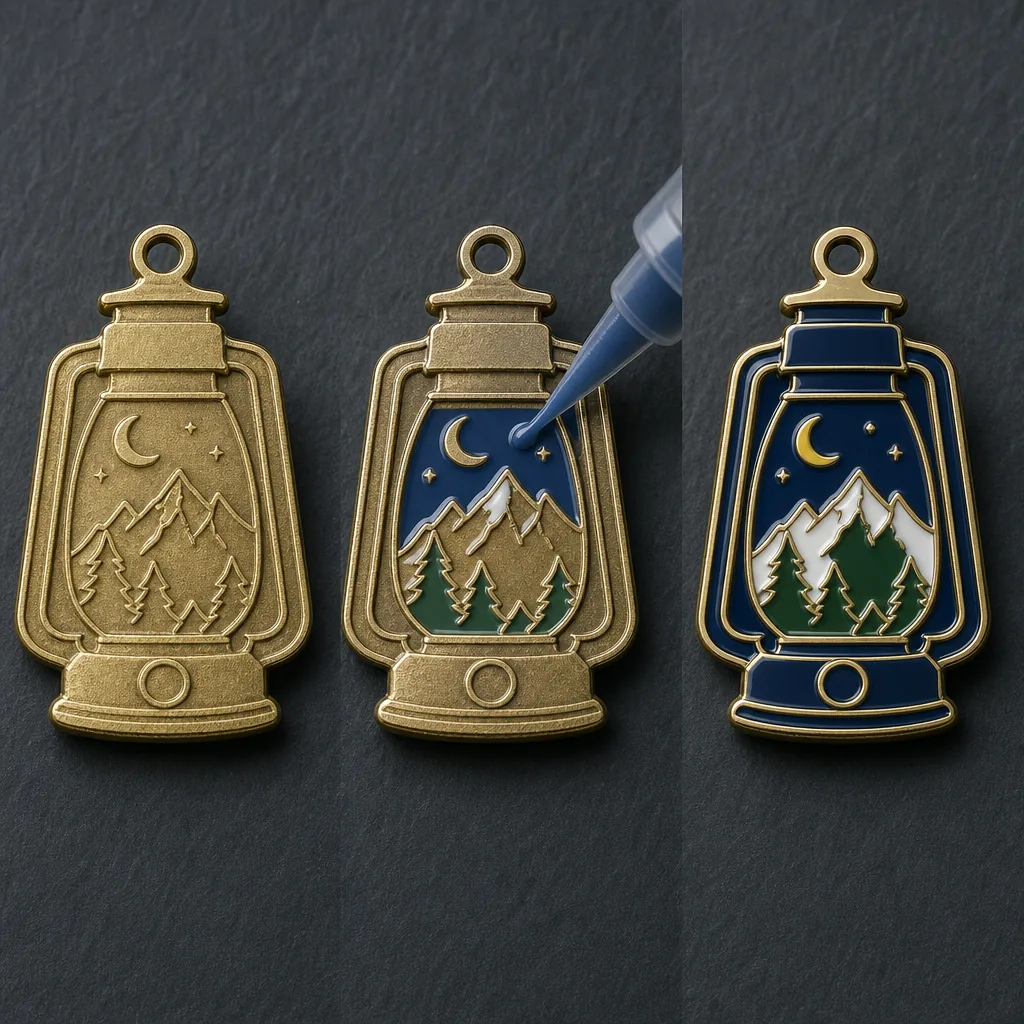
Why 5,000 pins is the point where process discipline starts paying for itself
A 5,000-piece custom pin order is large enough to unlock meaningful factory pricing, but still small enough that one specification mistake can erase the savings. Most first-time buyers start with approved artwork, a target budget, and a fixed event or launch date. What is usually missing is a manufacturing-ready specification covering process, metal, line width, finished thickness, plating finish, post layout, packaging, inspection standard, and shipping term. That missing detail is where delays and remakes begin.
At this volume, the main risk is not the quoted unit price alone. It is approving an incomplete build and discovering after production that the pin is undersized, the plating tone is wrong, the enamel cells are too small to fill cleanly, the single post allows the pin to rotate, or the shipment arrives after the event. Small changes matter at 5,000 units. Moving from one butterfly clutch to two typically adds USD 0.03 to 0.07 per piece. Adding a printed backing card plus individual polybag usually adds USD 0.05 to 0.11. Switching from stamped iron to die-cast zinc alloy often adds USD 0.14 to 0.32 per piece and can extend sampling by 2 to 5 days.
For a first import, the safest path is a narrow build: one design, one size, one plating finish, one attachment layout, and one packaging format. A practical baseline is a 35 mm stamped iron soft enamel pin, 1.5 mm finished body thickness, bright nickel plating with anti-tarnish topcoat, two 8 mm butterfly clutches, and one pin per sealed OPP bag. That specification is common, well understood, and usually offers the best balance of appearance, manufacturability, and cost for event, staff, and mid-tier merchandise use.
Write the RFQ so every factory is quoting the same product
Artwork is not a complete RFQ. If you send only an AI, PDF, PNG, or mockup and ask for pricing, one supplier may quote 30 mm iron with one post, another may assume 38 mm zinc alloy with epoxy, and a third may exclude packaging or quote EXW instead of FOB. Those quotations are not comparable.
A usable RFQ for custom pins should state the following at minimum: overall finished size in millimeters; target thickness; base metal; process type; plating finish; Pantone Solid Coated references; whether colors are approved by visual match to the approved sample under D50 to D65 lighting; number and position of posts; clutch type; packaging format; carton quantity; spare quantity requirement; target ship date; target warehouse date; and Incoterm. If you need barcodes, suffocation warning text, retail-ready carding, or carton labels by SKU, include that up front rather than as a post-approval add-on.
It also helps to define manufacturability limits before sampling. On a stamped iron soft enamel pin, raised metal lines below about 0.20 to 0.25 mm can soften during stamping, plating, and polishing. Recessed color cells narrower than about 0.35 to 0.40 mm are more likely to underfill or show color contamination. Small inside corners usually round slightly rather than remaining perfectly sharp. A practical tolerance set for a 35 mm stamped pin is overall size ±0.15 mm, body thickness ±0.10 mm, and post location ±1.0 mm unless tighter spacing is needed to fit a pre-punched backing card.
- Use one baseline RFQ for all suppliers: 35 mm, stamped iron, soft enamel, 1.5 mm thickness, bright nickel, 2 posts, butterfly clutches, individual polybag
- State visual limits in the RFQ: minimum raised line 0.25 mm, minimum enamel cell 0.40 mm, size tolerance ±0.15 mm, thickness tolerance ±0.10 mm
- Ask whether pricing includes tooling, plating, standard attachments, polybag, export carton, spare quantity, and FOB origin charges
- Typical MOQ is 100 to 300 pcs per design, but at 5,000 pcs total you can often negotiate lower tooling, better spare terms, or stronger packaging inclusion
Choose the construction before comparing unit price
Most first orders should start by locking the construction, then comparing factories. For promotional and mid-tier retail use, stamped iron soft enamel is usually the default because it delivers crisp metal borders, good color separation, and competitive pricing. Die-struck iron without enamel suits all-metal or antique-finish designs. Die-cast zinc alloy is the better choice when the shape is irregular, the relief is deeper, the cutouts are complex, or the pin is larger than about 40 mm. Hard enamel or imitation hard enamel improves surface flatness and perceived quality, but usually increases both price and production time.
Plating terminology should also be precise. Most custom pin finishes are decorative coatings, not engineering-grade corrosion systems. Bright nickel, imitation gold, black nickel, dyed black, and antique brass commonly fall in the decorative plating range of roughly 0.03 to 0.08 microns, often with a clear anti-tarnish layer added after plating. That is normal for merchandise, but it does not mean jewelry-level resistance to oxidation or abrasion. If inventory may sit in a warehouse or retail channel for 6 to 12 months, request anti-tarnish treatment and ask the supplier to confirm a face-side salt-spray expectation such as 12 to 24 hours without severe visible corrosion.
Attachment choice is another frequent source of avoidable complaints. A single centered post is usually acceptable only for small, round, or symmetrical pins under roughly 30 mm and under 6 g. For 35 mm designs, tall layouts, or asymmetrical shapes, two posts spaced around 12 to 20 mm apart are usually better because they reduce spinning and keep the pin aligned on fabric and backing cards. Standard butterfly clutches are the low-cost default. Rubber clutches can improve comfort. Deluxe locking clutches improve retention but typically add USD 0.08 to 0.18 per piece depending on type and source.
| Quote item | Economy giveaway build | Balanced first import | Premium retail build |
|---|---|---|---|
| Base spec | 30 mm stamped iron, soft enamel, 1 post | 35 mm stamped iron, 1.5 mm, soft enamel, 2 posts | 40 to 45 mm zinc alloy, imitation hard enamel or epoxy, 2 posts |
| Typical MOQ per design | 100 to 200 pcs | 100 to 300 pcs | 200 to 500 pcs |
| Typical FOB unit at 5,000 pcs | USD 0.42 to 0.58 | USD 0.60 to 0.88 | USD 1.02 to 1.78 |
| Tooling charge | USD 50 to 90 | USD 60 to 120 | USD 90 to 180 |
| Sample lead time | 4 to 6 days | 5 to 8 days | 7 to 10 days |
| Mass production lead time | 10 to 14 days | 12 to 18 days | 15 to 22 days |
| Common packaging | Bulk bag or single polybag | Single polybag or card plus bag | Retail card, barcode label, sealed bag |
| Best use | Event giveaways | Launches, uniforms, staff kits, mid-tier merch | Retail, collector drops, gift sets |
Approve the sample against measurements, plating, and hardware fit
A pre-production sample is there to catch interpretation errors before the full 5,000-piece run starts. It is not evidence that every production unit will be identical under magnification. Buyers often spend too much time debating tiny aesthetic points while missing the measurable checks that actually control the order.
For a standard custom pin program, sampling usually takes 5 to 8 calendar days after artwork approval. One revision cycle often adds another 3 to 5 days. During review, measure width and height with digital calipers, confirm body thickness, verify post spacing, test clutch fit and retention, and compare colors to Pantone references under neutral light. Inspect the face for enamel underfill, overflow onto metal borders, pinholes, exposed metal in color cells, scratches, staining, plating pits, and incomplete polishing. If epoxy is specified, confirm a consistent dome with no trapped dust, no edge flooding, and no bare spots.
The sample approval record should read like a mini specification sheet. For example: 'Approved standard: 35.0 mm overall size ±0.15 mm; 1.5 mm thickness ±0.10 mm; bright nickel decorative plating with anti-tarnish topcoat; Pantone 186 C, 123 C, and Black C matched visually to approved sample; two centered posts; standard butterfly clutches; one pin plus one printed card in one sealed OPP bag.' That note becomes the common reference for the factory, the inspector, and your own receiving team.
Set QC terms before deposit and tie them to AQL
Inspection standards should be agreed before the deposit is paid, not after production is finished. For a 5,000-piece custom pin order, many importers use ANSI/ASQ Z1.4, single sampling, General Inspection Level II. At a lot size of 5,000, that normally leads to sample size code L and a sample size of 200 units. A common acceptance structure is AQL 0 for critical defects, AQL 2.5 for major defects, and AQL 4.0 for minor defects. Under that plan, 200 sampled units generally means Ac 0/Re 1 for critical, Ac 10/Re 11 for major, and Ac 14/Re 15 for minor defects.
Critical defects are zero-tolerance because they affect safety, function, or item identity. On custom pins, this usually includes wrong design, wrong plating finish, dangerous burrs on customer-touch surfaces, missing or detached post, missing clutch when sold as a complete set, or attachment failure that makes the pin unusable. Major defects are problems most customers would reject on the front side: size outside tolerance, severe enamel voids, obvious scratches, large color mismatch, badly bent posts, missing fill area, or hardware placement that causes visible tilt. Minor defects are lower-impact issues such as slight backside plating marks, minor haze not visible at normal viewing distance, or light backside spotting.
Define the viewing method as well. A practical standard for decorative pins is front-side visual inspection at 30 to 50 cm under neutral white light of roughly 500 to 1000 lux, without magnification. If you want collector-grade retail sorting, say so early. Tighter front-side cosmetic sorting, stronger color control, and lower tolerance for minor flaws increase reject rates, sorting labor, and lead time. A low-cost promotional quote cannot support luxury-grade expectations unless the supplier has priced for that level.
- Lock inspection standard before deposit: ANSI/ASQ Z1.4, General Level II, single sampling is common
- For a 5,000-piece lot, sample size is typically 200 units under Level II
- Use zero tolerance for critical defects such as wrong item, unsafe burr, missing clutch, detached post, or wrong plating finish
- Agree a spare quantity of 1% to 3% to cover count variance, inspection fallout, and internal replacements
Plan backward from the warehouse date, not the factory ship date
The date that matters is when the pins are available at your warehouse, 3PL, distributor, or event venue, not when the factory says production is complete. At 5,000 pieces, shipment volume is small enough to move by courier, air freight, or LCL ocean, so freight mode should be chosen by deadline risk and landed cost rather than habit.
A realistic 2026 schedule for a straightforward first order looks like this: 2 to 4 days for quote alignment and artwork confirmation, 5 to 8 days for sample making, 1 to 3 days for sample review, 12 to 18 days for mass production, and 2 to 5 days for packing, export paperwork, and booking. After that, express courier is often 3 to 6 days door-to-door, standard air freight 6 to 12 days depending on consolidation and customs handling, and LCL ocean about 28 to 45 days including origin handling, sea transit, deconsolidation, customs clearance, and final delivery.
For budgeting, a 35 mm iron pin packed one per bag usually weighs about 10 to 16 g including bag and card, so 5,000 pcs often lands around 50 to 80 kg gross depending on card stock and carton style. That is still light enough for air to be viable if the launch date is fixed. If the order ships FOB, remember that destination charges do not appear on the factory invoice: customs brokerage, entry filing, bond, terminal handling, local trucking, and storage if paperwork slips. For first-time importers without internal logistics support, DDP or managed freight can be cheaper overall than a lower FOB quote followed by preventable clearance problems. For event-driven orders, keep a buffer of 10 to 14 calendar days; 7 days is the minimum only when the sample is approved first round and the route is simple.
Calculate landed cost per usable pin before issuing the PO
The number that matters is landed cost per usable piece, not the quoted EXW or FOB unit price. Start with tooling, unit price, attachment upgrades, packaging, inspection, freight, banking fees, customs duty if applicable, and local delivery. Then divide by the quantity you can actually use after reserving spares, marketing samples, and expected internal sorting fallout.
Example: 5,000 pieces at USD 0.68 FOB equals USD 3,400. Add USD 85 tooling, USD 0.08 each for backing card plus polybag, USD 180 for third-party inspection, USD 420 for air freight, and USD 70 for banking and documentation. Total pre-duty landed spend is USD 4,555. If you reserve 2% as spares and assume 1% for sample retention, merchandising, or internal sorting, usable quantity is about 4,850 pieces. That puts effective pre-duty cost at roughly USD 0.94 per usable pin, not USD 0.68. Add deluxe clutches, barcode labels, or a premium finish and the same design can quickly move into the USD 1.03 to 1.20 usable-cost range.
This is why chasing the last USD 0.03 off the factory quote often saves less than avoiding one freight upgrade or one remake. On first orders, stronger specifications, realistic tolerances, and a genuine time buffer usually protect margin better than aggressive price-only negotiation.
First-order checklist for a clean 2026 import
A good first 5,000-pin order is usually a simple one. Standardize the build, issue one production-ready RFQ, approve one measurable sample, lock QC terms before deposit, and book freight against the warehouse date rather than the nominal ship date. Once the first run is stable, then add collector packaging, glitter enamel, glow fill, spinner features, or multiple SKUs on the reorder.
- Issue one RFQ sheet with size, thickness, base metal, process, plating, Pantone codes, post count, clutch type, packaging, Incoterm, and required in-hand date
- Request a quote breakout for tooling, unit cost, hardware, packaging, sample lead time, production lead time, spare quantity, carton details, and shipping basis
- Approve the sample against measurable criteria: overall size, thickness, post spacing, plating finish, color reference, packaging count, and carton marking
- Set QC terms before deposit, including AQL plan, zero-tolerance critical defects, and front-side cosmetic review standard
- Leave 10 to 14 days of delivery buffer where the event date cannot move; use air or courier if ocean transit creates schedule risk
- Calculate landed cost per usable piece before final supplier selection, not just the quoted FOB unit price
If the artwork is already approved, the highest-value next step is usually not another round of price shopping. It is converting the design into a production-ready specification sheet and sending the same document to every supplier. For a first custom pin import in 2026, specification discipline remains the cheapest way to avoid remakes, missed dates, and a shipment that matched the quote but not the actual need.
Have a project? Send your artwork and target quantity and we’ll reply with a detailed quotation within 12 working hours.
Ready to get this made?
Send your sketch, target quantity and ship-date. Detailed quotation in 12 hours.



