Why Promo Sets Fail Incoming QC in 2026
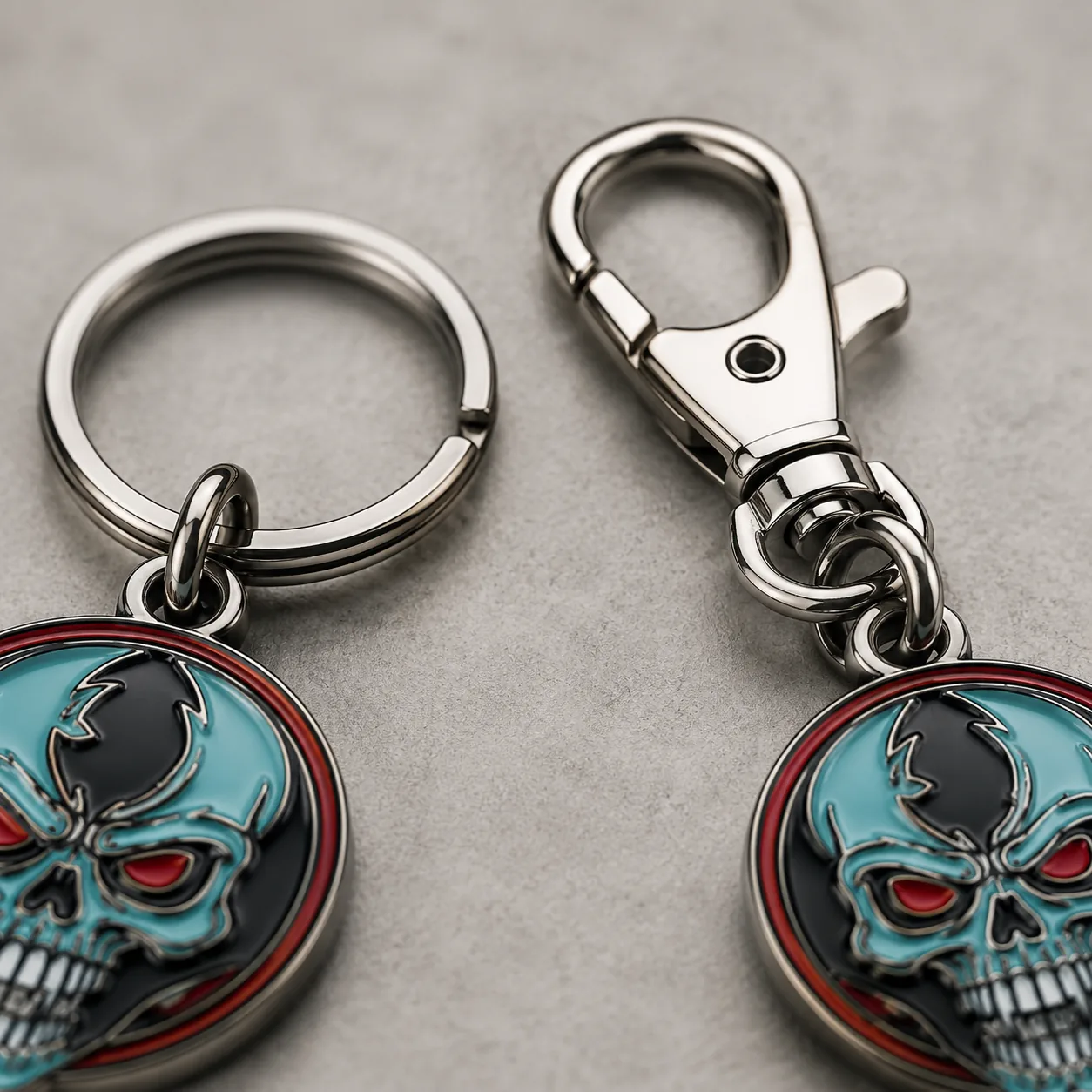
The set fails even when each component passes
Mixed promo sets rarely fail incoming QC because one component is obviously defective. The more expensive failure is set-level inconsistency: the pin passes, the keychain passes, the patch passes, and the lanyard passes, but the finished kit still looks mismatched, feels uneven, or is packed incorrectly. Buyers reject the program because the customer sees one branded product, not four separate SKUs.
Typical incoming failures are predictable. The bright gold pin looks warmer than the bright gold keychain. The patch red is visibly darker than the lanyard print. One variant uses a 2.0 mm split ring and another uses a lighter 1.5 mm ring, so the hardware feel changes from pack to pack. The master carton count is correct, but the retail pack contains the wrong language insert, barcode label, or pin-card combination. None of those issues is reliably caught when approvals are managed by commodity instead of by full set.
The practical fix is not more end-of-line inspection. It is one cross-item control sheet issued before tooling release and referenced on the PO, artwork approval, and inspection standard. That sheet should lock the finish reference, Pantone hierarchy, hardware standard, assembly order, packaging layout, carton spec, viewing conditions, defect classification, and AQL plan across the entire program. Without that document, incoming QC becomes subjective, slow, and expensive because the factory, inspector, and buyer are each working to a different standard.
Finish mismatch makes a premium set look cheap first
The fastest way to downgrade perceived quality is finish drift across metal parts. Buyers often write 'bright gold' on a pin, keychain, coin, zipper pull, and charm, then assume they will match. They usually do not. A die-struck brass pin, die-cast zinc alloy keychain, and stamped iron charm reflect light differently because substrate density, porosity, polish level, edge definition, and plating bath control all change the final appearance.
To reduce rejects, specify finish by process and viewing standard, not by color name alone. A usable callout is: bright imitation gold on all exposed metal items, same approved plated swatch, same pre-plate polish grade, same topcoat requirement if any, and first-off approval under D65 light at 50 cm. If the factory uses mixed substrates, approval should be against a full assembled set, not isolated single-item samples.
For decorative promo hardware in 2026, realistic plating numbers remain modest. Imitation gold, gunmetal, or black nickel decorative layers are commonly about 0.03-0.08 microns. Bright nickel for appearance and light corrosion resistance is often 0.5-1.0 microns over a copper or nickel undercoat depending on the substrate. Asking for much thicker decorative plating without a real wear or salt-spray requirement usually adds cost without solving visual mismatch, because polish and surface preparation drive appearance as much as deposit thickness.
Buyers also need to define what exact matching cannot achieve. Mirror-polished brass will usually read brighter than textured die-cast zinc even under the same finish code. If exact cross-item equality matters, align the build method across the visible metal pieces. If cost or geometry requires mixed methods, write a set-level tolerance such as 'no obvious tone mismatch under D65 light at 50 cm when displayed together' instead of demanding identical reflectance from unlike surfaces.
| Failure point | Typical incoming QC symptom | Spec that prevents it | Realistic tolerance or range |
|---|---|---|---|
| Plating match across pin and keychain | Gold tone looks warmer on one item and cooler on another | Same finish code, approved plated swatch, same polish grade, full-set first-off approval | Visual match under D65 at 50 cm; decorative plating typically 0.03-0.08 microns |
| Color match across metal, patch, lanyard, and insert card | Primary brand red shifts by substrate and the kit looks inconsistent | Critical color hierarchy plus material-specific strike-off approval against one anchor sample | No obvious off-tone appearance in final packaged set |
| Keychain hardware feel | Ring or clasp feels lighter, softer, or weaker than other SKUs | Wire diameter, base metal, spring spec, deburr standard | Split ring wire 1.8-2.0 mm; clasp cycle test 200-500 opens |
| Patch fit on card or tray | Patch buckles, twists, or sits off-center in retail pack | Finished size tolerance tied to card window or tray cavity | Patch tolerance typically plus or minus 2 mm; cavity clearance 1.0-1.5 mm per side |
| Kit assembly accuracy | Correct total quantity but wrong component combination per retail pack | Assembly map with SKU code, revision, barcode, language, and sequence | 100% verification for kitted sets with multiple variants |
| Magnet pull consistency | Some magnetic pieces slide while others hold | Minimum pull-force on a defined steel test panel | Specify pull force in N or gf; for small promo magnets often 600-1200 gf minimum |
Color approvals fail when buyers approve by material, not by program
Color is where many mixed sets quietly break down. Pantone references are approved for metal enamel, thread charts are approved for patches, sublimation art is approved for lanyards, and CMYK proofs are approved for insert cards. Every approval looks reasonable on its own. The problem is that nobody checks whether the assembled set still reads as one brand system.
A better method is to classify colors into three groups before sampling. Critical colors are the first colors stakeholders notice, usually the main brand red, navy, green, or black. Secondary colors should be close but can move within normal process limits. Adaptive colors such as gradients, metallic effects, skin tones, and heathered neutrals should be approved for overall appearance rather than forced against a rigid Pantone target that is unrealistic across thread, enamel, woven polyester, and coated paper.
For critical colors, nominate one anchor reference item. In practice that is often the insert card or a flat printed strike-off because flat print is easier to control than thread, woven label structure, or glossy enamel. Then require all visible components to align visually to that anchor under D65 light at 50 cm. Instrument measurement can help on flat print, where Delta E 2.0-3.0 may be workable for critical solids, but cross-material Delta E targets are often misleading because gloss, texture, weave density, and light scatter distort the reading. A patch can measure close and still look dark; a gloss enamel can measure farther off and still look correct in the set.
The enforceable incoming standard is simpler than many buyers think: critical brand colors must visually align across all visible components under agreed lighting; noncritical colors may vary within normal process limits; and no item may appear obviously off-tone when the set is displayed in final packaging. That standard is more useful than demanding exact Pantone matching on woven patch yarn, dyed thread, soft enamel fill, sublimation, and CMYK print at the same time.
Tolerance stack-up ruins presentation before parts are technically out of spec
Many promo sets fail at pack-out because buyers controlled standalone dimensions but ignored assembly-critical dimensions. A pin can be within plus or minus 0.20 mm, a patch within plus or minus 2 mm, and a folded lanyard within cut-length tolerance, yet the finished set still bows the card, distorts the blister cavity, or looks visibly off-center in the tray. Incoming QC then rejects the presentation even though each part passed its own drawing.
This is a stack-up problem. The important dimensions are not only pin width or patch height. They are the visible patch area through the die-cut window, total thickness of pin plus clutch plus card, folded lanyard bundle thickness, clearance between jump ring and blister wall, tray cavity depth, and remaining seal margin after all contents are inserted into the polybag. Those dimensions determine whether the set assembles cleanly, survives transport, and still looks deliberate at retail.
Reasonable process tolerances are narrow for metal and wider for textile. Stamped or die-cast metal promo items commonly run about plus or minus 0.15 to 0.25 mm depending on size and geometry. Soft enamel fill height can vary slightly if the face remains smooth and color boundaries stay clean. Woven or embroidered patches are commonly plus or minus 2 to 3 mm. Lanyard cut length often drifts by several millimeters depending on fold and attachment method. Packaging should be engineered around those realities rather than ideal CAD values.
For any mixed kit above roughly 500 finished sets, require a dry-run pack-out using actual production components. Review card alignment, cavity fit, barcode scannability, polybag seal width, and master-carton orientation. It is far cheaper to find out that the patch window is 1.5 mm too tight, or that the clutch bulges the card back by 0.8 mm, in pre-production than after 3,000 assembled units are already packed.
Hardware can pass a pull test and still fail the user on first touch
Attachment hardware drives quality perception immediately. A butterfly clutch that holds but feels loose, a split ring with a sharp edge, or a swivel clasp that binds after a few uses will generate complaints even if basic tensile checks passed. This matters most in museum retail, corporate gifting, campus stores, automotive merch, and technology brand kits where the customer handles the hardware before they inspect the artwork.
Write hardware specifications for both function and feel. For standard keychains, a split ring wire diameter of 1.8-2.0 mm is a practical baseline. Rings in the 1.4-1.6 mm range lower FOB cost but feel noticeably softer and deform more easily. Require deburring, gap consistency, and no permanent spread beyond the approved sample after normal opening. For swivel lobster clasps, specify smooth spring return, no plating flake at the pivot, no visible burrs, and no binding after 200-500 open-close cycles depending on price tier.
Safety breakaways on lanyards should be specified by release force, not just by presence. For event-use lanyards, around 1.5-2.5 kgf release force is common. For everyday badge wear, 2.0-3.5 kgf is often a better range because it reduces nuisance release while still functioning as a safety feature. For pins, rubber clutches may be acceptable on low-cost handouts, but carded retail sets and premium employee kits often justify military clutches or locking backs to keep retention and hardware feel consistent across the line.
These upgrades usually change cost less than buyers expect. Moving from a thin ring to a heavier ring, or from a basic clasp to a smoother spring clasp, often adds only USD 0.03-0.12 per unit FOB. On a 1,000-set program, that spend generally improves perceived quality more than adding another print color or negotiating a marginally lower unit price.
Cosmetic inspection fails when viewing rules and defect classes were never defined
Incoming QC disputes escalate when terms like 'scratched,' 'dirty,' 'poor finish,' or 'bad embroidery' were never converted into inspection rules. Mirror-polished brass, matte black zinc alloy, woven patch faces, and sublimated lanyards should not be judged under the same cosmetic standard. Without agreed conditions, the buyer inspects at 10 cm under harsh LED light while the supplier defends the goods at arm's length under factory ambient light.
A workable standard is to define viewing distance, lighting, orientation, and defect classes before production. For most promo metal items, cosmetic inspection at 30-50 cm under neutral white or D65-equivalent light is practical. Front-face issues such as exposed base metal, plating burns, visible pits, enamel contamination, color-fill voids, sharp burrs, and deep scratches should be classed as major or critical depending on severity and safety. Minor backside tool marks or light polishing haze may be acceptable if not visible during normal use.
For retail-facing kits, tighten the plan because packaging raises consumer expectation. A common baseline is AQL 2.5 for major defects, AQL 4.0 for minor defects, and zero acceptance for critical defects. Premium retail programs often tighten visible major defects to AQL 1.0-1.5, especially on front-facing metal badges, carded sets, or gift-box programs. Buyers should understand the tradeoff: tighter AQL increases sorting time, rework labor, and usually FOB cost.
- Define inspection distance, angle, and lighting for loose parts and packaged sets
- Classify defects as critical, major, and minor before production starts
- Set zero acceptance for sharp burrs, missing parts, wrong pack-outs, and functional failures
- Use one approved golden set for cross-item appearance checks
- Apply different cosmetic rules to mirror polish, matte plating, embroidery, and print
- Write the AQL plan directly into the PO, artwork release, or master specification
Wrong kit composition and weak export packing create the costliest rework
One of the most expensive failures is incorrect kit integrity. Total shipment quantity may be right, but the finished set is wrong: variant A pin on variant B card, wrong barcode label, missing leaflet, wrong language insert, or mixed country-compliance text in the wrong carton. The component cost is low; destination rework cost is not. Once retail packs are misbuilt, the labor to open, sort, relabel, and rebuild them often exceeds the value of the goods inside.
Control here should focus on assembly discipline, not only final random inspection. Require an assembly map listing every component by SKU, revision level, barcode, language version, orientation, and insertion sequence. If the program includes more than three components, multiple artwork variants, or market-specific inserts, 100% verification at the assembly station is usually justified. That can be a signed visual count sheet for simple projects or barcode scanning by component for higher-mix programs.
Carton design also affects incoming results. A practical export baseline for mixed promo sets is a 5-ply master carton, gross weight below 15 kg, inner dividers or polybags to prevent metal-to-metal abrasion, and clear carton marks showing PO, SKU, quantity, destination code, and carton number. If pin posts, split rings, or clasps can mark adjacent packs, orientation and internal spacing should be specified on the pack-out drawing.
For sea freight lasting 25-35 days, add desiccant planning, sealed inner polybags where appropriate, and card stock with enough moisture resistance to avoid edge wave or warping. A 350-400 gsm coated card may still curl if humidity control is ignored. Warped insert cards, scuffed blister windows, and carton crush at the bottom layer are common incoming failures even when the products themselves are acceptable.
Lead time, MOQ, and FOB price are where buyers accidentally remove QC protection
Compressed timelines often remove the exact controls that prevent set-level defects. If a buyer requests a four- to six-component custom set in 12 calendar days when the realistic cycle is closer to 20-30 days, the factory usually shortens first-off approvals, reduces cure or drying time, overlaps production before a golden set is signed, or cuts in-process sorting. The order may still ship on time, but incoming QC risk rises sharply.
For new custom mixed sets, a realistic schedule is usually 3-5 days for artwork and engineering review, 5-7 days for pre-production samples on repeat processes, and 7-10 days when new tooling, woven patches, printed inserts, or custom trays are involved. Bulk production commonly takes 10-18 days, with kitting and export packing adding another 2-5 days. Orders above 3,000-5,000 finished sets, or programs combining metal, textile, print, and thermoformed packaging, should be planned at the longer end.
MOQ also matters because it affects process stability and unit economics. Practical starting points in 2026 are often 100-300 pcs per custom pin design, 100-300 pcs per keychain design, 100-500 pcs per patch design depending on woven versus embroidered construction, and about 300-500 finished sets before manual kitting becomes cost-efficient. Below that level, suppliers can still build the program, but buyers should expect higher FOB pricing, fewer process redundancies, and less room for rework if sampling reveals a problem.
Indicative FOB China pricing in 2026 for standard specifications is still broad. A 25-35 mm soft enamel iron pin with butterfly clutch typically runs about USD 0.35-0.90 at 1,000 pcs; brass with upgraded polish or plating is more often USD 0.80-1.25. A 35-50 mm custom metal keychain generally lands around USD 0.65-1.60, rising toward USD 1.90-2.40 with heavier hardware, cut-outs, epoxy dome, or multi-part construction. Woven or embroidered patches commonly range from USD 0.25-1.20 depending on size, stitch density, border, and backing. Standard polyester lanyards are often USD 0.30-0.95, with breakaways, upgraded hooks, or double-sided print pushing higher. Custom backing cards, blister trays, barcode labels, and manual assembly are extra and should be quoted separately, typically by piece and by labor step.
When time is tight, the least damaging way to recover schedule is usually to simplify packaging, reduce variant count, standardize hardware across the set, or move a custom tray to a simpler card-and-polybag format. Skipping cross-item approval is the wrong shortcut. If a supplier offers the same lead time for one custom pin and for a six-component assembled retail kit, buyers should ask which approval and control steps were removed.
What buyers should lock before tooling release
Fewer incoming QC disputes start with a specification written around the finished set rather than isolated parts. Start from the failures stakeholders actually complain about: visual mismatch, inconsistent hardware feel, poor pack-out, wrong variant mix, cosmetic over-rejects, and late delivery. Then convert those complaints into measurable requirements that the factory, inspector, and buyer all use the same way.
At minimum, the control sheet for a mixed promo set should include the approved finish reference; critical color hierarchy and anchor sample; material specs and dimensional tolerances by item; hardware specs such as split-ring wire diameter, clutch type, clasp cycle requirement, magnet pull force if applicable, and lanyard breakaway force; packaging layout with orientation and cavity clearance; AQL by defect class; carton construction and gross-weight limit; MOQ by SKU and by finished set; and the planned lead time for sampling, bulk production, and kitting.
Finally, require one full pre-production golden set built exactly as the customer will receive it, in final packaging, with final inserts, labels, and hardware. Inspect that golden set under the agreed lighting and viewing distance, then use it as the set-level reference for production and incoming QC. That is where finish drift, tone mismatch, tray interference, wrong inserts, and weak hardware are still cheap to fix. A vertically integrated supplier can reduce handoff risk across metal, textile, print, and assembly, but only if the buyer defines what matching, acceptable, and complete mean in numbers rather than adjectives.
Have a project? Send your artwork and target quantity and we’ll reply with a detailed quotation within 12 working hours.
Ready to get this made?
Send your sketch, target quantity and ship-date. Detailed quotation in 12 hours.



