Why Pin Orders Miss Event Dates: 7 Failure Modes to Spec Out
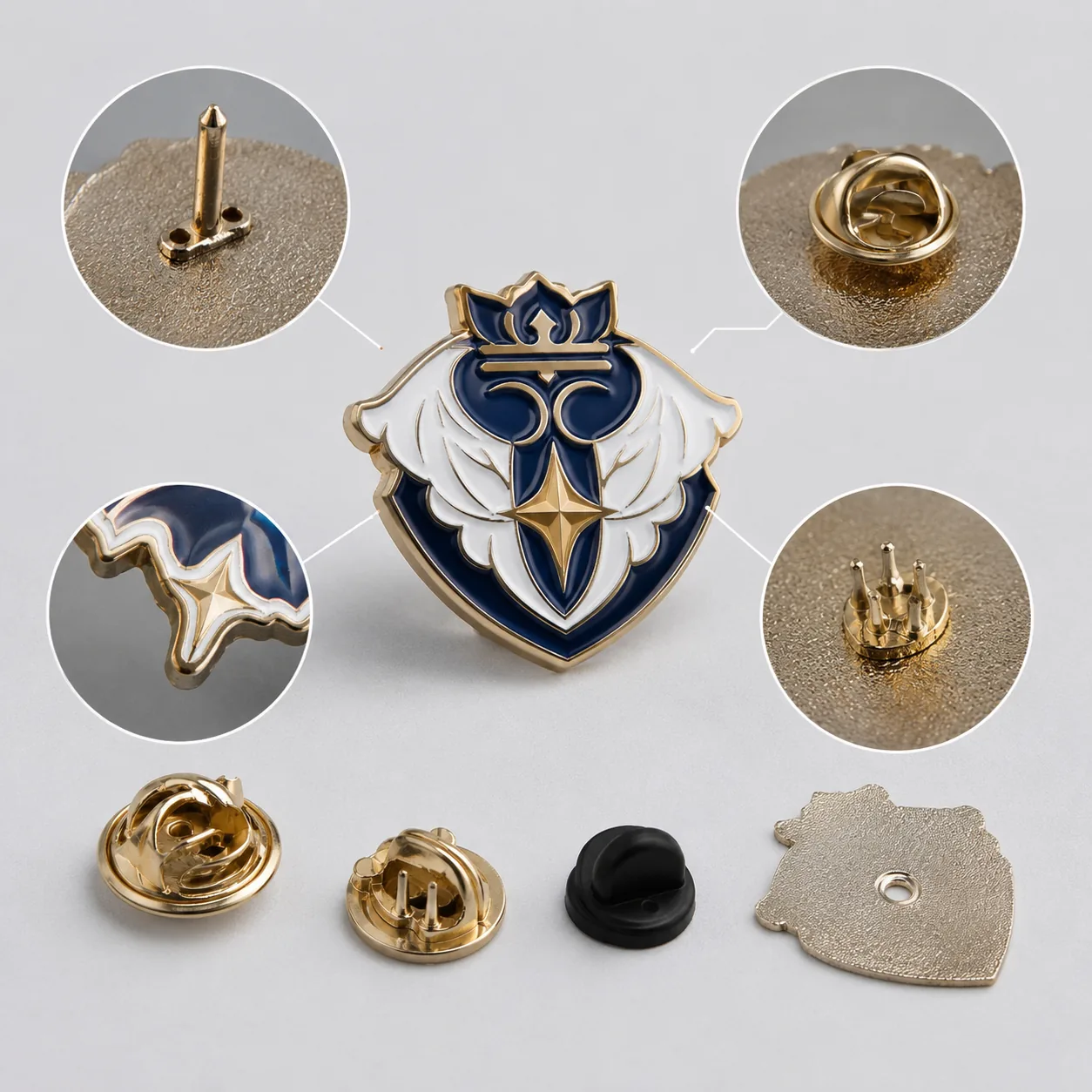
Most event-driven pin delays do not start with freight. They start when a buyer releases artwork, hardware, plating, or packaging without measurable manufacturing limits. A custom pin can look correct on screen and still miss an in-hand date because the RFQ never defined minimum line width, enamel recess tolerance, plating finish, post placement, inspection AQL, or the exact date when backing-card artwork must freeze.
That risk rises when the pin ships with lanyards, patches, challenge coins, or onboarding kits. One preventable hold at die review, sample approval, plating, or packout can delay the whole program. For standard custom enamel pins, a realistic factory window remains about 10 to 18 production days after final approval, but one redraw, plating correction, or packaging change commonly adds 3 to 9 working days. Those slips are usually predictable if the weak points are specified before tooling starts.
The safer approach is to treat a pin as an engineered promotional product. Lock feasibility, sample criteria, plating construction, attachment rules, packaging, inspection gates, and a real calendar before PO release. The seven failure modes below are the ones most likely to break an event date, along with the specs experienced sourcing teams put into the PO.
1. Artwork clears design review but fails production feasibility
The first avoidable delay is approving artwork that looks clean in Illustrator but cannot hold at production scale. Common failure points are borders below minimum width, tiny counters inside letters, narrow enamel cells, sharp internal corners, and text that collapses after stamping and polishing. If the factory finds that only when preparing the die, the order usually goes back for redraw, and if tooling has already been cut, the die may need to be rebuilt.
For die-struck soft enamel pins under 40 mm, practical factory minimums are usually 0.25 mm raised metal line width, 0.30 mm gap between metal borders, and 1.2 mm minimum raised text height. For hard enamel, which is polished flush and rounds fine detail, many factories require 0.30 to 0.35 mm lines, 0.35 to 0.40 mm gaps, and at least 1.5 mm reversed text. Any detail below those thresholds, especially maps, serif text, QR-style elements, or architectural linework, often runs better as photo-etched brass, offset-printed metal, or UV-printed zinc alloy.
Require a feasibility markup, not just a beauty proof. The supplier should submit a redline production drawing before tooling invoice that shows widened lines, enlarged gaps, text edits, cutout radius changes, and any dimensional adjustment greater than ±0.10 mm versus the supplied vector. Add a PO note that prohibits silent redraws, process substitutions, or tooling release before written approval. On rush orders, catching toolability issues before die cutting routinely saves 2 to 4 calendar days and avoids a full restart.
Process choice should also match MOQ and detail density. A 100-piece run of a simple 28 mm iron soft enamel pin can justify standard die striking, but a 250-piece pin with very fine linework may be cheaper overall as etched brass if it avoids die rework and high fallout. Typical FOB pricing is about USD 0.38 to 0.85 each for 25 to 30 mm soft enamel pins at 500 pcs, USD 0.28 to 0.60 at 2,500 pcs, and roughly USD 0.70 to 1.60 for hard enamel, printed detail, or zinc alloy builds depending on metal, plating, and packout.
2. Sample approval is subjective instead of measurable
Many late orders trace back to a sample approved by feel instead of by spec. The email says "approved," but never states what must remain consistent in mass production. When the lot later arrives with deeper enamel recess, slightly off-center posts, darker gold tone, or epoxy pullback around a cutout, the factory calls it normal variation and the buyer calls it a mismatch. That dispute burns the schedule.
A pre-production sample should be approved against a one-page acceptance sheet. For die-struck pins under 50 mm, a workable baseline is overall size tolerance of ±0.15 mm, thickness tolerance of ±0.10 mm on 1.2 to 1.8 mm bodies, and post-position tolerance of ±1.0 mm from approved centerlines. For soft enamel, specify recess relative to raised metal, such as maximum 0.08 mm below border height unless a deeper recess is intentional. For epoxy-coated pins, state whether up to 0.20 to 0.30 mm pullback at acute points or inner cutouts is acceptable.
Color and finish need the same discipline. If Pantone matching is required, specify Pantone Coated or Uncoated and define whether approval is against a physical swatch, printed card, or sealed sample. For plating, lock the finish name precisely: bright gold, imitation gold, matte gold, bright nickel, black nickel, antique silver, antique brass, or dyed black. "Gold" is too vague to support a remake claim. If slight tone variation is acceptable, write that the production lot may vary slightly from the sealed sample when viewed under D65 or neutral white light at 30 cm.
| Control point | Recommended event-order spec |
|---|---|
| Artwork feasibility | Factory redline required before tooling; no unapproved redraws over ±0.10 mm |
| Overall size | ±0.15 mm under 50 mm; ±0.20 mm at 50 mm and above |
| Body thickness | ±0.10 mm on 1.2-1.8 mm bodies |
| Post position | ±1.0 mm from approved drawing |
| Soft enamel depth | Max 0.08 mm below raised metal unless otherwise approved |
| Epoxy coverage | No exposed enamel; pullback max 0.30 mm only at sharp points or cutouts if approved |
| Plating finish | Locked to sealed sample; no substitution without written approval |
| Inspection level | AQL 2.5 major / 4.0 minor / 0 critical |
| Remake trigger | Wrong finish, wrong attachment, out-of-tolerance size, or major-defect rate above AQL |
3. Plating defects surface late, when rework is slowest
Plating failures are destructive because they are usually found after the expensive labor is already added. Bright finishes reveal scratches, pits, burns, stains, and edge exposure after tumbling, assembly, and bagging. Darker finishes such as black nickel or dyed black can pass under workshop lighting but show rub marks, thin edges, or color inconsistency during final inspection. Once posts, clutches, and packaging are complete, stripping and replating can add 5 to 9 production days and may still reduce yield.
Specify both cosmetic acceptance and plating construction. Decorative top layers on pins are often around 0.03 to 0.08 microns, but underplating consistency and polishing quality usually matter more for appearance and handling wear. Retail, donor, and executive programs normally require tighter cosmetic sorting and more complete edge coverage than giveaway-grade event pins. Antique silver and antique brass generally hide micro-scratches better than mirror-bright gold or nickel, while dyed black gives strong contrast but marks more easily in high-contact use.
For premium programs, define the visual standard in writing: no visible pits, burns, blistering, plating voids, raw base-metal exposure, or obvious finish mismatch at 30 cm under neutral light. If edge feel matters, specify no burrs or rough plating edges detectable by a bare-hand wipe test. If the destination market requires nickel-sensitive compliance, declare nickel-free or low-release plating before sampling; changing finish chemistry after approval usually forces new samples and can reset the schedule by a week or more.
Plating also changes price and lead time. Bright nickel, bright gold, and black nickel are standard. Matte finishes, antique-plus-polish effects, pearl nickel, and two-tone combinations typically add cost and 1 to 3 extra processing days. On a 500-piece run, the FOB adder for premium antique or dual-finish effects is often USD 0.05 to 0.18 per piece, but discovering after production that the wrong finish was applied can trigger a rework cycle worth far more than the original unit savings.
4. Attachment hardware is under-specified and the pin fails in use
A large share of remakes come from the back of the pin, not the front. The face may be approved, but the unit rotates on a jacket, sags on a polo shirt, or detaches because hardware was chosen by habit instead of by geometry, weight, and end use. This is common on wide asymmetrical shapes, thicker zinc alloy castings, spinner or dangler formats, and magnetic attachments used on heavy garments without wear testing.
For standard lapel pins around 25 to 30 mm wide and below about 8 g, one post with a butterfly clutch is common. Once width exceeds about 32 mm, the aspect ratio is greater than 1.8:1, or the shape is long, tall, or unbalanced, two posts should be the default. Above roughly 10 to 12 g unit weight, many buyers move to deluxe clutches, locking backs, or alternative hardware for better retention. Magnetic backs should be tested against actual fabric stack-up; a magnet that works on a thin dress shirt may fail on fleece, aprons, or industrial uniforms.
The cleanest control is a fallback rule inside the RFQ. Example: any SKU over 32 mm width, over 10 g unit weight, or with aspect ratio above 1.8:1 uses two posts unless the buyer signs off a one-post sample. Also define post diameter, usually about 0.9 to 1.2 mm, post length, and whether the factory may reposition posts for mold release or structural support within a limit such as ±2.0 mm. That gives the supplier permission to stop a risky hardware plan before mass production instead of after tooling.
Hardware choice affects both FOB cost and assembly time. Butterfly clutches are standard and lowest cost. Deluxe clutches, rubber backs, magnetic sets, safety pins, tie tacks, and cufflink backs increase both material and labor. Typical adders are about USD 0.03 to 0.08 for deluxe clutches, USD 0.08 to 0.15 for locking backs, and USD 0.12 to 0.25 for magnet sets depending on quantity tier. For event orders, paying for the correct hardware is usually cheaper than replacing unusable pins by air.
5. Packaging freezes too late and creates avoidable packout delays
Packaging delays are often mistaken for production delays. The pins are finished, but packout is not frozen, backing-card files are not approved, barcodes are missing, or the selected presentation requires more hand labor than planned. Depending on volume, packaging changes after pin production can add 2 to 5 working days, and specialty boxes, printed cards, foam inserts, or sourced sleeves can add 7 to 12 calendar days if they are not running in parallel.
Packaging also changes the defect profile. Mirror-bright and polished hard enamel pins packed loose at 10 or 20 pieces per bag can rub during transit and develop visible scratches. Premium pieces should usually be isolated in individual OPP bags, mounted on backing cards, or separated with tissue. Giveaway-grade soft enamel may tolerate simpler bulk packing, but mixed-SKU event kits more often fail on count accuracy, barcode readability, and carton labeling than on front-face quality.
- Freeze packaging artwork no later than sample approval if cards, labels, or inserts are required
- Specify unit pack exactly: bulk, individual OPP, card plus bag, velvet pouch, acrylic case, or rigid gift box
- Set inner-pack and export-carton quantities, such as 50 pcs per inner and 500 pcs per master carton
- Cap master-carton weight, for example 10-12 kg maximum, to reduce handling damage and split-carton risk
- Require carton labels with PO number, SKU, description, quantity, gross/net weight, carton count, and country of origin
- Provide scan-tested barcode files before mass packout if the program uses distributor or retailer intake standards
MOQ tiers should influence packaging choice. Individual OPP bags are usually economical from 100 pcs upward. Custom printed backing cards often make sense from 300 to 500 pcs because setup and print waste are spread better. Rigid gift boxes are usually justified for higher retail value or commemorative positioning, often 500 pcs and above. Typical FOB adders are about USD 0.02 to 0.06 for an individual bag, USD 0.06 to 0.18 for a printed card with polybag, and USD 0.35 to 1.20 for premium boxes depending on board thickness, insert type, and finish.
6. Inspection language is vague, so defects are argued too late
"Good quality" is not an inspection standard. When defect categories and AQL are missing, the factory and buyer often discover too late that they are using different acceptance rules. The buyer may reject for wrong post placement, front scratches, enamel specks, plating voids, weak magnets, or mixed assortments, while the factory believes the lot is commercially acceptable. The time lost in that dispute is usually greater than the time needed to define the standard upfront.
For mainstream custom pin programs, AQL 2.5 for major defects, 4.0 for minor defects, and zero tolerance for critical defects is a practical baseline. Critical defects include unsafe burrs that can cut skin, attachment failure in intended use, or wrong compliance labeling where required. Major defects include wrong finish, wrong attachment type, missing enamel color, size outside tolerance, severe front-side scratches visible at 30 cm, plating voids, or count shortages by SKU. Minor defects include light back scratches, slight card misalignment, small enamel specks, or tiny front marks visible only at close range.
A stronger method is to define two QC gates. First, run an in-line process check after plating and color fill, before posts, clutches, epoxy, and packaging are added. Second, run a final random inspection after assembly and packout using the agreed AQL. For larger orders such as 5,000 to 20,000 pcs, add a mid-run audit at about 20% to 30% completion to detect drift in finish, color fill, post placement, or hardware selection before the whole lot is committed. Those controls cost far less than one remake cycle.
7. The schedule is built on nominal lead time, not a real calendar
Quotations often list only production days, such as 12 to 15 days. Buyers miss event dates when they treat that number as the full calendar. A real schedule must include artwork review, feasibility redline, tooling release, sample build if required, mass production, packaging, export handoff, and at least one correction loop. Risk rises further when pins are consolidated with other promo items or when packaging components come from another supplier.
A practical planning model for a standard 25 to 35 mm die-struck soft enamel pin is 2 to 4 days for art and engineering confirmation, 3 to 5 days for a pre-production sample, 10 to 18 days for mass production depending on quantity and finish complexity, and 2 to 4 days for packaging and outbound handoff. For 100 to 300 pcs, many factories can hit the lower end. For 1,000 to 5,000 pcs, mixed platings, backing cards, or assorted SKUs, 15 to 20 production days is safer. Zinc alloy 3D pins, spinner elements, danglers, LED features, or premium presentation boxes usually push beyond that.
Rush service exists, but it compresses process margin. In practice, it often means same-day art signoff, no sample stage, parallel packaging prep, and very little buffer for replating or remake. That is why vague specs become expensive on urgent orders. Buyers should set an internal in-hand date at least 7 to 10 days before the public event date, and often 10 to 14 days earlier for cross-border air moves, customs uncertainty, or multi-SKU kit assembly.
If the same supplier is producing related items such as challenge coins, patches, or lanyards, ask for one critical-path schedule with milestone dates in calendar days, not a single headline lead time. The useful question is not "What is your standard lead time?" It is "On what date does art freeze, on what date is the sample approved, when does mass production start, and what is the latest correction date that still protects ship-out?" That level of scheduling prevents more misses than negotiating a few cents out of FOB.
What to lock into the next RFQ
A reliable custom pin RFQ should read like a control sheet, not a concept brief. At minimum, include size in mm, thickness, base metal, process type, plating finish, Pantone references, minimum line widths and gaps, attachment hardware, packaging method, inner-pack and carton rules, inspection level, remake triggers, and milestone dates for art freeze and sample approval. If a supplier cannot review those items clearly before tooling, the order still carries schedule risk even if the quoted unit price looks attractive.
For most event-driven orders, the buyer who spends one extra hour defining measurable specs usually saves far more time than the buyer who negotiates only on piece price. The goal is not bureaucracy. The goal is to remove ambiguity before it turns into redraws, rework, inspection disputes, or late cartons. When each of these seven failure modes is blocked by a written spec, custom pin delivery becomes materially more predictable.
Have a project? Send your artwork and target quantity and we’ll reply with a detailed quotation within 12 working hours.
Ready to get this made?
Send your sketch, target quantity and ship-date. Detailed quotation in 12 hours.



