Why Custom Promo Orders Fail in Production
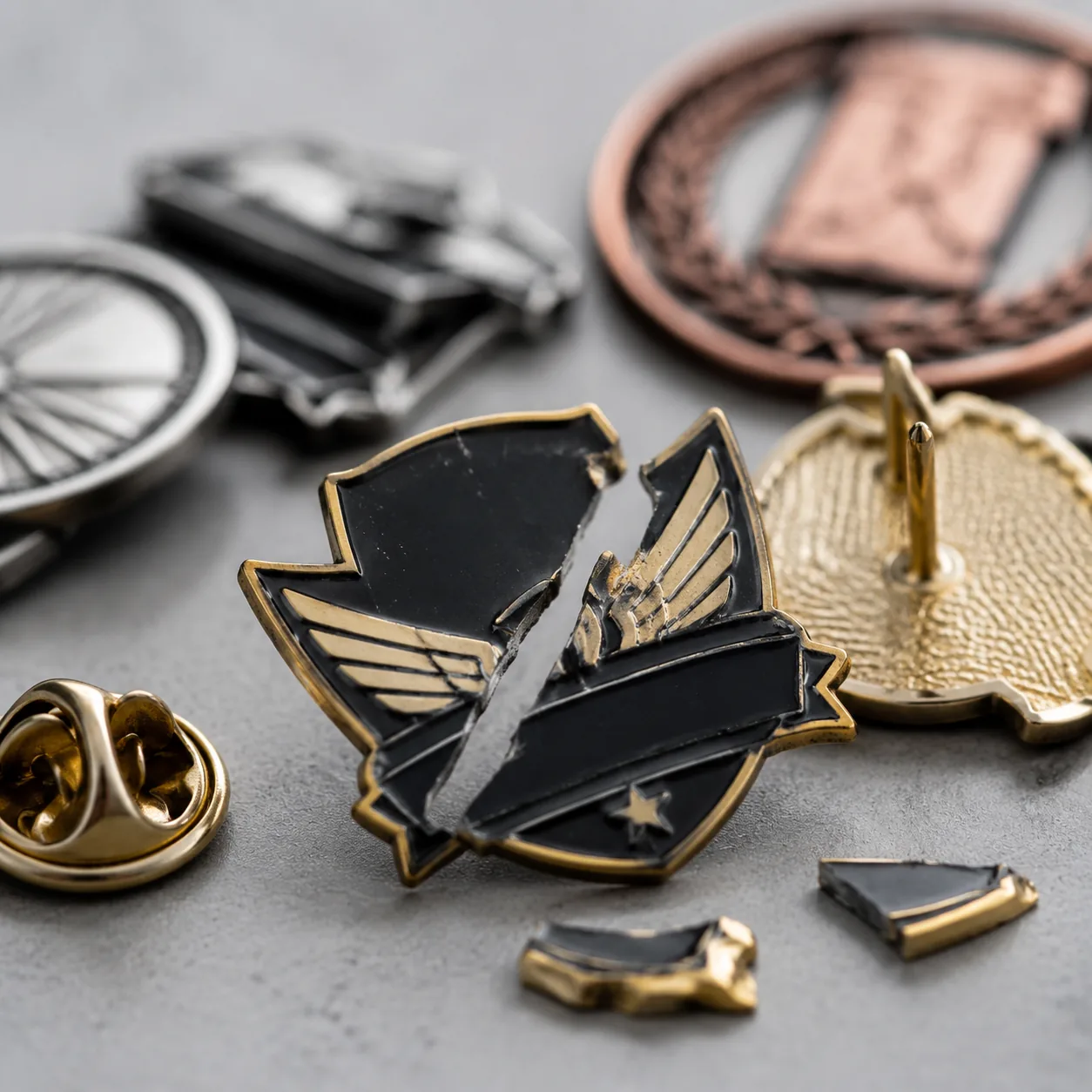
The real problem: failures happen at the handoff
Most custom promo product failures do not begin on the press, in casting, or in plating. They begin when a buyer sends a request that sounds complete to sales but leaves production with too much interpretation. The factory may be able to make a pin, coin, keychain, patch, or lanyard that looks acceptable in a sample and still ship a lot with the wrong dimensions, the wrong finish, weak hardware, or unstable color because the critical limits were never written down.
A custom order should be managed as a failure-mode exercise, not as a product-category exercise. Ask what can go wrong, how it will be measured, and what spec blocks the mistake before tooling starts. In factory work, the most expensive errors usually come from tolerance gaps, unapproved substitutions, and mismatched expectations between artwork, sample, and mass production.
A good RFQ does not only say what the item should be; it also says what it must not become. That means naming the target dimensions, the acceptable tolerance band, the finish, the hardware test basis, the inspection standard, and the packaging condition. Once those are explicit, the factory can quote against a controllable target instead of guessing intent.
For most promotional programs, the cost of poor definition is larger than the cost of a slightly more detailed brief. A quote that is 5% higher but built on locked specs is usually cheaper than a low quote that triggers remake, freight, and customer-service damage later.
Design problems: the artwork is printable, not manufacturable
A flat drawing can hide impossible geometry. Very thin text, tiny cutouts, sharp internal corners, and crowded relief details often look fine in artwork but collapse in tooling, casting, or stamping. If the line width is below about 0.25 mm for soft enamel items, or if recessed details are too shallow to survive polishing and plating, the final piece will lose definition or fill incorrectly.
For metal products, failure often shows up as softened edges, plugged cutouts, uneven depth between raised and recessed areas, or a mold that cannot vent cleanly. For patches, it appears as thread crowding and distorted borders; for woven lanyards, it shows up as unreadable small text once the weave count is too low to hold the letterforms.
Use manufacturability limits early. For soft enamel pins, keep line width at 0.25–0.30 mm minimum, keep cutout bridges at 0.30 mm or wider, and avoid internal text under 1.2 mm high unless you are using laser engraving or very fine printing. For embroidered patches, keep minimum stitchable text closer to 2.5–3.0 mm high. For woven patches and lanyards, keep line work simple enough that the factory can hold detail at the stated thread density, usually around 100D to 150D yarn systems depending on construction.
If a logo contains both readable text and decorative detail, mark which elements are approval-critical so the factory knows where detail loss is not acceptable. A clean way to do that is to identify a primary mark zone, a secondary detail zone, and a non-critical background zone. Then production knows what can be simplified without changing the brand read.
- Set minimum line width at 0.25–0.30 mm for soft enamel and 0.20–0.25 mm only when the factory has proven fine-tool capability.
- Keep negative space between cutouts at least 0.30 mm to reduce breakage, fill issues, and plating bridges.
- Require a feasibility check before sample tooling, not after the first sample arrives.
- Call out which details must remain sharp after plating, not just how the artwork should look on screen.
Dimensions and tolerances: “close enough” is not a spec
A lot of buyer frustration comes from a sample that is visually close but dimensionally wrong. In small metal goods, 0.5 mm can matter because it changes fit, pin balance, magnet coverage, or how the item reads next to packaging artwork. When dimensions are described with vague wording like “around 40 mm,” factories may build to a nominal size that varies from one batch to the next.
The safest spec is a primary dimension with a tolerance band and a stated measurement method. For example, a 45.0 mm badge can be accepted at 44.5–45.5 mm if measured across the widest point excluding a loop, but a 45 mm coin with a raised rim should define whether the rim is included. For multi-part promo sets, dimensions should also be locked against each other so one item does not overpower another in the pack.
For repeat programs, write the nominal size, tolerance, and method of measurement into the purchase order and the control sample sheet. If the factory measures a pin from the widest enamel area while the buyer measures from the outer plating edge, both sides can be technically correct and still disagree on acceptance. The standard has to be one line, not a conversation.
A practical tolerance for many promo items is ±0.3 mm on small metal components under 40 mm, ±0.5 mm on mid-size pins and coins, and ±1.0 mm on textiles such as lanyard length after finishing. Thickness typically needs its own tolerance as well: a 2.5 mm coin might be acceptable at 2.3–2.7 mm, but if the finish stack grows too much the apparent thickness can exceed the display tray or packaging insert.
| Item | Common failure | Safer spec |
|---|---|---|
| Pins | Width changes after mold shrinkage | 45.0 mm ±0.5 mm, measured across widest point |
| Coins | Rim creates size disputes | Diameter includes rim; thickness 2.5 mm ±0.2 mm |
| Keychains | Charm and ring proportions drift | Charm 50 mm ±0.5 mm; ring ID 25 mm ±0.3 mm |
| Lanyards | Length confusion after finishing | 900 mm flat length ±10 mm, excluding clip |
Color control: proof color and production color are not the same
Color problems are usually not printing mistakes alone. They come from ambiguous reference standards, poor surface prep, and different visual behavior under enamel, ink, powder coat, or woven thread. A Pantone number helps, but on textured or curved surfaces it is not enough to guarantee a visual match. Light colors on dark bases, transparent fills, and metallic finishes are especially prone to visible shift.
To reduce color drift, specify both the reference system and the acceptable visual outcome. If the product uses enamel, request a filled swatch on the actual base metal and finish. If it is printed, approve a hard proof under D65 or daylight-equivalent light and state whether a slight hue shift is acceptable. For mixed promo sets, lock all items to the same physical reference sample rather than separate interpretations of the same Pantone code.
A practical tolerance for branded promo work is a visual match within a Delta E of about 2.0 to 3.0 for color-critical surfaces, though textured substrates and metallic effects can widen apparent variation. If the brand standard is strict, include the retained master sample number, the viewing light, and a note on gloss level. Otherwise the factory is forced to guess whether the acceptable range is visual, numeric, or both.
For enamel, ask whether the factory uses baked hard enamel, soft enamel with epoxy, or printed color fill, because each process behaves differently under light and wear. For textiles, ask for a yarn-dyed or screen-printed reference, because a digital proof alone rarely predicts the finished look on woven material.
Finish and hardware: the parts that fail after handling
Plating failures are rarely just cosmetic. Thin plating, poor nickel barrier control, contaminated polishing residue, or abrasion during packing can cause tarnish, dark spots, and uneven shine before the goods reach the customer. For decorative promo items, a finish in the 0.03–0.05 micron range is generally too thin for repeated handling; a more durable build is usually nickel underplate plus a top finish around 0.1–0.3 micron, depending on alloy and process.
The key is to define finish by performance, not only by name. Ask whether the item needs indoor presentation quality or repeated hand contact, because the right spec changes with use. For higher-wear goods, hard enamel or epoxy protection often survives better than a delicate polished finish, even if the initial shine is slightly less mirror-like.
Hardware is where many low-cost orders break down. Butterfly clutches loosen, magnet backs slip, split rings deform, brooch pins sag, and keychain chains open because the sample was handled once and the production lot is expected to survive repeated use. On small hardware, the question is not whether it attaches; it is whether it keeps its holding force after repeated cycles.
For pin backs, specify the attachment type, material, and pull behavior. A rubber clutch can be safer for casual wear, but a metal butterfly clutch often holds better on thicker garments. For magnets, define the minimum pull force and the substrate thickness used for the test, because a magnet that feels strong on a thin sheet may fail on a thicker fridge panel or bag insert. For split rings, note wire diameter, outer diameter, and finish so the supplier does not quietly downgrade the metal gauge.
Good hardware specs usually include both material and a basic performance check. A keychain split ring may need 0.8–1.0 mm wire diameter, a pin post that stays centered within 0.3 mm, or a magnet that achieves the agreed pull on 1.0 mm steel. Without those numbers, the line between a pass and a claim is too subjective.
- State hardware material: iron, brass, stainless steel, or plated alloy.
- Specify the test basis: garment thickness, board thickness, or magnetic substrate thickness.
- Require pull or retention criteria where feasible, not just attachment type.
- Ask for pre-shipment spot checks on active hardware lots.
- Reject mixed hardware substitutions unless they are written into the approved spec.
Inspection and AQL: count defects, not cartons
Mass production can hide low-level defects until the box is opened by the end user. Common issues include paint bleed, off-center print, flash, burrs, scratched plating, broken attachment points, and inconsistent packaging inserts. A lot can still ship as the correct quantity even when its usable yield is much lower than the carton count suggests.
This is where AQL and defect definitions matter. For cosmetic promo products, a practical final inspection often starts around AQL 2.5 for major defects and AQL 4.0 for minor defects, but the right target depends on channel risk and claim exposure. The critical step is to define major versus minor defects before inspection begins so nobody argues after the fact.
Use a three-part QC rule: what is a reject, what is reworkable, and what is acceptable with note. For example, a tiny plating speck may be acceptable on the back of a keychain but not on the front face of a corporate gift pin. A small shift in print position may be acceptable on a giveaway item but not on a branded award piece. If the factory knows the threshold, it can sort efficiently instead of overcorrecting or undercontrolling.
For high-volume repeat runs, ask for a control plan with sampling frequency, defect photos, and in-line checkpoints. A good line will inspect first article, mid-run, and carton-out rather than waiting for final inspection alone. A sensible factory-side plan often includes first-piece approval, hourly in-process checks, and a final lot audit at least 2.5% to 5% of the shipment depending on order size and risk.
If you need a practical acceptance benchmark, many buyers use AQL 1.5 for critical defects, AQL 2.5 for major defects, and AQL 4.0 for minor defects on standard promo work. The exact numbers matter less than the consistency: the supplier must know what sample size and defect threshold will be used before production starts.
Packaging, MOQ, and lead times: the hidden cost drivers
Packaging often gets treated as a marketing extra, but it is a failure-control tool. Loose cartons, thin polybags, sharp backing cards, and poor separator design can scratch plated surfaces, deform lanyard folds, or let heavy coins scuff each other in transit. If the package is only sized for retail appearance and not for transport stress, the product can arrive with the right spec and the wrong condition.
A better packaging spec defines contact points and transit risk. For plated metal goods, soft inserts or film separators reduce abrasion; for pins, backing cards should not press against pointed posts; for challenge coins, compartments should stop edge-to-edge knocking. Carton strength matters too, especially if the goods move by mixed freight with multiple handling stages. If you ship by ocean, include desiccant and a moisture target for sealed inner packs.
For fragile or premium promo orders, ask the supplier to define the pack-out sequence. Cooling before bagging, a clean glove or tray handling rule, and a confirmed carton drop standard are cheap controls compared with replacing scratched stock. The packaging spec should protect the item, not just present it.
Lead time and MOQ also influence failure risk. Simple woven patches and printed lanyards can often run at 100–300 pcs MOQ with 7–12 days for sampling and 12–20 days for production. Molded or plated metal goods usually start around 300–1,000 pcs MOQ, with 10–15 days for sample approval and 18–35 days for production, depending on tooling, plating queue, and pack-out complexity. More complex enamel pins, coins with epoxy, or multi-piece sets can push production closer to 25–40 days.
Indicative FOB pricing for standard runs usually falls in these ranges: woven patches about USD 0.35–0.90 each; printed lanyards about USD 0.45–1.80 each; soft enamel pins about USD 0.20–0.80 each at 1,000 pcs; die-struck coins about USD 1.20–4.50 each depending on size, finish, and edge detail. Tight MOQ, short lead time, or premium packaging will move those numbers up quickly.
| Risk | Packaging control | Practical spec |
|---|---|---|
| Surface scratches | Insert or sleeve | Soft insert with no hard contact on plated face |
| Bent posts | Card clearance | Backing card hole depth cleared by 1.0 mm |
| Coin edge scuffing | Divider tray | Individual or paired cavities with separator |
| Moisture tarnish | Barrier pack | Dry packed with inner bag sealed after cooling |
What to do next: build the spec before you buy
Start with the failure list, not the purchase order. For your next RFQ, write down the top five things that would make the order unacceptable, then translate each into a measurable spec: dimension, tolerance, finish, hardware, color, packaging, or inspection rule. If the factory cannot quote against those points, the quote is not ready to compare.
For repeat programs, lock one retained sample, one written spec sheet, and one approved photo reference as the control set. That gives production and QC the same target across reorder cycles. Add MOQ and lead time to the control file as well, because a factory that is clear on volume and schedule is less likely to substitute parts or compress process steps to save time.
- Define the product with measurable dimensions, not descriptive language.
- Attach one approved master sample and one photo reference to the PO.
- Set AQL levels and defect classes before production starts.
- Confirm MOQ, lead time, and FOB price in the same document as the spec.
- Require written approval for any material, hardware, or packaging substitution.
If you want fewer surprises, make the spec do the arguing before the factory does. A clear drawing, a measurable tolerance, a known inspection level, and a controlled sample are usually enough to prevent the most common rework and rejection cases. If you want, I can turn this into a buyer-ready RFQ template for pins, coins, keychains, patches, and lanyards with exact fields and acceptance criteria.
Have a project? Send your artwork and target quantity and we’ll reply with a detailed quotation within 12 working hours.
Ready to get this made?
Send your sketch, target quantity and ship-date. Detailed quotation in 12 hours.



