Why Custom Pins Fail Drop Tests and How to Spec Them Out
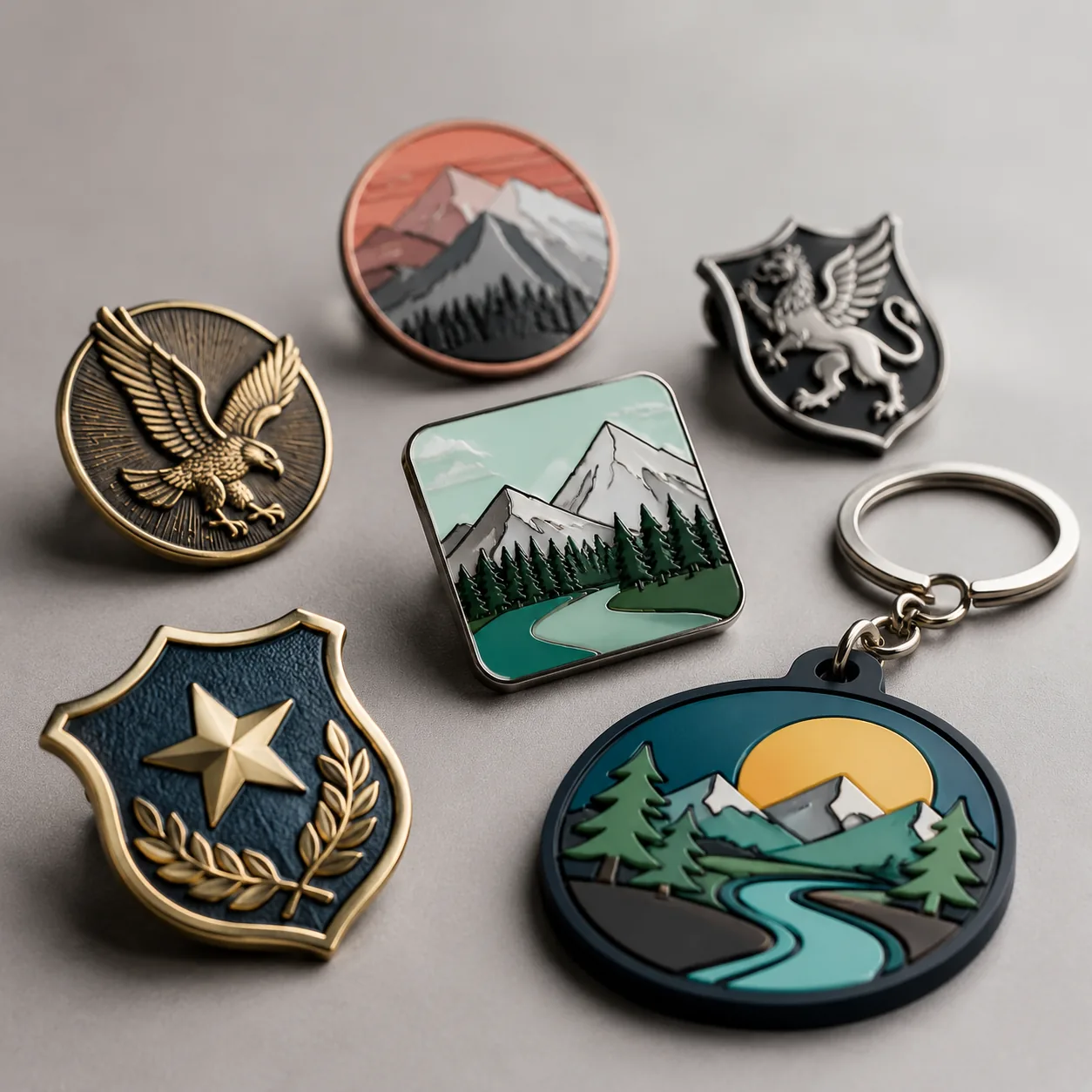
Visual approval is not enough: most pin failures start with missing mechanical, retention, and pack-out specs
Custom pins routinely pass artwork approval, Pantone matching, plating review, and even final visual AQL inspection, then fail during carding, carton transit, retail handling, or repeated wear. Typical complaints are bent posts, loose or missing backs, detached hardware, chipped enamel, scratched faces, and fast plating wear on raised edges. In most cases, those are not random courier incidents. They trace back to an incomplete specification: the PO covered appearance, but not body thickness, hardware retention, solder coverage, drop survival, cosmetic limits after transit, or carton pack-out.
For B2B buyers supplying museum shops, retail chains, uniform programs, live events, and subscription boxes, that gap turns directly into cost: rework labor, returns, chargebacks, relabeling, replacement freight, and missed launch dates. The correct approach is to spec the pin by use case, not by artwork alone. A 22 mm conference giveaway, a 32 mm gift-shop collectible, and a 45 mm jacket pin should not share the same base metal, body thickness, post count, clutch type, or packaging method.
Most preventive upgrades are inexpensive if defined before tooling and plating are locked. On standard custom pin programs, moving from a purely visual spec to a fit-for-use mechanical and packaging spec typically adds about USD 0.02-0.12 FOB per piece at 1,000 pcs. That is far cheaper than replacing a failed lot after arrival.
1) Bent or broken posts: control body thickness, post size, spacing, and solder coverage
Bent posts and post separation are the most common field failures on enamel pins. The usual causes are undersized post diameter, insufficient body thickness, poor rear-hardware placement, or weak solder attachment. For example, a 35 mm pin made in 1.2 mm iron with one 0.8 mm post is materially more failure-prone than the same design built in 1.5 mm brass with two 1.0 mm posts and full solder fillets.
For lapel-style pins up to 25 mm wide, one post is generally acceptable if finished body thickness is at least 1.2 mm and post diameter is 0.9-1.0 mm. For 25-30 mm, one post may still work for light-duty giveaway use, but two posts reduce rotation and improve drop survival. For 30-45 mm retail or repeat-wear pins, two posts should be standard, spaced as far apart as the artwork allows; practical center-to-center spacing is usually 16-28 mm. Above 45 mm, or for use on denim, canvas, packs, and outerwear, use two heavy posts, three posts, or switch to a brooch bar or safety-pin style back.
Post perpendicularity should be specified, not assumed. A lean greater than +/-3 degrees creates side loading during insertion and uneven clutch seating. On the back side, require a continuous solder fillet around at least 270 degrees of the post base for standard pins, and 360-degree coverage for heavier assemblies or zinc-alloy castings. Under 2x magnification, there should be no visible voids, pinholes, flux contamination, or dry joints. Adhesive-only attachment is not acceptable for load-bearing hardware.
| Pin size / use case | Recommended rear hardware spec | Typical FOB at 1,000 pcs |
|---|---|---|
| Up to 20 mm, event giveaway | 1 post, 0.9 mm dia, 1.2 mm body min, butterfly clutch | USD 0.28-0.42 |
| 20-30 mm, promo or employee wear | 1-2 posts, 0.9-1.0 mm dia, 1.2-1.5 mm body | USD 0.35-0.62 |
| 30-45 mm, retail or repeat wear | 2 posts, 1.0 mm dia, 1.5 mm body, full solder fillets | USD 0.55-0.98 |
| 45-60 mm, jackets, bags, heavy use | 2-3 posts or brooch bar, 1.5-1.8 mm body | USD 0.90-1.90 |
A practical pre-production screen is a controlled bend test on sample hardware. Bend the post to about 30 degrees from center, return it to center, and repeat 10 cycles alternating sides. Pass criteria: no fracture, no visible cracking at the base metal, and no loosening at the solder joint. This is not a formal ASTM test, but it is effective at exposing weak soldering and undersized posts before mass production.
2) Enamel chips after drops when the artwork is too fragile for the chosen build
Pins are dropped during carding, fulfillment, retail handling, and consumer use. Hard enamel gives a premium flush surface, but it is less forgiving when the design includes thin metal dams, large unsupported color fields, long projections, or sharp external points. Drop performance depends on geometry as much as finish type.
As a working rule, hard enamel becomes high-risk when metal line widths fall below 0.30 mm, when isolated projections extend more than 3-4 mm from the main body, or when a single color field spans more than about 8-10 mm without structural breaks. For pins above 30 mm, 1.5 mm body thickness is a safer minimum for hard enamel. If the art requires very fine borders or long pointed silhouettes, soft enamel with epoxy often survives handling better because the cured top layer absorbs impact more effectively than a brittle polished hard-enamel surface.
A concrete example: a 32 mm star-shaped collector pin in black nickel with large hard-enamel fields and narrow outer points may look excellent in first article review but remains a predictable drop-failure candidate. Increasing line width from 0.25 mm to 0.35 mm, increasing body thickness from 1.2 mm to 1.5 mm, and adding 0.5-0.8 mm corner radii at the points will materially reduce enamel pop-out. If the artwork cannot change, epoxy-coated soft enamel is usually the safer commercial build.
For B2B orders, define a packaged-unit drop test in the PO. A practical default is 5 drops from 1.0 m onto sealed concrete or ceramic tile: one face, one back, one top edge, one bottom edge, and one random corner. Sample size should be at least 10 finished units per lot or per colorway. Pass criteria for standard retail pins: no detached hardware, no enamel loss exposing base metal, and no chip visible from 30 cm under 500-700 lux office lighting. For premium collector retail, tighten that to no visible chip from 50 cm. For low-cost event giveaways, state whether minor edge witness marks are acceptable so the acceptance standard is clear before shipment.
3) Loose clutches are a retention-force problem, not just a hardware-style choice
Many attachment complaints begin with vague wording such as "butterfly back" or "rubber back." That identifies hardware style, but not holding force. Standard butterfly clutches are economical and suitable for high-volume promo orders, yet spring tension varies by source, plating, and slot tolerance. A clutch that feels acceptable during spot inspection can loosen quickly on garments, lanyards, or bags if pull-off force is too low or inconsistent.
A better method is to specify retention targets in N or kgf. For standard butterfly clutches, a practical target is 8-15 N pull-off force, equivalent to about 0.8-1.5 kgf, with no single sample below 6 N. For rubber clutches, 6-12 N is typical depending on compound hardness and bore tolerance. For locking clutches, 20-40 N is common. If the pin will be used on travel bags, uniforms, or repeated on-off wear, locking backs or military clutches are usually worth the extra cost.
Typical FOB adders at 1,000 pcs are modest relative to complaint risk: rubber clutch instead of standard butterfly, about USD 0.01-0.03; deluxe or locking clutch, about USD 0.08-0.20. Testing should be done with a pull gauge where available, using at least 5 samples at line start and 5 samples at final QC, recording average, minimum, and maximum values. If the factory does not have a gauge, require approved golden samples, in-line functional checks, and classify loose or slipping backs as a major defect under AQL 2.5.
Hardware should also match the garment. Thick denim, canvas, padded outerwear, and bag straps create more side load during insertion than a shirt placket or paper backing card. In those applications, upgrading only the clutch is not enough; you may also need thicker posts, wider post spacing, or a brooch-bar format to prevent bending and rotation.
4) Face scratches usually come from bagging, carding, and carton compression after plating
Buyers often blame scratches on plating quality, but many polished pins are damaged after plating during bulk packing, carding, or carton transit. Mirror gold, imitation silver, black nickel, polished brass, and hard-enamel flush surfaces show scuffs easily under retail lighting, so a premium-looking pin packed like a giveaway will predictably generate cosmetic claims.
For standard small pins, an individual OPP bag around 40 x 60 mm with 0.04 mm film thickness is common. For polished retail pieces, 0.05-0.06 mm film is safer, and one pin per bag should be mandatory. If a pin is mounted on a backing card, specify whether the clutch remains attached behind the card or is packed separately in a mini polybag. A metal clutch attached behind the card can emboss or scratch the next unit in a compressed inner carton. For premium finishes, add tissue interleaves, PE foam dots, or a low-tack protective film on the face if the unit cost supports it.
Carton density also needs control. Keep export cartons below about 12 kg gross weight; 8-10 kg is safer for carded retail pins. Use inner boxes sized to limit free movement, and do not mix loose backs or spare hardware in the same cavity as finished pins. A practical transit screen is a carton shake test on one sealed inner box, followed by cosmetic inspection of 13 pieces against an approved scratch standard. Cosmetic defects should be reviewed separately from structural defects under AQL, otherwise abrasion gets buried inside a broad minor-defect category.
If presentation packaging is included, require a compatibility review before mass production. Uncoated tins, abrasive paperboard inserts, exposed staple legs, rough flocking, and recycled board dust can all mark polished plating or epoxy surfaces. Low-cost fixes such as separate-bagged clutches or PE pads often add only USD 0.01-0.03 per piece and prevent a high percentage of avoidable scratch claims.
5) Plating wear and edge discoloration happen when decorative finishes are used for high-contact applications
A pin can leave the line looking bright and still wear quickly if the plating stack is purely decorative. This is common on souvenir pins, bag accessories, zipper-pull style pieces, and employee-recognition items that are handled repeatedly. Decorative imitation gold, imitation silver, nickel, and black nickel on custom pins are often in the roughly 0.03-0.08 micron range, depending on substrate, process route, and line control. That may be acceptable for one-day event distribution, but it is not a robust wear spec for museum retail or collector programs.
Where edge appearance matters, write the wear expectation into the PO. Raised polished areas and sharp corners are the first points to fade or discolor. A clear e-coat or protective topcoat can improve abrasion resistance, typically adding around USD 0.02-0.08 FOB per piece and 1-3 production days. Geometry matters too: reducing knife-like outer points, smoothing high-friction ridges, and avoiding unnecessary raised edge length can extend apparent finish life almost as much as a chemistry upgrade.
Substrate selection affects finish quality. Iron is cost-effective and common for soft-enamel promo pins. Brass generally gives cleaner stamped detail, better edge definition, and more consistent premium plating. Zinc alloy is useful for thicker 3D forms, cutouts, and irregular silhouettes, but edge plating behavior can differ from stamped brass or iron, especially on deep recesses. If your target is under about USD 0.40 FOB at 1,000 pcs for a 25 mm iron soft-enamel pin, there is limited room for upgraded plating build, locking backs, and retail-grade packaging all at once. The spec must prioritize what matters most.
For short-life promotional use, standard decorative plating is usually adequate. For tourism retail, museum shops, recognition awards, and collector drops expected to hold appearance for months, specify substrate, finish, whether a clear topcoat is required, and the approved cosmetic viewing distance after handling or transit.
6) QC should test joint integrity and lot performance, not only visual appearance
A neat pin back does not guarantee a strong assembly. Post separation usually comes from inadequate solder area, poor surface prep before soldering, or inconsistent heating. Risk rises sharply on larger pins, spinners, danglers, layered constructions, bottle-opener pins, and other formats where the rear hardware carries leverage rather than simple pull.
The buyer spec should state both connection method and inspection method. For standard posts, require full visible fillet coverage with no cracks, voids, or exposed base around the joint under 2x magnification. For larger or heavier pieces, request mechanical assist features such as recessed locating holes, broad post bases, tabs, or interlocking layers so the joint does not rely on solder alone. Detached hardware should be classified as critical if it creates a sharp-point hazard; otherwise at minimum as major.
At final inspection, use AQL that reflects business risk rather than generic defaults. A practical framework for many pin programs is AQL 2.5 major and 4.0 minor, with detached hardware, exposed sharp points, missing backs, and wrong count classified separately. For hardware integrity, ask for destructive pull testing on 5-10 samples per lot start or per colorway, not only on the first article. Any failure should trigger containment, process review, and reinspection of the affected lot.
Lead times should also be realistic. Standard MOQ is often 100 pcs, but 300-500 pcs is where pricing becomes more efficient and process control is easier to justify. Typical pre-production sample lead time is 5-7 days after artwork approval; mass production is usually 10-18 days. Premium packaging, epoxy curing, upgraded plating routes, or multiple hardware types can extend that to 15-22 days. Rush production is possible, but it raises the risk of weak polishing, unstable plating, and packing damage.
What to put on the spec sheet before approving a custom pin order
If your RFQ or PO lists only size, colors, plating, and backing type, it is incomplete. Most repeat failures can be reduced with a one-page spec sheet tied to actual use conditions. The goal is to convert likely complaints into measurable build, test, and pack-out lines that the supplier cannot interpret loosely.
- Define end use clearly: event giveaway, collector retail, museum shop, uniform wear, bag accessory, or subscription-box insert.
- State substrate and finished body thickness in mm; for pins over 30 mm, 1.5 mm is usually a safer minimum.
- Specify post count, post diameter, and target spacing; for 30-45 mm pins, 2 posts at 16-28 mm spacing is a strong default.
- Call out allowable post lean, e.g. +/-3 degrees max from perpendicular.
- Specify clutch retention by force target, not only by hardware name.
- Set minimum metal line width, such as 0.30 mm for hard enamel, and add minimum corner radius where possible.
- Define drop-test method, height, surface, sample size, and cosmetic viewing distance for pass/fail.
- Define solder fillet coverage and whether mechanical assist features are required on heavier assemblies.
- Write pack-out details: OPP bag size, film thickness, one-per-bag rule, clutch attached or separate, inner-box quantity, and maximum carton gross weight.
- Set inspection levels such as AQL 2.5 major / 4.0 minor, with detached hardware and sharp points classified separately.
- List MOQ, sample lead time, production lead time, and any adder for premium plating, topcoat, epoxy, or upgraded backs before artwork approval.
For budgeting, realistic benchmarks at 1,000 pcs are: a 25 mm die-struck iron soft-enamel pin with standard butterfly back and basic OPP bag, about USD 0.28-0.55 FOB; the same size in brass with epoxy or hard enamel, upgraded clutch, and retail-minded packaging, about USD 0.50-0.95 FOB; and a 35-45 mm retail pin with two posts, thicker body, and better pack-out, about USD 0.55-1.20 FOB depending on finish complexity and hardware.
The practical next step is simple: take the last pin order that generated complaints and classify each issue by failure mode instead of supplier explanation. Then convert each complaint into a measurable PO line such as post diameter, body thickness, minimum line width, clutch retention, drop test, bag film thickness, solder fillet coverage, or topcoat requirement. That is usually the lowest-cost point in the process to prevent the same failure on the next order.
Have a project? Send your artwork and target quantity and we’ll reply with a detailed quotation within 12 working hours.
Ready to get this made?
Send your sketch, target quantity and ship-date. Detailed quotation in 12 hours.



