Why Custom Pins Fail Drop Tests and How to Spec Them Out
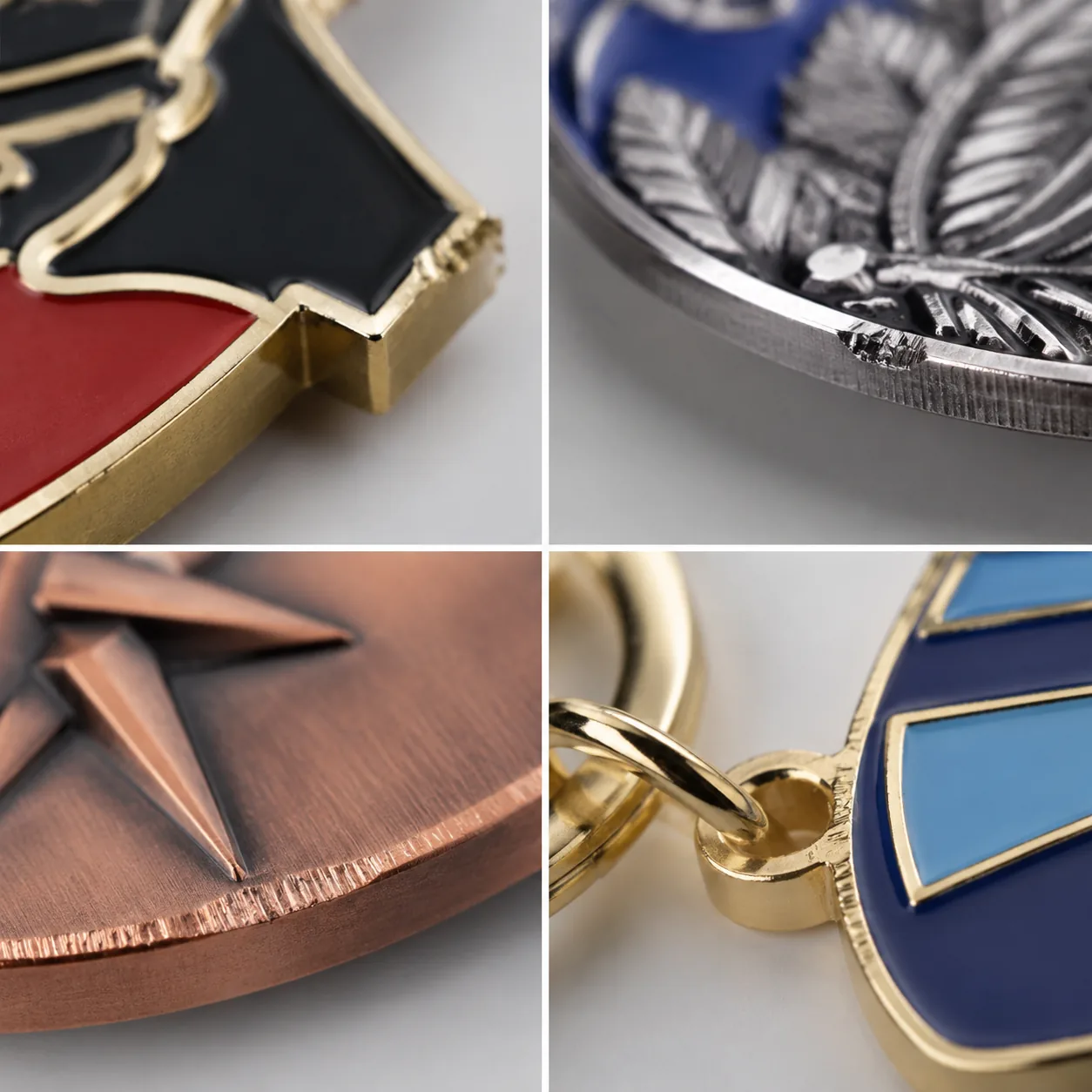
Why pins pass visual QC but still fail after packing and wear
The most common sourcing error on custom lapel pins is approving the front face while leaving the back hardware at factory default. A pin can match artwork, plating, Pantone fills, and epoxy finish, then fail 7 to 30 days after handout because the post bends, the solder joint separates, the clutch loosens, or the pin rotates on real garments. Those are use-phase and transit-phase failures, so they are easy to miss when incoming inspection focuses on enamel fill, print clarity, or plating color.
Risk rises sharply once the design moves beyond a small flat badge. A 20 mm stamped pin weighing 3 to 5 g may perform adequately with one 0.9 mm post and a standard butterfly clutch. A 35 mm soft enamel pin with an epoxy dome, layered relief, or spinner can weigh 10 to 16 g and generate much higher torque at the post base. On a backing card it looks fine; on blazer wool, polo knit, or 600D bag fabric it behaves like a lever.
For B2B buyers, the cost imbalance is severe. A unit costing only USD 0.55 to 1.80 FOB can trigger replacements, event disruption, rework labor, and brand damage if hardware fails in the field. The fix is not upgrading every SKU to locking clutches and oversized posts. The fix is writing a hardware spec that links size, finished weight, post count, post diameter, solder pad, clutch type, post length, packaging, and acceptance criteria before tooling starts.
Failure mode 1: post pull-out at the solder joint
Post pull-out is the costliest hidden defect because the front decoration usually stays intact while the fastening system separates from the back. End users often call it a broken needle, but on stamped or cast metal pins the failure point is usually the soldered or welded joint at the base of the post, not the shaft itself. The problem is most common when a wide or heavy pin uses one thin post, a small solder pad, and a tight clutch that increases removal torque.
Default hardware on low-spec orders is often one post at 0.8 to 0.9 mm diameter with a light solder fillet. That can be acceptable for a flat 18 to 22 mm badge under 5 g. It becomes marginal once the pin exceeds about 28 mm, weighs more than 8 g, uses an epoxy dome of 0.3 to 0.5 mm, or adds leverage through layered construction, cutouts, danglers, or spinners. In those builds, even normal removal force concentrates stress at the post base.
A usable specification should define four points: minimum post diameter, minimum solder or weld contact area, post count, and a pass/fail pull test on the approved sample. Practical starting ranges are 0.9 mm for small flat pins, 1.0 mm for mid-size pins, and 1.0 to 1.2 mm for heavy or moving-part designs. Where posts are soldered, request a continuous fillet around the base and a contact pad of at least 3.0 mm diameter for mid-size pins and 3.5 to 4.0 mm for heavy styles. One-sided tack solder should be rejected.
| Pin build | Typical finished weight | High-risk default spec | Safer attachment spec |
|---|---|---|---|
| 18-25 mm flat die-struck or soft enamel | 3-6 g | 1 x 0.8-0.9 mm post | 1 x 0.9 mm post, solder pad >= 3.0 mm, pull test >= 3.0 kgf |
| 26-32 mm soft enamel or die-struck | 7-10 g | 1 x 0.9 mm post | 2 x 1.0 mm posts or 1 post + anti-rotation nub, pull test >= 4.0 kgf |
| 33-45 mm thick, layered, or offset printed | 11-18 g | 1 x 0.9 mm post with standard clutch | 2 x 1.0-1.2 mm posts, solder pad 3.5-4.0 mm, pull test >= 5.0 kgf |
| Spinner, dangler, or epoxy-domed design | 8-20 g | Factory standard hardware | 2 posts minimum, twist test plus pull test, clutch chosen by weight and end use |
Treat hardware separation as a critical defect, not a cosmetic defect. Cosmetic inspection can still use AQL 2.5 for major and AQL 4.0 for minor issues such as plating spots, enamel chips, or print blemishes. A detached post, cracked solder joint, or missing clutch should sit in a zero-acceptance category. If the RFQ does not state that clearly, some factories will inspect mainly the front face and treat hardware as visually attached rather than mechanically sound.
Failure mode 2: rotation, sagging, and unstable wear position
A pin that stays attached but hangs crooked is still a field failure. Rotation usually happens when buyers approve one centered post on a wide horizontal badge, asymmetrical logo, or design with uneven mass distribution. The visual center of the artwork is often not the balance center of the finished part, especially with cutouts, offset relief, one-sided accessories, or locally thicker metal sections.
On a 35 to 40 mm horizontal pin, one centered post may look stable on a sample card yet rotate immediately on knitwear, uniform shirts, backpacks, or blazer lapels. Two posts are usually safer, with center-to-center spacing of roughly 18 to 28 mm depending on width. In most cases, placing posts near the outer thirds of the badge controls rotation better than clustering them near the middle.
For small vertical pins under 22 mm, one post plus an anti-rotation nub often controls movement at lower cost than dual posts. For horizontal badges above 28 mm, specify the exact back geometry instead of writing 'two posts if needed.' A clear RFQ line is: '2 x 1.0 mm posts on horizontal axis, each 6 to 8 mm from nearest edge, subject to artwork clearance.' That wording is easy to quote, tool, and inspect.
Wear testing should use the actual target material, not only a backing card. Test on at least two real fabrics if end use is mixed, for example 220 gsm polo knit and blazer wool, or 600D bag fabric and lightweight shirting. Fabric compression changes the load angle under the clutch, so a pin that looks straight on rigid card stock can still sag once worn.
Failure mode 3: clutch loss, accidental drop-off, and weak retention
Many complaints are clutch failures rather than metal failures. The post remains attached, but the butterfly clutch loosens, a rubber clutch slips off, or retention drops after repeated removal. Standard butterfly clutches remain the market default because they are compact and low cost, but they are not the best choice for every weight, garment, or wear cycle.
As a working guide, standard butterfly clutches usually suit small to mid-size pins under about 8 g that will be worn occasionally. Rubber clutches are comfortable and reduce scratching, but retention varies with rubber hardness and mold consistency; they fit lightweight event pins better than heavy retail badges. Deluxe or locking clutches cost more and are slower to operate, yet they reduce real-world loss on pins above about 12 g, premium collector pieces, and any 2-post pin expected to be re-worn repeatedly.
Specify hardware by performance, not by nickname alone. For example: 'butterfly clutch must maintain secure fit after 20 removal cycles with no visible looseness' or 'locking clutch required for finished weight above 12 g and all 2-post retail pins above 35 mm.' If a supplier proposes a substitute clutch, they should prove equivalent retention on the same post diameter. A strong clutch on an undersized 0.8 mm post is still a weak system.
Retention choice should also tie to MOQ and price. At 500 pcs, a 25 mm soft enamel pin commonly lands around USD 0.55 to 0.95 FOB with standard butterfly clutch. A 30 mm soft enamel pin with two posts often ranges from USD 0.78 to 1.20 FOB. Upgrading to a locking clutch typically adds USD 0.06 to 0.15 at 500 pcs and about USD 0.04 to 0.10 at 3,000 pcs. Common MOQs are 100 pcs for standard custom pins, 300 pcs for carded retail units, and 500 pcs or more where one SKU is split across multiple clutch types or pack formats.
Failure mode 4: bent posts, scratched faces, and packaging damage
Not all failures begin in wear. Many begin in packing and transit. Posts arrive bent, scratch neighboring pieces, puncture display cards, or deform because post length, clutch depth, card thickness, and pack density were never specified together. What buyers call rough handling is often a stack-up problem in the specification.
Standard post length is usually 8 to 10 mm. That suits many butterfly-clutch applications on thin cards, but issues begin when the order changes to thicker display card, a deeper locking clutch, or a tight polybag without adjusting hardware. A long post creates more leverage in transit. In bulk packs, exposed posts can hook adjacent pieces, causing bends, plating rub, and enamel scratches.
Write packaging as one combined requirement: post length, post-length tolerance, clutch type, card thickness, and unit pack style. A common tolerance for post length is +/-0.5 mm. If the pin is mounted on a card, specify the board, for example 300 to 350 gsm art card at about 0.35 to 0.45 mm thickness. For premium retail sets, pre-installing the clutch through the card and bagging each unit usually protects hardware better than loose bulk packing. That extra packing cost is often only USD 0.03 to 0.08 FOB per piece, which is usually cheaper than sorting damaged stock after arrival.
If the order ships in bulk, require a packed-sample transit check before mass production. Inspect 20 packed units after courier shipment or after a controlled carton shake plus 3 free-fall drops from 80 to 100 cm. This is not formal ISTA certification; it is a practical confirmation that the chosen post geometry survives the actual packaging method.
Right-size the hardware for the real use case
Over-specifying hardware creates a different quality problem. Buyers sometimes react to one failure by demanding the thickest posts and strongest locking clutches on every design. That can leave larger needle holes, increase application force, slow event distribution, and frustrate recipients wearing delicate fabrics. Stronger hardware is not automatically better if the use case is short-duration wear or high-speed handout.
This trade-off matters most for conference giveaways, campaign pins, hospitality uniforms, and welcome badges in the 18 to 25 mm range. A locking clutch may reduce loss, but if users struggle to remove it or it leaves visible holes in lightweight shirting, the hardware has introduced a usability defect. In those cases, one 0.9 mm post with butterfly or rubber clutch may be the better choice, provided it still passes a defined retention check.
Match the attachment to the wear context. Denim jackets, bags, employee-service awards, and gift-shop collector pins can justify dual posts and stronger clutches. One-day event pins usually need faster handling and lower fabric damage. The specification should state target fabric and expected wear cycles, not just plating and color count.
Sample-stage tests that catch failures before mass production
Most attachment failures can be found during sampling if the back is inspected as carefully as the front. The pre-production sample must use the exact post count, post diameter, post position, clutch type, solder build, and intended packaging format. If any of those change after approval, the sample is no longer representative.
- Measure post diameter with calipers; common approved range is 0.9 to 1.2 mm depending on size and weight
- Check post location against the drawing; on wide badges confirm dual posts are spaced correctly and not clustered near center
- Run at least 20 removal and reattachment cycles per sample; record where looseness appears: clutch, post, or solder joint
- Perform both pull and twist checks on approved samples; record the failure point and force, not only pass or fail
- Inspect solder fillet coverage around the base; thin, uneven, or off-center solder is an early warning sign
- Fit the pin on actual target materials such as blazer wool, knit polo, shirting, or bag fabric to confirm anti-rotation performance
- Review packed samples after courier shipment or basic drop simulation, especially for long posts, locking clutches, and bulk-packed orders
For larger programs, ask for a golden sample with back-side hardware photos and a one-page dimensional note sheet. This is especially useful on repeat orders where front artwork stays unchanged but hardware substitutions can occur quietly. Keeping one retained golden sample on both buyer and factory side is a low-cost control that reduces replenishment disputes.
RFQ and PO fields to lock in 2026: MOQ, price, lead time, and acceptance criteria
If an RFQ lists only size, plating, colors, and 'butterfly clutch,' it is incomplete for any pin expected to survive distribution and repeated wear. A better RFQ treats hardware as a system. At minimum, include finished size, estimated target weight, post count, post diameter, post position, clutch type, post length, packaging format, target fabric, wear cycle, and defect classification for attachment failure.
Commercial terms should connect to that hardware detail. As a working market range, adding a second post often increases FOB cost by about USD 0.03 to 0.08 per piece depending on size and volume. Moving from standard butterfly to locking clutch usually adds USD 0.05 to 0.20. Standard pre-production samples typically take 7 to 10 days after artwork and tooling approval. If post layout, clutch type, or packaging changes after first sample, expect another 4 to 7 days plus freight. Mass production for standard custom pins commonly runs 10 to 18 days after sample approval, extending to 18 to 25 days for retail packing, multi-part assemblies, mixed hardware configurations, or carded sets packed individually.
Acceptance language should sit directly in the PO. A practical framework is: cosmetic AQL 2.5 major and 4.0 minor; hardware separation critical with zero acceptance; no bent posts outside +/-0.5 mm length tolerance or visible lean beyond agreed visual standard; no clutch drop-off during the 20-cycle sample test; and packaging locked to approved packed sample. This prevents inspection teams from downgrading attachment problems into minor cosmetic issues.
The simplest internal control is a one-page hardware matrix by size band and use case: under 25 mm event pins, 26 to 32 mm retail pins, and 33 to 45 mm heavy or moving-part pins. Once that matrix exists, your team can quote faster, compare factories on equal terms, and avoid repeating the same failure pattern on future programs. For borderline designs, request two hardware sample options up front. The extra sample cost is usually trivial compared with returns, reshipments, or event-day complaints.
Have a project? Send your artwork and target quantity and we’ll reply with a detailed quotation within 12 working hours.
Ready to get this made?
Send your sketch, target quantity and ship-date. Detailed quotation in 12 hours.



