Where Custom Pin Orders Blow Up in 2026 Cost Reviews
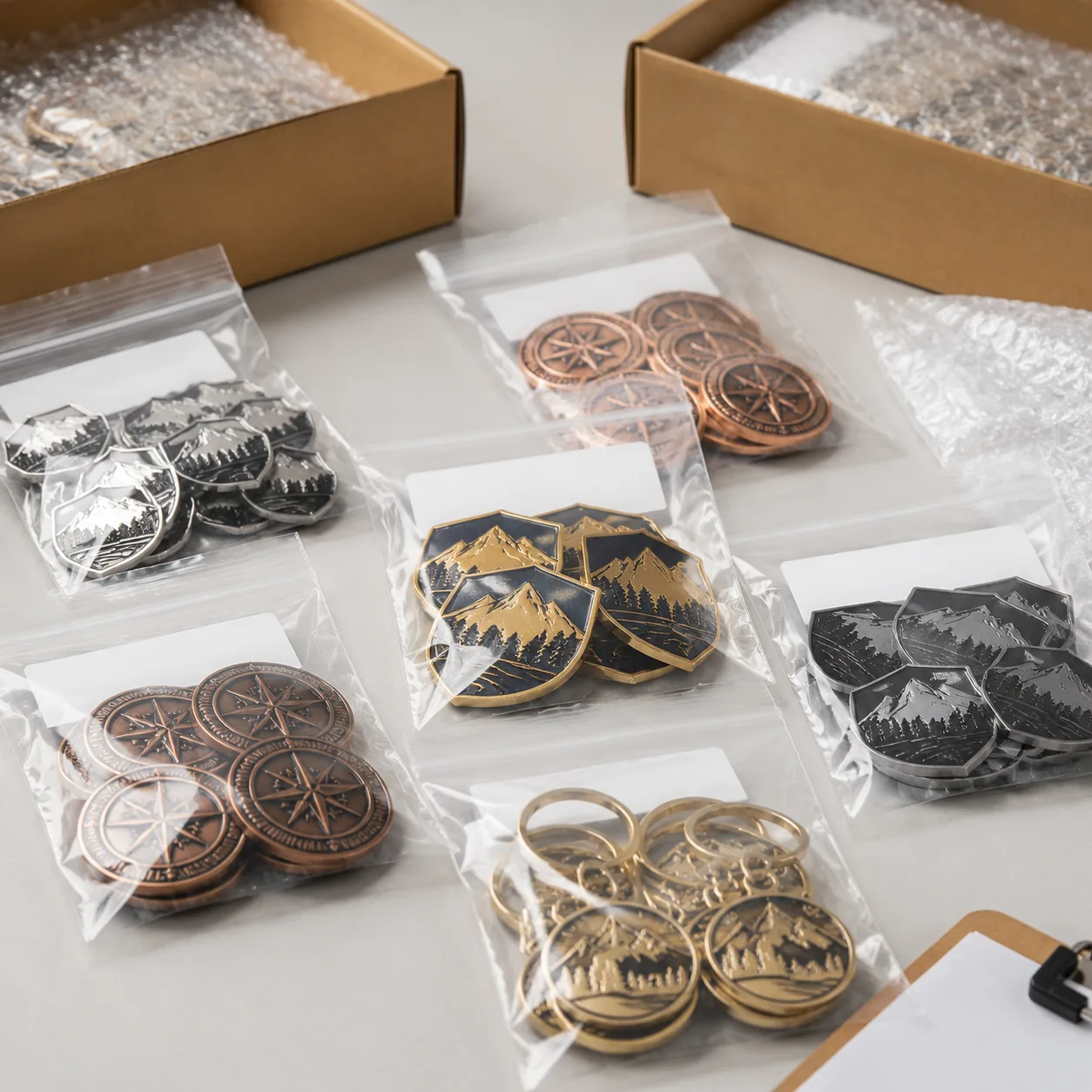
Run cost review before artwork approval
The most expensive mistake in custom pin buying is still approving artwork before checking whether the design can be manufactured at the target FOB price, MOQ, and ship date. Once brand, marketing, or licensing teams approve a visual, later engineering changes feel like quality loss rather than cost control. That is how a pin quoted attractively at 5,000 units becomes a poor buy at 200 to 300 units after die charges, plating setup, color-fill labor, attachment assembly, and packaging handling are allocated correctly.
Most overruns do not start at the first RFQ. They appear during engineering review or pre-production sampling, when the factory flags details the art file hides: 7 to 10 color fills on a 25 to 30 mm face, text below 0.8 mm cap height, recessed cells narrower than 0.30 mm, internal cutouts under 1.2 mm, mixed polished and sandblasted textures, or two posts specified on a small back with too little solder area. Each item seems minor in Illustrator. On the line, each one slows polishing, raises touch-up time, increases reject rate, or forces a process change.
For most promotional programs, the most stable cost structure is still a stamped soft enamel pin in iron or brass, 1.2 to 1.5 mm thick, 25 to 35 mm wide, with 4 to 6 colors, one plating finish, and one standard butterfly clutch. In South China and similar export bases, sample lead time is commonly 5 to 7 calendar days after approved artwork and deposit, with mass production in 12 to 18 days after sample sign-off for standard builds. Programs using die-cast zinc, screen print, epoxy dome, or retail packing usually extend to 18 to 25 days, and complex assortments can push beyond 30 days.
The discipline is simple: lock must-have brand elements first, then quote the stripped specification before decorative extras are added back. The key commercial question is not just unit price. It is which details are most likely to move after die layout, color separation, and first sample review. That is where budget drift starts, and that is why cost review belongs before artwork approval rather than after it.
Failure mode 1: the artwork forces the wrong process
A large share of blown budgets starts with process mismatch. Buyers submit dense artwork and accept a stamped-pin quote because it looks cheapest at RFQ stage, even though the design really needs photo etching or die casting. The result is familiar: unreadable rim text, flooded enamel, weak separation between color fields, rejected samples, redraw charges, or a second tooling cycle in a different process.
For stamped iron or brass pins, a practical baseline is 0.30 mm minimum raised metal line width and 0.30 mm minimum recessed gap width. Internal cutouts should generally be at least 1.20 mm, and serif text below roughly 5 pt at final size often degrades unless the copy is very simple. Stamped bodies are typically 1.2 to 1.5 mm before plating. Photo-etched brass can usually hold finer linework down to about 0.20 mm, cleaner small text, and narrower borders, but the face is flatter and the body is lighter, commonly 0.8 to 1.0 mm before plating. Die-cast zinc alloy is better for irregular outlines, larger voids, undercuts, and 3D relief, but die cost and short-run unit cost rise quickly.
A concrete example makes the choice clearer. A 28 mm round pin with three interior cutouts, a 55-character rim sentence, and a serif crest in the center is rarely a good stamped candidate if readability matters. If the priority is the lowest FOB, simplify the art to block lettering and larger separations. If the copy must remain legible at arm’s length, paying more upfront for an etched or die-cast process is cheaper than failing a stamped sample, revising the artwork, and reopening tooling.
| Process | Best use case | Typical measurable limits | MOQ/value tier | Typical FOB unit price |
|---|---|---|---|---|
| Stamped soft enamel | Standard logos, mascots, event and promotion runs | 0.30 mm min line, 0.30 mm min gap, 1.20 mm+ cutouts, 1.2-1.5 mm body | 100 pcs possible, best value at 300-1,000 | USD 0.28-0.75 at 500 pcs |
| Photo etched brass | Fine text, flatter graphics, detailed borders | 0.20 mm min line, finer text, 0.8-1.0 mm body | 100 pcs possible, efficient at 300-500+ | USD 0.35-0.85 at 500 pcs |
| Die cast zinc alloy | 3D forms, large voids, irregular silhouettes | Better for sculpted relief, larger cutouts, heavier body | 300 pcs MOQ common, setup cost higher | USD 0.45-1.20 at 500 pcs |
| Imitation hard enamel | Smooth premium face, gifting and retail programs | Flatter polished face, tighter fill and polish control, lower color complexity preferred | 300 pcs MOQ common, stronger value at 500-1,000 | USD 0.55-1.40 at 500 pcs |
Failure mode 2: finish stacks add labor faster than buyers expect
The second major blow-up comes from stacking too many effects into one build. Matte black nickel, translucent enamel, glitter, pearl powder, screen print, epoxy dome, laser serials, and sandblasted recesses may each add only a few cents in a quote, but their risk is not linear. Every extra effect adds masking, curing, handling, inspection, and rework exposure. On a 300-piece order, those labor steps often matter more than the raw metal value.
Plating is a frequent source of confusion because quotes can look comparable while finish quality is not. Decorative gold-tone, nickel-tone, and black nickel on custom pins are appearance coatings, not heavy-wear engineering finishes. On low-cost promotional pins, decorative plating thickness commonly sits around 0.03 to 0.05 microns. That is adequate for normal badge use, display, and occasional wear, but it is not designed for repeated abrasion against zippers, lanyard clips, or bag hardware. Antique gold, antique silver, and antique copper behave differently again because the look depends on darkened recesses and post-polish contrast, not a perfectly uniform mirror face.
Screen printing also deserves tighter controls than many POs give it. It is useful for details below what metal lines can hold, but registration should be specified, typically within plus or minus 0.10 to 0.15 mm on small faces. Epoxy dome can improve perceived smoothness and add scratch resistance over print, but it changes gloss, edge feel, and color appearance. Glitter and translucent fills can look excellent in renderings yet create more lot-to-lot variation, especially in narrow recessed cells where fill depth varies across the face.
The practical rule is to rank finish effects by commercial value. If matte black nickel defines the brand look, protect it. If epoxy is needed to prevent print wear, glitter may be optional. In many failed cost reviews, deleting one effect saves only USD 0.03 to 0.08 per unit, but it removes far more than that in scrap exposure, approval delay, and back-and-forth on finish expectations.
Failure mode 3: attachment choices create claims instead of stability
Attachment layout is often approved visually instead of mechanically. That is how a sample passes a desk review but fails in use. Common problems are one centered post on a wide pin that rotates on fabric, two posts placed too close together on a heavy zinc-alloy badge, or low-grip rubber clutches used where metal locking backs would better control movement.
As a working guide, one post is usually sufficient for compact pins under 25 mm with a body thickness around 1.2 to 1.5 mm and a weight below about 5 g. From 30 to 50 mm width, two posts are generally safer, and spacing should be as wide as the rear geometry allows. For die-cast pieces above roughly 8 to 12 g, the factory should review post count, post diameter, solder area, and clutch type together. A 45 mm zinc-alloy pin with two narrow posts only 12 mm apart may rotate more than a lighter 32 mm stamped pin with better post spread.
Buyers should define attachment performance in the QC plan, not just attachment type on the artwork. For many promotional programs, General Inspection Level II with AQL 2.5 for major defects and 4.0 for minor defects is workable, but only if loose clutches, cracked solder joints, bent posts, detached backs, and excessive rotation are classified as major defects. A practical acceptance routine can include clutch-fit verification, a solder-joint pull check, and a rotation check on a woven fabric panel similar to the end-use garment or bag.
The economics are straightforward. Saving USD 0.02 to 0.04 per unit with a weaker backing or poor post layout is rarely a real saving if even 2 to 3 percent of the shipment rotates, detaches, or requires replacement. That replacement cost usually lands on the buyer as rework, field complaint handling, or brand damage rather than a simple supplier debit.
Failure mode 4: vague QC language catches defects too late
Many POs still say things like no scratches, good color, secure attachment, or clean finish. That language is too subjective to protect either cost or schedule. When the standard is vague, the argument happens after packaging is printed and the ship date is committed. In a tighter 2026 margin environment, late disagreement is exactly where a low-cost order becomes an expensive one.
For enamel pins, define defects numerically wherever possible. If face smoothness matters, enamel underfill deeper than 0.10 to 0.15 mm below the metal line should be treated as a major defect. Missing fill, exposed base metal inside a color field, obvious color contamination, cracked epoxy, detached posts, sharp burrs, and point hazards should also be major defects. For screen print, specify registration tolerance such as plus or minus 0.15 mm. For overall dimensions, plus or minus 0.20 mm is common on small stamped pins, while thickness tolerance of plus or minus 0.10 mm is realistic depending on process, polishing, and plating.
Inspection method matters as much as defect definitions. General Inspection Level II with AQL 2.5 major and 4.0 minor is a solid commercial baseline. For retail-packed goods, licensed merchandise, or launch programs with low tolerance for returns, buyers often tighten checks on plating consistency, point safety, backing-card alignment, barcode readability, count accuracy, and assortment mix. The approval reference should always be a mass-production-representative golden sample, not a hand-finished presentation sample prepared outside normal line conditions.
- Define major defects numerically: underfill deeper than 0.10-0.15 mm, exposed base metal, missing color, loose attachment, sharp burr or exposed point
- Define minor defects numerically: light face marks, slight color spread, limited polish inconsistency, small print offset within agreed tolerance
- State feature tolerances clearly: overall size ±0.20 mm, thickness ±0.10 mm, screen-print registration ±0.15 mm, cutout size ±0.15 mm
- Lock the inspection method in the PO: General Inspection Level II with AQL 2.5 major and 4.0 minor unless retail or licensed standards are tighter
- Require one golden sample plus in-line production photos for epoxy, mixed finishes, multi-SKU assortments, or hand-sorted retail packs
Failure mode 5: packaging erases sourcing gains
Packaging is one of the easiest places for hidden cost to erase aggressive pin sourcing. Buyers negotiate the metal product hard, then add individual polybags, printed backing cards, barcode labels, warning labels, assortment sorting, and retail-ready inner packs after sample approval. The quoted piece price still looks competitive, but the true delivered program cost is no longer low.
The difference is material. A 30 mm pin packed loose in bulk with tissue-separated layers is efficient to handle and cartonize. The same pin mounted on a 350 gsm printed card, inserted into a 40 to 50 micron self-seal OPP bag, labeled, scanned, and sorted by SKU requires more labor, more count control, and more carton volume. In programs with 6 to 12 designs, packing and assortment errors often generate more claims than the pin body itself.
Packaging therefore needs its own quoted specification. State card size, board weight, print sides, bag material and thickness, warning-label content, barcode type, barcode position, inner-pack quantity, and master-carton count. As a practical range, a plain OPP bag may add about USD 0.01 to 0.03 per unit; a printed backing card may add USD 0.03 to 0.08; and a retail-ready set with card, bag, barcode label, and SKU sorting commonly adds USD 0.08 to 0.25 per set depending on volume and complexity. At 100 to 300 pieces, those costs are especially punishing because labor overhead is spread across fewer units.
If the package is customer-facing, ask for two quote lines: production-only FOB and packed FOB. That one discipline stops packaging labor from being hidden inside a blended piece price and gives buyers a much cleaner cost review.
Failure mode 6: MOQ strategy rewards flexibility and punishes cost
MOQ pressure creates a predictable failure pattern. Buyers want 100 or 200 pieces per design across too many SKUs, then act surprised when tooling amortization, plating setup, print setup, and repeated approvals make the quote unattractive. Small runs are possible, but they are not economical in the same way as consolidated programs.
For many factories, the practical MOQ is 100 pieces per design for a simple pin, but the stronger value band usually begins at 300 to 500 pieces. That is where setup cost, plating efficiency, inspection flow, and cartonization begin to normalize. On a standard 30 mm stamped soft enamel pin, pricing commonly drops 10 to 25 percent when moving from 100 pieces to 500 pieces under the same specification, and value often improves again at 1,000 pieces when packaging labor and master-carton planning can be standardized. Typical FOB levels for that product might be about USD 0.55 to 1.10 at 100 pieces, USD 0.35 to 0.80 at 300 pieces, and USD 0.28 to 0.75 at 500 pieces, excluding tooling and freight.
SKU count matters as much as unit price. A buyer running 8 designs at 100 pieces each often spends more total money and accepts more schedule risk than a buyer running 4 designs at 250 pieces each. The second program uses fewer tooling setups, fewer sample approvals, fewer labeling opportunities for error, and less factory coordination time. In 2026, suppliers are less willing to absorb multiple engineering changes on tiny runs because labor costs, line capacity pressure, and freight volatility leave less room for non-billable revision work.
The best control method is to model the order in tiers before PO release: 100, 300, 500, and 1,000 pieces per design; standard versus premium finish; bulk pack versus retail pack. That matrix shows quickly which costs are structural and which are preference costs. It also makes trade-offs visible to internal stakeholders before the factory exposes them during sampling.
Lock these quote controls before releasing the PO
The safest custom pin orders are not the ones with the cheapest opening quote. They are the ones where the buyer removes avoidable ambiguity before the PO is issued. That means confirming the process, substrate, body thickness, measurable artwork limits, plating type, color count, attachment layout, packaging format, inspection plan, and approved lead time against one mass-production-representative sample.
Normalize supplier quotes on exactly the same basis. Compare FOB term, tooling charge, sample charge, MOQ tiers, size, thickness, number of colors, plating finish, attachment type, packaging details, sample lead time, and production lead time. For standard stamped pins, a realistic baseline is 5 to 7 days for sampling and 12 to 18 days for mass production after sample approval. For die-cast forms, epoxy domes, screen-printed details, or retail-packed multi-SKU programs, 18 to 25 days is more realistic, while expedited schedules usually carry either a cost premium, a tighter approval cutoff, or higher defect risk.
One final discipline prevents more surprises than most negotiations: request one lower-cost alternate specification together with the main quote. Make the alternate concrete. Remove one finish, cut one print pass, reduce color count from 7 to 5, switch from retail pack to bulk pack, change from locking backs to standard butterfly clutches where performance allows, or consolidate eight SKUs into four. That is where the safest 2026 savings usually sit. Cost reviews stop blowing up when buyers control measurable variables before production starts instead of trying to negotiate after the factory has already identified the weak points in the spec.
Have a project? Send your artwork and target quantity and we’ll reply with a detailed quotation within 12 working hours.
Ready to get this made?
Send your sketch, target quantity and ship-date. Detailed quotation in 12 hours.



