When to Split One Promo Order Across Two Factories
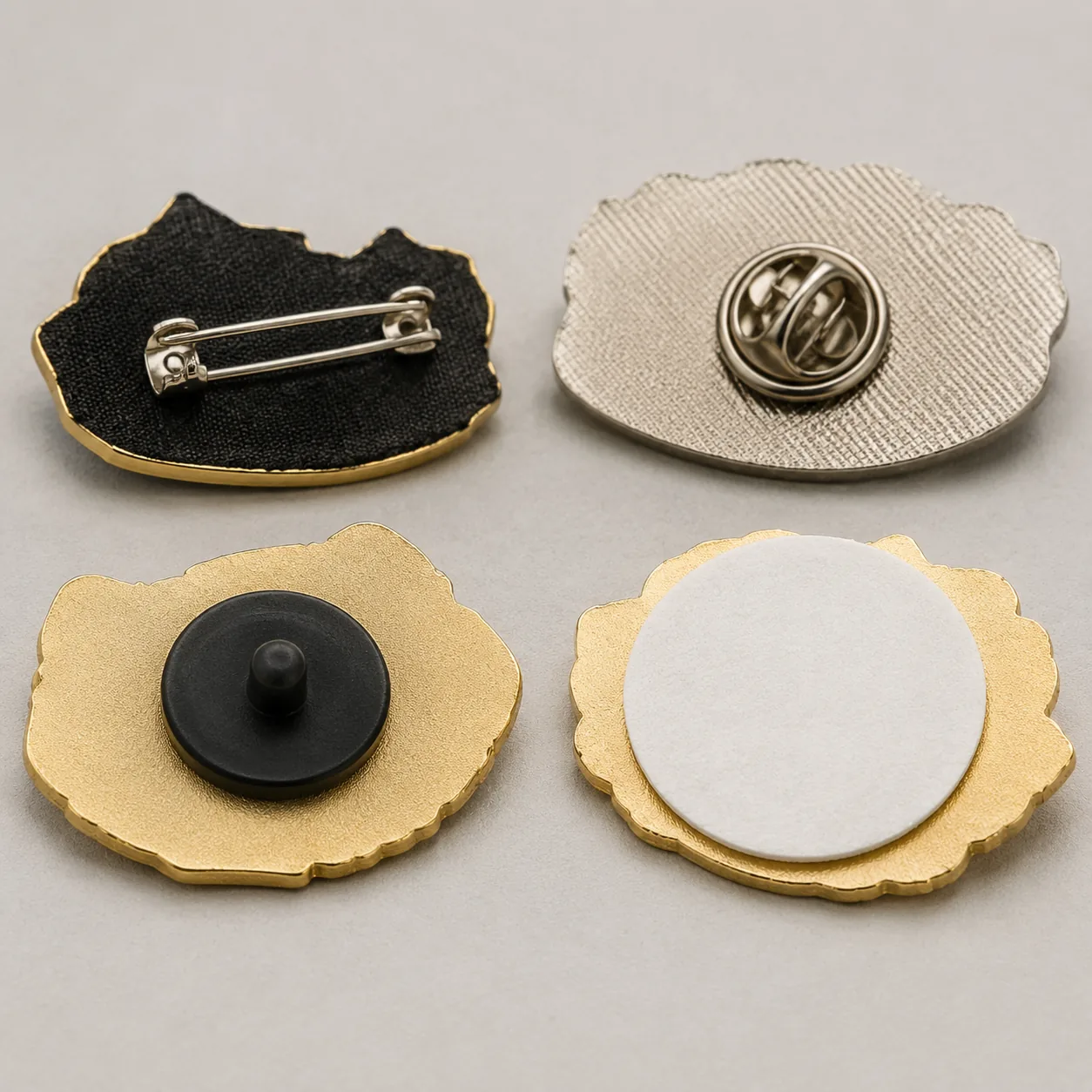
Choose the factory structure before you choose the quote
A distributor wins a 12,000-set conference order for August delivery: one 35 mm soft enamel pin, one 75 mm woven patch, one 20 x 900 mm polyester lanyard, and one fridge magnet per attendee. The intuitive move is one PO to one supplier. That is still the best option only when the supplier has real capability across all four manufacturing families, current capacity in the target ship window, and a documented QC plan that covers each SKU plus final set collation.
The real risk in a bundled quote is usually not the visible FOB unit price. It is process mismatch hidden inside subcontracting. A metal badge factory may quote the full kit but outsource woven patches, sublimation lanyards, and magnets. Every handoff adds delay and failure points: 1-2 days for artwork relay, 1-3 days for color approval, 1-2 days for hardware confirmation, 1-3 days for domestic transfer, and often another 1-2 days for recounting and receiving before assembly starts. In peak August-September windows, those transfers can consume 7-10 extra calendar days.
The opposite mistake is splitting too early. Two factories can create artwork revision drift, inconsistent Pantone interpretation, duplicate sample charges, mismatched barcodes, and partial shipments that trigger expensive airfreight. For mixed promo kits, the decision should not be based on who can quote all items. It should be based on which SKU has the highest process risk, which one controls the event schedule, and whether one supplier can truly own final assembly and export.
Break the kit into production families and measurable specs
Do not group items by promo category label. Group them by process family. The pin is a metal product: usually stamped iron at 1.2-1.5 mm or die-cast zinc alloy at 1.5-2.0 mm, then polished, plated, enamel-filled, baked, and fitted with attachment hardware. The woven patch is a textile product made on a loom with thread density limits, then cut, bordered, and backed. The lanyard is a narrow-fabric product using dye sublimation, screen print, or jacquard weaving with sewn or riveted hardware. The magnet may be a printed flexible rubber magnet with PET lamination, a tinplate badge bonded to ferrite, or a molded PVC part with embedded magnet.
Each family has different machinery, tolerances, and failure modes. Metal items fail on burrs, recessed plating, enamel underfill, color contamination, weak butterfly clutch fit, and plating adhesion. Woven patches fail on border distortion, thread exposure, unreadable fine text, edge fray, and backing peel. Lanyards fail on fuzzy print, off-center art, cut-length variance, poor rivet setting, weak swivel hook springs, or breakaway buckles outside release spec. Magnets fail on low magnetic pull, curled corners, lamination bubbles, print scratches, die-cut drift, or bond failure between face stock and magnetic sheet.
- Soft enamel pin: MOQ usually 100-300 pcs per design; common thickness 1.2-1.5 mm stamped iron or 1.5-2.0 mm zinc alloy; decorative nickel or black nickel plating deposit often 0.03-0.08 micron; critical finished-size tolerance commonly ±0.15 mm; epoxy dome typically adds 2-4 days; at 12,000 pcs, standard production is often 12-18 days after sample approval
- Woven patch: MOQ usually 100-300 pcs; finished-size tolerance typically ±1.0 mm; merrow border suits simple shapes while laser or heat-cut suits complex outlines; text under about 2.0 mm cap height and line detail under 0.5-0.6 mm is risky on lower-density looms; backing peel issues rise when iron-on adhesive coat weight is inconsistent
- Polyester lanyard: MOQ usually 100-300 pcs; common widths 15 mm, 20 mm, 25 mm; width tolerance often ±0.5 mm and cut length ±5 mm; polyester thickness commonly 0.8-1.2 mm before hardware; breakaway buckle release should be specified in N, not described as safe or standard; hardware spring and rivet retention should be checked on pull test, not only visual inspection
- Promotional magnet: MOQ usually 100-500 pcs; flexible magnetic sheet commonly 0.4 mm, 0.5 mm, or 0.7 mm; size tolerance around ±0.5-1.0 mm depending on die-cut method; pull force should be stated in gf or N, for example 180-250 gf for a small fridge magnet; PET laminate thickness is commonly 18-25 micron and should be checked for bubble-free adhesion
Once you map the order this way, it becomes easier to distinguish a true manufacturer from a trading coordinator. A useful supplier can still subcontract, but you need to know exactly which process is in-house and which is not.
Verify whether the supplier is integrated or just coordinating subcontractors
A supplier does not need to make every SKU internally to be the right lead vendor. Many capable promo suppliers run one core factory and manage specialist partners well. The issue is operational control. You need to know which processes are internal, who approves pre-production samples, where color signoff sits, where finished goods are inspected, and who carries responsibility during domestic transfer between producing sites and the final pack-out point.
Integration matters most in four places: shared color control, transfer logistics, set collation, and final AQL inspection. If one lead supplier can hold a Pantone-based master reference, receive specialist-made components, run a pilot pack-out, and conduct one final random inspection on complete sets before export, splitting can reduce risk. If each factory only checks its own component and nobody inspects the complete attendee set, the buyer inherits the coordination gap.
Ask for evidence that is difficult to improvise. Request dated sample photos for each category, front and back. Ask for one recent inspection report with lot size, sample size, defect counts, and pass/fail result. If the supplier claims complete assembly capability, ask for a packing-line video showing polybagging, inner-pack collation, carton labels, and barcode application. A metal supplier that can only show pin photos but no lanyard sewing line, no patch backing process, and no magnet packing evidence is not an integrated producer for the full kit.
| Question to ask | Good sign | Risk sign |
|---|---|---|
| Where is each SKU produced? | Factory name, city, process, and whether in-house or subcontracted are listed by item | Generic answer such as we handle everything internally |
| Which steps are outsourced? | Clear process list such as weaving, sublimation, PET lamination, die cutting, or breakaway buckle assembly | No direct answer or the story changes later |
| Who owns color approval? | One master approval sheet with Pantone references, revision number, and signoff date | Separate approvals with no cross-category color check |
| Where does final inspection happen? | One AQL inspection on collated sets before export, with carton reconciliation | Each SKU inspected separately only |
| Can you do complete kit assembly? | Yes, with SOP, pilot run, barcode labeling, and master-carton specification | Can only ship components separately |
| What is the real lead time? | Tooling, pre-production sample, production, transfer, assembly, and booking broken out in days | One total number with no breakdown |
Use process fit and failure cost, not just the bundled FOB price
In event kits, the cheapest item often has the highest schedule impact. A lanyard may cost less than a pin, but if check-in requires badge wear, a late lanyard can disrupt the whole event. A pin may carry higher brand value, yet because it is compact and dense, emergency airfreight is often more feasible. Patches and magnets can look secondary, but they become costly if they are packed with printed inserts or retail sleeves that must be remade.
Model the likely failure costs. Saving USD 0.04 on a lanyard is irrelevant if a missed vessel cutoff forces 20 cartons to move by air at USD 6-10 per kg plus destination handling. Paying USD 0.05-0.08 more for a specialist woven patch supplier is often justified if the artwork includes 0.7-0.8 mm line detail or 2.0 mm text that a generalist starts losing below 1.0-1.2 mm. Paying a few cents more for a magnet producer that will confirm 0.5 mm sheet thickness, 20-25 micron PET lamination, and 200 gf minimum pull force is cheaper than handling post-event complaints about magnets sliding down metal surfaces.
Typical 2026 FOB China price bands are close enough that process fit usually matters more than squeezing the last cent. At 5,000 pcs, a 35 mm stamped iron soft enamel pin with butterfly clutch is commonly USD 0.32-0.62 FOB; at 10,000-12,000 pcs, a realistic range is USD 0.28-0.52 depending on color count, backstamp, epoxy, and packing. A 75 mm woven patch is typically USD 0.26-0.58 FOB at 5,000 pcs and USD 0.23-0.49 at 10,000-12,000 pcs depending on weave density, backing, and edge finish. A 20 x 900 mm sublimation lanyard with swivel hook is commonly USD 0.20-0.48 FOB at 5,000 pcs and USD 0.18-0.40 at 10,000-12,000 pcs. A printed flexible magnet around 60-80 mm using 0.5 mm magnetic sheet often lands at USD 0.12-0.35 FOB at 5,000 pcs and USD 0.10-0.28 at 10,000-12,000 pcs.
Score each SKU on three factors: delay cost, defect cost, and replacement difficulty. The highest combined score should get either the specialist factory or the strongest direct control from the lead supplier.
When splitting usually makes sense and when one source is still better
For conference kits, the most reliable structure is often one lead supplier plus one specialist factory. Keep final set assembly, carton labeling, and export coordination with the lead supplier. Place the most technically sensitive SKU with the factory that runs that process every day. In practice, that often means the lead supplier manages pins, magnets, and pack-out while a textile specialist produces the woven patch or lanyard.
Splitting is usually justified in three cases. First, one SKU has specialist process demands the lead supplier cannot document well: dense woven patches with small text, jacquard lanyards with tight repeat registration, custom-molded breakaway parts, or magnets with a specified pull-force floor and abrasion-resistant laminate. Second, capacity is uneven: the lead supplier can produce pins in 12-16 days but quotes 25-30 days on subcontracted lanyards because the print line is overloaded. Third, one SKU requires test discipline the bundled supplier does not normally run, such as breakaway release testing, hardware retention testing, or magnet adhesion aging checks.
Do not split automatically for smaller mixed kits of 300-500 sets unless a quality or schedule risk is already proven. Duplicate pre-production samples, added domestic freight, extra receiving, and repacking often add USD 150-600, which can erase any unit-price advantage. Also avoid splitting when brand color sensitivity is high and the buyer lacks a disciplined approval process. If enamel, woven thread, and sublimation print all need to read as one visual family, weak coordination can create a worse outcome than paying a slightly higher single-source price.
- Split when one category has a specialist failure mode the lead supplier cannot support with recent evidence
- Split when one category sits on a much longer queue and threatens the event date by more than 5-7 days
- Split when the critical SKU needs tighter tolerance, denser weave, stronger hardware, or verified pull-force data than the bundled supplier normally offers
- Keep one source when total volume is low and duplicate sampling, freight, and admin will erase savings
- Keep one source when a supplier can prove control of color, set assembly, final inspection, and export packing
Tighten the paperwork so two factories do not create one QC and packaging failure
If you split, your documentation has to become stricter. Use one master specification sheet for all shared brand fields: Pantone references, approved artwork revision, logo placement, backing card dimensions, barcode location, insert orientation, inner-pack quantity, and master-carton limits. Then attach SKU-level specifications with tolerances, test points, and packaging notes for each item.
For example, a pin specification should state finished size 35.0 mm ±0.15 mm on critical width, thickness 1.5 mm ±0.10 mm, plating finish, attachment type, and whether clutch retention must pass a defined pull check. A woven patch specification should state finished size 75.0 mm ±1.0 mm, border style, backing type, minimum readable text height of 2.0 mm, and acceptable loose-thread count. A lanyard specification should state width 20.0 mm ±0.5 mm, cut length 900 mm ±5 mm, print method, hardware model, rivet type, and breakaway release band, for example 8-15 N if that is the buyer standard. A magnet specification should state material thickness such as 0.5 mm ±0.05 mm, laminate finish, die-cut tolerance, minimum pull force such as 200 gf, and flatness after 24 hours at ambient conditions.
- Issue one shared packing specification: polybag thickness, insert-card orientation, set collation order, barcode placement, carton dimensions, and gross-weight limit such as 12-15 kg per master carton
- Set one acceptance standard: AQL 2.5 for major defects and 4.0 for minor defects is common for promo goods; premium retail presentation may justify AQL 1.5 and 2.5
- Define inspection points in writing: pre-shipment inspection at each producing factory plus final assembly audit, or one final random inspection on completed kits
- Lock one approved color reference file with the same revision number across every supplier and packing site
- Require one pilot run of 20-50 complete sets before full assembly so fit, barcode, bag size, and color harmony are checked in real conditions
On the buyer side, assign one commercial owner and one technical owner. The commercial owner manages quote comparisons, Incoterms, payment terms, and delivery commitments. The technical owner approves artwork, pre-production samples, and the pilot collated set. Without that split, teams often approve four individually acceptable components that fail once combined into one event pouch or header-card set.
Build the schedule backward and expose the handoff risk
The main challenge in split sourcing is not making two products. It is synchronizing two production clocks with one shipping clock. Realistic 2026 lead times after artwork approval are still about 3-7 days for pre-production sampling, 10-18 production days for standard soft enamel pins, 7-14 days for woven patches, 8-15 days for sublimation lanyards, and 7-12 days for printed flexible magnets. Add 1-3 days for domestic transfer to the assembly site and 2-5 working days for final collation, labeling, carton sealing, and booking release.
Build backward from the event date. First subtract international transit, customs clearance, local receiving, and internal distribution. Then subtract final assembly time and all domestic transfer days. If any component has less than a 5-day buffer before final pack-out, the plan is fragile. For fixed-date events, a 7-10 day production buffer before vessel cutoff or air handoff is materially safer, especially during late-summer peak periods.
Freight terms matter more once you split. Under FOB, your forwarder may need two pickups, two loading appointments, and short-term staging. Under EXW or FCA with lead-supplier consolidation, specify who pays domestic transfer, who carries risk in transit between factories, and how carton counts are reconciled at receipt. The most common dispute is not catastrophic quality failure. It is missing cartons, relabeling cost, or no clean handoff record when one supplier says 120 cartons shipped and the assembler says 118 arrived.
| Stage | Typical days | What to confirm |
|---|---|---|
| Artwork and pre-production samples | 3-7 days | Pantone callouts, dimensions, hardware model, approved revision number |
| Pin mass production | 10-18 days | Tooling status, plating queue, enamel fill, attachment assembly, final packing method |
| Patch mass production | 7-14 days | Weave density, border finish, backing application, count accuracy |
| Lanyard mass production | 8-15 days | Hardware stock, buckle spec, print registration, cut-length control |
| Magnet mass production | 7-12 days | 0.4/0.5/0.7 mm material choice, laminate adhesion, die-cut accuracy, pull-force target |
| Domestic transfer and final assembly | 3-8 days total | Pickup booking, carton labels, pilot pack-out, final AQL inspection, carton reconciliation |
A simple 2026 decision rule for promo kits
Single-source buying usually wins on lower admin time, fewer approvals, and more consistent packaging. Split sourcing usually wins on process capability and capacity flexibility. The right choice depends on whether the added control points reduce expensive failure risk more than they add handling cost.
For a 5,000-10,000-set project, splitting one category to a specialist commonly adds USD 200-800 in duplicate sampling, domestic freight, extra receiving, recounting, and assembly handling. If the specialist is in another province, cartons need relabeling, or the lead supplier charges separate storage and handling, the added cost can exceed USD 1,000. But avoiding one remake, one missed sailing, or one emergency partial airfreight move can save more than that immediately.
| Model | Likely advantages | Likely added costs or risks |
|---|---|---|
| One supplier for all items | Simpler PO management, one shipment plan, easier set packing, fewer approval touchpoints | Hidden subcontract delays, weaker quality on non-core SKUs, less visibility into true process ownership |
| Lead supplier plus one specialist | Better process fit on the critical SKU while one party still controls final assembly and export | Extra approvals, domestic transfer freight, tighter timeline management, more dependence on carton handoff accuracy |
| Separate suppliers with buyer-managed consolidation | Maximum benchmarking control by category and direct visibility into each producer | Highest admin load, highest label-mismatch risk, more freight touchpoints, and no single party accountable for final set quality |
A practical rule is straightforward. Stay single-source when one supplier can show direct competence in the risky categories, provide a day-by-day lead-time breakdown, and own final set inspection. Split when one SKU clearly sits outside that supplier's proven process depth or queue capacity, and when the lead supplier can still own collation and export. For medium to large conference kits, that middle model is usually the best balance of risk, cost, and execution control.
Have a project? Send your artwork and target quantity and we’ll reply with a detailed quotation within 12 working hours.
Ready to get this made?
Send your sketch, target quantity and ship-date. Detailed quotation in 12 hours.



