When to Respec a Custom Pin Order Before It Fails QC
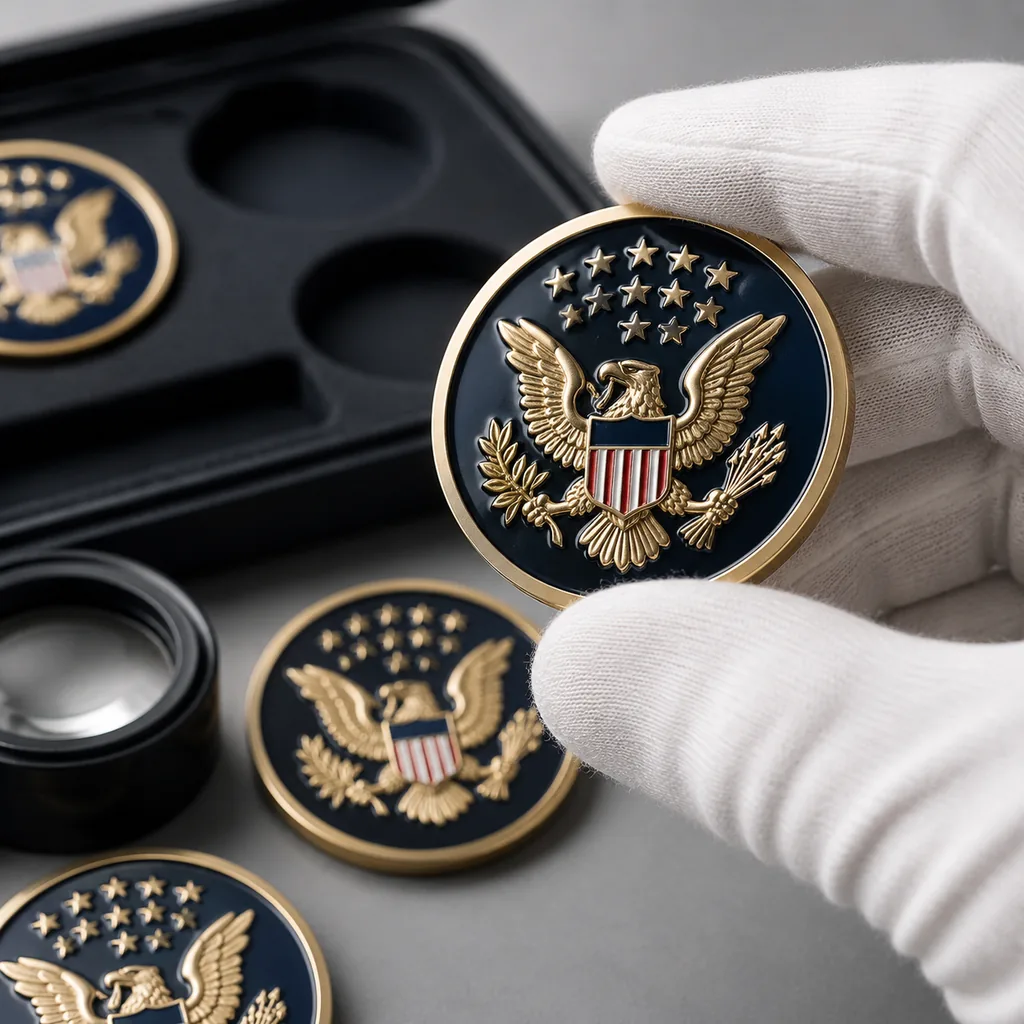
Sample approval is not enough if the design has no production margin
Most custom pin failures do not start with a random factory error. They start when the approved sample is already at the edge of what the process can repeat. A hand-finished pre-production sample can look acceptable while still masking a weak process window: 0.28 mm logo lines that are barely open, enamel cells pinching down below 0.50 mm, a single center post carrying a 20 g piece, or backing-card holes that only work when every post is perfectly centered. At 500, 2,000, or 10,000 units, normal variation turns those borderline features into visible rejects, assembly slowdowns, or failed inspection lots.
That is why buyers should judge a sample by repeatability, not by appearance alone. The real question is whether the approved sample proves the factory can hold the result through die striking or casting, enamel fill, polishing, plating, attachment welding, carding, and final pack-out within the agreed AQL. On retail launches, museum-store replenishment, licensed merchandise, and event kits, a remake typically costs 10-21 calendar days end to end once rework, inspection rebooking, and freight recovery are included. That is usually more expensive than a controlled spec correction before mass production.
In practice, respec often means a narrow engineering change rather than a redesign. Common fixes include widening a divider line from 0.30 mm to 0.40 mm, increasing overall size from 25 mm to 28 mm, converting one clutch post to two posts spaced 12-18 mm apart, deleting a 0.45 mm isolated enamel island, or changing from soft enamel to imitation hard enamel. Those adjustments usually preserve the customer-facing design while creating enough tolerance for stable output.
Gate 1: Separate style choices from measurable process risk
Start by splitting comments into preference and capability. Preference is a commercial choice: antique nickel versus shiny gold, bright versus muted Pantone interpretation, paper card versus EVA insert. Capability is a manufacturing limit: whether a 0.25 mm eye detail is already closing, whether a recessed color cell can be filled cleanly, or whether the plating contrast exaggerates every polishing variation. Preferences can be debated. Capability limits must be redesigned, priced into expected fallout, or explicitly accepted in the inspection standard.
For stamped brass or iron pins, raised metal lines below 0.30 mm are high risk in routine production; 0.35-0.40 mm is workable but still detail-sensitive; 0.50 mm or above is safer for logos and borders. For recessed enamel areas, narrow channels under 0.50 mm frequently show underfill, overflow, or washout after polishing. Under 0.60 mm, chip risk and color inconsistency rise, especially on long, pointed cells. As a rule of thumb, text smaller than roughly 5 pt equivalent on a 25 mm pin is rarely reliable unless the artwork is simplified or the pin is enlarged to 30-32 mm.
Packaging geometry deserves the same scrutiny. If a sample backing card hole is only 0.20-0.30 mm larger than the nominal post diameter, that may assemble in the sample room but fail on the line once post placement drifts by normal tolerance. For most carded pins, total clearance of 0.30-0.50 mm over nominal post or clutch geometry is more realistic. The test is not whether one sample can be assembled once. The test is whether production workers can assemble hundreds per hour without force, scratching, bent posts, or re-punching cards.
Gate 2: Classify the likely defect before you decide how to respec
The right correction depends on the failure type. A buyer should classify the most likely issue as brand-visible, functional, pack-out, or compliance-related. That keeps the response proportional. You do not need to over-engineer minor back-side cosmetic variation on a giveaway pin, but you do need to react early if the likely defect will be customer-visible, cause returns, or fail retail inspection.
Brand-visible defects include muddy logo detail, unreadable text, front-side scratches, plating tone drift, weak antique contrast, or enamel colors that miss the approved standard under D65 lighting. Functional defects include bent posts, weak butterfly clutch retention, pin rotation during wear, brooch bars that sag, or magnets that cannot hold through the intended 1.5-2.5 mm fabric thickness. Pack-out defects include card-hole mismatch, EVA slots catching clutches, wrong SKU mix, bag count errors, or cartons packed so heavily that cards warp and corners crush. Compliance-related defects include burrs, sharp points, nickel-release concerns for EU markets, missing warning labels, or coatings that do not meet the retailer's restricted-substance requirements.
| Defect class | Typical trigger to respec | First change to make | Typical cost effect |
|---|---|---|---|
| Brand-visible detail loss | Critical lines under 0.35 mm, sample text unreadable at 30 cm, corners already filling | Widen lines by 0.05-0.15 mm, enlarge pin by 2-4 mm, remove tiny recessed pockets | Low |
| Color inconsistency | Pantone-critical fill in cells under 0.60 mm, adjacent mirror metal exaggerates shade drift | Enlarge color areas, strengthen metal borders, approve color under D65 or TL84 with retained sample | Low |
| Functional balance failure | Piece over 32 mm wide or 18-22 g finished weight still uses one center post | Move to 2 posts, set spacing at 12-18 mm, increase thickness to 1.5-1.8 mm if needed | Low to medium |
| Plating appearance failure | Lot-to-lot tone drift, fingerprinting, early tarnish after 48-72 hour storage simulation | Change finish, add clear coat, improve individual bagging, add desiccant for humid lanes | Low to medium |
| Packaging fit failure | Card holes or EVA slots require force, post misalignment shows in trial pack-out | Add 0.30-0.50 mm clearance, shift post positions, revise insert die-cut | Low |
| Safety or compliance concern | Sharp points, burrs, nickel-sensitive destination, missing labeling | Specify deburr standard, rounded corners, point caps, nickel-free route or test standard | Medium |
AQL should match channel and defect severity. Promotional pins often ship at AQL 2.5 major and 4.0 minor, with critical defects at zero. Retail collectible programs more commonly tighten to AQL 1.5 major and 2.5 minor, and premium licensed programs may push visible front-side defects to AQL 1.0. If the sample only passes because it was hand-selected, hand-assembled, or photographed under flattering light, respec is usually cheaper than trying to inspect quality into an unstable build.
Gate 3: Compare respec cost with drift cost, not with zero
Many teams resist a respec because it feels like delay. The correct comparison is not respec versus no delay; it is respec versus production drift. Drift includes failed third-party inspection, sorting labor, re-carding, replacement parts, buyer credits, line stoppage in kitting, and air freight to recover the launch date. Once plating, polishing, and final packing have started, almost every correction becomes more expensive because labor and material value have already been added to defective units.
In a typical pin program, an art and engineering revision adds about 2-4 calendar days. If the buyer requires a new physical pre-production sample, add about 5-7 production days plus 2-4 days courier transit. Minor die edits may be absorbed, but practical tooling costs in 2026 are still commonly around USD 30-120 for modest die adjustment and USD 60-180 for a new die on a materially changed outline. Those numbers are small compared with a remake or missed release date.
FOB China pricing remains relatively low for mainstream specs. At 100 pieces, a 25 mm soft enamel iron pin often runs about USD 0.85-1.40 FOB because setup is spread over a small lot. At 500 pieces, the same item is often USD 0.45-0.75. At 1,000 pieces, a 25 mm soft enamel iron pin usually lands around USD 0.38-0.65 FOB; a 30 mm imitation hard enamel brass or iron pin around USD 0.55-0.95 FOB; and a 35-45 mm die-cast zinc alloy piece with custom carding around USD 0.95-1.80 FOB. MOQ is commonly 100 pieces for stamped iron or brass, while complex zinc alloy shapes, layered builds, or specialty inserts often move the economical MOQ to 300-500 pieces.
That cost math matters. If 12% of a 2,000-piece order requires manual sorting and re-carding because post placement is drifting, the added labor can exceed the original die charge before inspection delay and freight upgrade are counted. A narrow respec before mass production is usually the lowest-cost intervention available.
Gate 4: Know the spec combinations that usually become unstable
Some combinations create QC pressure even when each individual feature seems reasonable. Frequent trouble cases include small overall size paired with dense lettering, a thin stamped base carrying a wide asymmetrical silhouette, mirror-bright plating combined with strict Pantone matching, one center post on a heavy or top-loaded shape, and retail carding designed with almost no assembly clearance. These builds are possible, but they give the factory less room to absorb normal variation.
For many stable enamel pin programs, the safest operating zone is 25-35 mm overall size, 1.2-1.5 mm base thickness for stamped parts, 0.40 mm or wider critical metal lines, and 0.60 mm or wider narrow enamel cells. Once the piece exceeds about 32 mm in width, or becomes tall, top-heavy, or asymmetrical, two posts are generally safer than one. For zinc alloy pieces with internal cutouts or sculpted relief, 1.5-2.0 mm thickness is more common to maintain rigidity, but wearer comfort should be reviewed once finished weight approaches 20-25 g.
Use real production tolerances rather than perfect artwork dimensions. Finished length and width are commonly held to +/-0.15 mm to +/-0.25 mm depending on process and size. Thickness is often +/-0.10 mm to +/-0.15 mm. Post placement can vary enough that backing cards and EVA slots need intentional clearance; 0.30-0.50 mm total clearance beyond nominal geometry is a practical starting point. Plating thickness on decorative promo-grade work is usually flash-only, often about 0.03-0.08 microns. That is sufficient for appearance but not a guarantee against tarnish, abrasion resistance, or long humid storage.
- Respec if critical logo lines are below 0.35 mm or front-side text is hard to read at 30 cm
- Respec if the narrowest enamel cell is below 0.60 mm or tiny islands already show pitting, washout, or underfill
- Respec if a pin above 32 mm wide or about 18 g finished weight still uses one center post
- Respec if mirror-polished raised metal sits beside deep antique recess and the brand requires lot-to-lot visual consistency
- Respec if card holes, EVA slots, or post spacing already look tight before a live pack-out trial
- Respec if the target AQL is stricter than the process margin actually demonstrated by the approved sample
- Respec if the sample only passes because it was hand-selected, hand-assembled, or approved from photos rather than physical review
Gate 5: Use the smallest change that widens the process window
The best respec is usually the least disruptive one. Increasing size by 2-3 mm often solves several problems at once by opening line width, improving text legibility, enlarging enamel cells, and allowing better post spacing. Thickening one divider line by 0.10-0.15 mm, increasing an inside corner radius, deleting one isolated fill area, or moving a post 3-5 mm inward from the edge can eliminate a large share of predicted rejects without changing the design concept the customer approved.
Material and process changes are the next lever. Soft enamel is economical and preserves raised metal ridges, but fill-height variation is more visible piece to piece. Imitation hard enamel creates a flatter polished face and often produces a more uniform premium look, but it changes the style and usually adds cost. If a stamped iron piece cannot hold relief cleanly at the chosen size, brass may improve edge definition. If the shape needs deep contours, cutouts, or layered relief, die-cast zinc alloy may be more forgiving than stamping. The trade-offs are higher unit cost, different edge feel, heavier weight, and often a higher practical MOQ.
Sometimes the correct action is to respec the acceptance standard rather than the part. For a 500-piece event giveaway with a hard ship date, a buyer may intentionally accept broader antique variation, minor back-side plating marks, or looser color tolerance in exchange for schedule security. That is a valid business decision only if it is written into the approval sheet. Unwritten tolerance turns into a dispute later because the factory, inspector, and buyer are all using different definitions of pass and fail.
Gate 6: Convert the revised spec into line-level QC checkpoints
A revised specification only works if production and QC can verify it objectively. Every high-risk feature should have a measurable checkpoint. If the concern is attachment alignment, require first-article checks for post spacing, post verticality, weld strength, and finished flatness before the run continues. If color fidelity matters, approve against a signed physical standard or retained approved sample under controlled lighting such as D65 or TL84, not phone images under mixed office light.
A practical inspection flow for export programs is pre-production sample approval, in-line confirmation during the first 5-10% of output, and final random inspection to the agreed sampling plan. Promotional orders often remain at AQL 2.5 major and 4.0 minor. Retail programs frequently tighten visible front-side criteria to AQL 1.0-1.5. Critical defects such as sharp-point hazards, missing attachments, wrong SKU assortment, or count shortages should stay at zero acceptance. Terms such as cleaner logo, stronger magnet, or better plating are too vague to inspect consistently.
Write the final spec so it can be checked on the line: base material, finished size, thickness, plating type, finish reference, Pantone or approved color standard, attachment type, post spacing tolerance, edge smoothness, card-hole size, bag specification, inner-pack quantity, carton count, and gross-weight cap. For most export cartons, keeping gross weight around 12-15 kg reduces crush risk and warehouse handling complaints. If storage or sea transit corrosion matters, discuss clear topcoat, polybag type, desiccant use, and expected storage duration rather than assuming decorative flash plating alone will provide protection.
Run a five-question release test before mass production
Before release, put every custom pin order through five written questions. First, which feature is closest to the process limit: line width, enamel cell size, post layout, plating contrast, or pack-out fit? Second, which failure hurts most commercially: visible defect, functional failure, pack-out slowdown, or compliance issue? Third, what is the likely drift cost in days and dollars if the current sample margin is too narrow? Fourth, what is the smallest spec change that materially improves repeatability? Fifth, how will QC verify that change during sample review, in-line inspection, and final random inspection?
If two or more risk signals appear together, respec is usually the safer business decision. The most common combinations are small size plus dense logo detail, mirror plating plus tight Pantone expectation, or a wide asymmetrical silhouette plus one attachment point. Those builds can be manufactured, but they should not be released simply because one sample looked passable. Release them only when the sample sits comfortably inside the process window, not on its edge.
For a standard 25-35 mm program, the most useful control document is a one-page approval sheet listing size, thickness, base material, finish, attachment layout, color callouts, packaging method, AQL target, and approved front-and-back reference images. If the order includes retail carding, mixed-SKU kits, or EVA trays, add card-hole spacing, bag size, insert tolerance, inner-pack quantity, and carton count. That single document usually prevents more scrap and argument than another long email chain after production has already started.
Have a project? Send your artwork and target quantity and we’ll reply with a detailed quotation within 12 working hours.
Ready to get this made?
Send your sketch, target quantity and ship-date. Detailed quotation in 12 hours.



