When One Promo Kit Uses Pins, Coins, Patches and Lanyards
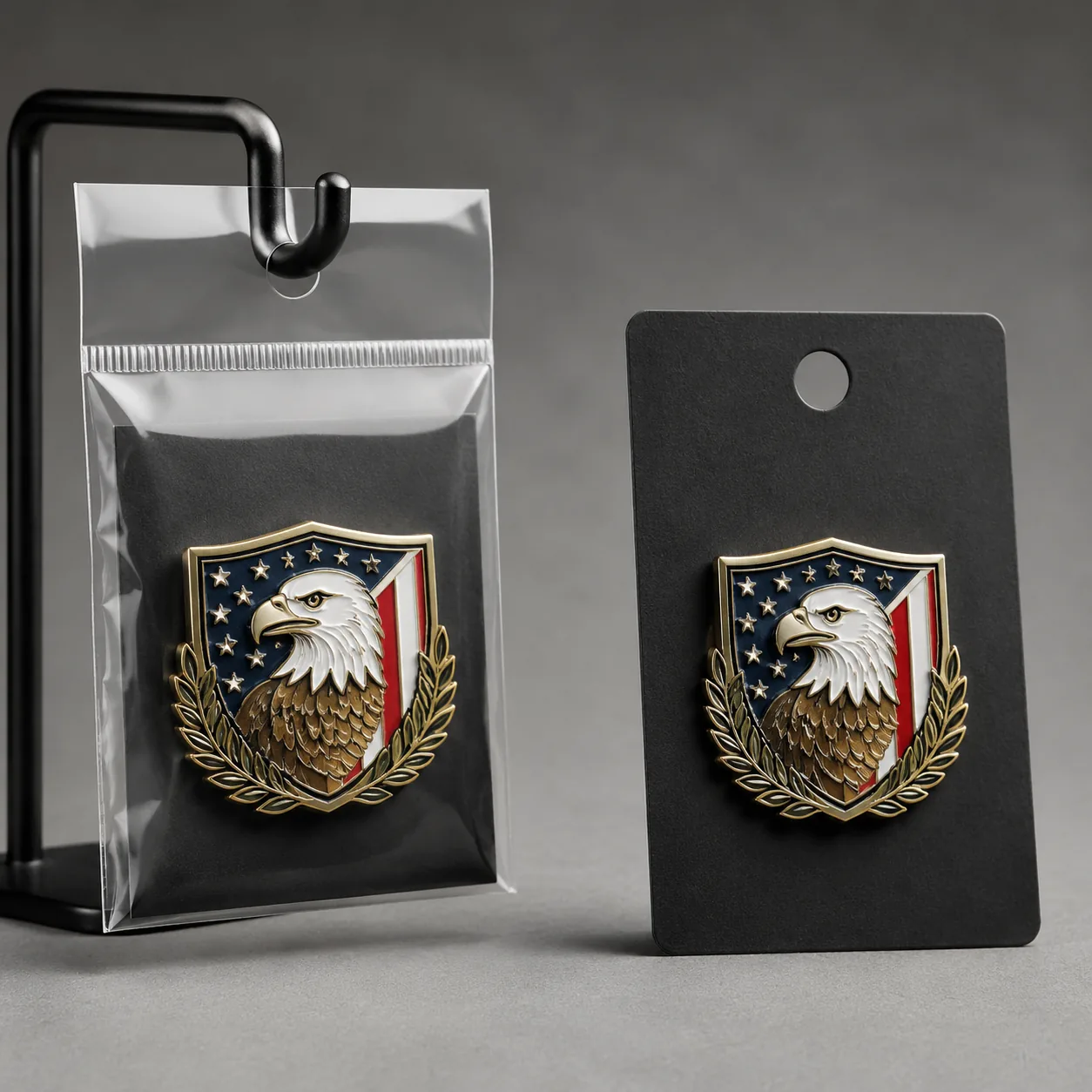
The order landed as one campaign, not four products
A procurement team usually does not ask for four separate items because they want four SKUs. They need one event kit that behaves like one brand decision: a pin for registration desks, a coin for VIP handouts, a patch for staff apparel, and a lanyard for the badge holder. The challenge is that each item has different construction limits, different color behavior, and different tolerance risk. If you source them as unrelated jobs, the kit can arrive with mismatched blues, inconsistent metal finishes, and attachment hardware that feels cobbled together.
The right way to buy this is to treat the whole kit as a controlled system. Lock the visual reference first, map each product to the process that best fits it, and then define what must match across items versus what can differ. In practice, many buyers lose time because they approve samples one by one but never define the cross-item rules. The result is rework at carton stage, not artwork stage.
- Decide the hero item first; usually the pin or coin sets the brand standard.
- Fix one color reference system for all items, ideally Pantone plus approved physical swatches.
- Separate shared specs from item-specific specs before requesting quotes.
- Ask suppliers to quote the kit as one managed project, not four disconnected orders.
Start with the campaign use case, not the artwork file
Before you send designs, define where each item will be used and who receives it. A staff lanyard for daily wear needs abrasion resistance and legibility at arm’s length; a VIP coin can prioritize weight, edge detail, and presentation finish. A patch attached to a jacket has different drape and stitch-density requirements than a patch sewn onto a tote. If you skip this step, the factory will optimize the wrong attribute because your file does not say which item matters most.
The practical buyer move is to write one short use-case note per item. Example: the lanyard must survive 5,000–10,000 abrasion cycles on a Martindale-style rub test target, the pin must not snag on blazer fabric, the patch should survive at least 20 wash cycles if sewn onto garments, and the coin should present well in a rigid gift box. This is not marketing language; it changes hardware, backing, thread density, and packing. Good suppliers can only choose the right process when the end use is explicit.
| Item | Primary buyer risk | What to lock first |
|---|---|---|
| Pin | Color mismatch and plating drift | Pantone, plating finish, backing type |
| Coin | Edge detail and perceived value | Diameter, thickness, relief height |
| Patch | Fraying and poor readability | Border type, stitch density, size |
| Lanyard | Print fade and weak attachment | Width, material, hardware |
| Packaging | Kit inconsistency | Card size, insert layout, carton pack |
One visual system has to survive four production methods
A common failure point in mixed kits is assuming one artwork file can be used identically everywhere. It cannot. A flat logo that works on a sublimated lanyard may need simplified linework for an enamel pin and stitched contours for a woven patch. Metallic finishes also behave differently: a shiny nickel pin can read cooler than a matte silver coin, even if both are described as silver in the quote. If you want the kit to feel coordinated, you need one master brand spec and then item-specific translations.
For the most stable workflow, define a master color target, then create item production files that respect each process. For hard enamel, keep important lines at about 0.2 mm or thicker and avoid color islands that are too small to fill cleanly. For soft enamel, use slightly heavier outlines and remember that recessed areas will visually darken. For woven patches, thin text below about 2.5 mm often becomes weak in production, and borders under 2.0 mm can fray if not heat-cut or merrowed correctly. For lanyards, print samples should be checked under the same lighting used for event packaging approval, because bright factory LEDs can hide subtle drift.
- Use one master Pantone reference and require physical approval for the first article.
- Simplify small text on pins and patches before finalizing the shared design.
- Expect metallic items to vary slightly under different lighting and finish types.
- Approve the kit as a system, not as isolated single-item samples.
Match each item to the process it can actually hold
Not every production method suits every brand element. If the logo has tiny interior cutouts, a hard enamel pin may hold the edges better than a woven patch, but a patch may be faster and cheaper for garment application. If the event needs a premium executive gift, a 2.0 to 2.5 mm thick coin with raised relief can carry more perceived value than another pin in the same budget. Choosing the wrong build method is how buyers end up paying for beauty that cannot survive mass production.
You also have to factor in order size and lead time together. Mixed kits often share a single deadline, but not a single MOQ. A pin might be practical at 100–300 pieces per design, while custom lanyards typically make more sense at 300–1,000 pieces depending on print method, strap width, and hardware. Coins and patches usually sit in the middle, but setup cost per design can still dominate if you split them too late in procurement. A common factory schedule for a straightforward kit is 10–15 days for artwork and sample approval, 12–20 days for metal and textile production, and 5–10 days for packing and export coordination, with faster lanes available if tooling is already on file.
| Product | Typical spec range | MOQ tier | Typical lead time | Indicative FOB price |
|---|---|---|---|---|
| Enamel pin | 20–35 mm, 1.2–1.8 mm thick | 100–300 pcs/design | 15–25 days | USD 0.45–1.80 |
| Challenge coin | 38–45 mm, 2.0–3.0 mm thick | 100–200 pcs/design | 18–30 days | USD 1.20–4.50 |
| Woven patch | 60–90 mm, 0.8–1.2 mm thick | 100–500 pcs/design | 12–22 days | USD 0.30–1.20 |
| Sublimated lanyard | 15–20 mm width, 800–1,000 denier strap equivalent | 300–1,000 pcs/design | 10–18 days | USD 0.18–0.85 |
Quote the shared parts separately from the item parts
A clean RFQ for a mixed promo kit should split the costs common to the whole order from the costs that belong to each item. Common costs include design cleanup, revision time, carton packing, and any shared presentation packaging. Item-specific costs include tooling, plating, thread selection, woven pattern setup, and hardware like lobster clasps or split rings. If these are bundled together, it becomes hard to compare suppliers or identify which piece is driving the price.
For budget planning, buyers should expect price dispersion by item type. At common promo quantities, a simple printed lanyard may price in the low cents-to-under-a-dollar range FOB, while a plated coin or detailed enamel pin can move materially higher depending on size, finish, and attachment. The real issue is not the absolute price; it is whether the supplier has shown the unit economics clearly enough for you to remove unnecessary premium features. In many cases, one design simplification saves more than switching factories. For example, reducing a coin from double-sided deep relief to one strong face with a simpler rim can cut tooling and unit cost more than 15 percent at low volume.
| Cost bucket | Usually shared or item-specific | Buyer control lever |
|---|---|---|
| Artwork cleanup | Shared | Send final vector files and one master color list |
| Tooling | Item-specific | Confirm whether molds are reused or new |
| Packaging insert | Shared | Standardize card size across the kit |
| Hardware | Item-specific | Choose one attachment family where possible |
| Shipping cartons | Shared | Optimize kit dimensions and count per carton |
Approve samples in the same sequence the kit will be packed
Sampling order matters. If you approve the pin before the coin, then the coin before the lanyard, you may inadvertently lock in different color interpretations across items. A better sequence is to approve one master visual reference, then one sample from each process family, then the packed set. That catches packaging mismatch, dimensional interference, and color drift before mass production starts.
For quality control, set clear acceptance rules. For metal products, define visible surface defects, plating consistency, and edge burr limits. A practical production target is no visible pits or scratches larger than 0.3 mm in the main display area, no plating bare spots, and burrs under 0.2 mm on non-cut edges. For textile items, define print clarity, stitch density, and fray control; for woven patches, 76–100 stitches per linear inch is a common quality band, while a merrow border should hold cleanly without loose loops. For final packed sets, define carton count tolerance, insert position, and whether all items must align in the same orientation inside the outer pack. If you do not define carton-level acceptance, the factory can deliver perfectly made components in a poorly arranged kit.
- Check each sample under the same light source and viewing distance.
- Verify that all components fit the intended retail or event box.
- Confirm that the final packed set has the correct quantity by SKU.
- Reject any sample that solves one item while breaking the kit’s visual consistency.
A practical spec map for a mixed promo kit
This is where buyers save the most time: create one page that maps every product to its key specs, tolerances, and approval owner. That page should tell the factory what cannot move. If the pin diameter can vary by 0.5 mm but the lanyard width cannot, write that down. If the coin plating is satin nickel but the pin is polished nickel, document the reason so no one harmonizes the finishes during production. If the patch backing must be iron-on while the pin uses a butterfly clutch, call that out too. Ambiguity is expensive because it gets resolved by the factory, not by your brand team.
A good mixed-kit spec map also clarifies who signs off each category. Marketing may own logo placement, procurement may own price and lead time, and operations may own packaging and shipping. The better the spec map, the less the factory has to interpret intent. Good project sheets also record packaging tolerances: for example, individual kit cards at ±1.0 mm, folded lanyard length at ±10 mm, and assembled retail set count at zero tolerance for missing pieces. That level of specificity is what prevents a carton from looking “close enough” while still failing at handoff.
| Spec item | Suggested control | Typical tolerance |
|---|---|---|
| Pin size | Outer diameter | ±0.5 mm |
| Coin thickness | Measured at rim | ±0.2 mm |
| Patch size | Cut edge to edge | ±1.0 mm |
| Lanyard width | Finished width | ±1.0 mm |
| Color | Pantone or approved swatch | Visual match within approved sample |
| Lanyard length | Folded finished length | ±10 mm |
What to do next if you want the kit to arrive cleanly
Start by freezing one master brand sheet with artwork, Pantone references, finishes, and packaging intent. Then split the project into four item specs, one for each product, and mark which dimensions are fixed and which can flex. Ask the supplier to quote both a standard version and a premium version so you can see where value is being added and where it is just decoration. If the numbers do not make sense at the kit level, the issue is usually spec complexity, not factory pricing.
If you want the order to move fast, send one decision package instead of four separate emails. Include final artwork, a packed-set reference, target quantity per SKU, delivery window, and your non-negotiables on color and fit. For a typical event kit, that package should also specify carton pack-out, target FOB budget by item, and whether partial shipment is allowed. That reduces sample loops and makes the factory accountable for the whole system. For mixed promo kits, the winning move is not getting each item perfect in isolation; it is getting the full set to look like one intentional brand product when it reaches the buyer.
Have a project? Send your artwork and target quantity and we’ll reply with a detailed quotation within 12 working hours.
Ready to get this made?
Send your sketch, target quantity and ship-date. Detailed quotation in 12 hours.



