When a Sample Fails in 2026: A Respec Playbook
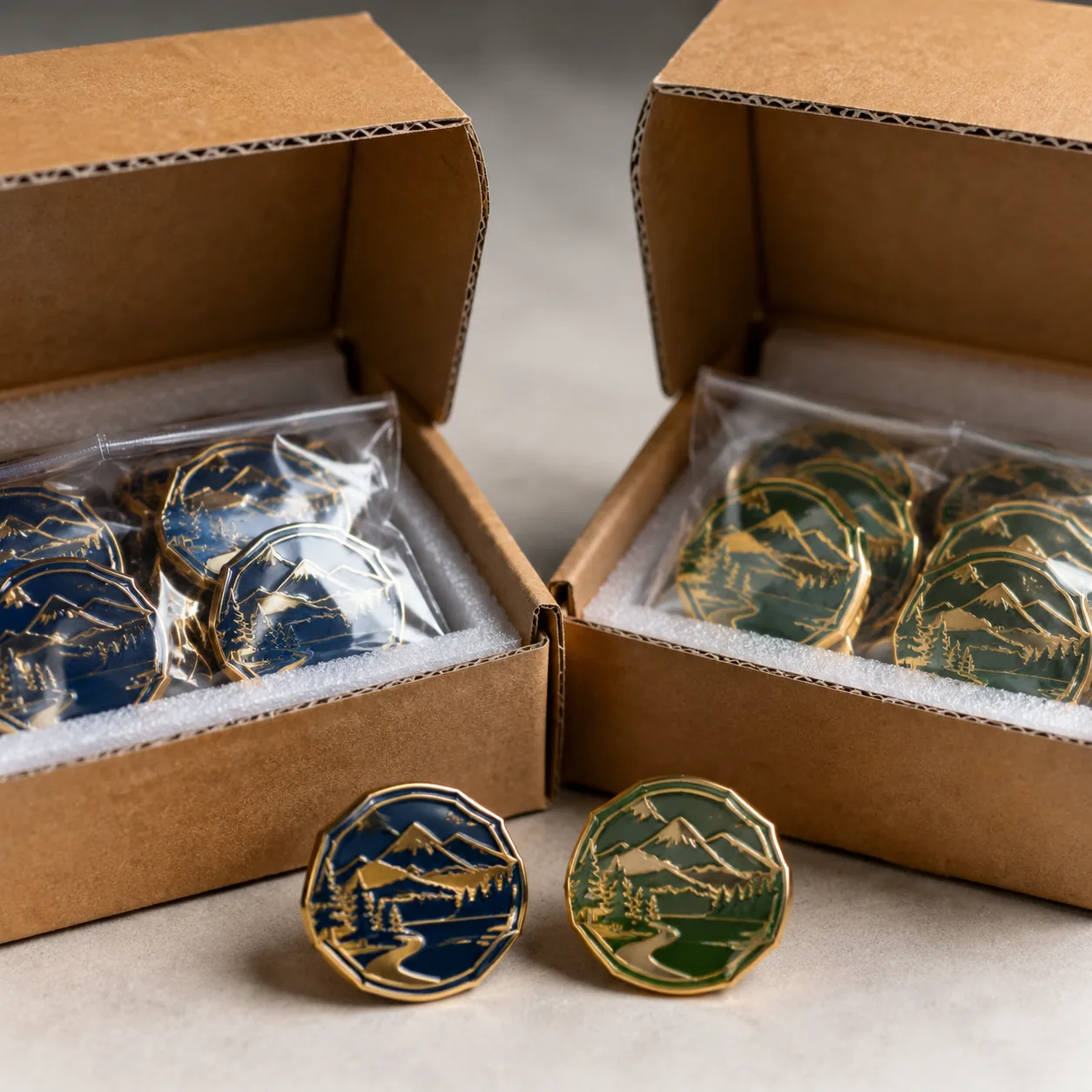
The order looked fine until the sample arrived
A failed pre-production sample is not a cosmetic problem. In 2026, it is usually a signal that the buyer brief was too loose for the factory to execute consistently, or that the first sample validated the wrong thing. Common failures are not dramatic: plating looks too warm, line work closes up, epoxy domes too high, attachment rotates, or a magnet holds on a desk but slips on powder-coated steel. The expensive mistake is treating these as isolated defects instead of evidence that the spec needs a respec.
For custom metal giveaways, the practical question is not whether a sample is imperfect. The question is whether the deviation can be corrected with a note, a process adjustment, or a formal respec that locks revised dimensions, materials, and inspection points before mass production. ZheCraft sees this most often on enamel pins, brooches, challenge coins, keychains, fridge magnets, patches, and lanyards where the buyer is ordering across multiple SKUs and needs one consistent standard across all items.
- Minor issue: one-off finish variation, usually corrected by process notes and a second sample.
- Medium issue: repeatable defect tied to a measurable spec, such as thickness, plating color, magnet grade, or fill level.
- Major issue: the sample reveals a design or tolerance problem that would affect the full order, requiring respec before PO release.
Classify the failure before you change the drawing
Not every bad sample deserves a new specification sheet. Start by sorting the problem into appearance, fit, durability, or compliance. Appearance issues include plating tone, color mismatch, texture, or surface pitting. Fit issues include pin post position, magnet alignment, clasp clearance, chain length, or packaging cavity size. Durability issues include bend, pull-off, edge wear, and coating failure.
The reason to classify early is simple: the fix path is different. A plating shade issue may need a finish code and a thickness range, while a loose attachment may need a stronger backer, a larger solder pad, or a tighter positional tolerance. If you do not separate these, the factory may correct the visible problem while leaving the root cause untouched.
| Failure type | What to lock in respec | Typical buyer mistake |
|---|---|---|
| Appearance | Finish code, thickness range, color standard, acceptable variation | Approving by eye only |
| Fit | Critical dimensions, hole size, post spacing, insert depth | Changing one dimension without checking the assembly stack |
| Durability | Pull force, bend limit, wear cycles, coating thickness | Testing only static appearance |
| Compliance | Nickel-free statement, child-safe geometry, packaging warning text | Leaving responsibility notes informal |
The respec trigger points that matter in 2026
A respec should start when the sample fails a measurable condition, or when the buyer has to explain the same defect twice. The key trigger is repeatability. If one sample has a crooked post but the next one does not, you may only need tooling correction. If three samples show the same misalignment, the drawing is underspecified or the process window is too wide.
For 2026 buying, the higher-risk trigger points are tighter brand consistency, multi-item sets, and mixed decoration methods. A buyer may accept a slight deviation on a single pin, but not when the same logo appears on a pin, coin, keychain, and lanyard set shipped together. This is where respec becomes a control tool, not a complaint document.
- Respec when the defect repeats across at least two samples or two production lots.
- Respec when the factory cannot state a numeric process window for the disputed feature.
- Respec when the buyer plans a reorder and the current sample would create a mismatched second batch.
- Respec when the same artwork must work on different substrates with different minimum line widths or fill behaviors.
What to measure before you ask for a new sample
A useful respec starts with numbers. Measure the actual sample, then compare it to the intended spec and the production tolerance. For metal items, that often means overall thickness, rim width, raised line height, recess depth, plating thickness, and attachment position. For soft goods, it may mean border width, stitch density, heat-cut edge width, or print registration.
Use practical tolerances. A buyer does not need laboratory precision, but they do need a limit the factory can inspect. For most promo metal parts, a common working range is plus or minus 0.2 mm on non-critical dimensions and tighter on alignment features, with critical features set individually by use case. For premium plating, buyers often ask for nickel or gold plating in the 0.03 to 0.08 micron range on decorative items, but the correct range depends on substrate, finish type, and corrosion expectation.
| Spec item | Common buyer range | Why it matters |
|---|---|---|
| Thickness | 1.0 to 2.5 mm for pins and badges | Affects weight, rigidity, and closure feel |
| Line width | 0.2 to 0.3 mm minimum for enamel work | Controls fill failure and artwork clarity |
| Plating thickness | 0.03 to 0.08 micron decorative finish range | Impacts tone stability and wear appearance |
| Pull force | Defined per clasp or magnet use case | Prevents returns from drop-offs and rotation |
| Positional tolerance | Tighter on posts, magnets, and holes | Prevents assembly drift |
How to rewrite the spec without restarting the whole project
A respec should be surgical. Rewrite only the parts that failed and keep the stable sections unchanged. That means preserving approved artwork, base metal, item size, and packing format when they already work. Then tighten the weak point with a numeric requirement the factory can inspect in-process and at final inspection.
For example, if a soft enamel pin shows fill shrinkage in recessed areas, the respec might specify a lower cavity depth, a 0.2 mm minimum wall, and a revised cure-and-polish sequence. If a brooch rotates on fabric, you may need to change back hardware, add a second clutch point, or adjust the center of gravity instead of redrawing the front. The point is to fix the failure mode, not to redesign the whole SKU by habit.
- Keep the approved artwork untouched unless the artwork itself caused the issue.
- Add a measurable acceptance rule for the failed feature.
- State whether the next sample is a tooling correction sample or a true pre-production restart.
- Require the factory to mark the revised revision number on the sample card and internal order record.
Comparison table: note fix, re-sample, or full respec
Buyers often lose time because they treat all sample issues the same way. In practice there are three different responses, and each one has a different cost, lead time, and risk profile. The table below is the simplest way to decide.
| Response | When to use | Typical added time | Typical added cost | Risk if misused |
|---|---|---|---|---|
| Note fix | Single visible issue, no drawing change needed | 2 to 5 days | Low or none | Problem can recur in mass production |
| Re-sample | Process needs correction but spec is mostly sound | 5 to 10 days | Low to moderate | Buyer may accept an unstable process |
| Full respec | Failure is numeric, repeatable, or affects reorder stability | 7 to 15 days | Moderate to high | Mass production drift and repeated claims |
What QC should check on the second sample
The second sample is not a courtesy. It is the proof that the respec worked. Inspect it against the revised spec, not against memory of the first sample. That means comparing the new sample to a written checklist, photographing the measurement points, and recording pass or fail by feature.
For a QC-driven respec, the second sample should also be tested in the way the buyer will actually use the product. A keychain should be clipped and pulled, not just admired. A magnet should be checked on the intended metal surface. A lanyard should be worn and rotated. A patch should be stitched and bent. A coin should be handled for edge feel and surface scratch resistance.
- Confirm the revised dimension or finish matches the updated drawing.
- Check the defective feature and the adjacent features that may have shifted.
- Repeat the use-case test: pull, clip, wear, flex, or stick.
- Verify packing labels, revision marks, and carton counts on the new sample set.
What to do next
If the sample failed, do not rush into a mass production approval with a verbal promise attached. Ask for a written respec note, a revised drawing or spec sheet, and a second sample marked with the new revision. Keep the failure, the correction, and the acceptance rule in one record so the next reorder is not dependent on tribal memory.
For buyers managing multiple promo items, the cleanest next step is to standardize the respec format across products: one defect classification, one numeric tolerance field, one approval checklist, and one reorder lock. That is where a vertically integrated factory helps, because the same QC logic can be applied across pins, coins, keychains, magnets, patches, and lanyards without reinventing the process for every SKU.
Have a project? Send your artwork and target quantity and we’ll reply with a detailed quotation within 12 working hours.
Ready to get this made?
Send your sketch, target quantity and ship-date. Detailed quotation in 12 hours.



