When a Custom Pin Quote Is Too Cheap: QC Respec Walkthrough
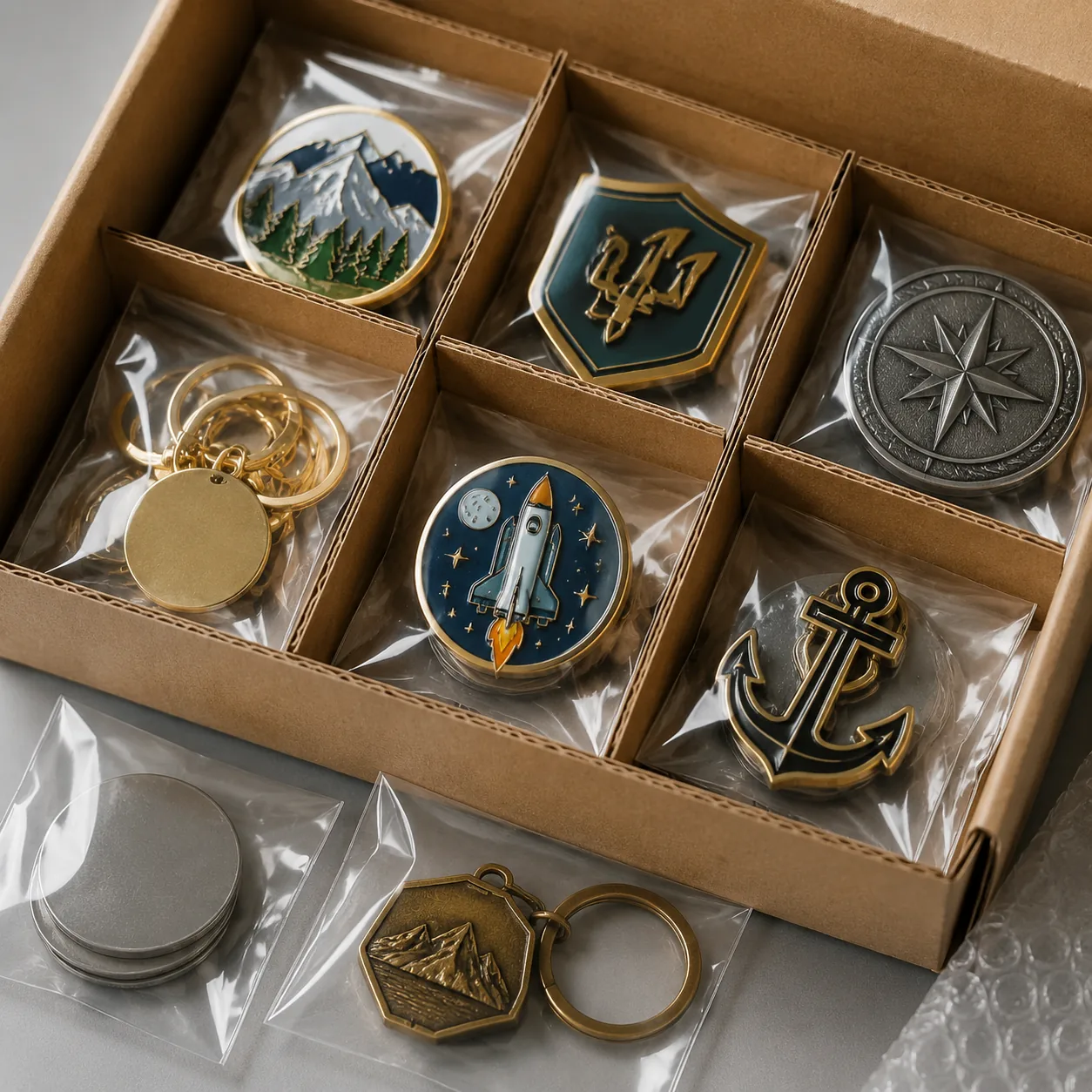
Why an unusually low custom pin quote usually means the build was quietly downgraded
A promotional-products distributor is sourcing 8,000 custom soft enamel pins for a university alumni event in spring 2026. Final design: 32.0 mm wide x 24.0 mm high, soft enamel fill, antique nickel finish, two rear posts with butterfly clutches, and one pin packed with one printed backing card in an individual OPP bag. Three suppliers return FOB Ningbo pricing within two business days: USD 0.41, USD 0.58, and USD 0.63.
That USD 0.17 gap versus the mid quote equals USD 1,360 on the order before freight, duty, and inspection. In custom metal accessories, a spread that wide rarely comes from overhead alone. It usually means one factory priced a different product standard: thinner metal, fewer process steps, lighter decorative plating, looser post placement, simpler packing, or no defined inspection plan.
The cheapest quote is not automatically wrong. It is simply not safe to compare until the specification is forced into parity. The buyer-side fix is a QC respec: rewrite the product as a line-by-line manufacturing standard, issue the same sheet to every factory, and request revised FOB pricing on identical terms. Only then can procurement tell whether the low supplier is genuinely efficient or just under-specifying the pin.
Where the hidden cost cuts usually sit in low enamel pin quotes
The two higher quotes include production language: die-struck iron, 1.5 mm nominal thickness before plating, two 8 mm posts, antique nickel finish, Pantone-referenced colors, individual carded bagging, and ANSI/ASQ Z1.4 final inspection at AQL 2.5 major / 4.0 minor. The USD 0.41 quote says only: metal pin, 32 mm, antique finish, butterfly clutch, standard packing.
That wording is not manufacturing-ready. 'Metal pin' could mean stamped iron, thinner stamped iron, brass, or cast zinc alloy. 'Antique finish' does not identify plating family, color expectation, or whether a clear topcoat is applied. 'Standard packing' may mean one pin per card per bag, or it may mean bulk-packed pins with cards shipped loose. Those differences matter because they change both cost and claim exposure.
For a 32 mm soft enamel pin, the most common quiet downgrade is body thickness dropping from 1.5 mm nominal to 1.2 mm nominal. At 8,000 pieces, that often saves about USD 0.03-0.05 per piece. Rear hardware is another frequent cut: one post instead of two, shorter posts, smaller post diameter, or relaxed placement tolerance that allows the pin to rotate on fabric. Packing is a third lever. Card insertion and individual OPP bagging usually add around USD 0.02-0.04 per piece compared with bulk packing.
| Risk area | Vague quote wording | What often changes in production | Typical FOB impact at 8,000 pcs |
|---|---|---|---|
| Base metal and thickness | Metal pin | 1.5 mm stamped iron reduced to 1.2 mm, or process switched to cast zinc alloy | USD 0.03-0.06 lower each |
| Plating build | Antique finish | Nickel-family decorative layer kept very light, weak edge coverage, inconsistent antiquing wipe | USD 0.01-0.02 lower each |
| Rear hardware | Butterfly clutch | One post instead of two, 0.8 mm posts instead of 0.9-1.0 mm, shorter posts, looser placement | USD 0.01-0.03 lower each |
| Enamel workmanship | Soft enamel | Shallower recess, poorer polish, more pits, more color spread across metal lines | Usually hidden until inspection |
| Inspection control | Standard quality | No formal AQL, no defect classification, factory self-judges shipment | Low direct saving, high claim risk |
| Packing | Standard packing | Bulk bagging, cards packed separately, higher scratch and count-mix risk | USD 0.02-0.04 lower each |
| Sampling gate | Sample if needed | No pre-production sample approval before mass run | Saves 3-5 days initially, increases remake risk |
How to rewrite the quote into a production-grade pin specification
The right move is not to challenge the supplier with general comments like 'your quote is too low.' The right move is to issue a controlled build sheet. For this project, the specification should state the exact process, measurable dimensions, acceptable tolerances, hardware, finish, packing, and inspection standard.
A workable construction spec for this pin is: stamped iron construction; finished size 32.0 mm x 24.0 mm with tolerance of +/-0.20 mm on overall width and height; nominal body thickness 1.50 mm before plating with acceptable measured range 1.45-1.55 mm; front polished after stamping; all edges deburred with no sharp burrs detectable by finger touch; soft enamel recess depth 0.08-0.15 mm below raised metal lines after fill and bake; raised metal line width not less than 0.30 mm in production artwork unless specifically approved narrower.
Finish language also needs to be realistic. For promotional metal goods, specify decorative nickel-family plating at approximately 0.03-0.05 microns for appearance consistency, followed by antique wiping. If the factory routinely applies a transparent protective topcoat, require disclosure and sample approval. Do not write jewelry-grade plating requirements into a mass promotional pin; they raise cost without reflecting the real use case.
Hardware should be called out in full: two rear posts, each 0.90-1.00 mm diameter and 8.0 mm +/-0.5 mm long; post centerline location tolerance +/-0.50 mm from approved back-view drawing; posts perpendicular enough that both clutches can be installed by hand without bending force; nickel butterfly clutches, one per post. If the buyer wants better retention, a revised quote can include black rubber clutches or locking backs as priced options rather than vague 'upgrades.'
Packing should be equally specific: one pin mounted or inserted with one printed 350 gsm backing card in one clear self-seal OPP bag of not less than 30 microns thickness; 50 unit packs per inner polybag for counting if needed; 500 pcs per export carton; maximum carton gross weight 12 kg; 5-ply export corrugate with shipping marks by PO and SKU. Once all factories quote this same standard, the suspicious USD 0.41 offer often normalizes to around USD 0.50-0.53 FOB, which is exactly what the respec is designed to reveal.
What a realistic 2026 FOB price ladder looks like after quote parity
After a proper respec, the buyer can benchmark the quote against a credible market range instead of guessing. For one 32 mm stamped iron soft enamel design with antique nickel finish and standard color count, a realistic 2026 FOB band is typically USD 0.62-0.82 at 1,000 pcs, USD 0.52-0.68 at 3,000 pcs, USD 0.49-0.61 at 5,000 pcs, USD 0.47-0.56 at 8,000 pcs, and USD 0.44-0.53 at 10,000 pcs.
Those ranges assume standard soft enamel without epoxy dome, glitter, glow fill, screen print overlay, or premium retail box. They also assume one design, not mixed micro-runs across many designs. If carding and individual bagging are not included, add roughly USD 0.02-0.04 per piece. Premium rubber clutches usually add USD 0.01-0.02, while locking backs often add USD 0.05-0.12 depending on style and source. Brass instead of iron can add roughly USD 0.03-0.08 at this size and volume.
Tooling should be quoted separately so the buyer can compare unit pricing cleanly. For a 32 mm stamped iron pin, a common tooling range is about USD 80-150 for one design, with revised charges if there are internal cutouts, separate attachment plates, or unusually fine detail requiring more artwork cleanup. If a supplier claims 'free mold,' confirm whether the charge was simply buried in the unit price.
Approve the pre-production sample with measurements, not beauty shots
Once quote parity is established, the next control point is the pre-production sample. This is where weak suppliers often break down. A pin can photograph well from the front while still missing thickness, showing warp, having shallow fill, or carrying poor post alignment. For an 8,000-piece order, require either one physical pre-production sample or a documented sample pack with measured photos and a retained approval sample before mass production starts.
For this pin size, four checks catch most downstream complaints. First, flatness: maximum warp should not exceed 0.50 mm when the pin is placed on a flat glass plate or machined steel surface and measured at the highest lift point. Second, enamel workmanship: color cells must be fully filled, with no visible pits, sink marks, pinholes, or voids at 30 cm under 800-1,000 lux lighting; no color overflow across raised metal boundaries; and clean line intersections under 3x-5x magnification. Third, plating appearance: antique nickel tone should be reasonably even across visible front surfaces, with no raw base metal showing and no bright edge flash obvious at 30-60 cm. Fourth, hardware function: both posts must be straight, clutches must fit snugly by hand, and the two-post layout must prevent noticeable rotation on medium-weight woven fabric.
The sample pack should include front view, back view, side profile, macro close-ups of fine line areas, caliper photos showing width, height, and thickness, a warp check photo, card-and-bag assembly photos, and the approved Pantone references. For subjective antique finishes, freeze either one approved physical sample or one dated side-by-side approval image with target tone notes. A sample approved on appearance alone is not a reliable production gate.
- Require one pre-production sample before mass production
- Approve against physical sample or a full measurement/photo pack
- Verify size +/-0.20 mm, body thickness 1.45-1.55 mm, and warp <=0.50 mm
- Check enamel fill for pits, voids, overflow, and clean metal line separation
- Confirm two-post spacing against the approved back-view drawing
- Freeze card stock, bag format, carton count, and shipping mark layout
- Reject photo-only approval if side profile or measurement evidence is missing
Set acceptance criteria that the supplier, buyer, and inspector can all enforce
For custom pins, the goal is not zero cosmetic variation. The goal is objective pass-fail criteria that all parties can apply the same way at final random inspection. Without that, the supplier uses one standard, the buyer another, and the end client a third.
A practical setup is ANSI/ASQ Z1.4, single sampling, General Inspection Level II, with critical defects at 0, major defects at AQL 2.5, and minor defects at AQL 4.0. For a lot size of 8,000 pieces, the common sample size under General Level II is 200 pcs using code letter L. The inspection report should show the exact acceptance and rejection numbers used for major and minor defects rather than only stating 'pass' or 'fail.'
Critical defects should include sharp burrs or points capable of cutting skin, detached or missing post, wrong design, wrong plating family, visible rust, mixed SKU packing, and missing clutch in a sealed unit pack. Major defects should include overall size outside +/-0.20 mm, thickness outside 1.45-1.55 mm, warp above 0.50 mm, obvious plating patchiness visible at about 60 cm, raw base metal visible on the front, unfilled enamel areas, major color contamination across lines, incorrect post placement affecting wearability, or missing backing card where specified. Minor defects should include slight backside scratches, small non-display cosmetic specks, and limited antique tone variation that remains within the approved sample range.
Functional checks should be written into the inspection plan as well. A practical field-use test is 10 manual attach-remove cycles on representative fabric without post loosening, bent posts, or clutch failure. Clutches must seat fully by hand without tools. Unit packs must match card insertion and count requirements exactly. These are simple controls, but they target the failures that actually generate returns after event distribution.
Lead times, MOQ tiers, and schedule promises that are actually believable
Cheap quotes often come with unrealistically fast lead times. A promise of 10-12 production days after artwork approval for 8,000 antique nickel pins with printed backing cards is possible only under unusually open capacity or by skipping normal control gates. After respec, a more believable schedule is: 2-4 calendar days for tooling and art separation, 3-5 days for pre-production sample, 1-2 days for buyer approval, 10-14 days for mass production, and 2-3 days for final inspection, count verification, and port handoff.
That puts ex-factory readiness at roughly 18-28 calendar days after final artwork approval. Under FOB terms, buyers should then add domestic handoff time plus ocean transit, which can easily add several weeks depending on destination. If shipping by courier or express air after pickup, add roughly 3-6 days door-to-door, subject to customs clearance. The point is not that fast turnaround is impossible. It is that a credible lead time should reflect actual process steps, not sales pressure.
MOQ claims also need context. Many factories advertise MOQs of 100-300 pcs, but that does not mean the same process economics apply. Below 1,000 pcs, setup cost and handling drive a larger share of unit price. For this 32 mm spec, a realistic MOQ ladder is: 300 pcs at USD 0.88-1.25, 500 pcs at USD 0.74-0.98, 1,000 pcs at USD 0.62-0.82, 3,000 pcs at USD 0.52-0.68, 5,000 pcs at USD 0.49-0.61, 8,000 pcs at USD 0.47-0.56, and 10,000 pcs at USD 0.44-0.53. Prices move upward for epoxy domes, glitter, translucent fills, extra spot colors, special back stamps, or retail presentation packs.
When respecing is worth doing, and when the safer move is to walk away
Some low quotes can be salvaged. Others should be disqualified quickly. If a supplier will not confirm nominal thickness, avoids measurable tolerances, refuses to state AQL level, or keeps substituting phrases like 'good quality' and 'standard export packing' for actual specifications, the issue is not price. It is process discipline. A factory that cannot define the build in writing is unlikely to hold it consistently across 8,000 pieces under schedule pressure.
Another red flag is process switching without design reason. If the artwork is suitable for die-struck iron but the supplier starts pushing zinc alloy casting only after its low quote is challenged, ask why. Zinc alloy is valid for thicker relief, irregular contours, larger cutouts, and more sculpted 3D surfaces. It is not a neutral substitute. It changes edge sharpness, back texture, weight, and parting-line management. The process should follow the design, not rescue a bad quote.
A practical release rule is simple: if the sample looks acceptable but the documentation remains vague, do not rely on the sample. One hand-selected pilot unit can hide a weak production system. The safer supplier is the one that can issue a production-ready specification sheet, support it with measured sample evidence, and quote lead times that match real process steps.
Before deposit and tooling approval, the buyer should have one final document set that could support a repeat order 6 or 12 months later without guesswork: approved artwork, finished dimensions, tolerances, thickness range, post layout, Pantone references, plating callout, packing details, final inspection standard, and sample approval record. At that point procurement is no longer choosing the cheapest-looking pin. It is choosing the most controlled manufacturing outcome.
- Confirm base metal and process: stamped iron unless brass or zinc alloy is design-driven
- Lock finished size tolerance, nominal thickness range, enamel recess depth, and warp limit
- Specify plating family, decorative micron target, and approved antique appearance standard
- Define rear hardware: post count, post diameter, post length, clutch type, and placement tolerance
- Freeze unit packing, backing card stock, OPP thickness, carton quantity, and max carton weight
- Set inspection standard: critical 0, AQL 2.5 major, AQL 4.0 minor, with pre-production sample approval required
- Do not release deposit until the supplier issues a production-ready specification sheet and revised FOB quote
Have a project? Send your artwork and target quantity and we’ll reply with a detailed quotation within 12 working hours.
Ready to get this made?
Send your sketch, target quantity and ship-date. Detailed quotation in 12 hours.



