When a Custom Pin Order Fails Drop Tests: Respec It Fast
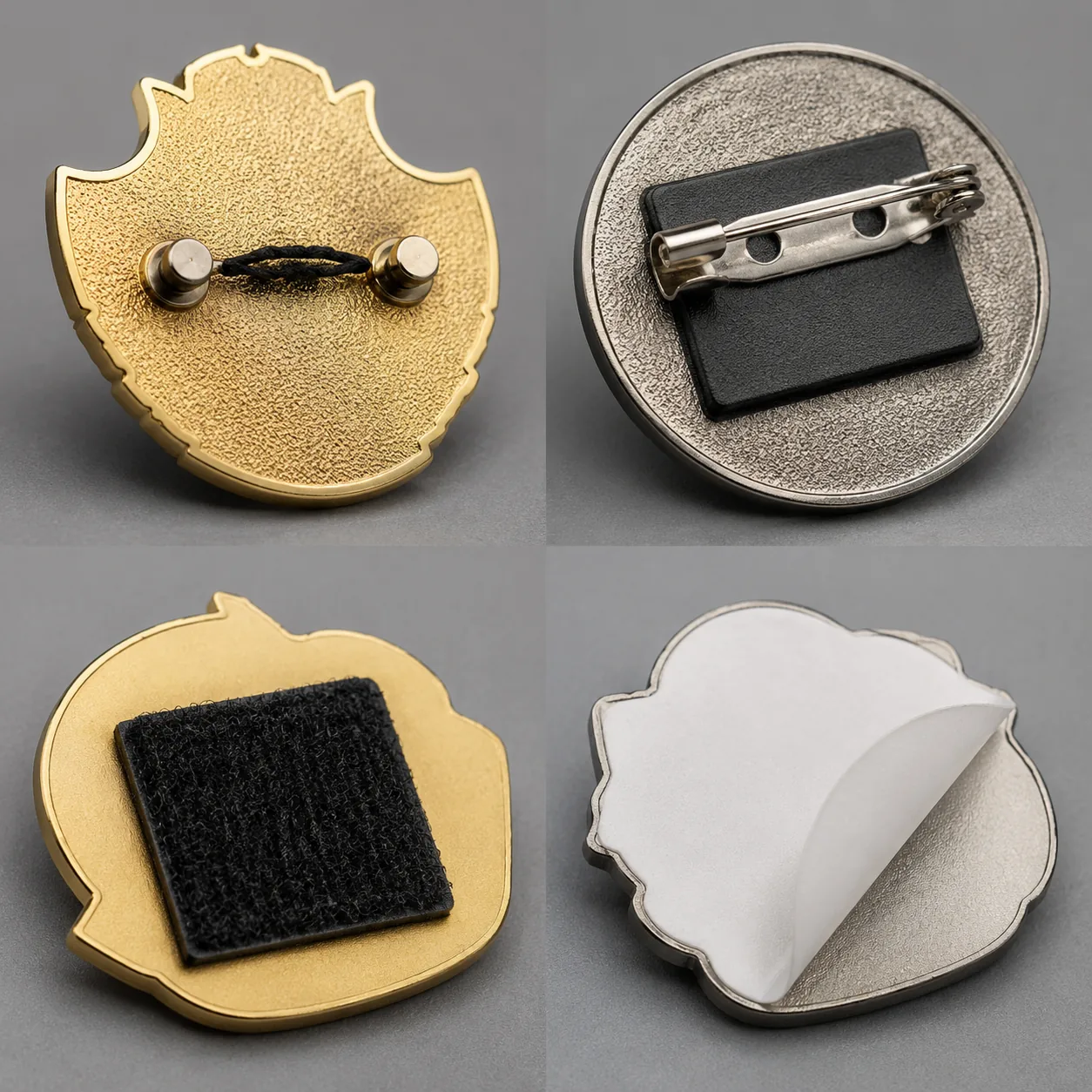
Approved artwork is not a production-ready pin spec
A common 2026 failure pattern is simple: the approved sample looks fine on the card, but the pilot lot starts losing clutches, bending posts, scratching plating, or chipping enamel once the pins are carded, bagged, kitted, and shipped. Damage often first appears during backing-card insertion, assembly of 100-500 event packs, polybag friction, or 1.0 m master-carton drops in finished retail pack.
Treat these early losses as a specification failure, not an artwork failure. If more than 2 defects appear in the first 50 handled units, or if 4% or more of a pilot lot shows the same failure mode, the construction is not robust enough for release. On launch-critical SKUs, many buyers use a tighter trigger of 2% recurring failure during pilot handling.
The usual weak points are measurable: body thickness, post diameter, post location, solder or weld footprint, clutch retention force, plating thickness, minimum wall width around enamel, corner radius at exposed points, and pack-out method. The fastest recovery is to respec these with numbers. Hardware-only or packaging-only revisions can often be re-sampled in 3-5 calendar days, then internally validated in another 1-2 days. That is usually far cheaper than remaking a full lot or absorbing field complaints after distribution.
Before asking for a remake, send three things: clear failure photos, a short note on real use and packing conditions, and the original approved specification or PI. Without all three, suppliers often strengthen the wrong feature and create a second failure mode.
Classify the failure first so you fix the right variable
Custom pin failures usually fall into three groups, and each group points to a different correction path. A loose butterfly clutch, a detached post, and a chipped soft-enamel edge should not be investigated the same way.
- Cosmetic failures: scratches visible at 30 cm under 600-1000 lux, plating haze, pits, color contamination, uneven enamel fill more than 0.15 mm below rim, epoxy dust, exposed base metal on front face
- Structural failures: bent post, broken solder joint, cracked bridge section under 1.2 mm width, warped body, distorted cutout, post tearing away from backplate, die-cast zinc fracture at thin neck
- Handling failures: clutch too loose or too tight, pin rotating on fabric, backing card tearing during insertion, magnet shifting in transit, face abrasion from bag friction or face-to-face stacking
A practical sorting rule helps. If the defect appears before the pin is worn, start with packaging and surface protection. If it appears during attachment to fabric or carding, review post geometry, post placement, and backing method first. If it appears after light wear, review body thickness, base metal, clutch type, and plating as one system.
Record actual failure rates and conditions. 'Some pins feel loose' is not actionable. '6 of 80 pilot units lost the clutch after card insertion and two 1.0 m carton drops in final retail pack' gives the factory a measurable target and a reproducible test.
Respec to actual end use, not the quote default
Many failed orders were originally quoted for appearance only: for example, a 30 mm soft-enamel iron pin, 1.2 mm thick, one standard butterfly clutch, bulk packed. That can be acceptable for a collector card that stays flat in a sleeve. It is often not adequate for denim, tote bags, employee gift sets, event handouts, or ecommerce mailers.
For a 28-32 mm pin worn on suiting, badge pouches, or light blazers, one post can still work if total weight stays below about 7-8 g, body thickness is at least 1.5 mm, and post diameter is 0.8-0.9 mm. For heavier substrates such as 10-14 oz canvas, denim jackets, or embroidered backers, specify two posts spaced 12-18 mm apart, or one main post plus a 1.5-2.0 mm anti-rotation nub. If the face has broad unsupported sections or long horizontal spans, move to 1.8 mm body thickness.
Base metal matters as much as hardware. Stamped iron is economical and common for flat soft-enamel pins. Die-cast zinc alloy is usually better for complex outlines, cutouts, recessed fields, and thicker 3D forms because it holds irregular geometry better and reduces distortion in narrow sections. Brass remains the better choice when the design needs a cleaner polished surface, finer stamped detail, or a more jewelry-like finish, but FOB is typically 15%-35% higher than iron at comparable size and packaging.
As a practical 2026 benchmark at 500 pcs FOB China: a 30 mm iron soft-enamel pin with one post and butterfly clutch typically runs USD 0.45-0.70; the same size in zinc alloy with two posts, rubber clutch, and individual OPP bagging is more often USD 0.62-0.95; brass usually starts around USD 0.75 and can exceed USD 1.10 depending on finish, carding, and color count. At 1,000 pcs, per-piece cost commonly drops another USD 0.03-0.08 if the design and pack-out remain unchanged.
| Failure observed | Likely root cause | Respec that usually works | Typical FOB cost impact |
|---|---|---|---|
| Post bends during attachment | Post too thin for insertion force; backplate too thin behind post | Increase post from 0.7 mm to 0.9 mm; increase body from 1.2 mm to 1.5-1.8 mm; do not place post on bridge areas under 4 mm width | +$0.02-$0.06/pc |
| Pin rotates on fabric | Single centered post on a wide or asymmetrical face | Add second post or 1.5-2.0 mm anti-rotation nub; place posts 12-18 mm apart and at least 4 mm from edge | +$0.03-$0.08/pc |
| Clutch falls off in transit | Loose butterfly spring tolerance; friction in bulk pack | Switch to tighter rubber clutch or locking clutch; require retention check on golden sample; use individual bag or carded sleeve | +$0.01-$0.35/pc |
| Enamel chips at rim | Metal wall too thin near outer edge; sharp points take impact | Set minimum metal wall width at 0.30-0.35 mm; add 0.3-0.5 mm corner radius; prevent face-to-face impact in pack-out | +$0.00-$0.05/pc |
| Front scratches in packed lot | No face protection; direct metal-to-metal contact | Use individual OPP bag, glassine, or card mount with face cover; separate layers with tissue or tray cavities | +$0.02-$0.12/pc |
| Plating dulls or rubs through | Decorative plating too thin; no tarnish control in humid storage | Specify decorative nickel, imitation gold, or black nickel at 0.03-0.08 micron; add anti-tarnish bag if stored over 60 days | +$0.01-$0.07/pc |
| Post detaches from back | Small solder area, weak weld, or heavy face lever action | Increase solder pad or weld area, use larger post base, move post inward, validate with pull or torque test on pilot lot | +$0.02-$0.05/pc |
Use the smallest effective design change, not a full redesign
If the shape, logo, and colors are already approved, the fastest corrective path is usually hardware, thickness, or pack-out. These changes often require no new mold, or only a minor die adjustment. That matters when the launch date is fixed and air freight is already under discussion.
For soft-enamel pins under 35 mm, the most successful changes are usually straightforward: increase body thickness from 1.2 mm to 1.5 mm, upgrade from one post to two, move posts away from narrow neck areas, change from standard butterfly clutch to tighter rubber clutch, and add an anti-rotation nub. On exposed points, a 0.3-0.5 mm corner radius can materially reduce impact chipping with little visible design change.
For larger pins, especially 40-50 mm award or souvenir pieces, attachment geometry matters more than finish upgrades. A 45 mm zinc-alloy pin with one centered post may pass visual approval yet still rotate, sag, or lever against the weld point during garment movement. In that size range, two posts should be the default unless the item is mainly sold as a collector piece that remains on display card.
Avoid overbuilding when it does not solve the actual failure. Locking clasps are effective against loss and unauthorized removal, but they add roughly USD 0.20-0.35 per piece and slow event distribution because users need extra time to attach and remove them. A 2.0 mm body can feel more premium, but on light garments it may drag fabric unless post layout also changes. Choose the smallest revision that addresses the verified weak point.
Write the revised mechanical spec in measurable numbers
The replacement order should state dimensions, tolerances, finish, and pack-out in production terms. 'Stronger post,' 'better plating,' or 'premium clutch' are not usable manufacturing specifications.
For a standard 28-35 mm soft-enamel rescue build, a practical spec is: stamped iron or die-cast zinc alloy; body thickness 1.5 mm +/-0.10 mm; post diameter 0.9 mm +/-0.05 mm; two posts on designs wider than 28 mm where anti-rotation is required; post centerline at least 4 mm from edge and not on bridge sections under 4 mm width; minimum metal line width 0.30 mm; minimum recessed color opening 0.35 mm; corner radius 0.30 mm minimum on exposed points; decorative plating nickel, imitation gold, or black nickel at 0.03-0.08 micron; enamel fill not more than 0.10-0.15 mm below metal rim; no exposed base metal on the front face.
If the design uses epoxy, define that too. Clear epoxy dome thickness is typically 0.3-0.5 mm. It improves scuff resistance on printed or soft-enamel faces, especially in mail-order gift sets and bulk event kits, but it can yellow under prolonged UV exposure and may show flow variation on line detail below about 0.4 mm width. For polished-metal designs, epoxy can soften the crisp appearance of raised lines and make defects under the dome impossible to rework.
For plating, stay realistic. Decorative plating on promo-grade pins is thin by nature and should not be treated as engineering wear plating. Most custom quotes are based on 0.03-0.08 micron decorative gold, nickel, black nickel, or imitation rose gold. If humid storage or ocean transit is a concern, anti-tarnish OPP bags, desiccant in master cartons, and storage below about 65% RH are usually more effective than simply asking for 'thicker gold plating.'
For backing cards, specify slot and board details if insertion damage is part of the failure. A common rescue spec is 300-350 gsm coated card, die-cut slot width matched to post diameter plus 0.15-0.25 mm clearance, and insertion test on 20 samples before mass carding. Too-tight slots can bend posts; too-loose slots allow shifting that scratches the face.
Rewrite QC so the same defect cannot pass again
A better drawing without a better QC plan is incomplete. If the first lot failed during drop handling, card insertion, or transit abrasion, outgoing inspection must include those exact conditions. Otherwise the factory can meet the drawing and still ship unstable performance.
A workable baseline is ANSI/ASQ Z1.4, single sampling, General Inspection Level II, with AQL 2.5 for major defects and AQL 4.0 for minor defects. For first orders with a new supplier, pilot runs, or launch-critical SKUs, many buyers tighten major defects to AQL 1.5 and require pre-shipment inspection on packed goods, not loose goods only.
- Major defects: detached or loose post, post movement under firm finger pressure, clutch that fails retention after cycling, visible enamel chip on front face, wrong plating finish, wrong logo orientation, sharp burr that can cut skin, broken magnet if magnetic backing is used
- Minor defects: light scratch visible only closer than 30 cm, small haze on back plating, enamel low-fill within approved tolerance, minor print offset on backing card that does not affect branding or readability
Use simple tests with fixed conditions. A practical control set is: post pull or torque check on pilot samples with no detachment; clutch cycle test for 5 attach/remove cycles with no cracking and no obvious loss of grip; drop test from 1.0 m for 3 drops in mixed orientations while in approved retail pack; abrasion test with 20 packed units shaken for 30 seconds or lightly tumbled in a closed carton; cosmetic review at 30 cm under neutral white light at about 600-1000 lux.
Where suppliers can support it, add numeric acceptance limits. For example: no post detachment under a 3 kgf axial pull for 10 seconds on 5 pilot units; no visible front-face scratch after packed abrasion test beyond minor standard; clutch retention sufficient that no clutch disengages during carding plus drop test sequence on 20 sampled units. Even if your supplier uses a simpler internal method, your brief should state the pass/fail target.
Include pack-out in golden sample approval. Many pins pass as loose samples and fail only after carding, polybagging, inner boxing, and master-carton drops. Product approval without package approval leaves the highest-risk gap open.
Check cost, MOQ, and lead-time impact before releasing the revision
Respec costs usually move in layers rather than all at once. The main drivers are thicker metal, extra posts, upgraded clutch, individual protection, revised plating, and extra QA handling. On a 30 mm custom soft-enamel pin at 500 pcs, a standard build with one post and butterfly clutch is commonly USD 0.45-0.85 FOB China in 2026, depending on color count, cutouts, and carding. A corrected build with 1.5 mm body, two posts, better clutch, and individual bagging often lands around USD 0.58-1.05 FOB.
MOQ is usually manageable if tooling already exists. Many factories will apply hardware and packing upgrades from 100-300 pcs upward. Premium printed backing cards, tray inserts, and locking clasps become more economical at 500 or 1,000 pcs. Below 100 pcs, expect fewer clutch options, higher setup allocation per unit, and less willingness to produce two or three revised sample variants.
Lead time depends mostly on tooling impact. Hardware-only or packaging-only revisions can often be sampled in 3-5 days and mass produced in 8-12 days after approval. If a new mold, revised cut line, deeper die, or relocated post requires tooling work, sample lead time is more commonly 5-7 days and production 10-15 days. Nonstandard plating colors, anti-tarnish materials, custom tray inserts, or full card redesign can add another 1-3 days.
Ask suppliers to quote the deltas separately: revised FOB unit price, one-time tooling charge if any, revised sample fee, sample lead time, production lead time, and any change in inner-pack or carton dimensions. This avoids the common problem where a 'small fix' quietly changes labor content and freight cube.
Send a failure-based respec brief, not a complaint email
The best recovery tool is a one-page respec brief built around the failed condition. State the SKU, original approved spec, actual defect rate, where the failure occurred, and the exact revision you want tested. If you are unsure of the best fix, ask for two controlled options rather than an open-ended remake request.
- List original approved specs exactly: size, thickness, base metal, finish, color count, post count and diameter, clutch type, backing card, individual pack method, and approved sample date
- Attach 3-6 defect photos, including one close-up with ruler or caliper where dimensions matter
- State the failure rate clearly, for example: 6/80 loose clutches after carding; 3/50 scratched faces after bulk bagging; 2/30 bent posts on denim insertion
- Describe the real use case: suit lapel, denim jacket, tote bag, ecommerce mailer, event handout, or employee gift set
- Request one or two revised sample options with separate cost delta, MOQ delta, and lead-time delta for each
- Freeze QC gates in writing: AQL level, clutch cycle test, 1.0 m drop test in final pack, abrasion check, and cosmetic viewing distance
- Approve one final golden sample with complete pack-out before restarting mass production
Most failed custom pin orders do not need a full redesign. They need a narrow, measurable correction to hardware, geometry, finish protection, or packaging, plus a QC plan that reproduces the original failure mode. If you respec around actual end use and fixed test conditions, you can often recover the project in under a week of engineering time and avoid repeating the same defect on the reorder.
Have a project? Send your artwork and target quantity and we’ll reply with a detailed quotation within 12 working hours.
Ready to get this made?
Send your sketch, target quantity and ship-date. Detailed quotation in 12 hours.



