When a 50,000-Piece Pin Program Needs a 0.8% Defect Cap
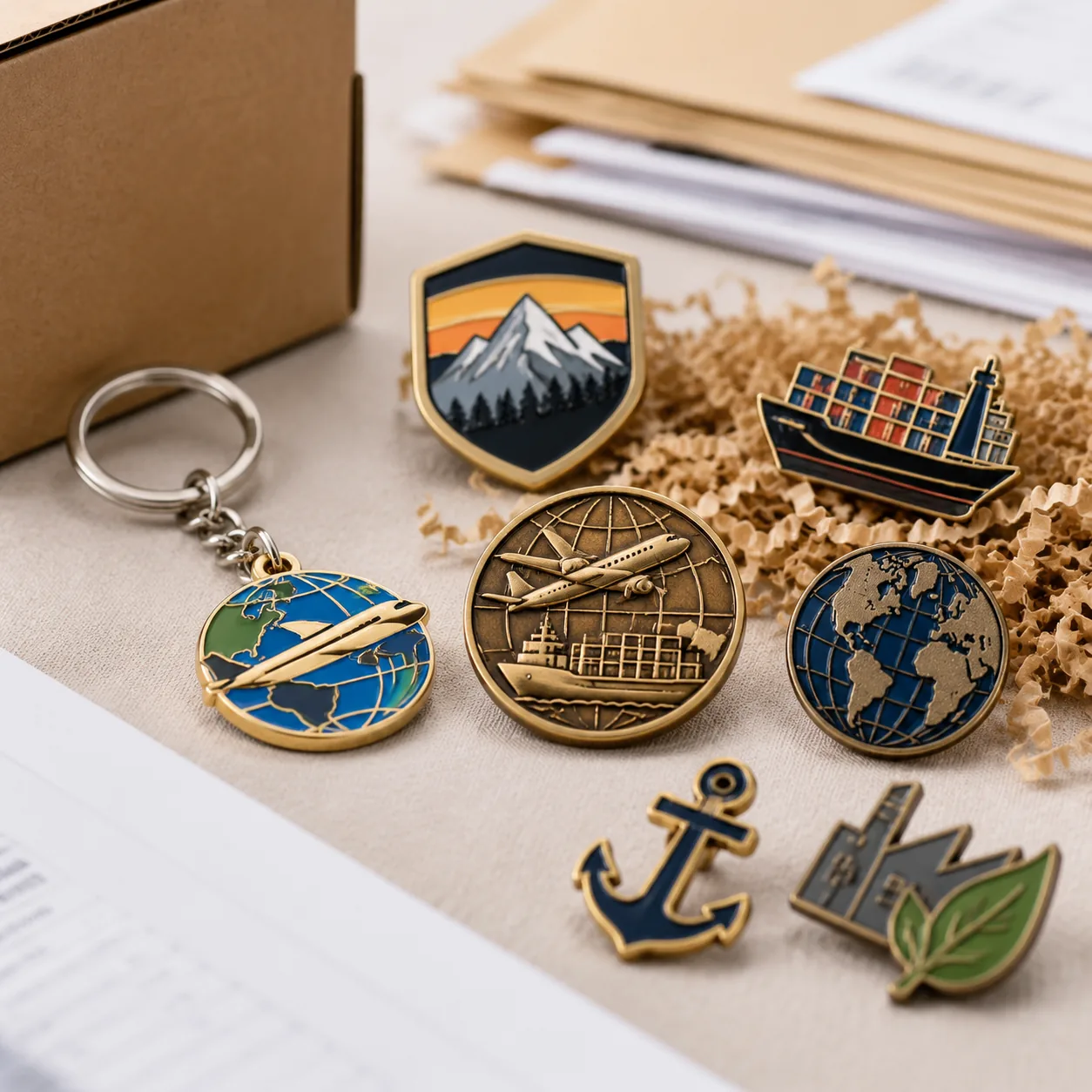
The real challenge: 50,000 event pins, 3 destinations, and a hard 0.8% visible-defect ceiling
The hard part in a repeat event-pin program is rarely finding a factory. It is turning one attractive approval sample into a production system that still looks acceptable after plating, assembly, bagging, export transit, regional storage, and event handling. In this scenario, the buyer is placing 50,000 soft enamel lapel pins for one global launch, split across North America, Europe, and the Middle East, with an internal requirement that customer-visible defects on receipt stay at or below 0.8%.
The prior run failed in four predictable ways: uneven enamel fill on the front face, butterfly clutches loosening during use, lot-to-lot color shift, and light tarnish on shiny nickel after about 45 to 75 days in storage. None of those defects alone would normally stop a shipment. Combined, they created 3PL re-sorting labor, replacement shipments, and brand damage at the point of use.
That failure pattern usually means the specification was descriptive instead of measurable. Terms such as smooth enamel, secure clutch, or good plating do not control a process that includes die striking, deburring, polishing, plating, color filling, baking, screen printing, post soldering, clutch assembly, and pack-out. If the business requirement is a maximum 0.8% visible defect rate, the product has to be respecified around the actual complaint modes, with numeric limits and inspection rules that the factory, third-party inspector, and 3PL can all apply the same way.
Why the original spec created disputes instead of control
The original item was commercially standard: a 32 mm die-struck iron soft enamel pin, nominal 1.5 mm thickness, shiny nickel plating, four Pantone colors, one black screen-print detail, and one post with one butterfly clutch. The design itself was not the problem. The problem was that sample approval stopped at appearance and never translated appearance into tolerances.
The old approval set did not define acceptable enamel sink, plating continuity, color drift, print registration, post alignment, clutch retention, or packing protection. That leaves each stakeholder using a different threshold. A factory QC operator may pass a 0.20 mm enamel low spot because the recessed area is still filled. A brand manager may reject the same part immediately if the defect sits inside a large logo block. A clutch that feels acceptable once in hand may still loosen after five to ten insertion cycles on lanyards, jackets, or woven bags.
Sampling language is often too vague as well. For branded event merchandise, saying inspect at AQL 2.5 is incomplete. Acceptance should be split by defect class under ISO 2859-1. A practical plan here is single sampling, normal inspection, General Inspection Level II, with critical defects at AQL 0, major defects at AQL 1.0, and minor defects at AQL 2.5. For a lot size of 50,000 units, the sample size code letter is typically N, which corresponds to a sample of 500 pieces under normal inspection.
Under that plan, critical defects are zero tolerance. For 500 sampled units, major defects at AQL 1.0 are typically accepted at 10 and rejected at 11, while minor defects at AQL 2.5 are accepted at 21 and rejected at 22. The exact plan should appear in the PO and inspection brief, not in email shorthand. If it is left implied, the supplier, inspector, and buyer will each assume a different risk level.
Respec the pin around the failure modes, not generic quality language
The right fix is not to tighten every feature. That only increases scrap, slows output, and adds cost where it does not reduce complaints. Tighten the features linked to actual failures: front-face appearance, hardware retention, color consistency, storage stability, and abrasion in packing.
For a 32 mm event pin with ordinary raised outlines, iron remains the most practical base metal. It is faster and lower cost than zinc alloy for standard die-struck shapes. Move to zinc alloy only if the artwork needs recessed detail finer than about 0.30 to 0.35 mm, deep sculpted relief, complex pierced cutouts, or irregular outer geometry better suited to casting. For a conventional badge shape, iron is usually the better commercial choice at 50,000 pieces.
Raise nominal body thickness from 1.5 mm to 1.8 mm. That modest increase improves rigidity, reduces the flimsy feel, and gives better support for the post joint. Set width and height tolerance at +/-0.20 mm, body thickness at +/-0.15 mm, and flatness so the pin does not rock more than 0.30 mm when placed on a calibrated glass plate.
For soft enamel, define cosmetic limits by zone. In primary brand zones such as logo fields, require no exposed base metal, no pinholes over 0.20 mm, and fill-height variation no greater than 0.10 mm below the adjacent raised metal line. In secondary zones, allow up to 0.15 mm. Also define raised metal line width at not less than 0.25 mm after plating so fine borders do not wash out during polishing and nickel deposit.
For screen print, require registration within +/-0.15 mm, no line loss over 0.20 mm, and no double image visible at 30 cm under 800 lux neutral light. If the black print contains text below 4 pt equivalent at final size, require a pre-production print legibility check on 8 to 12 actual-tooling samples, not on digital art only.
For plating, specify shiny nickel with anti-tarnish topcoat rather than shiny nickel alone. Decorative nickel on promotional pins is thin by design, commonly around 0.03 to 0.05 microns, so process discipline matters more than raw thickness. Require uniform coverage, no blistering, no peel at edges, and no visible discoloration after an accelerated storage check of 72 hours at 50 +/-5 degrees C and 85% RH on approved samples. If the goods may sit for 60 to 90 days before use, that test is cheap insurance.
Hardware is often the highest field-risk choice. One post with a butterfly clutch is lowest cost but also the most complaint-prone in use. For a 32 mm pin, one 8 mm post with one deluxe clutch is usually the best balance between security and cost. If anti-rotation matters because the pin will be worn on soft fabric or carded upright for retail presentation, specify two 8 mm posts. Hold post location to +/-0.30 mm, post perpendicularity within 3 degrees, and confirm post length after carding if the backing card exceeds 300 gsm so the clutch still seats fully.
| Feature | Loose commercial spec | Controlled spec for <=0.8% visible defects | Typical FOB impact at 50,000 pcs |
|---|---|---|---|
| Base body | Iron, 1.5 mm | Iron, 1.8 mm nominal; +/-0.20 mm W/H; +/-0.15 mm thickness; flatness max 0.30 mm rock | USD 0.01-0.03/pc |
| Metal detail capability | Not defined | Use iron only where final line/recess detail is >=0.35 mm; use zinc alloy for finer relief or complex cutouts | USD 0.00-0.06/pc |
| Soft enamel face | Visual only | No exposed base metal; primary-zone low spot max 0.10 mm; other zones 0.15 mm; no pinholes >0.20 mm | USD 0.01-0.03/pc |
| Plating | Shiny nickel | Shiny nickel with anti-tarnish topcoat; decorative nickel target 0.03-0.05 microns | USD 0.01-0.03/pc |
| Screen print | Black detail | Registration +/-0.15 mm; no line loss >0.20 mm; no double image visible at 30 cm | USD 0.00-0.01/pc |
| Attachment | 1 post + butterfly clutch | 1 x 8 mm post + deluxe clutch, or 2 x 8 mm posts if anti-rotation required | USD 0.02-0.07/pc |
| Packing | 100 pcs/polybag bulk | Individual OPP bag, or glassine/tissue interleave every 25 pcs; 5-layer export carton | USD 0.02-0.06/pc |
Define defects so the factory, inspector, and 3PL grade the same unit the same way
If the business target is a maximum 0.8% customer-visible defect rate, the defect list has to reflect what end users and receiving teams will actually notice. Critical defects should be zero tolerance. For this pin, criticals should include sharp burrs capable of cutting skin, missing posts, detached or unsoldered hardware, wrong artwork, wrong plating finish, exposed rust, and any mixed-SKU packing error that sends the wrong pin to the wrong region.
Major defects should cover functional failure and obvious brand damage. Examples include enamel voids or low spots above 0.30 mm in primary visual zones, exposed base metal in filled areas, plating peel or blistering, front scratches visible at 30 cm, print misregistration beyond +/-0.15 mm, Pantone mismatch beyond approved master limits, bent posts, post skew that prevents normal wear, or deluxe clutch fit failure. If butterfly clutches are still used, define a retention benchmark against an approved golden sample instead of allowing subjective hand feel.
Minor defects should be commercially tolerable but countable: light die marks on the back, isolated back discoloration, front color specks under 0.15 mm outside key logo zones, slight print edge roughness not visible at normal use distance, or soft backstamp detail that does not impair identification.
Viewing conditions must also be fixed. A workable standard is 600 to 1000 lux under D50 to D65 neutral-white light, viewed at 30 cm on the front face, with no more than 5 seconds per unit. The inspector should tilt the pin naturally, not hold it at an extreme glare angle to find cosmetic issues the end user would never see. Without written viewing conditions, remote reviews become subjective and every defect call becomes negotiable.
Use four QC gates instead of relying on one final inspection
A final random inspection cannot rescue a weak process. For this type of program, the lowest-risk model is four control gates: artwork lock, pre-production sample approval from actual tooling, in-line process control, and final inspection after complete pack-out.
At artwork lock, freeze Pantone references, line widths, plating finish, backstamp, post layout, carding method, bagging method, carton markings, and destination split. For color judgment, define the master clearly: physical Pantone chips where applicable, plus a signed production sample. On metal-and-enamel items, a signed production sample is usually more reliable than digital art for color and surface expectation.
At pre-production, request 8 to 12 samples from actual production tooling, not one hand-selected hero sample. Measure width and height to +/-0.20 mm, thickness to +/-0.15 mm, post location to +/-0.30 mm, and print registration to +/-0.15 mm. Check enamel low spots in primary fills with a depth gauge, feeler comparator, or optical comparator. Compare all samples side by side under neutral light for lot color consistency and plating tone.
In-line control matters most during plating, coloring, printing, and assembly. Require an in-line review after the first 500 completed pieces before the supplier releases the remaining quantity. Then require process checks every 2,000 to 3,000 pieces for enamel fill, print registration, and hardware assembly. On hardware, use a defined retention method: clutch must seat fully, release normally by hand, and remain attached through five insertion-removal cycles on the same post without spontaneous fall-off under light shake. If the factory uses an internal pull test, record the method and minimum pass value in the report; for example, a post solder joint pull resistance target of >=3 kgf for 10 seconds is a reasonable control benchmark for this size class.
Final inspection should occur only after full packing. Inspecting loose pins before bagging misses two common complaint sources: face abrasion from bulk contact and count errors by inner pack or regional destination. Check carton count, gross weight, dimensions, seal integrity, barcode or shipping mark accuracy, and destination labels. For export cartons, 5-layer corrugated outer cartons are standard; keep gross weight around 10 to 12 kg where possible to reduce corner crush and handling damage.
- Lock artwork, Pantone references, plating finish, and defect photo standards before mass production
- Approve 8-12 pre-production samples from actual tooling, not one hand-picked sample
- Require a first-500-piece in-line review before release of the full run
- Measure size to +/-0.20 mm, thickness to +/-0.15 mm, post position to +/-0.30 mm, and print registration to +/-0.15 mm
- Inspect to ISO 2859-1, General Level II, normal inspection, with critical 0, major 1.0, minor 2.5
- Run final inspection after full pack-out so abrasion, assortment, and count defects are visible
- Record carton count, gross weight, dimensions, seal condition, and destination markings before loading
Cost, MOQ tiers, and lead-time impact of the tighter spec
A lower visible-defect target does not automatically make the program expensive. On a 32 mm soft enamel iron pin at 50,000 pieces, a broad commercial FOB range is typically USD 0.30 to 0.48 per piece for a basic build with one post, butterfly clutch, and bulk packing. With the tighter control package here, a more realistic FOB range is USD 0.38 to 0.62 per piece depending on hardware, anti-tarnish finishing, and pack-out method.
Tooling for a straightforward die-struck iron pin is commonly USD 80 to 150 per design. If the design includes interior cutouts, unusual silhouette complexity, multiple mold components, or zinc-alloy casting, tooling often rises to USD 180 to 350. For custom backing cards, add separate print setup and die costs where applicable.
MOQ is rarely the limiting factor, but pricing tiers matter. Many factories will quote 300 to 500 pieces per design; meaningful breaks usually appear at 1,000, 3,000, 5,000, 10,000, and 50,000 pieces. A practical FOB ladder for this specification might look like USD 0.70-0.95 at 500 pcs, USD 0.52-0.75 at 3,000 pcs, USD 0.45-0.66 at 10,000 pcs, and USD 0.38-0.62 at 50,000 pcs, assuming stable art and standard export terms. Regional split shipments are feasible at 50,000 units, but confirm whether mixed carton labels, destination sorting, or multiple ship-to addresses add labor charges of roughly USD 50 to 200 per destination, pallet pattern, or label set.
Lead time usually changes modestly but materially. A basic run may deliver pre-production samples in 5 to 7 calendar days and complete mass production in 15 to 22 days after approval. A controlled run is more likely to need 7 to 10 days for pre-production samples and 18 to 28 days for mass production, especially if it includes anti-tarnish topcoat, tighter in-line sorting, or individual bagging. Add 2 to 4 days for third-party inspection booking and any rework. For three-region launches, schedule to the realistic lead time, not the supplier's fastest-case promise.
How to reduce quote increases without removing the controls that matter
If the revised quote comes back higher, do not cut features randomly. Ask the supplier to separate material cost, labor cost, scrap risk, and packing cost. On pin programs, the largest increases usually come from second posts, deluxe clutches, anti-tarnish topcoat, 100% face sorting, and gentler pack-out. Those are often the exact controls that prevent the known complaint pattern.
A better negotiation is to protect high-impact controls and simplify lower-risk items elsewhere. For example, keep the enamel sorting standard, upgraded clutch, anti-tarnish topcoat, and post-position tolerance, but reduce backing-card weight from 400 gsm to 350 gsm, standardize one plating finish across multiple SKUs, or replace individual OPP bags with glassine or tissue interleave every 25 pieces if a packing rub test shows no front-face abrasion after transit simulation.
Side-by-side quoting is useful here. Ask for two builds: a standard commercial version and a controlled version built to critical 0, major 1.0, minor 2.5, with revised hardware and packing. That makes trade-offs visible before PO release. Saving USD 0.03 per piece deliberately is very different from saving it by removing the one control that prevents a repeat failure.
A practical RFQ and PO checklist for a live 2026 pin program
Start with evidence, not assumptions. Pull return photos, 3PL receiving notes, event-staff complaints, warehouse dwell time, and prior inspection reports. Rank the top three defect modes by frequency and by cost. Those become the first features to tighten in the RFQ and PO.
Then rewrite the buying documents in measurable terms. For this scenario, specify product size, nominal thickness, base metal, plating finish, anti-tarnish requirement, Pantone references, print tolerance, attachment type, post quantity, post position, front-face cosmetic limits, defect definitions, AQL split, packing method, carton spec, destination labeling, and expected storage period before event use.
A practical starting specification for this 50,000-piece order is: 32 mm die-struck iron pin, 1.8 mm nominal thickness, shiny nickel plating with anti-tarnish topcoat, four Pantone colors, one black screen print with +/-0.15 mm registration, one 8 mm post with deluxe clutch or two posts if anti-rotation is required, front-face enamel variation max 0.10 mm in primary zones and 0.15 mm elsewhere, no pinholes above 0.20 mm on the front face, packed individually or interleaved every 25 pieces, in 5-layer export cartons, inspected to ISO 2859-1 General Level II, normal inspection, critical 0, major 1.0, minor 2.5.
Finally, do not release production from one perfect sample. Approve a pre-production set from actual tooling and, if possible, packed exactly as shipment goods will be packed. On a 50,000-piece metal promo order, that extra week is usually the cheapest insurance available if the business target is a visible defect rate below 1%.
Have a project? Send your artwork and target quantity and we’ll reply with a detailed quotation within 12 working hours.
Ready to get this made?
Send your sketch, target quantity and ship-date. Detailed quotation in 12 hours.



