Wear Testing Custom Pins and Keychains Before Shipment
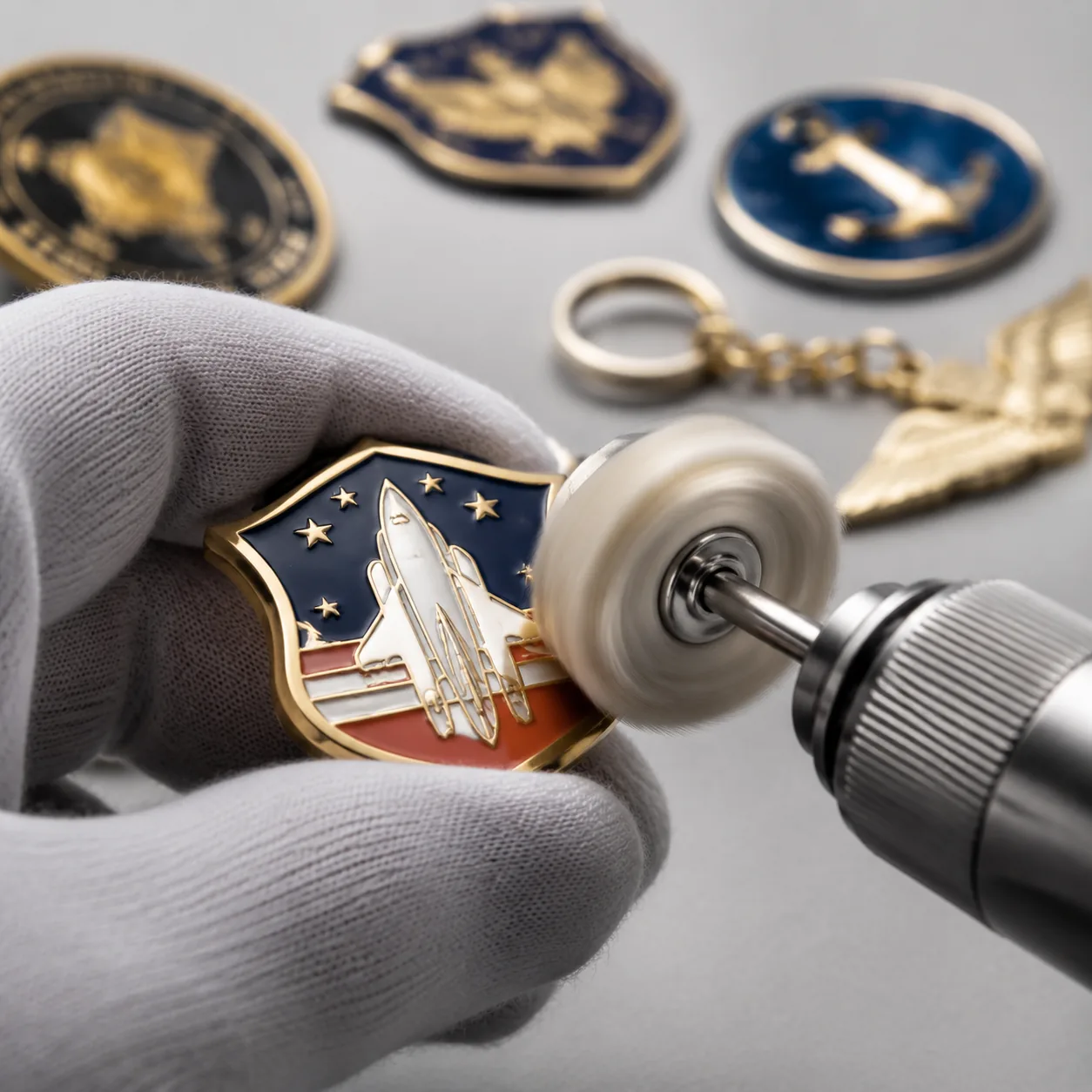
Why Good Photos Still Miss Field Failures
Pre-shipment photos can confirm enamel fill, plating color, logo position and packaging layout. They cannot prove that a pin post will survive a jacket pull, that a split ring will stay closed on a commuter’s keys, or that imitation gold plating will still look acceptable after weeks of pocket abrasion. Many complaints appear only after the goods have been distributed, when replacement stock costs more than the original inspection.
Wear testing is not the same as cosmetic inspection. A cosmetic inspection checks scratches, color bleed, dust in enamel, plating stains, wrong attachments and packaging errors under an AQL sampling plan. Wear testing applies controlled force, abrasion, impact, sweat exposure or repeated movement to finished goods and records whether the product still functions.
For B2B orders, the goal is not laboratory perfection. The goal is a written, repeatable pre-shipment plan that matches the product’s real use. A conference lapel pin, a retail souvenir keychain and a challenge coin carried daily in a pocket should not share the same durability standard.
Match the Test Plan to the Use Case
Start the RFQ with a one-line use case: one-week event giveaway, retail souvenir, employee recognition pin, uniform badge, daily-carry keychain, outdoor club coin or collector product. This sentence determines which risks deserve testing and which tests add cost without reducing real claims.
For a 25 to 35 mm soft enamel pin with a butterfly clutch, the main risks are post detachment, clutch looseness, sharp burrs, enamel chips on raised edges and plating discoloration from sweat. For a 50 to 70 mm metal keychain, the risks shift to jump ring opening, split ring deformation, plating wear around the ring hole, logo abrasion and chain connector failure. For a 40 to 50 mm challenge coin, common failures are edge dents, antique finish rub-off, color fill loss in recessed areas and inconsistent thickness.
Do not over-spec a low-cost event item as if it were safety hardware. A 7-day giveaway pin normally does not need 96 hours of neutral salt spray unless it will be used near the sea, stored for a long campaign or sold as retail merchandise. But do not under-spec paid products. One broken connector on a retail keychain can create returns even when the die-cast emblem is perfect.
| Product type | Practical risk level | Recommended wear-test sample | Typical FOB price context |
|---|---|---|---|
| Event lapel pin, 25–35 mm | Low to medium; short wear period | 5–8 finished pieces per SKU | USD 0.35–0.95 depending on size, mold and colors |
| Retail enamel pin, 30–45 mm | Medium; buyer expects repeated use | 8–13 finished pieces per SKU | USD 0.60–1.80 depending on plating, posts and backing card |
| Metal keychain, 50–70 mm | Medium to high; daily abrasion and pull load | 8–13 finished pieces per SKU | USD 0.75–2.50 depending on weight and hardware |
| Heavy keychain above 35 g | High; connector and ring hole carry more stress | 13–20 finished pieces per SKU | USD 1.50–4.00 depending on casting, plating and chain |
| Challenge coin, 40–50 mm | Medium; edge impact and finish wear | 8–13 finished pieces per SKU | USD 1.20–3.80 depending on thickness, enamel and antique finish |
Core Wear Tests and Pass Limits
Use tests the factory QC team can repeat without interpretation. Measure force with a calibrated pull gauge, dimensions with 0.02 mm digital calipers, weight with a 0.01 g scale and plating thickness with XRF when thickness is part of the contract. Take before-and-after photos of every destructive test piece. Tested pieces should be retained as QC samples, not packed as saleable goods.
Pull samples from finished, assembled and packed production goods, not from the approval sample tray. Approval samples are often made slowly by senior workers and may not represent the final batch after polishing, plating, enamel curing, assembly and bulk packing.
| Test | Typical specification | Pass/fail limit |
|---|---|---|
| Pin post pull | Apply 5 kgf for 10 seconds perpendicular to pin back | Post does not detach, solder does not crack, post bends less than 10 degrees |
| Butterfly clutch retention | Fit and remove clutch 10 cycles, then apply 1.5 kgf pull | Clutch remains locked and cannot slide off under hand pressure |
| Rubber clutch retention | Fit and remove 10 cycles, then apply 1.0 kgf pull | Clutch does not tear, split or loosen excessively |
| Keychain connector pull | Apply 8 kgf for 10 seconds in chain direction | Jump ring gap opens less than 0.5 mm and connector remains closed |
| Heavy keychain pull | Apply 12 kgf for 10 seconds for emblems above 35 g | No ring-hole cracking, chain breakage or connector opening |
| Drop impact | Drop 5 pieces from 1.2 m onto plywood over concrete, 3 drops each | No broken attachment, sharp burr or enamel loss larger than 1.0 mm |
| Dry rub | Rub decorated area 50 cycles with white cotton cloth under 500 g load | No visible color transfer and no base metal exposed at normal viewing distance |
| Sweat or salt exposure | 24 hours at 35 °C in artificial sweat or 5% salt solution | No green corrosion, blistering or staining visible at 30 cm |
| Plating thickness | XRF on raised edge and flat field | Decorative flash 0.05–0.10 microns minimum; premium wear areas 0.20–0.50 microns if quoted |
| Dimensional check | Measure 10 pieces against approved drawing | Length/width ±0.30 mm; thickness ±0.20 mm; post position ±0.50 mm |
Sampling, AQL and MOQ Planning
Wear testing consumes stock. A pull-tested pin or drop-tested keychain may look acceptable afterward, but it has been stressed and should not be sold as new retail inventory. State the test quantity, replacement quantity and responsibility for sample loss in the purchase order, especially on small premium runs.
For visual inspection, many importers use ANSI/ASQ Z1.4 or ISO 2859-1, general inspection level II. A practical default for custom metal items is AQL 0 for critical defects, AQL 2.5 for major defects and AQL 4.0 for minor defects. Functional wear tests should use a smaller fixed sample with stricter acceptance because one detached post or open ring can indicate a process problem.
For orders below 500 pieces, test 5 pieces per SKU for simple pins and 8 pieces for keychains, magnets or products with moving parts. For 500 to 3,000 pieces, test 8 to 13 pieces per SKU. For 3,000 to 10,000 pieces, test 13 to 20 pieces per SKU and split the samples across early, middle and late production lots. For repeat orders above 10,000 pieces, keep the same AQL plan but add lot-based functional checks every 3,000 to 5,000 pieces.
MOQ also affects durability choices. A factory may accept 100 pieces for a simple soft enamel pin, but reinforced hardware, custom clutches, thicker split rings or premium plating often become economical at 300 to 500 pieces. For die-cast keychains and coins, practical MOQs are commonly 100 to 300 pieces, but unit pricing improves sharply at 500, 1,000 and 3,000 pieces because mold, setup and QC costs spread across more units.
- Define wear-test sample quantity in the PO before production starts.
- Classify broken post, detached chain, open ring, sharp burr and missing magnet as critical defects with zero tolerance.
- Use AQL 2.5 for major visual defects such as wrong enamel area, obvious plating stain or loose attachment.
- Use AQL 4.0 for minor defects such as tiny dust marks, light polishing lines or retail bag scuffs.
- Produce 2–3% overage on small orders when destructive testing and normal rejects may reduce ship quantity.
- Keep tested pieces in labeled retain bags for at least 30 days after shipment.
- Require photos, measured force values, test duration and inspector name, not only a pass statement.
Attachment Specs for Pins, Magnets and Keychains
Attachments fail more often than the badge body because they concentrate force in a small area. A 30 mm iron or zinc alloy pin body may be strong enough, but a poorly soldered 0.8 mm post can shear off during packing or first use. Specify post diameter, post length, placement tolerance and post count, not only “butterfly clutch” or “rubber clutch.”
For most lapel pins, a 0.9 to 1.0 mm steel post with 8 to 10 mm usable length is suitable for jackets, caps and lanyards. Post position should stay within ±0.5 mm of the approved drawing, and the post should stand within 5 degrees of perpendicular before packing. Pins wider than 35 mm or heavier than 12 g should usually use two posts, especially for uniforms, bags or thick fabric.
For magnets, test vertical sliding and straight pull-off separately. A magnet can feel strong when pulled away from a steel plate yet still slide down a fridge door if the back is uneven or the magnet footprint is too small. A 50 mm decorative fridge magnet may use a 20 to 25 mm ferrite magnet. A heavier die-cast metal magnet may need two ferrite magnets or a smaller neodymium magnet, but neodymium increases cost and may require warning language for some markets.
For keychains, the weak point is often the jump ring or connector, not the split ring. A standard promotional keychain can use a 25 mm split ring with 1.8 to 2.0 mm wire. Emblems above 35 g should use heavier chain links, a stronger jump ring or a direct-cast loop. Keep at least 1.5 mm of metal wall around the ring hole; less than that can crack during pull testing or after repeated twisting.
Surface Wear: Plating, Enamel, Printing and Epoxy
Surface durability depends on process choice as much as inspection. Soft enamel has recessed color protected by raised metal lines, so it often resists casual rubbing better than expected. Hard enamel is polished flat and looks premium, but aggressive buffing can thin plating on raised edges. Die-struck antique coins rely on controlled oxidation; too little protection causes uneven rub-off, while too much coating can make the antique finish look plastic.
Most promotional pins and keychains use decorative plating, not heavy engineering plating. Decorative gold flash may be only 0.05 to 0.10 microns. Better wear resistance often requires 0.20 microns or more at high-contact points, and premium daily-carry items may specify 0.30 to 0.50 microns where budget allows. Buyers should not expect thin imitation gold flash to survive months of key abrasion without visible wear.
Printed decoration needs different protection from enamel. Screen printing, UV printing and offset printing sit on top of metal or enamel and should be checked with dry rub, tape adhesion and edge exposure tests. A clear epoxy dome of 0.5 to 1.0 mm can protect printed graphics, but it changes the feel, adds gloss and may yellow faster under strong UV exposure than bare enamel or metal. Do not add epoxy when the design requires a flat, jewelry-like hard enamel surface.
Record surface failures by exact location. Plating loss on a sharp raised corner may require artwork changes, larger radii or gentler polishing. Plating loss across a flat field suggests bath control, cleaning or thickness problems. Enamel chips along the edge may indicate insufficient metal wall, poor curing or rough tumbling after color fill.
RFQ Clauses, Pricing and Lead Time
Vague wording such as “durable plating,” “strong attachment” or “good quality” is difficult to price and impossible to enforce. A useful RFQ clause states the use case, tests, sample quantity, pass limits, inspection timing and report format. It should also state whether failed wear tests allow rework, replacement production or shipment rejection.
A retail keychain clause can be concise: finished goods must pass 8 kgf pull test on chain and jump ring for 10 seconds, 50-cycle dry rub on logo under 500 g load, 1.2 m drop test on 8 pieces, no sharp burrs, ring-hole wall minimum 1.5 mm and dimensional tolerance ±0.3 mm. A conference pin clause may specify 5 kgf post pull on 8 pieces, clutch retention after 10 fit-removal cycles, post angle within 5 degrees, no sharp burrs and visual inspection under AQL 2.5 major and 4.0 minor.
Stricter specifications affect cost and schedule. Extra plating thickness, reinforced hardware, double posts, stronger magnets and additional QC time all require quoting before production. If the requirement appears only during inspection, the factory may have no practical way to correct the batch without remaking it.
| Specification level | Best for | Typical FOB impact | Typical lead-time impact |
|---|---|---|---|
| Basic event use | Giveaway pins, short campaigns, internal events | No change to +USD 0.02 per piece | No change if confirmed before production |
| Retail standard | Souvenir keychains, brand merchandise, paid products | +USD 0.03–0.12 per piece for stronger hardware or thicker plating | +1–3 days for testing and replacements |
| Premium daily carry | Heavy keychains, uniform pins, outdoor club coins | +USD 0.10–0.40 per piece depending on plating and attachment upgrades | +3–7 days for reinforced samples and lot checks |
| Outside laboratory validation | Regulated programs or high-risk retail channels | Quoted case by case; lab fees may exceed in-house test cost | +5–15 days depending on lab schedule |
Final Pre-Shipment Checklist
The cheapest time to improve durability is before tooling, when attachment position, ring-hole wall thickness, plating method and packaging can still be adjusted. After 5,000 finished pieces fail a pull test, the options are slower, more expensive and more contentious.
Before the next order, classify the product as event-only, retail standard or daily-carry premium. Then add a short wear-test table to the RFQ with sample quantity, force values, drop height, rub cycles, AQL level and pass/fail rules. For pins, confirm post diameter, number of posts, clutch type and post placement tolerance. For keychains, confirm split ring diameter, wire thickness, jump ring style, connector type and minimum metal wall around the ring hole. For coins, confirm thickness tolerance, edge finish, antique finish expectations and packaging to prevent transit dents.
- Confirm the use case and expected wear period before quoting.
- Approve drawings with attachment dimensions, tolerances and hardware specs included.
- Pull wear-test samples from finished production, not from sample-room pieces.
- Separate critical functional failures from cosmetic minor defects in the inspection report.
- Add realistic overage for destructive testing, rejects and retain samples.
- Price thicker plating, reinforced rings, double posts and stronger magnets before the PO is released.
- Hold failed samples and measured results so buyer, factory and distributor can review the same evidence.
A clear wear-test specification does not make a promotional item over-engineered. It makes the expected performance measurable. That protects the buyer, the distributor and the factory from avoidable disputes at shipment and from expensive failures after the product reaches end users.
Have a project? Send your artwork and target quantity and we’ll reply with a detailed quotation within 12 working hours.
Ready to get this made?
Send your sketch, target quantity and ship-date. Detailed quotation in 12 hours.



