Trade Show Rush Orders: Custom Pin Timeline That Still Ships
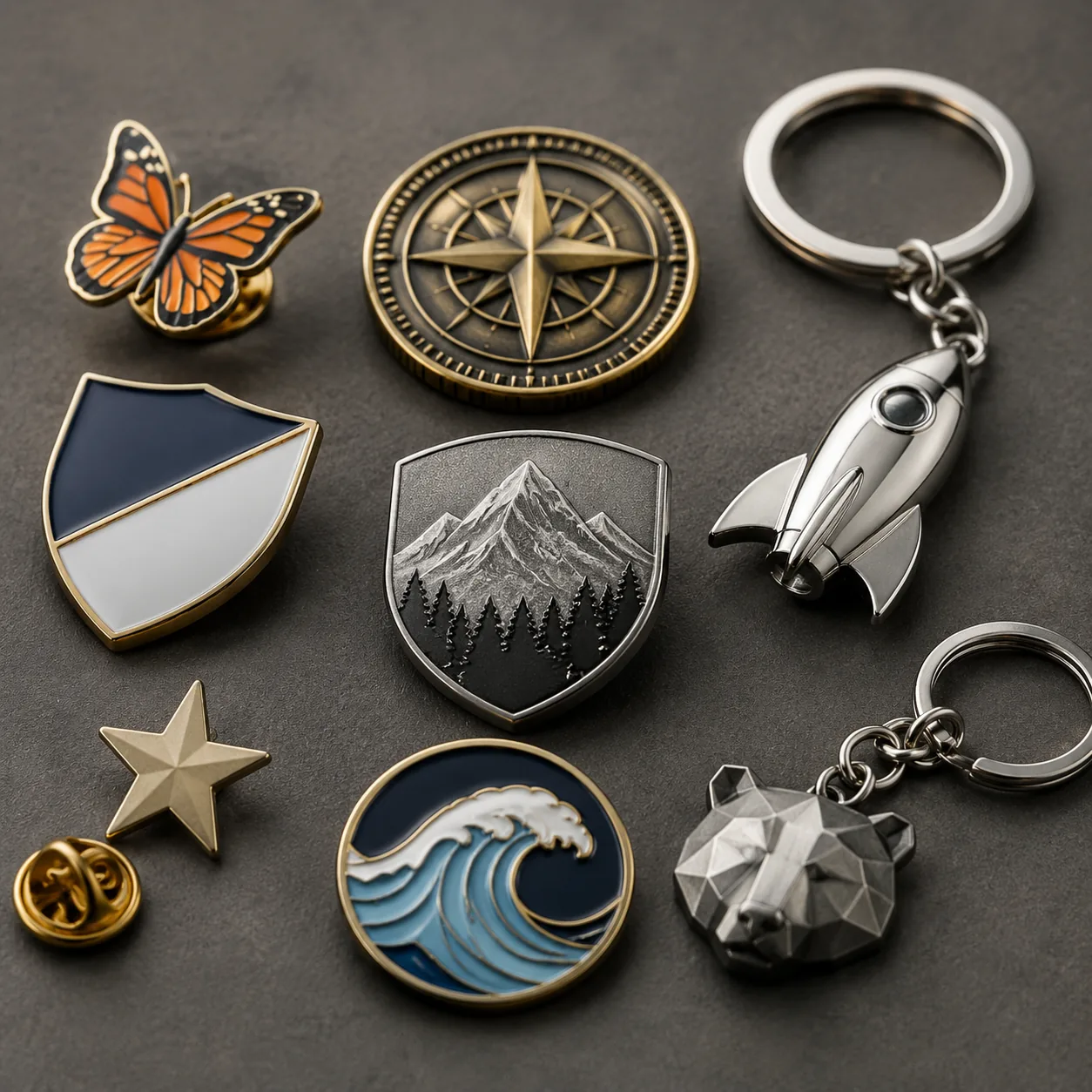
Rush orders usually fail in approvals and freight, not at the stamping press
Most event-driven pin and badge programs miss their in-hands date for administrative reasons rather than pure factory capacity. The usual pattern is consistent: 1 to 3 days disappear while the buyer clarifies missing RFQ data, converts raster art into vector, changes plating after proof approval, or adds backing cards after the sample is already made. On a compressed schedule, losing 48 to 72 hours in approvals is often more damaging than paying a 10% to 20% rush surcharge on production.
For 2026 trade-show programs, schedule backward from the required delivery point: venue advance warehouse, show-appointed contractor, 3PL, hotel, or local office. Ex-factory completion in Shenzhen, Zhongshan, or Dongguan is not the finish line. The order still needs final count, export carton packing, pickup booking, line-haul, customs clearance, and last-mile delivery. Typical door-to-door ranges are 3 to 5 calendar days for express courier, 5 to 8 days for airport-to-airport air freight plus clearance and local delivery, and 1 to 3 extra days if the venue requires check-in appointments, pallet labels, or dock windows.
A workable rush plan is disciplined, not heroic. Choose a low-risk construction, issue a production-ready RFQ, limit the project to one proof cycle, keep it to one physical sample round or waive the sample if the supplier is proven, freeze packaging before bulk starts, and pre-book freight before final packing. Under those conditions, a standard custom pin order can still move from RFQ to shipped bulk in about 15 to 21 calendar days, or 19 to 27 days delivered, depending on destination, customs handling, and whether a physical pre-production sample is required.
1) Pick the lowest-risk build for the time you actually have
If the event date is tight, start with the process that has the fewest unstable steps. Soft enamel iron pins and die-struck iron pins are usually the safest rush options because tooling, die stamping, nickel or black nickel plating, and manual color fill are mature processes with predictable output. Woven or embroidered patches are also manageable if the artwork is not too fine. Zinc alloy keychains remain feasible, but mold prep, gate cleanup, and thicker sections add variability. Imitation hard enamel, dual plating, mirror-polished recesses, spinner parts, sliders, hinges, glow pigment, pearl pigment, offset print plus epoxy, and mixed metal-acrylic assemblies all increase both defect risk and lead-time volatility.
Keep geometry inside standard production bands. For rush work, practical finished sizes are 25 to 40 mm for lapel pins, 45 to 60 mm for keychains, 45 to 57 mm for challenge coins, and 70 to 90 mm for embroidered patches. Stamped iron pins are commonly 1.2 to 1.5 mm thick before plating, zinc alloy keychains 2.0 to 3.0 mm, and coins 3.0 to 3.5 mm. Below about 0.25 mm line width, 0.30 mm enamel cell width, 0.60 mm bridge width at cutouts, or 0.80 mm text height, factories often have to simplify art. Those features increase the chance of enamel underfill, plating exposure at edges, weak bridges, or unreadable copy.
| Build option | MOQ tiers | Sample lead time | Bulk lead time | Typical FOB price | Rush suitability |
|---|---|---|---|---|---|
| Soft enamel pin, iron, 30 mm, 4 colors, butterfly clutch | 300 / 500 / 1000 pcs | 3-5 days | 7-9 days | USD 0.38-0.68 @500 pcs | High |
| Die-struck pin, iron, antique nickel, no color, 30 mm | 300 / 500 / 1000 pcs | 3-4 days | 6-8 days | USD 0.32-0.58 @500 pcs | High |
| Embroidered patch, 75 mm, merrow border, iron-on backing | 300 / 500 / 1000 pcs | 4-6 days | 7-10 days | USD 0.30-0.60 @500 pcs | Medium-high |
| Zinc alloy keychain, 50 mm, soft enamel, split ring | 300 / 500 / 1000 pcs | 4-6 days | 8-11 days | USD 0.78-1.32 @500 pcs | Medium |
| Imitation hard enamel pin, 30 mm, polished finish | 300 / 500 / 1000 pcs | 5-7 days | 10-13 days | USD 0.55-0.90 @500 pcs | Medium-low |
| Challenge coin, 50 mm, 2-sided, 3.5 mm thick, partial 3D relief | 200 / 300 / 500 pcs | 5-7 days | 10-14 days | USD 1.60-2.90 @300 pcs | Low |
If you have fewer than 28 total calendar days, the safest path is usually one standard soft enamel or die-struck pin with one plating finish, one standard attachment, no epoxy dome, and individual polybag or bulk pack only. The fastest project is rarely the one with the most overtime. It is usually the one with the fewest finishing steps, least artwork ambiguity, and lowest chance of reopening production after sampling.
2) Send an RFQ that can be quoted and built without assumptions
A rush RFQ should answer the supplier's risk questions on day one. Include finished size in mm, thickness, quantity by SKU, base material, plating finish, attachment type, color count, Pantone references if required, packaging method, target ship date, destination country, Incoterm, and whether the deadline means ex-works, FOB, airport delivery, or delivered. If any of those points are missing, the factory has to quote and schedule on assumptions, which makes both price and timeline less reliable.
Artwork should be vector in AI, EPS, or a layered PDF with cut line, metal line, and color callouts separated. Raster JPG or PNG may be enough for a budgetary quote, but not for fast production release unless the buyer also marks what can be simplified. On rush jobs, microtext, weak outlines, hidden gradients, and unclear cutouts burn the first 24 hours. If brand color matters, specify Pantone Solid Coated numbers and state whether a close visual match under D65 light is acceptable or whether the item must match existing print collateral side by side. That changes how aggressively the factory pushes color corrections.
- Quote at least three quantity tiers, such as 300, 500, and 1000 pcs, so MOQ economics and line capacity are visible immediately
- State acceptable substitutions in advance, such as rubber clutch instead of butterfly clutch or 25 mm split ring instead of 30 mm
- Lock packaging early: bulk pack, individual polybag, backing card plus bag, velvet pouch, or rigid gift box
- Ask for a same-day proof cutoff based on China time so artwork submitted before noon factory time can still be reviewed that day
- Declare whether split shipment is allowed if one SKU or one carton group finishes first
- Request a manufacturability review covering line width, cutouts, enamel pockets, bridge strength, and attachment placement
A strong RFQ asks for feasibility feedback, not just price. Ask the supplier to flag narrow bridges, high-risk cutouts, plating options that may run slower than shiny nickel, attachment locations that may let the pin rotate on fabric, and any packaging step that adds manual labor after final inspection. That review usually protects the schedule more than negotiating another USD 0.02 to 0.05 per piece.
3) Compare quotes by schedule credibility, not only unit cost
When quotes come back, compare process stability and calendar assumptions before comparing FOB cost. A 30 mm soft enamel iron pin at USD 0.38 to 0.68 FOB for 500 pieces is often the better show choice than an imitation hard enamel version at USD 0.55 to 0.90 if the flatter polished finish adds 2 to 4 production days and an extra polishing check. Likewise, a plain polybag at roughly USD 0.02 to 0.04 each is often smarter than a printed backing card plus bag at USD 0.08 to 0.15 each if card artwork, print proof, and hand insertion will slow release.
MOQ also affects the credibility of a rush promise. Many suppliers advertise 100-piece minimums, but rush lanes are usually more practical at 300 to 1000 pieces because tooling, plating racks, and color stations still need to be scheduled. Below 200 pieces, ask whether the order will run alone or be merged into a similar plating or enamel batch. If it depends on a combined batch, the promised lead time is inherently less dependable.
Clarify when the lead-time clock actually starts. Some factories count from artwork approval, some from pre-production sample approval, and some from deposit receipt. For an event order, ask for a broken schedule with days assigned to digital proof, die or mold prep, sample, sample transit, bulk production, final QC, packing, and ship-out. A statement like '10 days production' may exclude weekends, packaging, or sample time.
4) Keep the job to one proof cycle and one sample cycle
Rush projects are commonly lost in approval loops. The buyer approves the digital art, receives the sample, and then changes size, plating, copy, backing card layout, and attachment location at once. That can reopen tooling or trigger a second sample round, adding 3 to 6 production days plus transit. On a 21-day total window, that often consumes the entire freight buffer.
Use two approval gates only. First, approve the digital proof for die line, dimensions, Pantone references, copy, SKU identifiers, attachment position, and packaging layout. Second, use the physical sample to judge what cannot be verified on screen: plating tone, enamel fill level, edge finish, clutch fit, ring movement, embroidery density, and actual color appearance under office light or daylight. If the item is simple and the supplier is proven, some buyers waive the physical sample and approve a plated photo plus dimensioned proof, saving 2 to 4 days.
Make approvals measurable. For small stamped pins, working tolerances are commonly +/-0.20 mm on length and width, +/-0.10 to 0.15 mm on thickness, and modest shade variation versus Pantone because plating color and recessed enamel change perceived tone. Soft enamel normally sits slightly below the raised metal line. Imitation hard enamel is flatter and polished but needs a longer finishing window. If bulk inspection criteria are not already defined, AQL 2.5 for major defects and 4.0 for minor defects is a common baseline, with zero tolerance for critical defects such as wrong logo, wrong plating, wrong attachment, mixed SKUs in one inner pack, or incorrect carton labels.
5) Freeze the bulk specification before plating and packing start
Once the sample is approved, issue one consolidated bulk approval sheet rather than relying on email threads or chat messages. It should show the approved artwork revision, finished size, base material, thickness, plating finish, color count, attachment type, backing card version if any, packaging method, units per inner bag, units per master carton, carton dimensions, gross-weight target, and shipping marks. That single control document reduces drift between sales, production, plating, and packing teams.
Late changes hurt most when they affect plating or packing. Changing from shiny nickel to shiny gold can mean moving into a different plating queue. Switching from bulk pack to individual backing cards can add 1 to 3 days depending on whether the cards are printed, whether barcode labels are needed, and whether operators must hand-insert each unit. Adding epoxy dome, protective lacquer, magnetic backing, velvet pouch, or rigid gift box late is especially risky because those are usually end-of-line steps, not part of base production.
Ask for updates only at the production gates that matter: raw stamped or cast parts complete, post-plating appearance confirmed, post-color-fill complete, and final packed cartons ready for release. Too many ad hoc status requests create noise rather than control. What matters is whether the factory can confirm quantity, appearance, and packing accuracy at each gate before the shipment is handed over.
6) Match QC depth to order value, SKU count, and event risk
Not every rush order needs a third-party inspection, but every rush order needs a release rule. For a simple one-SKU run of 500 standard pins in polybags, a factory QC report with date-stamped photos, count summary, and carton-label photos may be enough. For multiple SKUs, executive gift sets, or premium coins above roughly USD 2.50 FOB each, a live remote inspection or formal pre-shipment inspection is easier to justify even if it adds 1 to 2 days.
| Order type | Recommended control | Typical added time | Key checks |
|---|---|---|---|
| 300-500 standard pins, 1 SKU, polybag | Factory final QC with photo set | 0-1 day | Plating finish, enamel fill, pin backs, count accuracy, carton marks |
| 500-2000 mixed pins or keychains, 2-5 SKUs | Remote live inspection plus count verification | 1 day | SKU segregation, attachment function, packaging orientation, count by inner pack |
| Premium coins or gift-boxed sets | Third-party pre-shipment inspection | 1-2 days | Surface defects, plating consistency, box fit, barcode and label accuracy |
| Urgent split shipment | Inspect first lot, release balance by agreed photos | 0-1 day | First-lot consistency, lot count, carton ID control, ship mark accuracy |
For metal items, practical checkpoints include plating consistency, exposed base metal on visible areas, burrs on edges, attachment alignment, clasp or split-ring function, epoxy coverage where specified, and barcode readability if labels are applied. If magnets are used, add a basic pull-force spot check. For premium pieces, also check plating thickness where relevant: decorative nickel is often in the low micron range, while flash gold finishes are thin and more cosmetic than wear-resistant. If the product will be handled repeatedly at a booth, lacquer can reduce short-term scratching, but it should not be presented as the same thing as heavy-duty abrasion resistance.
7) Book freight before production finishes and protect a real buffer
Production is only half the timeline. If the total project window is under 30 calendar days, assume express courier or air freight from the start. Practical planning ranges are 3 to 5 days for express courier, 5 to 8 days for airport air freight plus customs and local delivery, and longer if consignee paperwork, tax ID, broker instructions, or show-site delivery rules are incomplete. Sea freight is rarely realistic for a genuine trade-show rush unless the route is short and the in-hands date is flexible.
Carton planning matters because metal products are dense. Challenge coins can push cartons above efficient courier weight thresholds, so many buyers cap cartons at roughly 12 to 15 kg gross to reduce handling damage and surcharge exposure. Pins are lighter, but rigid gift boxes drive volumetric weight, which can exceed actual weight on express service. A low FOB unit cost can become expensive after dimensional-weight billing if packaging is oversized.
If the deadline is tight, agree split-shipment logic before bulk production ends. A practical example is shipping the first 300 pieces by express for booth opening while the remaining 700 move by standard air service. That lowers total failure risk, protects the launch date, and is often cheaper than sending the full order at the highest express rate.
What to lock today if the event date is already close
Count backward from the required delivery date at the actual receiving point, not from show opening day. Reserve at least 5 to 7 calendar days as freight and customs buffer even on air shipments. If that leaves fewer than 15 production days, simplify immediately: standard size, one plating finish, one attachment, one SKU if possible, simple packaging, and no moving parts, rigid gift boxes, or secondary decorative processes.
Then send one complete RFQ to two or three qualified suppliers rather than ten loosely briefed factories or traders. Ask each for the same decision set: fastest feasible process, sample lead time in days, bulk lead time in days, MOQ tiers, FOB price by quantity, packaging impact in days, carton count estimate, estimated carton weight, and recommended freight method. You are comparing realistic schedules with defined assumptions, not collecting optimistic promises.
Finally, assign one internal approver who can release the proof and sample the same day they arrive. That discipline prevents more missed trade-show deadlines than any rush fee. With a standard 30 mm soft enamel iron pin, vector artwork, one proof cycle, one sample cycle or waived sample, simple polybag packing, and air shipment, moving from RFQ to shipped bulk in about 15 to 21 days remains realistic. Without same-day approvals and a freight buffer, even a capable factory will struggle to save the event date.
Have a project? Send your artwork and target quantity and we’ll reply with a detailed quotation within 12 working hours.
Ready to get this made?
Send your sketch, target quantity and ship-date. Detailed quotation in 12 hours.



