Top 5 Proofing Methods for Custom Pins Before Mass Production
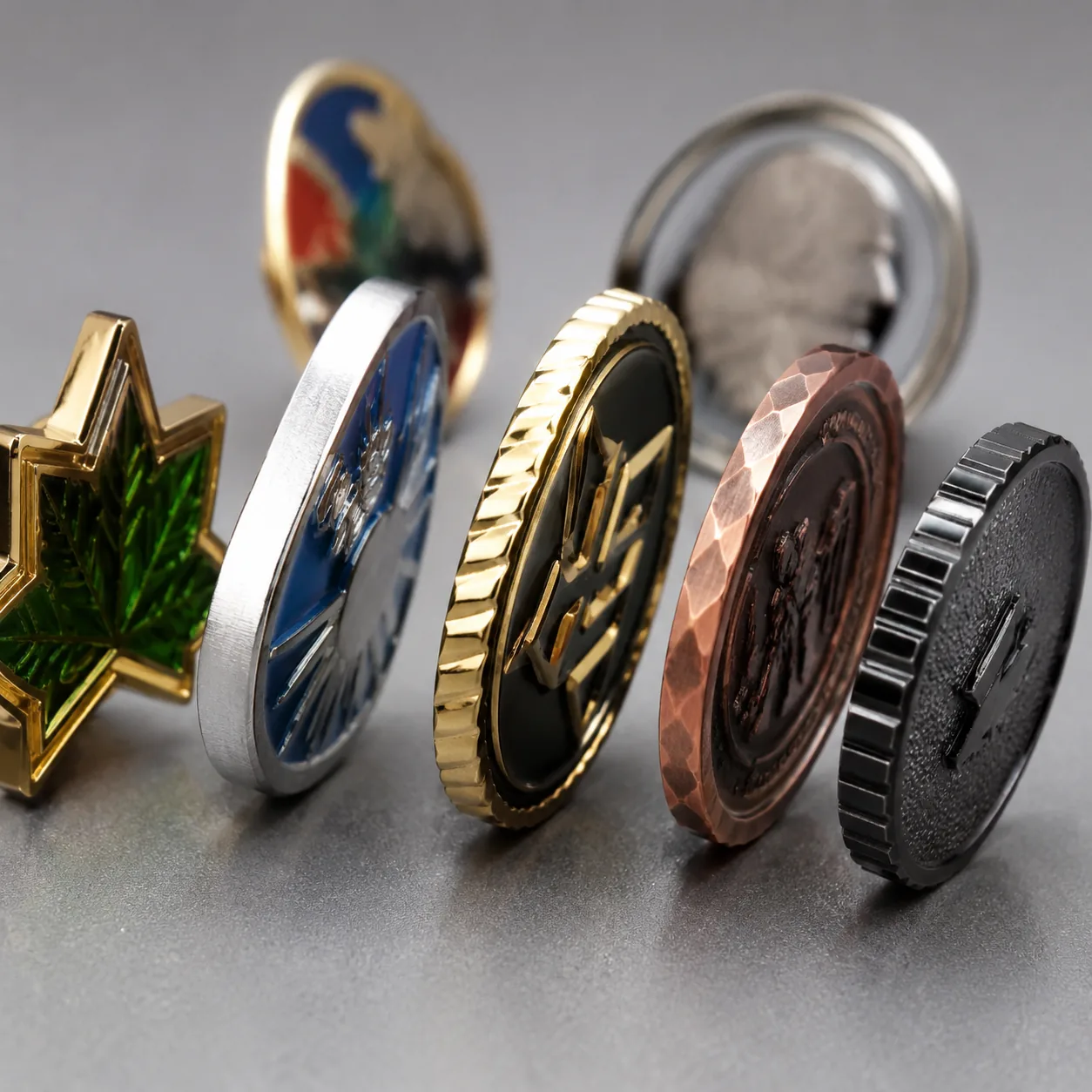
Top 5 proofing methods ranked by defect prevention, lead time, and sample cost
Most custom pin failures do not start in bulk production. They start earlier, when the buyer approves a sample stage that does not control the real risk on the order. A digital proof can confirm artwork scale, line width, Pantone callouts, and tooling intent, but it cannot show actual plating tone or enamel level. A bare-metal sample can prove the shape, bridges, relief, and post geometry, but not the commercial finish. A full finished sample can confirm what the customer will actually see, but it costs more time and money. A first-article photo or video check can catch drift during mass production, while a retained production sample protects future reorders from slow spec creep. These methods are complementary, not interchangeable.
This guide covers the mainstream custom pin market: 25 to 45 mm finished size, 1.2 to 2.0 mm thickness, stamped iron, brass, or die-cast zinc alloy, with soft enamel, imitation hard enamel, die-struck, screen print, or offset print decoration. Typical MOQ is 100 to 300 pieces per design, with standard 2026 FOB production pricing often around USD 0.34 to 1.15 per piece at 300 to 1,000 pieces for conventional designs. Basic die charges commonly run USD 45 to 90 for stamped pins, USD 75 to 145 for die-cast zinc, and USD 95 to 180 for moving parts such as spinners, danglers, or hinged constructions.
Sampling requirements increase quickly when any of the following are present: metal lines below 0.25 mm, text below 5 pt after scaling, more than 6 fill colors, transparent or glitter enamel, offset print, epoxy domes, antique plating, dual plating, cutouts, sliding or spinning mechanisms, magnet backs, or customer-facing retail carding. In those cases, the right comparison is not sample cost versus unit price. It is sample cost versus die remake, rework, delayed launch, split shipment, or expedited air freight.
1. Digital production proof is the baseline control for most standard orders under 500 pcs
A digital production proof should be the default first approval for almost every custom pin order. It is the fastest and cheapest way to prevent incorrect tooling, wrong dimensions, missing back details, and packaging mismatches before the factory starts die cutting or mold work. For standard programs, suppliers usually issue a production proof within 1 to 2 working days after artwork receipt. Cost is often included with the quote or charged at roughly USD 0 to 20 before deposit.
A production-proof file is only useful if it functions as a manufacturing document rather than a marketing mockup. It should show finished size in mm, metal thickness, base material, plating finish, Pantone references, raised and recessed areas, post quantity and exact location, backstamp artwork, attachment type, backing card dimensions, packing method, and export carton quantity. On a routine 30 mm stamped iron soft enamel pin, 1.5 mm thick, shiny gold or black nickel, 4 to 6 colors, and one or two butterfly clutches, that single file often prevents the most expensive early mistakes: wrong scale, text below process limits, borders too thin for filling, omitted bleed for print, incorrect post spacing, or card holes that conflict with post placement.
Add measurable process limits directly on the proof. For stamped iron and brass pins, practical tolerances are commonly plus or minus 0.15 mm on overall size, plus or minus 0.10 mm on thickness, and plus or minus 0.50 mm on post position. Minimum metal line width should usually be held at 0.20 to 0.25 mm for soft enamel and 0.25 mm or above for antique finishes, where recess definition can soften after plating. For die-cast zinc alloy, outside-profile tolerance is more often plus or minus 0.20 mm. If screen print is involved, specify registration tolerance of plus or minus 0.10 to 0.15 mm. Without those figures, the digital proof is incomplete and too open to interpretation.
Use digital-only approval when the order is straightforward: standard shape, no moving parts, no tight cutouts, no unusual finish, and no premium retail presentation. On a 300-piece order priced around USD 0.50 to 0.85 FOB each, that is usually the most efficient control. The weakness is obvious: no digital file can verify actual gold tone, enamel underfill, burrs, polish level, clutch retention, or print sharpness on the metal surface.
2. Bare-metal sample is the fastest way to verify shape, bridges, relief, and post geometry
A bare-metal sample, sometimes called an unfinished die-struck sample or raw-metal sample, is the best option when the main question is whether the design can be manufactured cleanly as drawn. It allows the buyer to inspect outline accuracy, openwork, bridge strength, relief definition, edge finish, post placement, and overall flatness before plating or enamel hides structural issues. Typical lead time is 5 to 7 calendar days after proof approval for standard stamped pins and 6 to 9 days for die-cast shapes. Typical sample cost is USD 25 to 60 plus courier, with complex 3D shapes or large sizes often running USD 70 to 95.
This stage matters on long silhouettes, narrow bridges, internal cutouts, two-post layouts, and pieces with sharp internal corners. For example, a 38 mm stamped iron pin with two cutouts and a 1.2 mm bridge may look acceptable on a PDF proof but distort during stamping, edge grinding, or post soldering. In practice, bridges below about 1.2 mm on stamped iron or brass and below about 1.5 mm on die-cast zinc should be physically confirmed. The same applies to long horizontal designs where a single post will allow rotation, or to retail-carded pins where post spacing must hold the product level on a 300 to 400 gsm card.
Inspection targets should be numeric. Reasonable acceptance points for a bare-metal sample are burr height under 0.05 mm on exposed edges, flatness within 0.30 mm across the longest axis for a two-post piece, and post lean no more than 3 degrees from perpendicular. If the sample uses soldered posts, check solder spread and pull strength; buyers commonly require a post pull test of at least 3 kgf to 5 kgf, depending on pin size and post diameter. For magnet backs, ask for a simple retention check against 0.8 to 1.0 mm card stock or typical garment fabric. What the bare-metal sample does not show is finished appearance: no enamel surface, no antique wash contrast, no transparent color clarity, and no plating hue.
3. Full finished sample is the approval stage that best predicts what the customer will receive
A full finished sample is the most reliable pre-production approval tool when appearance, presentation, or brand consistency matters enough that a digital proof leaves material uncertainty. The sample should follow the intended production route exactly: same base metal, same plating type, same enamel system, same print process, same posts and clutches, same card stock, same polybag, and same assembly sequence. Typical lead time is 7 to 12 days after final artwork approval for straightforward builds and 10 to 15 days for spinners, sliders, danglers, epoxy domes, offset print, or custom folded retail cards. Sample cost is commonly USD 45 to 120 plus courier, with premium mechanisms or presentation packs reaching USD 150 to 180.
This is the stage that verifies what end customers actually notice. It confirms soft enamel fill level, imitation hard enamel flushness, plating brightness, antique recess contrast, print sharpness, epoxy clarity, post balance, and the final look of the pin on the card. Consider a 32 mm imitation hard enamel pin mounted on a 90 x 55 mm, 350 gsm coated card with a euro slot. A finished sample can confirm that the two posts keep the pin level, the card hole does not tear during packing, the card print remains centered after assembly within plus or minus 1.0 mm, and the total pack thickness still fits the planned carton density, for example 500 sets per export carton with a carton gross weight below 12 kg.
Use measurable finish targets instead of vague terms such as premium gold or smooth enamel. Decorative nickel, gold-tone, black nickel, or antique plating on lapel pins is typically applied in the range of roughly 0.03 to 0.08 microns for standard cosmetic appearance, with tighter branded programs sometimes requesting the upper end of that band for better lot-to-lot consistency. For soft enamel, underfill up to about 0.08 to 0.10 mm below the metal border is generally acceptable if the fill is even and free from contamination. For imitation hard enamel, the face should be near-flush with the metal, with no obvious pits, pinholes, polishing burn, or color drag when viewed at 30 to 40 cm under neutral 5000 K to 6500 K light. For screen or offset print, define acceptable registration shift and edge sharpness in writing.
The tradeoff is schedule. On a 100-piece event order with a fixed in-hand date, a finished sample plus courier can consume 4 to 7 days of a short schedule. It is most justified when the pin is sold at retail, carries strict brand standards, uses a nonstandard finish, or has enough order value that a remake or re-carding would clearly cost more than the sample stage.
4. Photo or video first-article approval is useful when the spec is locked and transit time is the bottleneck
Photo or video first-article approval is a practical production-stage control when the factory already has a complete approved spec and the buyer cannot absorb courier time for another physical sample. The supplier produces the first finished pieces from the line, then sends high-resolution photos or short video showing front, back, side profile, posts, clutches, backing card, polybag, barcode label, and outer carton markings. With a locked spec, this step can detect obvious production drift within 24 to 48 hours.
It is most effective on repeatable constructions where the remaining questions are narrow: whether black nickel is too light, whether glitter has migrated across fine borders, whether a screen print looks soft, whether the card is centered, whether the rubber clutch color is correct, or whether the export carton count matches the PO. On rush orders with a total production window of 10 to 15 days, avoiding 3 to 5 days of courier transit can be the difference between standard air shipment and costly express freight or a partial split shipment.
Its limitation is inspection sensitivity. Photos rarely show micro-scratches, burrs below 0.05 mm, slight post lean, small epoxy voids, or subtle plating color shifts caused by lighting. If you use first-article approval, pair it with written QC criteria and a known inspection plan. AQL 2.5 for major defects and AQL 4.0 for minor defects is a common baseline for custom pins, especially for promotional merchandise. Define face-side criteria clearly: no exposed base metal in enamel areas, no color contamination crossing borders, no underfill deeper than 0.10 mm on standard soft enamel, no visible print blur at normal viewing distance, and card alignment within plus or minus 1.0 mm unless the design requires tighter control.
5. Retained production sample is essential for reorders, claims, and annual replenishment
A retained production sample is an approved physical piece pulled from the actual bulk lot, identified to the PO and artwork revision, and kept as the benchmark for future reorders or quality claims. It ranks fifth only because it does not prevent first-order mistakes on its own. For repeat business, however, it is one of the most effective controls available because it stops gradual drift between lots.
Reorders placed 3 to 12 months later often shift in plating tone, enamel height, print density, card placement, or even post spacing when the only reference is an old mockup or an email thread. Small changes in plating chemistry, enamel batch, subcontracted card printing, polishing media, or assembly setup can all become visible at retail. A retained sample gives both buyer and factory a shared physical standard. That matters most on annual replenishment programs, distributor orders, licensed merchandise, and any SKU that must match an existing display.
The retained sample should be fully traceable. The label should include PO number, design revision, size, thickness, base metal, finish, attachment type, card code, inner-pack quantity, and carton quantity. A typical label would read: 30 mm stamped iron soft enamel pin, 1.5 mm thick, shiny gold-tone plating, 2 butterfly clutches, 90 x 55 mm card, 100 pcs per inner bag, 500 pcs per export carton. A sound practice is to have the supplier keep one retained sample on file and place one sealed reference unit in the top carton or with the shipping documents.
Comparison table: what each proofing method controls and when it earns the cost
| Proofing method | Typical lead time | Typical cost | Best for | Main blind spots | Recommended order profile |
|---|---|---|---|---|---|
| Digital production proof | 1 to 2 working days | Included or USD 0 to 20 | Artwork scale, dimensions, line widths, post placement, backstamp, card layout | Real plating tone, enamel surface, tactile defects, actual print finish | 100 to 500 pcs, 25 to 35 mm standard pins, simple finishes |
| Bare-metal sample | 5 to 7 days stamped; 6 to 9 days cast | USD 25 to 60 plus courier | Cutouts, bridge strength, relief depth, flatness, post geometry, manufacturability | Color, plating, fill level, print effects, epoxy appearance | Openwork shapes, thin bridges, long silhouettes, two-post pins |
| Full finished sample | 7 to 12 days standard; 10 to 15 days complex | USD 45 to 120 plus courier | Final appearance, plating, enamel finish, print quality, retail packaging | Adds schedule and cost; still must be held by in-line QC during bulk production | Retail merchandise, premium launches, special plating, imitation hard enamel |
| Photo or video first article | 24 to 48 hours after first pieces | Usually included | Fast check against locked production spec before full packing | Micro-scratches, exact color match, burrs, clutch feel, subtle post lean | Rush orders where transit time is the main constraint |
| Retained production sample | No added production delay | Minimal or included | Reorder consistency, dispute reference, benchmark for future lots | Does not prevent first-order tooling or appearance mistakes | Any buyer planning repeat POs or annual replenishment |
How to choose the right route by MOQ, complexity, and remake exposure
For a simple order below roughly USD 300 FOB total, such as 100 to 300 pieces of a conventional 30 mm soft enamel pin with standard carding and no special effects, a detailed digital production proof is usually enough. In that range, a USD 75 finished sample can consume too much of the project budget. The better control is a complete approval sheet that locks dimensions, tolerances, Pantone references, post locations, backing specifications, and inspection criteria before tooling starts.
Move up one level when the design includes any two of these factors: more than 6 colors, line widths below 0.25 mm, transparent or glitter enamel, offset or screen print, unusual silhouette, spinner or dangler hardware, antique or matte plating, two-post construction, or retail resale use. Add a bare-metal sample when geometry is the main risk. Add a finished sample when appearance is the main risk. If both risks are high, use both stages. That is common on 40 mm and larger designs with openwork plus premium presentation.
A simple decision rule is to compare sample cost with probable failure cost. If a 500-piece order is quoted at USD 0.68 FOB each, goods value is USD 340 before freight. A partial remake, re-carding, replacement of weak clutches, or express shipment can easily add USD 180 to 350. If the item supports a launch date or retail drop, delay cost can exceed the goods value. In that context, a USD 50 bare-metal sample or an USD 85 finished sample is commercially justified.
Approval checklist to send with the PO
- State finished size in mm, thickness in mm, and tolerance for each dimension, for example plus or minus 0.15 mm on size and plus or minus 0.10 mm on thickness.
- Specify base metal and process: stamped iron, stamped brass, die-cast zinc alloy, photo-etched brass, stainless steel, or another agreed route.
- List plating finish and appearance target, including shiny, matte, antique, dual-tone, black dye, or sandblast effect, and request decorative plating thickness when appearance consistency matters.
- Name every Pantone reference or approved color target and define acceptable variance under standard lighting if color match is critical.
- Confirm attachment type, quantity, and exact location from edge or centerline; for two-post pins, require spacing in mm.
- Define decoration method clearly: soft enamel, imitation hard enamel, die-struck no fill, screen print, offset print, epoxy dome, glitter, or transparent fill.
- Lock packaging details: backing card size, paper weight, coating, hole style, polybag type, barcode label, inner-pack quantity, carton quantity, and shipping marks.
- Set inspection criteria in writing, such as AQL 2.5 major and 4.0 minor, and list the top rejectable defects for face side, posts, clutches, and packaging.
- Require first-article photos of front, back, edge, and packaging before full packing if no couriered finished sample is ordered.
- Request one retained production sample labeled to the PO and artwork revision for reorder matching.
For most first orders, the practical sequence is digital proof first, then either a bare-metal sample or a full finished sample if the design carries real structural or appearance risk, then first-article photo approval during production, followed by one retained production sample for future matching. That sequence covers the failure points behind most disputes without forcing every project into the cost and delay of full physical sampling.
The operational requirement behind all five methods is a single consolidated approval sheet. Before tooling starts, require one document covering artwork, dimensions, tolerances, materials, plating, color references, hardware, packaging, and QC limits. Once those details are scattered across multiple emails, spreadsheets, and image files, production drift becomes much more likely. Good proofing is not about adding more sample stages. It is about using the stage that actually controls the risk on the order in front of you.
Have a project? Send your artwork and target quantity and we’ll reply with a detailed quotation within 12 working hours.
Ready to get this made?
Send your sketch, target quantity and ship-date. Detailed quotation in 12 hours.



