Top 5 Backing Card Designs for Custom Pins in 2026: A Buyer's Spec Comparison
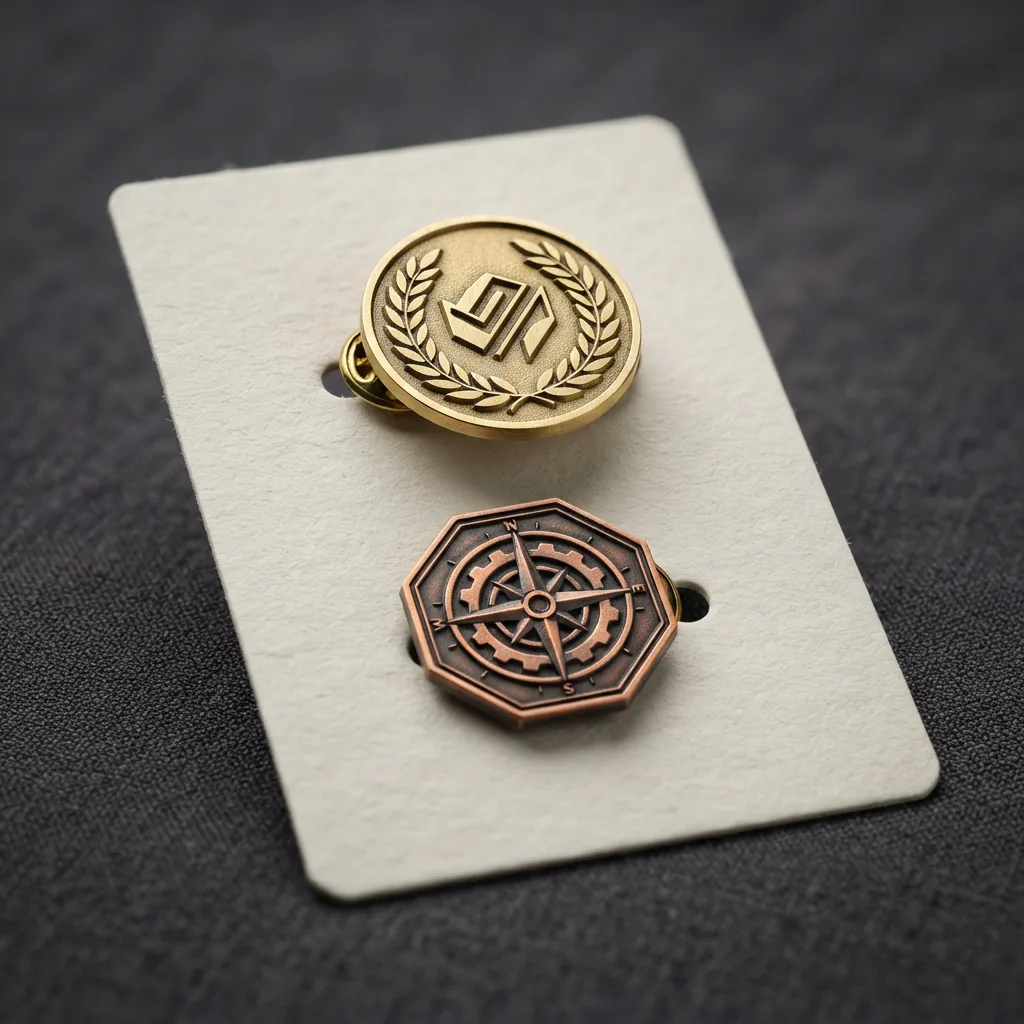
Why Backing Card Specs Drive Cost, Damage Rate, and Approval Speed
On most custom pin programs, the metal pin gets engineering attention first: plating, enamel line width, post count, and clutch type. The backing card is often approved from artwork alone. That is usually where avoidable delays begin. If the card is too light, it can curl after lamination, humid storage, or 30-45 days of ocean transit. If the surface is too abrasive, polished gold, nickel, or black nickel can scuff inside the polybag. If hole spacing is off by even 0.5 mm on a two-post pin, assembly slows down and tear-out risk rises.
For procurement, the card affects three measurable outcomes: packaged unit cost, presentation on arrival, and pre-shipment reject rate. Across 2024-2025 commercial runs, the most common backing-card defects were bent cards, color mismatch versus approved brand references, off-position holes or slots, die-cut burs, and dimensions that left pin points or clutches exposed. These are low-cost failures per unit, but they routinely add 7-14 working days when cards have to be reprinted, and 14-21 days when a new die line or finish is involved.
This comparison is built for B2B buyers who need numbers they can put into an RFQ: stock grade, caliper, coating type, realistic MOQ tiers, FOB China pricing, lead times in working days, print limits, and inspection tolerances. The benchmarks assume standard single-pin cards in the 55 x 85 mm to 70 x 90 mm range, produced around Yiwu, Wenzhou, or nearby East China packaging clusters.
How the Five Options Were Ranked
The five formats below are ranked on landed packaging cost, MOQ flexibility, lead time after artwork sign-off, shipping durability, and brand reproduction accuracy. Scores run from 1 to 5. Pricing is quoted as typical USD FOB China per 1,000 cards and excludes the metal pin, unusual inserts, custom blister shells, or manual assembly premiums. Figures reflect normal offset or UV print conditions on standard shapes; oversized cards, foil, embossing, sequential numbering, and complex die-cuts will push both price and schedule upward.
- Cost benchmark: FOB USD per 1,000 cards at common tiers such as 500, 1,000, and 5,000 pieces.
- MOQ: the practical factory minimum before setup charges distort the unit price.
- Lead time: working days from final artwork approval and deposit; transit is excluded.
- Durability: resistance to edge crush, humidity warp, hole tear-out, and surface abrasion during bagging and carton compression.
- Brand control: ability to hold solid colors, reverse text, QR codes, and PMS-matched logos. For branded programs, specify Delta E <= 2.0 to approved references; for routine promo runs, Delta E <= 3.0 is more achievable.
- Inspection baseline: AQL 1.5 major / 4.0 minor is standard commercial practice; premium retail programs often tighten to AQL 1.0 major / 2.5 minor.
- Core dimensional controls: caliper tolerance usually +/-0.03 mm for paperboard and +/-0.05 mm for PVC; hole position tolerance typically +/-0.50 mm, tightened to +/-0.30 mm for two-post center spacing.
1. Matte Coated Paperboard: Best Baseline for Cost, Speed, and Broad Sourcing
Matte coated paperboard remains the default for event pins, employee-recognition pins, museum gift-shop programs, and mainstream promotional runs. The common specification is 300-400 gsm C1S or C2S board, with finished caliper around 0.36-0.48 mm. In practice, 350 gsm C2S with aqueous matte coating on both sides is the most stable commercial spec because it prints cleanly, keeps setup simple, and is available from nearly every packaging vendor that supports enamel pin factories.
Typical FOB pricing at 55 x 85 mm is $32-$58 per 1,000 pieces at a 500-piece MOQ, dropping to roughly $24-$36 per 1,000 at 5,000 pieces when artwork is straightforward and the die line is standard. Lead time is usually 5-7 working days, or 7-9 if back-side print, spot PMS, or barcode verification is required. This is also the easiest format to replenish fast because printers commonly hold compatible stock in-house.
The main weakness is surface and stiffness performance under friction and compression. Matte-coated board can still show rub marks if units shift in transit, especially against highly polished plating. It also creases faster than laminated stock when inners are overpacked or when stack height exceeds the board's compression tolerance. For commercial use, write in 350 gsm minimum, caliper tolerance of +/-0.03 mm, two-side seal coat, hole diameter tolerance of +/-0.10 mm, and maximum warp of 3 mm measured across the card diagonal at final inspection.
Best fit: budget-sensitive runs, replenishment programs, convention or event giveaways, and standard retail packs where speed and cost matter more than premium surface effects.
2. Gloss Coated Card with UV or Film Lamination: Strongest All-Around Retail Option
For shelf presentation, gloss-coated board with full UV or gloss film lamination is usually the most balanced choice. Standard stock is 350-400 gsm coated board with finished thickness of about 0.42-0.55 mm after coating or lamination. This format holds dense blacks, bright reds, gradient backgrounds, and fine reverse type better than kraft or textured stocks, and it usually gives the lowest scuff-related reject rate on branded consumer packaging.
FOB pricing typically lands at $52-$88 per 1,000 pieces at 1,000 units, with larger runs around $40-$62 per 1,000 at 5,000 pieces. Lead time is normally 7-10 working days. If a project uses exact brand colors, confirm whether the supplier is running true PMS spot inks or CMYK simulation only. With approved hard-copy references, Delta E <= 2.0 is realistic on stable spot colors; for multicolor CMYK imagery, a more practical target is <= 2.5 to 3.0.
The technical advantage is lower moisture uptake and better abrasion resistance. That matters when cards are staged loose before polybagging or when cartons see repeated handling at fulfillment centers. The tradeoff is process sensitivity. Full UV can micro-crack on aggressive folds, and gloss film can reduce writability for limited-edition numbering or QA marks. If labels will be added later, test sticker adhesion and peel cleanly on the exact laminate. For retail programs, add registration tolerance of +/-0.20 mm on centered logos and rub resistance standards such as no visible front-face ink loss after 20 dry rub cycles with moderate hand pressure.
Best fit: licensed merchandise, brand-store packs, gift-with-purchase programs, and any run where packaging color fidelity has to support the selling price.
3. Kraft Board: Useful for Natural Branding, but the Least Forgiving Technically
Kraft board is chosen for eco-positioned, outdoor, artisan, or low-ink brand aesthetics. Typical material is 250-350 gsm unbleached kraft, with caliper around 0.32-0.46 mm depending on fiber mix and recycled content. FOB price is attractive at $28-$48 per 1,000 pieces, with 500 pieces as a realistic MOQ and 4-7 working days lead time on simple one- or two-color print.
The cost advantage comes with print and stability limits. Because the base stock is brown and more absorbent, CMYK output shifts visibly and small type fills in sooner than on coated white board. As a working rule, avoid fine gradients, flesh tones, and type below 6 pt unless you have a physical proof on the actual stock. White ink can improve contrast, but it adds cost and often needs two hits to avoid show-through, which lengthens production and still will not match the crispness of coated board.
Kraft is also the weakest option for humid routes unless sealed on both sides. On 30-45 day sea shipments, unsealed kraft can bow, soften around the holes, and transfer fiber dust onto the pin finish. It is a poor choice for heavy pins above about 15-20 g, especially one-post designs where leverage concentrates at a single tear point. If you still want kraft for export retail, specify 300 gsm minimum, both-side varnish, hole edge integrity with no visible feathering, liner bags inside export cartons, and final-inspection warp not exceeding 3 mm diagonally.
Best fit: eco-forward brands, simple one-color graphics, outdoor themes, and designs where the substrate color is part of the branding rather than something the print has to overcome.
4. Velvet or Soft-Touch Laminate Card: Premium Tactile Finish with Tighter Process Control
Velvet, suede, and soft-touch laminated cards are premium formats used for collector drops, executive gifts, and boxed sets where the card itself is part of the perceived value. The usual construction is 300-400 gsm board with a soft-touch film on the front, giving a finished thickness of roughly 0.50-0.65 mm. Some suppliers offer heavier flocked surfaces up to about 0.72 mm, but those are less common because they are harder to keep clean during assembly.
Pricing is materially higher than standard board: about $115-$210 per 1,000 pieces FOB at 1,000 units, with lead time typically 10-14 working days. Decoration is usually kept simple: foil stamp, blind deboss, spot UV over matte, or limited spot-color print. This format is not well suited to dense full-color artwork or fine halftones because the film texture softens edge definition and can flatten contrast.
The practical benefit is tactile presentation and lower direct abrasion against polished metal surfaces. The practical risk is contamination and handling marks. Soft-touch surfaces show finger oils more readily than gloss stocks, and flocked finishes can attract lint. For premium orders, units should be polybagged individually, and boxed sets should include an interleaf, tray, or cavity to prevent foil logos from rubbing. Inspection language should explicitly cover surface contamination, visible bald spots in flock or film, foil registration within +/-0.30 mm, and no pressure dents visible at 500 mm viewing distance under standard light.
Best fit: anniversary pins, limited editions, premium corporate gifting, and collector sets where tactile finish supports a higher retail or presentation value.
5. Rigid PVC Card: Highest Durability and Best for Functional, Reusable Programs
Rigid PVC is the most durable substrate in this group. It is usually produced at 0.50 mm, 0.76 mm, or 0.80 mm thickness, with 0.76 mm being the common card-like specification for membership or credential-style packs. It supports full CMYK print, spot colors, signature panels, sequential numbering, variable QR codes, and some functional add-ons such as barcodes or magnetic features depending on the converter's line capability.
Typical FOB pricing is $145-$260 per 1,000 pieces, with MOQs usually starting at 2,000 units because of setup economics. Lead time runs 12-18 working days, and longer if variable data, scratch panels, or multi-stage finishing is required. Print sharpness is strong, and the substrate is waterproof, tear-resistant, and structurally stable in long transit or high-handling environments.
The limitations are cost, sustainability concerns, and fit precision. PVC will not flex enough to mask poor slot geometry, so slot width, corner radius, and retention force need to be approved from a real sample rather than a drawing alone. If the card uses a slot or pocket instead of standard pin holes, specify dimensions to +/-0.10 mm and test insertion/removal over multiple cycles. For cards carrying QR codes, require scan verification before and after abrasion testing so the code remains readable after handling. This format only makes sense when the backing card has a second use or needs to survive far beyond initial sale.
Best fit: membership packs, loyalty cards with removable pins, challenge-coin or multi-pin sets, and programs where the carrier card is meant to remain functional after the pin is removed.
Spec Comparison Table for RFQs
| Option | Common Material Spec | Finished Thickness | FOB Price per 1,000 (USD) | Practical MOQ | Lead Time (working days) | Durability | Brand Reproduction |
|---|---|---|---|---|---|---|---|
| 1. Matte coated paperboard | 300-400 gsm C1S/C2S, usually 350 gsm | 0.36-0.48 mm | $32-$58 | 500 | 5-7 | 3/5 | 4/5 |
| 2. Gloss card + UV/lamination | 350-400 gsm coated board | 0.42-0.55 mm | $52-$88 | 1,000 | 7-10 | 4/5 | 5/5 |
| 3. Kraft board | 250-350 gsm unbleached kraft | 0.32-0.46 mm | $28-$48 | 500 | 4-7 | 2/5 | 2/5 |
| 4. Velvet / soft-touch laminate | 300-400 gsm board + soft-touch film | 0.50-0.65 mm | $115-$210 | 1,000 | 10-14 | 4/5 | 3/5 |
| 5. Rigid PVC card | 0.50 / 0.76 / 0.80 mm rigid PVC | 0.50-0.80 mm | $145-$260 | 2,000 | 12-18 | 5/5 | 5/5 |
Three Failure Points to Lock Before Sample Approval
The first failure point is card geometry. Buyers often size cards by appearance instead of protection envelope. For a single pin, leave at least 8-10 mm from the furthest pin edge to every card edge; for larger two-post pins or bulky rubber clutches, 12-15 mm is safer. A 25 mm round pin may fit on a 45 x 45 mm card, but production usually works better at 50 x 70 mm or 55 x 85 mm because the clutch stays within the protected footprint and there is still room for branding and barcodes.
The second is attachment geometry. Hole position should be referenced from the actual pin-post centerline, not from the visual center of the card. Standard punched hole diameter for butterfly clutch posts is often 0.9-1.2 mm, but actual post diameters vary by factory and plating buildup. For two-post pins, center-to-center tolerance should usually be held within +/-0.30 mm. A basic 2D dimensioned drawing with X-Y coordinates prevents most fit failures and is faster than revising artwork after samples come back.
The third is transit and inspection language. Unsealed paperboard can warp above about 60-65% RH, and cards packed too tightly can crush at the corners or split around the holes. For export orders, specify front and back coating, maximum bow or curl of 3 mm over the diagonal, no delamination at edges, and no die-cut burs visible from 500 mm. Also state your defect baseline clearly: color outside approved Delta E tolerance, exposed raw edges, hole tear-out, front-face scratches, and registration drift beyond the approved limit should all count in the AQL checklist.
RFQ Checklist: What to Put in Writing
A usable RFQ treats the backing card as a controlled component, not just a layout file. The more premium the program, the less room there is for assumed specifications.
- Material and gauge: exact substrate, gsm or thickness, coated or uncoated, recycled-content target if relevant.
- Finished size: width x height in mm, corner radius, hang-hole style, and whether dimensions are before or after lamination.
- Attachment geometry: hole diameter, slot dimensions, X-Y hole coordinates, center spacing, and tolerance.
- Print construction: CMYK, PMS spot colors, white ink, foil, emboss/deboss, barcode, QR code, and front/back coverage.
- Color standard: approved physical reference, Delta E target, and whether wet proof, digital proof, or hard-copy print proof is required.
- Finish and durability: matte varnish, aqueous coat, UV, gloss film, soft-touch film, and required rub or humidity performance.
- Inspection standard: AQL level, warp limit, registration tolerance, edge quality, contamination standard, and visible-scratch criteria.
- Packing method: assembled or separate, individual polybag yes/no, stack count per inner carton, desiccant requirement, and carton compression limit.
For most B2B pin orders, the safest default remains 350 gsm coated board with protective coating on both sides, a standard size such as 55 x 85 mm, and AQL 1.5 major / 4.0 minor. Move up to gloss UV or gloss lamination when color fidelity and scuff resistance matter. Use soft-touch only when tactile presentation justifies the cost and handling controls. Use PVC only when the card has a functional second life or must withstand repeated use. That gives you a backing-card spec matched to the job instead of a generic artwork file that creates rework later.
Have a project? Send your artwork and target quantity and we’ll reply with a detailed quotation within 12 working hours.
Ready to get this made?
Send your sketch, target quantity and ship-date. Detailed quotation in 12 hours.



