Tariff-Resilient Pin Specs for 2026: Cut Cost Without Downgrades
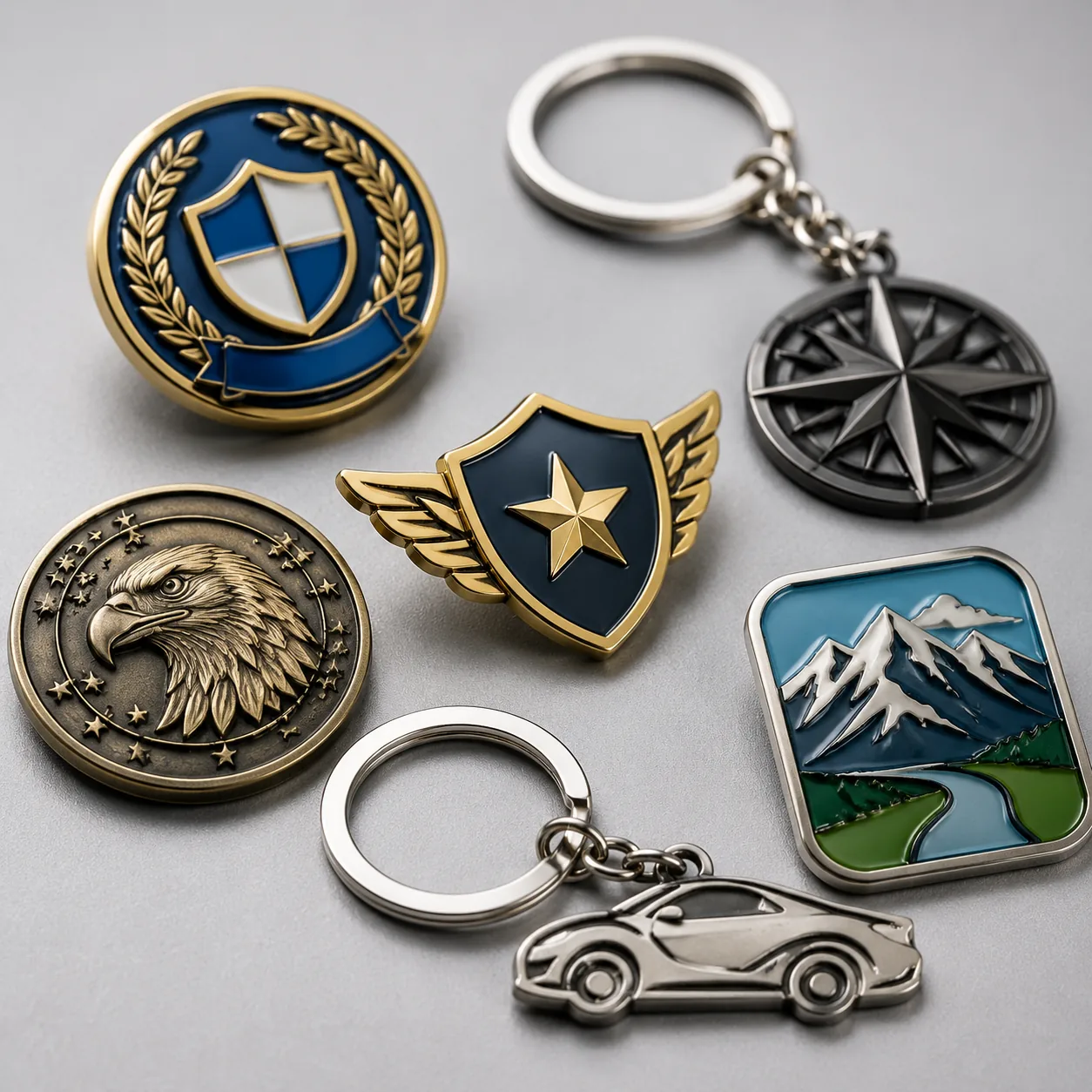
In 2026, landed cost discipline matters more than quote shopping
Custom pin programs rarely fail because the tooling charge was too high. They fail because the approved specification locks in avoidable cost before the goods ever clear export: oversized dimensions, unnecessary plating upgrades, retail packaging that inflates cube, or hardware choices that add labor without improving function. In 2026, that gap is more expensive because tariffs, customs brokerage, destination drayage, domestic fulfillment labor, and slower inventory turns can push landed cost 15% to 40% above quoted FOB unit price.
That is why specification engineering usually creates more savings than late-stage price negotiation. Duty is calculated on customs value first, then freight, warehousing, pick-pack, and shrink risk stack on top. A feature that adds only USD 0.05 to 0.08 FOB, such as an extra post, deluxe clutch, or printed backing card, can cost materially more after duty and domestic handling. Each RFQ line should answer one question: does this feature protect function, retail presentation, compliance, or sell-through? If not, it is a candidate for removal.
For most lapel pin programs, the largest cost levers are process choice, overall size, thickness, plating finish and decorative micron range, color segmentation, hardware count, and packaging density. These are controllable before die or mold approval. Once the artwork is locked and the sample is signed, most savings options disappear.
The ranges below reflect realistic 2026 planning numbers for standard custom soft enamel, imitation hard enamel, and die-cast pin programs sourced in Asia on FOB terms. Final pricing still moves with geometry, cutouts, polish level, attachment mix, plating combination, and reject rate, but the underlying cost patterns are consistent enough to build a sharper RFQ and a safer total-cost model.
Lock process, size, and thickness first because they drive the biggest cost swing
For cost-sensitive pins, the most efficient build zone is usually 25 to 30 mm overall size at 1.2 to 1.5 mm thickness. That range keeps metal weight, enamel fill volume, polish time, and post alignment under control while still allowing most logos, mascots, school emblems, and event graphics to read clearly. Once a design moves past 32 mm, cost rises faster than many buyers expect because metal area, fill volume, buffing labor, and bend risk increase together. At 38 to 45 mm, unit FOB is commonly 25% to 45% above a comparable 28 mm design.
Stamped iron soft enamel remains the lowest-cost route for flat 2D artwork with closed color cells and standard outlines. At 1,000 pieces for a 25 to 30 mm pin, 1.2 to 1.5 mm thick, with one butterfly clutch and bulk packing, a practical 2026 FOB range is USD 0.40 to 0.72 per piece. Tooling for a simple 2D die usually runs USD 55 to 95; complex outlines, small copy, or tight registration can move that to USD 100 to 150. Typical pricing bands are USD 0.55 to 0.95 at 500 pieces, USD 0.40 to 0.72 at 1,000 pieces, and USD 0.34 to 0.60 at 2,500 pieces.
Zinc alloy die-cast becomes the better value when the artwork needs pierced cutouts, curved outer contours, domed sections, 3D relief, or body thickness above about 1.8 mm. For a simple flat badge, however, zinc usually costs 8% to 20% more than stamped iron because mold cost, casting cleanup, and hand polishing are higher. Many buyers overspecify zinc for a flat 28 mm corporate logo that stamped iron can make cleanly and at lower scrap risk.
Imitation hard enamel should be treated as a visual upgrade, not a default premium box to tick. Its smooth polished face works well for museum retail, anniversary pieces, employee awards, and membership kits where hand-feel matters. The tradeoff is a longer bake and polish cycle and higher rework exposure. At 1,000 pieces, a standard 25 to 30 mm imitation hard enamel pin typically lands around USD 0.58 to 1.05 FOB. For conference giveaways or campaign pins that ship in OPP bags, that premium often does not survive a landed-cost review.
| Spec line | Cost-efficient default | Upgrade trigger | Typical FOB effect at 1,000 pcs |
|---|---|---|---|
| Size | 25 to 30 mm | Increase only if artwork fails readability at approved line width | +10% to 30% at 32 to 38 mm; +25% to 45% at 40 to 45 mm |
| Thickness | 1.2 to 1.5 mm | Use 1.8 to 2.0 mm for long bars, premium feel, or extra rigidity | +6% to 15% above 1.8 mm |
| Base process | Stamped iron soft enamel | Use zinc alloy for cutouts, curves, domes, or heavier 3D body | Zinc alloy often +8% to 20% |
| Face finish | Standard soft enamel | Use imitation hard enamel only when smooth polished face is visible to buyer | Usually +15% to 30% |
| Relief level | 2D with limited raised lines | Use 3D only when sculpted depth affects perceived value | Often +20% to 50% |
Specify plating by appearance, micron range, and storage life
Decorative plating is often oversold because showroom samples are viewed under ideal lighting and handled for a few minutes, not stored in cartons for months. For most custom pins, standard decorative plating in the 0.03 to 0.05 micron range is adequate for bright nickel, black nickel, imitation gold, imitation silver, or gunmetal. Programs with tighter shelf-life expectations or stricter lot-to-lot consistency may justify 0.05 to 0.08 micron, but most promotional programs do not gain measurable value from heavier decorative plating than that.
Nickel-family finishes generally provide the best cost-to-risk ratio. Bright nickel and black nickel hide minor handling marks, resist visible oxidation better than copper-tone finishes, and stay more consistent lot to lot. Bright gold, rose gold, and antique copper can fit the brand, but they show rub marks, fingerprints, and shade drift more easily, especially after 6 to 12 months in humid storage. If inventory may sit longer than 90 days, anti-tarnish passivation plus sealed individual bags usually delivers better protection than paying for decorative plating thickness the customer will never notice.
Avoid vague phrases such as premium plating or luxury finish. A usable plating specification reads more like an inspection standard: bright nickel on front and edges; decorative plating 0.03 to 0.05 micron; anti-tarnish treatment required; no exposed base metal on front face at 30 cm under normal indoor lighting; back side cosmetic variation acceptable except for sharp burrs or peel. That language aligns the factory, third-party inspector, and buyer.
Simple storage protection is inexpensive if specified early. Sealed OPP bags, desiccant by master carton where humidity warrants it, and anti-tarnish treatment usually add only USD 0.01 to 0.03 per piece. That is almost always cheaper than sorting, re-bagging, discounting, or replacing tarnished stock after import.
Engineer artwork to actual manufacturing limits, not sample-box fantasy
Artwork cleanup is one of the safest ways to offset tariff pressure because it cuts labor, scrap, and inspection points without making the pin feel cheaper. In standard production, 4 to 6 enamel colors is an efficient range for most logos, event emblems, and mascot designs. Once a pin reaches 8 to 10 colors with many isolated cavities, hand-fill time, color contamination risk, and touch-up labor rise sharply. Reject rates often follow.
Factories can hold very fine detail on a hand-selected sample, but repeatable mass production requires margin. For soft enamel, the practical minimum raised metal line width is about 0.25 to 0.30 mm, but repeatable output improves meaningfully at 0.35 mm or above. Recessed fill cells narrower than 0.40 mm are harder to fill consistently. Text below roughly 1.0 to 1.2 mm cap height becomes risky when surrounded by enamel and is usually better executed as raised metal only. For imitation hard enamel, keeping fill cells at or above 0.45 mm reduces underfill and polishing exposure.
This is where engineering review can save more than a price concession. A 32 mm, 9-color badge with thin segmented fills can often be redrawn as a 28 mm, 6-color version with stronger line hierarchy and higher contrast. That single change can reduce unit FOB by USD 0.08 to 0.18, improve yield by several points, raise carton density, and lower customs value at the same time. In landed-cost terms, removing 2 to 4 mm of unnecessary size usually saves more than pressing a supplier for another USD 0.02 against the same flawed drawing.
Choose hardware for stability, retention, and assembly efficiency
Attachment hardware is not a cosmetic afterthought. It affects assembly labor, anti-rotation performance, return risk, and end-user experience. For pins up to about 25 mm, one post with one standard butterfly clutch is the normal cost baseline. For horizontal badges, top-heavy designs, long bars, or sizes above 30 mm, two posts materially improve stability but add weld points, hardware cost, and assembly time. In 2026 programs, that second post commonly adds about USD 0.03 to 0.08 per piece depending on volume, post diameter, and clutch type.
Rubber clutches are often the most practical choice for youth merch, sports programs, and casual use because they are comfortable and less likely to scratch adjacent items. Standard butterfly clutches remain the lowest-cost option and usually ship well in bulk. Deluxe locking clutches improve retention and perceived value, but the adder is real: often USD 0.12 to 0.30 per piece. Magnetic backs work for uniforms or delicate garments that cannot be pierced, yet they add weight, packing complexity, and roughly USD 0.18 to 0.45 per piece, with a further freight penalty on large runs.
- Use 1 post for pins up to about 25 mm unless shape or center of gravity causes rotation
- Use 2 posts for horizontal badges, top-heavy forms, and most designs above 30 mm
- Specify post diameter and length; 0.8 to 1.0 mm diameter posts are common for standard lapel pins
- Avoid locking clutches on giveaway programs unless loss prevention clearly justifies the added cost
- Require in-line pull, twist, and post-alignment checks instead of relying only on final inspection
Define hardware completely in the RFQ: post quantity, post diameter, post length, clutch type, assembly included or separate, and any pull-force requirement. Without that detail, suppliers solve stability in different ways, which makes quote comparisons unreliable and creates avoidable disputes during inspection.
Packaging is the quiet cost leak in tariff-loaded programs
Packaging is one of the easiest places to remove cost because many pin orders still inherit presentation rules from older retail programs that no longer match the sales channel. Bulk-packed pins in PE or OPP inner bags inside export cartons remain the cheapest and densest option. By contrast, individual bags, printed backing cards, barcode stickers, vellum sleeves, and header cards can add roughly USD 0.06 to 0.35 per piece before any freight effect is counted.
Density matters because freight and warehouse handling follow carton count, cube, and pack complexity. A standard 25 to 30 mm pin in bulk can often fit about 3,000 to 4,500 pieces per export carton, depending on hardware and inner-bag method. The same item on a printed card in an individual bag may cut carton quantity by 30% to 50% and increase dimensional freight. If final retail finishing can be done domestically, importing protected bulk stock and carding locally is often the lower-risk total-cost model.
Packaging language should be measurable. Instead of requesting retail ready or protected packaging, write terms such as: individual bag only if front-face scuff risk exists; backing cards packed flat unless pre-inserted display is mandatory; master carton gross weight under 15 kg; double-wall export carton required for magnetic-back mixes; no unapproved void-fill substitutions; barcode label placement per approved artwork. Clear pack specs stop suppliers from overpacking at the expense of duty, freight, and pallet efficiency.
Use AQL, tolerances, and golden samples to prevent false economies
Low FOB is meaningless if the shipment arrives with bent posts, plating skips, underfilled enamel, or off-center attachments. For decorative metal pin programs, final random inspection at AQL 2.5 for major defects and AQL 4.0 for minor defects remains a practical default, with critical defects at zero acceptance. Sharp burrs, detached posts, wrong artwork, wrong plating color, missing hardware, and exposed base metal on visible front surfaces should be classified as critical or major depending on end use and safety expectations.
Tolerance language also needs to match process reality. For most custom pins, overall size tolerance of +/-0.20 mm and thickness tolerance of +/-0.10 to 0.15 mm are realistic planning values. Post position is often best controlled within +/-0.50 mm, especially when the pin must sit squarely on a backing card or align with a dual-post fixture. Decorative plating coverage should be judged visually, while enamel color should be approved against signed production sample and artwork proof rather than demanding laboratory color matching on tiny fill cells.
A paid pre-production sample is far cheaper than a failed full run. Typical sample charges are about USD 35 to 120 plus courier, with lead times of 7 to 10 days for standard soft enamel and 10 to 14 days for imitation hard enamel, mixed plating, or retail-packed samples. For tariff-exposed programs with long replenishment cycles, keep one signed golden sample and one approved artwork proof on file, then state on the PO that all reorders must match the golden sample unless written deviation is approved.
Right-size MOQ and quote by line item to stay tariff-resilient
Tariff pressure changes old MOQ logic. A larger order still lowers FOB unit price, but that does not automatically mean lower total cost once duty, storage, slow-turn risk, and working capital are included. For many branded pin programs in 2026, the resilient range is 500 to 2,000 pieces per design. FOB is slightly higher than at 5,000-plus quantities, but inventory exposure and markdown risk are materially lower.
Technical MOQs for standard custom pins often remain around 100 to 300 pieces, but the most useful pricing breaks are usually 500, 1,000, and 2,500 pieces. Planning lead times should be written explicitly: 7 to 10 days for pre-production sample after art approval, then about 10 to 18 days for mass production after sample signoff on standard builds. More complex programs such as imitation hard enamel, mixed attachments, magnetic backs, or custom retail packs can extend production to 18 to 25 days. If plating is nonstandard or packaging is hand-assembled, add 3 to 5 buffer days rather than assuming standard output speed.
Require unbundled quotations. Tooling, unit FOB, plating surcharge if any, second-post adder, hardware upgrade cost, packaging adders, sample charge, estimated carton count, carton dimensions, and Incoterm should all be listed separately. A line-item quote makes tariff exposure visible and lets the buyer remove non-essential features without restarting the RFQ. A useful matrix is to quote the same artwork at 500, 1,000, and 2,500 pieces across three pack options: bulk, individual bag, and carded retail. That exercise often shows that simplifying packaging saves more than raising order quantity.
Before negotiation starts, rewrite the RFQ into decision lines: process, size, thickness, plating finish and decorative micron range, anti-tarnish requirement, color count, minimum metal line width, hardware type, packaging method, AQL, tolerance band, sample requirement, and target lead time. Mark each line as mandatory, flexible, or legacy. For many 2026 programs, the strongest default build is a 25 to 30 mm stamped iron soft enamel pin, 1.2 to 1.5 mm thick, bright nickel or black nickel at 0.03 to 0.05 micron, 4 to 6 colors, one post unless anti-rotation is needed, and bulk or simple individual-bag packing. Upgrade only when the use case clearly requires it. In a tariff-heavy market, the fastest savings usually come from rewriting the specification, not from squeezing the same overbuilt one harder.
Have a project? Send your artwork and target quantity and we’ll reply with a detailed quotation within 12 working hours.
Ready to get this made?
Send your sketch, target quantity and ship-date. Detailed quotation in 12 hours.



