Sustainable Material Swaps for Promo Products: 2026 Spec Sheet
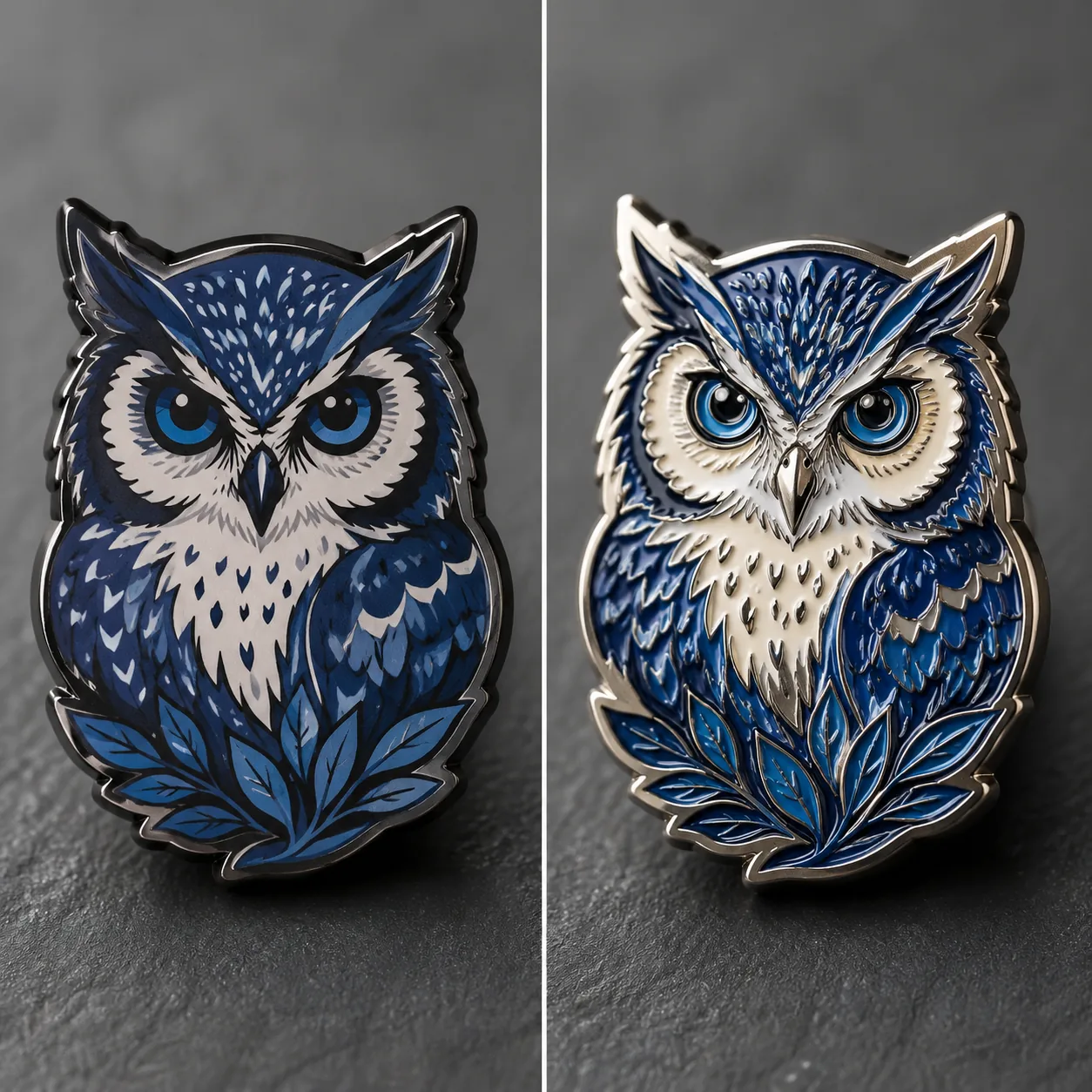
Freeze every sustainable swap on the PO before tooling, color matching or sampling
Most promo-product failures blamed on sustainability are actually spec-control failures. A buyer requests a greener version of an existing pin, keychain, patch, charm or lanyard, and the quote comes back with vague language such as recycled metal, RPET fabric, eco PVC or low-impact plating. If the PO stops there, the supplier still has room to change density, stiffness, shrink rate, odor, color hold, finish behavior, hardware grade or packout without technically breaking spec.
Treat each swap as a controlled engineering change. Every line should state five things: current construction, approved replacement, locked functional attributes, allowed cosmetic delta and proof required at sample or inspection stage. A usable spec reads like this: die-cast zinc-alloy keychain body, 45.0 mm overall, 3.0 mm nominal thickness, shiny nickel finish; approve post-industrial recycled-content zinc feedstock at supplier standard grade; keep finished size within +/-0.15 mm, assembled weight within +/-8%, split-ring wire diameter 1.8-2.0 mm, split-ring pull strength no lower than control sample, and finish appearance within approved sample range under D65 light at 50 cm.
Lock the substitution before tooling release. Once a mold cavity, enamel wall, laser path, print file or patch edge is tuned around one material behavior, late swaps can trigger flash, sink, fill loss, edge curl, shrink mismatch, trapped bubbles or plating rejects. In practice, recycled-content swaps are usually low-risk on stamped iron, zinc alloy and polyester webbing. They are much higher risk on clear acrylic, very soft PVC, exact-white assemblies and mirror-polish jewelry-style pieces.
Metal pins, coins and keychains: change feedstock first and hold geometry constant
For enamel pins, challenge coins, die-cast keychains, bag charms and stamped magnet shells, the safest sustainability move is usually recycled-content base-metal feedstock while holding design, wall thickness, attachment style and finish constant. Stamped iron remains the most economical route for flat or lightly raised designs with clean outer lines. Typical stamped-iron pin thickness is 1.2-1.8 mm, with 1.5 mm the standard balance of rigidity and cost. Die-cast zinc alloy is better for cutouts, hollow centers, undercuts and sculpted 3D relief, usually at 2.0-3.5 mm. Challenge coins commonly run 3.0-4.0 mm, with 3.5 mm the normal spec for acceptable hand feel and edge definition.
Start by fixing output quality rather than chasing the highest recycled-content claim. For standard soft-enamel pins at 25-35 mm, stamped iron at 1,000 pcs typically lands around USD 0.22-0.55 FOB depending on color count, backing and finish. Equivalent zinc-alloy builds usually range from USD 0.45-1.20 FOB because die casting requires a mold and more polishing. A 45 mm die-cast keychain at 1,000 pcs is more often USD 0.75-1.80 FOB. A 45 mm challenge coin usually runs USD 1.20-3.20 FOB depending on relief depth, edge style, antique wash and color fill.
Where to tighten control: raised line widths below 0.25 mm, mirror-polish areas, hinge parts, threaded attachments, spinner coins and very small moving components. Recycled feedstock can still work, but the inspection plan should be stricter. For premium cosmetic work, use AQL 1.0 major and 2.5 minor on appearance. For mainstream promo goods, AQL 2.5 major and 4.0 minor remains realistic. Typical metal acceptance limits worth writing into the PO include burr height <=0.05 mm on exposed edges, diameter tolerance +/-0.20 mm on coins, enamel fill flushness within +/-0.10 mm on soft enamel, and pin-post solder pull >=4 kgf for 10 seconds with no detachment.
| Product type | Standard build | Practical 2026 lower-impact swap | Critical fixed specs | Typical MOQ | Sample lead time | Bulk lead time | FOB range USD |
|---|---|---|---|---|---|---|---|
| Soft enamel pin 30 mm | Stamped iron, 1.5 mm, nickel plate, butterfly clutch | Recycled-content iron sheet feedstock | Size +/-0.15 mm; enamel fill flushness +/-0.10 mm; burr <=0.05 mm; post pull >=4 kgf/10 sec; plating coverage per approved sample | 100 pcs | 5-7 days | 10-15 days | 0.28-0.65 |
| Die-cast keychain 45 mm | Zinc alloy, 3.0 mm, shiny nickel, 30 mm split ring | Recycled-content zinc-alloy feedstock | Weight +/-8%; size +/-0.15 mm; split ring 20 open-close cycles with recovery; tape-adhesion pass on finish; no sharp edge | 100 pcs | 5-7 days | 12-18 days | 0.75-1.80 |
| Challenge coin 45 mm | Zinc alloy or brass, 3.5 mm, antique nickel | Recycled-content zinc alloy where relief allows | Diameter +/-0.20 mm; relief sharpness to approved sample; edge smoothness; antique tone under D65 light | 100 pcs | 5-7 days | 12-18 days | 1.20-3.20 |
| Fridge magnet 60 mm | Stamped iron shell with ferrite magnet | Recycled iron shell plus reduced-plastic packout | Flatness <=0.50 mm bow; magnet hold on vertical steel panel for 24 hr; print protection in packout | 100 pcs | 5-7 days | 10-15 days | 0.45-1.10 |
| Brass-look lapel pin 25 mm | Die-struck brass, polished, no color fill | Recycled-content brass only with approval sample | Mirror-area scratch standard; line width >=0.30 mm; color tone match to approval sample; no sink on polished face | 100 pcs | 6-8 days | 12-18 days | 0.60-1.50 |
Plating, antique wash and doming usually matter more than the metal claim
On metal products, buyers often focus on recycled substrate content and ignore the finish line, even though finish chemistry usually drives more rejection risk, process waste and cost than a modest feedstock change. Decorative plating, selective masking, antique washing, epoxy doming and cosmetic repolish can erase the practical benefit of a small recycled-content increase if the design becomes reject-prone.
Write finish specs in terms of appearance intent and realistic decorative thickness. For promo-grade nickel, black nickel, imitation gold or gunmetal, decorative plating is commonly about 0.03-0.10 micron, often with a clear anti-tarnish topcoat. That is adequate for conference pins, event keychains and short-cycle merchandise. It is not wear-grade plating, and over-specifying decorative thickness usually adds cost without changing in-use life. If the real goal is better handling durability, a clear topcoat, fewer mirror areas and less repolish are more effective than asking for heavier decorative plate.
Simplify finish stacks where possible. Two-tone finishes, black-dye recesses plus bright highlights, selective masking and epoxy domes all raise reject rates and cycle time. A single matte nickel, antique nickel, black nickel or antique brass finish with no dome is easier to control across recycled-content alloys. For antique finishes, require an approved pre-production sample because the same wash can read warmer, cooler, lighter or dirtier depending on texture and alloy lot. If you keep epoxy domes, specify dome height 0.8-1.2 mm, no overflow onto edges, no visible bubble larger than 0.3 mm at 30 cm, and no dome sink deeper than 0.2 mm at center.
Acrylic, PVC and other plastics: define haze, hardness, odor and color tolerance
Plastic substitutions fail faster than metal swaps because appearance drift is obvious. Terms such as recycled acrylic or eco PVC are not enough to buy against. The RFQ should identify resin family, transparency requirement, color tolerance, odor acceptance and basic physical performance. For acrylic keychains and charms, recycled-content PMMA can work well on opaque printed parts, especially when full back print hides minor internal specks. On fully clear charms, even slight haze, tint shift or black-speck contamination can trigger rejection.
For acrylic charms, specify thickness, edge finish and print durability. Common builds are 2.5 mm, 3.0 mm and 4.0 mm PMMA with dimensional tolerance around +/-0.30 mm after laser cutting. Clear-face parts should ship with protective film on both sides until final packing. A practical acceptance plan is 20 dry-cloth rubs with no major image loss, no visible edge cracks after a 1.0 m drop onto smooth concrete in retail pack, and no obvious haze or yellow cast versus the approved sample under D65. MOQ is often 100 pcs, sample lead time 5-7 days and bulk 10-14 days. Typical FOB for a 50 mm printed acrylic keychain at 1,000 pcs is USD 0.38-0.90 depending on double-sided print, epoxy layer and hardware.
For soft PVC charms, tags and luggage labels, alternative compounds are improving but are not universal drop-ins. Specify Shore A hardness, nominal thickness, odor and destination-market compliance requirement. Typical thickness is 3-5 mm with dimensional tolerance +/-0.30 mm. A practical hardness band for standard tags is Shore A 65-80; very soft squeeze effects below Shore A 60 are harder to reproduce consistently with lower-impact compounds. MOQ commonly starts at 100-300 pcs, but specialty material buying often pushes effective minimums to 300-500 pcs. If exact white matching across PVC, metal print and textile parts matters, require a pre-production sample and define acceptable color delta, such as Delta E <=2.0 under D65 if the factory has instrument capability; otherwise use approved master sample only.
RPET lanyards and patches: strong sustainability gain if construction stays realistic
Recycled polyester is one of the most practical default moves for 2026 textile promo items, especially sublimation lanyards and many patch backers. The key is to specify the construction, not just the yarn claim. For lanyards, state width, webbing thickness, print method, hardware, breakaway requirement, stitching method and finished cut length. Standard widths remain 15 mm, 20 mm and 25 mm. Finished thickness is usually 0.8-1.2 mm, with common webbing weights roughly 110-160 gsm depending on weave and hand feel.
RPET performs well for sublimation because the print process is already surface-color driven. At 1,000 pcs, FOB pricing for a standard RPET sublimation lanyard is often USD 0.35-0.95 depending on width, hook style, breakaway and single- versus double-sided print. Sample lead time is typically 3-5 days, with bulk production in 7-12 days after art approval. A realistic hardware pull requirement is >=7 kgf on the finished assembly without clip separation or stitch failure; for heavier badge reels or detachable buckles, >=10 kgf is safer. If a safety breakaway is required, specify whether it must be color-matched or can be stock black or white, since stock plastic often differs in gloss and white tone.
For patches, choose the lower-impact route based on detail density. Woven patches hold finer text and thinner lines than embroidery while using less thread bulk. Embroidered patches with recycled thread are viable, but dense fills can become stiff and distort small shapes. Merrow edges suit circles, shields and rectangles; laser-cut or hot-cut edges suit custom outlines. Textile tolerance of +/-2 mm is normal; asking for +/-0.5 mm on bulk sewn goods is usually unrealistic. If heat-apply backing is used, specify post-press behavior: edge curl <=3 mm after application at 150-160 C for 12-15 seconds, no delamination after cooling, and no adhesive bleed beyond edge. Typical FOB at 1,000 pcs is USD 0.18-0.60 for basic woven or embroidered patches under 70 mm, with MOQ often 100 pcs and bulk lead times 7-14 days.
Packaging is usually the fastest, safest sustainability win
For many promo programs, packaging changes deliver cleaner environmental improvement than risky product-body substitutions. Buyers often debate recycled resin content on a low-cost keychain while still specifying individual polybags, EVA inserts, PET windows and rigid gift boxes that will be discarded immediately. If the product must remain visually exact, packaging is usually the first place to simplify without triggering approvals risk.
Write packaging as a production spec: unit pack, separator type, card stock, carton construction, inner-pack quantity, master-carton gross-weight limit and where scratch protection is genuinely required. For standard pins and keychains, replacing a rigid presentation box with a 300-350 gsm FSC paper card, belly band or glassine sleeve can remove both cost and cube. Typical direct savings are USD 0.05-0.40 per unit depending on the original packout, and freight savings can be larger than the unit savings on air shipments because box volume often drives chargeable weight.
Do not strip protection blindly. Shiny plating, polished coins, epoxy-domed emblems and exposed acrylic faces can scuff if packed product-to-product. Use selective protection instead: keep protective film on acrylic until final pack, use tissue or glassine where rub marks are likely, and avoid decorative inserts on event merchandise. For export cartons, 5-ply corrugated at K=A or equivalent remains a sound default, with master carton gross weight below 15 kg for better handling consistency and lower crush damage risk.
Lead times, MOQ shifts and the real 2026 price effect
Sustainable substitutions do not automatically mean slower or more expensive. The real impact depends on whether the change affects tooling, color approval, material buying, compliance testing or packaging assembly. Recycled-content metal feedstock usually adds little or no bulk lead time if the supplier already buys that grade. Custom alternative fabrics, unusual paper boards, clear recycled plastics and non-stock molded compounds are more likely to add delay.
As a planning range, standard metal promo items with controlled lower-impact substitutions usually stay within 10-18 production days after sample approval at 1,000 pcs. Pre-production samples are commonly 5-7 days. Lanyards and basic patches are often 7-14 days in bulk, with samples in 3-5 days. MOQ often remains 100 pcs for custom pins, keychains, coins, patches and lanyards, but specialty recycled textiles or molded alternative plastics can push material-buy minimums to 300-500 pcs even if the factory would otherwise accept 100.
Price movement is usually smaller than buyers expect when the design stays disciplined. A straightforward pin, coin or keychain often rises only USD 0.02-0.10 per piece for a practical feedstock substitution. By contrast, a custom gift box, dual-tone plating, detachable buckle set, exact-match accessory or specialty insert can add more cost than the sustainable material change itself. Quote every substitution as a separate line item with standard build and approved lower-impact build shown side by side. That exposes the real cost drivers instead of hiding them inside a generic eco premium.
Inspection checklist and substitution matrix for RFQs
A sustainable spec sheet should be auditable at sample stage and final inspection even when full chain-of-custody certification is not part of the order. Focus on measurable checks that prove the substitution did not degrade the item: dimensions, weight, color against approved standard, odor, plating appearance, hardware strength, print rub resistance, magnet hold, pack count and carton condition. Final random inspection at AQL 2.5 major and 4.0 minor remains a practical baseline for most promo orders, with tighter cosmetic AQL reserved for premium branding or finish-sensitive SKUs.
Useful acceptance tests are simple and repeatable: pin-post solder pull >=4 kgf for 10 seconds with no detachment; split-ring recovery after 20 manual open-close cycles; lanyard clip-and-stitch pull >=7 kgf; magnet hold on a vertical painted steel panel for 24 hours at approved product weight; acrylic print rub resistance of 20 dry-cloth strokes with no major image loss; and odor check after 24 hours sealed-bag conditioning with no strong offensive odor on opening. These tests do not prove recycled content, but they do prove that the lower-impact build still functions as sold.
- Write each change as original material versus approved replacement, never as a vague eco request
- Freeze non-negotiables on the PO: size tolerance, weight band, color delta, pull strength, plating appearance and pack method
- Use pre-production samples for clear plastics, soft compounds, antique finishes, exact whites and textured surfaces
- Keep textile tolerances realistic: typically +/-2 mm on patches and +/-1-2 mm on finished lanyard length
- Set decorative metal inspection at AQL 2.5 major / 4.0 minor unless premium cosmetics require tighter limits
- Quote sustainable swaps as separate priced lines with MOQ and lead-time impact shown per SKU
- Simplify finishes and packaging before forcing high-risk resin changes on visible parts
- Request documentation level before sampling if recycled-content proof is required
- Build a one-page substitution matrix for each SKU listing current build, approved swap, fixed specs, acceptable cosmetic delta, MOQ impact and allowed lead-time movement
- Do not remove protective packing where scratch, rub or dome damage would create rework or reshipment
Before sending RFQs, prepare that substitution matrix for each SKU. For mixed programs such as a pin, lanyard and patch set, prioritize low-risk wins first: RPET lanyards, reduced-plastic packaging, and recycled-content iron or zinc feedstock on standard metal parts. Leave higher-risk swaps such as transparent acrylic, exact-white plastic components, ultra-soft PVC and premium mirror-polish pieces for sample-based decisions. That sequence usually captures meaningful impact reduction without slowing approvals, increasing rejects or creating avoidable cost surprises.
Have a project? Send your artwork and target quantity and we’ll reply with a detailed quotation within 12 working hours.
Ready to get this made?
Send your sketch, target quantity and ship-date. Detailed quotation in 12 hours.



