Sustainable Material Swaps for Promo Items: Cost and Lead Times
When a sustainability request sends an approved quote back to engineering
A common 2026 sourcing problem is not choosing a promo-item style; it is reopening an approved custom quote because a retailer, event sponsor, or procurement team adds a late sustainability requirement. Typical asks are rPET content, FSC-certified paper, reduced single-use polybags, molded-pulp inserts, or a non-PVC alternative. The commercial risk appears immediately: the approved FOB may no longer hold, sample approval may need to restart, and the buyer has to explain why a seemingly small material change altered tooling, assembly steps, carton density, or defect risk.
In promotional products, a sustainable option is rarely a simple upgrade. Some swaps are operationally light, such as replacing virgin polyester with rPET lanyard webbing or switching a virgin paper backing card to FSC-certified 350-400 gsm SBS or CCNB. Others create a different product with a different failure mode. Replacing a zinc alloy keychain body with bamboo veneer, cork laminate, or paper composite changes stiffness, edge durability, moisture response, drilling yield, and print adhesion. The correct sourcing question is not whether a material sounds greener; it is what it does to scrap rate, tolerance, MOQ, unit FOB, and total lead time on an actual order.
The safest quoting method is to keep geometry and process route as stable as possible. If the item still runs on the same sublimation line, weaving loom, die-striking press, badge-forming line, or final assembly station, the premium is usually modest. If the swap changes curing behavior, drilling, lamination, stitch density, bonding adhesive, or hand assembly, expect another pre-production sample and typically 3-10 extra calendar days.
Lowest-disruption swaps: where sustainability usually preserves cost and schedule
The easiest sustainability gains are secondary-material changes that preserve the approved product body. In practice that means FSC backing cards, recycled-content paper inserts, FSC rigid boxes, bulk inner packing of 25 or 50 units, paper belly bands, soy-ink carton printing, and rPET webbing for lanyards. These changes improve the sustainability profile without forcing a redesign of the item itself.
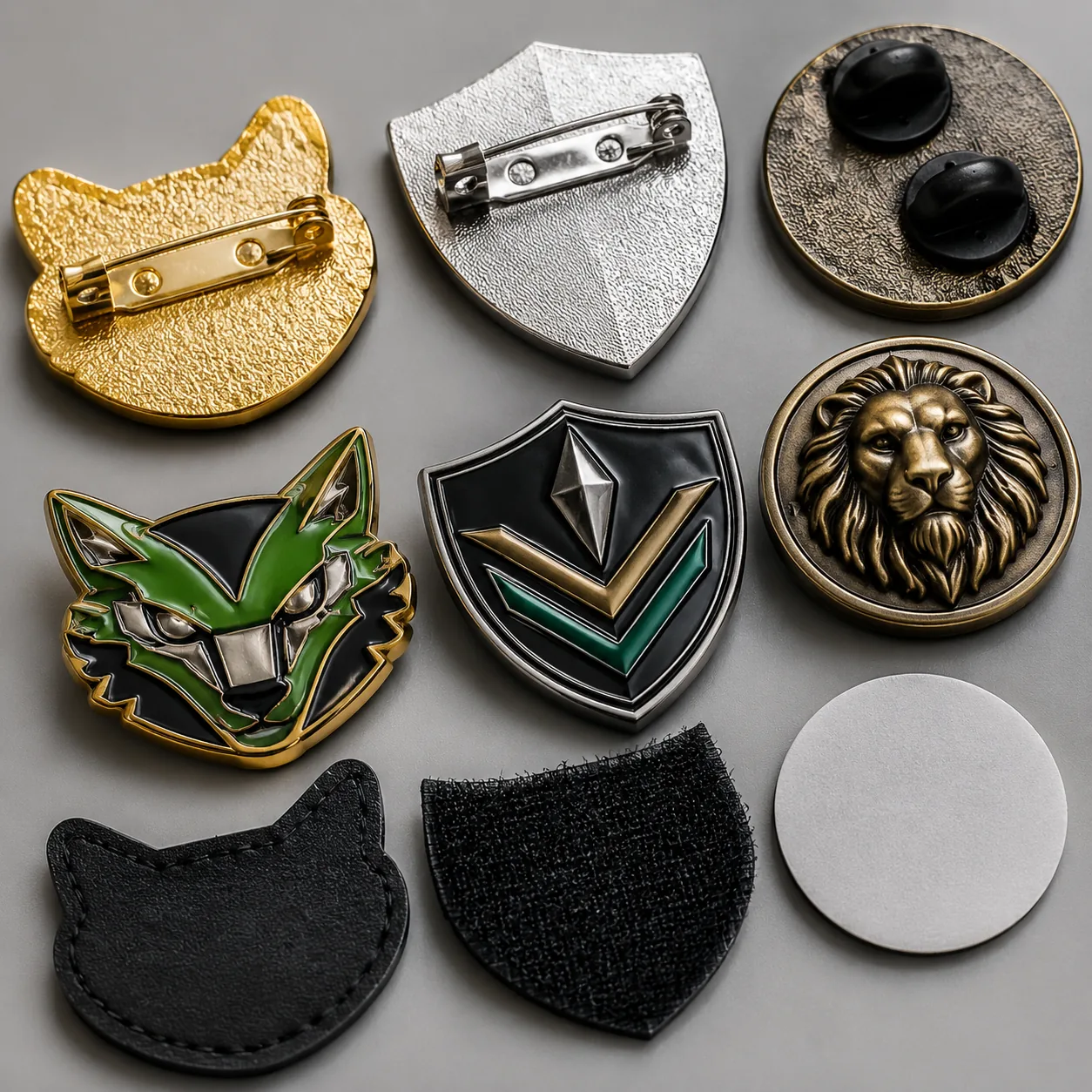
For metal categories such as pins and keychains, changing the metal body is usually not the first place to look. Die-struck iron and zinc alloy are selected for dimensional consistency, plating stability, and long service life. The cleaner commercial move is often to remove avoidable packaging: replace acrylic display boxes with 1200-1400 gsm rigid paper boxes, remove EVA trays, convert from one-piece OPP bags to kraft sleeves or bulk pack, or consolidate accessories into a single pack-out.
These low-disruption swaps usually require no new mold and only minor artwork updates for a card or dieline. They also preserve functional performance. A 20 x 900 mm lanyard made from stocked rPET webbing can usually run on the same sublimation and sewing flow as standard polyester. A 30 mm iron pin on an FSC card still uses the same die, enamel fill, plating, and attachment hardware. In contrast, a body-material substitution often changes tolerances and reject risk before it changes sustainability claims.
| Product type | Standard spec | Sustainable swap | Typical MOQ | FOB standard | FOB sustainable | Lead time standard | Lead time sustainable | Main trade-off |
|---|---|---|---|---|---|---|---|---|
| Lanyard, 20 x 900 mm folded | Polyester sublimation, 0.9-1.1 mm thick, swivel hook, optional breakaway | rPET sublimation with same hardware | 300 pcs | $0.42-$0.78 | $0.46-$0.86 | 10-14 days | 12-16 days | Slight yarn texture and base-tone shift; dark Pantones require physical approval |
| Pin, 30 mm | Iron soft enamel, 1.2 mm thick, butterfly clutch, 350 gsm card, OPP bag | Same pin with FSC 350-400 gsm card, no polybag or kraft sleeve | 100 pcs | $0.48-$0.95 | $0.50-$0.99 | 10-15 days | 10-15 days | Product body unchanged; packaging premium is small but hand pack may rise |
| Keychain, 50 mm body | Zinc alloy, 3-4 mm thick, epoxy dome, 30 mm split ring | Same keychain in FSC rigid box or kraft drawer box, no PVC pouch | 100 pcs | $0.95-$1.85 | $1.03-$2.02 | 12-18 days | 12-18 days | Packaging cost rises without changing body yield |
| Patch, 75 mm | PVC patch, 2D relief, hook backing | Woven patch, 50D/75D yarn, merrow or heat-cut edge, hook backing | 200 pcs | $0.55-$1.10 | $0.48-$0.98 | 10-14 days | 12-16 days | Less molded depth; sharper textile look but lower 3D effect |
| Magnet, 60 mm | Soft PVC magnet, layered effect | Tinplate badge magnet with printed paper insert, PET lamination optional | 300 pcs | $0.60-$1.10 | $0.52-$0.92 | 12-16 days | 14-18 days | Flatter profile; cannot reproduce thick molded contour |
What actually moves the FOB: material is only one line item
Buyers often assume a lower-plastic version should cost less. In custom manufacturing, that is only sometimes true. Recycled or certified substrates can cost more per kilogram, may come from fewer qualified mills, and can create more waste during die-cutting, lamination, embroidery, drilling, or finishing. Final FOB depends less on sustainability language than on process yield and labor content.
Four cost drivers matter most. First is raw-material premium. rPET lanyard webbing commonly adds $0.02-$0.08 per piece at 300-1000 units, while FSC rigid boxes, molded pulp inserts, bamboo veneer, or cork laminate can add $0.08-$0.45 per piece depending on size, print coverage, and board thickness. Second is process yield. Stable metal items often run at 97-98.5% first-pass yield, while natural-material or composite parts with edge finishing can fall to 92-95%, and sometimes below 90% on thin bridges, drilled holes under 4 mm from edge, or dark edge-painted components.
Third is setup and engineering. A new insert, box dieline, stitch file, pull-test validation, or adhesive test adds non-recurring time that low-volume orders cannot absorb efficiently. Fourth is packing labor. Sustainable pack-outs often remove plastic but increase handwork: tissue wraps, belly bands, barcode labels, multilingual paper inserts, or mixed-SKU sorting can add more cost than the item body itself at 100-300 units.
This is why a material that appears cheaper by weight can still land at a higher FOB. A standard iron pin packed on a card may barely move in price if the request is only FSC paper and no polybag. A paper-composite or bamboo key fob behaves very differently: wider color variation, edge sealing labor, higher breakage risk during riveting, and more manual sorting. On small runs, the sustainable story often gets priced through labor and yield, not through resin or fiber alone.
MOQ economics at 100, 300, and 1000+ units
Sustainable versions do not make equal commercial sense at every volume. Below 100 pieces, almost any body-material change looks expensive because setup, sampling, and scrap are spread across too few units. At that level, packaging changes are usually the cleanest move unless the client accepts a clearly higher unit FOB and wider aesthetic variation.
At 100-299 pieces, simple substitutions are workable: FSC backing cards, FSC tuck boxes, kraft sleeves, bulk pack-outs, rPET lanyard webbing, and in many cases woven patches instead of PVC if the artwork is thread-friendly. At 300-499 pieces, more routes become stable because the supplier can buy stock in practical quantities and absorb setup over more units. At 500-999 pieces, molded pulp inserts, recycled-board gift boxes, and mixed-material pack structures become commercially viable. At 1000+ pieces, the buyer can finally standardize one sustainable packaging format across several SKUs and recover part of the premium through shared dielines, better nesting, and stronger carton utilization.
For metal items, MOQ usually does not rise because of the metal itself. It rises because sustainability briefs are often bundled with custom packaging, retailer compliance marks, multilingual warnings, barcode labels, or no-plastic presentation requirements. On a 100-piece order, a printed certified paper box with label application can easily carry more setup and packing cost than the pin or keychain inside it.
- 100-199 pcs: use packaging swaps first; avoid new body substrates unless unit price is secondary
- 200-499 pcs: rPET lanyards, woven patch substitutions, FSC cards, and bulk pack-outs are usually workable
- 500-999 pcs: molded pulp inserts, recycled-board boxes, and mixed-material builds become commercially viable
- 1000+ pcs: best leverage for custom sustainable pack structures, consolidated cartons, and shared dielines across SKUs
- If the program mixes pins, patches, and keychains, standardize one card size or one box style to spread setup cost
Lead-time impact by swap type: what adds 0 days, 2-5 days, or 7+ days
Most sustainable projects slip for two reasons: the substitute substrate is not routine stock, or the buyer and factory never aligned on acceptable variation. If the factory already buys the material weekly, there may be no meaningful delay. This is why standard FSC paper stocks and common rPET webbing are relatively safe, while cork laminates, bamboo veneer, paper composites, or niche bio-based plastics often create approval drag.
As a planning rule, packaging-only swaps usually add 0-2 days. Stocked recycled textile swaps usually add 2-5 days, mainly for color and hand-feel confirmation. Unfamiliar substrate changes usually add 5-10 days including one revised sample cycle. For 2026 non-rush orders, a practical factory calendar is 2-3 days for artwork and digital proof, 5-7 days for a pre-production sample on a known material, 7-10 days if a new material requires physical testing, and 7-15 days for bulk production depending on category and quantity. Final inspection and carton closure usually add 1-2 more days ex-factory.
The real schedule risk is not one extra production day; it is a second sample loop that misses vessel or air booking cutoff. Physical sample review matters more than digital proof when the substrate behaves differently under heat, pressure, adhesive bonding, or stitching. Deep navy, black, and fluorescent shades on rPET webbing are common examples. So are woven patches with 1 mm text and natural-material key fobs with stained edges.
QC and rework timing also need to be budgeted. If the sustainable material has tighter visual expectations, first-pass yield can drop and packing can start a day later than planned. A lanyard that normally yields at 98% may fall to 95-96% if dark color approval is delayed. A bamboo key fob with a laser-cut hole and stained edge may need extra sorting if edge chipping exceeds the approved sample.
Best sustainable-first route by product category
Lanyards are usually the easiest win. Standard widths are 15 mm, 20 mm, and 25 mm, with finished folded length around 900 mm and webbing thickness typically 0.8-1.2 mm. rPET performs close to standard polyester for sublimation, heat transfer, and screen print. MOQ often remains 300 pieces with standard hardware such as J-hook, bulldog clip, lobster clasp, or swivel hook. Where buyers get into trouble is exact color expectation: recycled yarn base tone can vary slightly, so a Delta E under 2.0 across all shades is not always realistic. For dark brand colors, approve against a physical sample on actual webbing, not a paper Pantone proof.
Patches are more nuanced. Moving from PVC to woven or embroidered construction reduces soft-plastic content and can lower unit FOB at 300+ pieces, but it changes both look and performance. Woven patches can hold fine detail well, yet text below about 2.0 mm cap height or line widths under 0.4 mm should be tested. Embroidery generally needs strokes above 0.8 mm and works best when gradients and very small counters are simplified. PVC still performs better for 3D relief, wipe-clean outdoor use, and logos that rely on raised molded borders.
Pins are often best left as metal items with improved packaging rather than forced body-material changes. A 30 mm soft enamel iron or zinc alloy pin at 1.2-1.5 mm thickness with butterfly clutch is already a durable long-life item. Replacing the backing card and removing the polybag often delivers a cleaner sustainability result than moving the body to a less stable substrate. Typical QC for pins is AQL 2.5 major and 4.0 minor, dimensional tolerance +/-0.2 mm, and plating judged against an approved sample rather than a theoretical color target.
Keychains and magnets require more caution. Daily-use key items need hardware pull strength, edge integrity, and moisture resistance. If the brief calls for bamboo, cork, or board-based material for branding reasons, lock the thickness, edge seal, hole diameter, and ring attachment method in writing. A practical pull-test target for a standard split-ring connection is at least 8-10 kgf without separation, depending on design. For magnets, tinplate badge-style builds or veneer-faced flat magnets can work well, but they do not reproduce the thick sculpted contour of PVC. Flatness, adhesive bond, and magnetic pull should be checked before mass-production approval.
| Category | Recommended sustainable-first swap | Typical spec range | Key tolerance or QC point | When not to choose it |
|---|---|---|---|---|
| Lanyards | rPET webbing | 15/20/25 mm width, 0.8-1.2 mm thick | Approve color on actual webbing; check hook plating and stitch count | When exact fluorescent or brand-critical color match is non-negotiable |
| Patches | Woven or embroidered instead of PVC | 50-90 mm, merrow or heat-cut edge | Text under 2.0 mm and lines under 0.4 mm need review | When molded 3D depth or wipe-clean mud resistance is required |
| Pins | Keep metal pin; upgrade pack-out | 1.2-1.5 mm thick, backing card 300-400 gsm | AQL 2.5/4.0; enamel fill, plating consistency, +/-0.2 mm size tolerance | When the customer specifically requires a non-metal body |
| Keychains | Keep metal body; reduce plastic packaging first | 3-5 mm body thickness, split ring 25-30 mm | Attachment pull test, ring closure, edge finish, epoxy adhesion | When the brief requires bamboo, cork, or paper-composite body for branding |
| Magnets | Tinplate or veneer-faced flat magnet | 0.3-0.5 mm face stock with laminated print if needed | Adhesive bond, flatness, magnetic pull force | When the design depends on thick soft-PVC contours or layered 3D effect |
QC, tolerances, and RFQ details to lock before asking for a sustainable quote
The fastest way to get comparable pricing is to freeze the performance requirement first and ask for one standard version plus one or two sustainable alternatives against that baseline. If the buyer simply says eco-friendly, each factory will quote a different assumption and the comparison will be meaningless.
A useful RFQ should state finished size, thickness, decoration process, attachment hardware, expected use condition, pack-out, master-carton quantity, and prohibited materials. For textile products, specify whether slight yarn or shade variation is acceptable. For paper packaging, state board weight such as 300 gsm, 350 gsm, or 400 gsm; whether matte or gloss lamination is allowed; whether water-based varnish is acceptable; and whether FSC certification, FSC mix, or a minimum recycled-content percentage is mandatory. Many buyers request a paper box but still expect a laminated luxury-board finish, which changes both recyclability and cost.
QC language should be practical, not aspirational. Common shipment standards are AQL 2.5 for major defects and 4.0 for minor defects. Dimensional tolerance is often +/-0.2 mm for small metal parts, +/-0.5 mm for die-cut paper components, and +/-1-2 mm for stitched textile goods depending on finished length. On natural materials, grain, tone, and small fiber variation should be agreed as inherent unless a premium appearance grade is specified. For packaging, define acceptable scuffing, board-edge exposure, print registration tolerance such as +/-0.3 mm, and carton drop requirements if the item will enter retail or e-commerce channels.
- State the exact standard version first, then request a sustainable alternative against it
- Separate product-body changes from packaging-material changes in the quote
- Confirm whether recycled content is required in the product, the packaging, or both
- Set acceptable color variation before sampling, especially on rPET textiles
- Ask which materials are stock and which require special purchasing
- Lock pack-out early; packing changes often move cost more than the body material swap
- Request one physical sample whenever texture, grain, edge finish, or pull strength can vary
How to meet the sustainability brief without missing ship date or budget
Start with one commercial baseline and no more than two sustainable alternatives. For example: standard polyester lanyard, rPET lanyard, and rPET lanyard with bulk pack-out instead of individual polybags. That keeps the comparison clean and avoids wasting a week on six versions that are not functionally equivalent.
If the order is under 300 pieces, prioritize packaging and textile swaps over experimental body materials. If it is over 500 pieces, ask the supplier to split tooling, unit FOB, and packing cost so you can see where the premium actually comes from. On mixed-SKU programs, standardize one backing-card size, one box style, or one carton format across pins, patches, and keychains wherever possible. Shared pack formats usually save more than negotiating a few cents on the item body.
Finally, insist on one physical sample when feel, grain, edge finish, color on recycled substrates, or pull strength can vary. A supplier that routinely makes both metal and textile promo items should be able to identify which swaps are low-risk and which only look attractive on a spreadsheet. That is the practical route to meeting a 2026 sustainability brief without discovering too late that the greener option added seven days, pushed rejects from 2-3% to 6-8%, or delivered a less durable product than the original spec.
Have a project? Send your artwork and target quantity and we’ll reply with a detailed quotation within 12 working hours.
Ready to get this made?
Send your sketch, target quantity and ship-date. Detailed quotation in 12 hours.



