Sustainable Material Swaps for Custom Promo Products in 2026
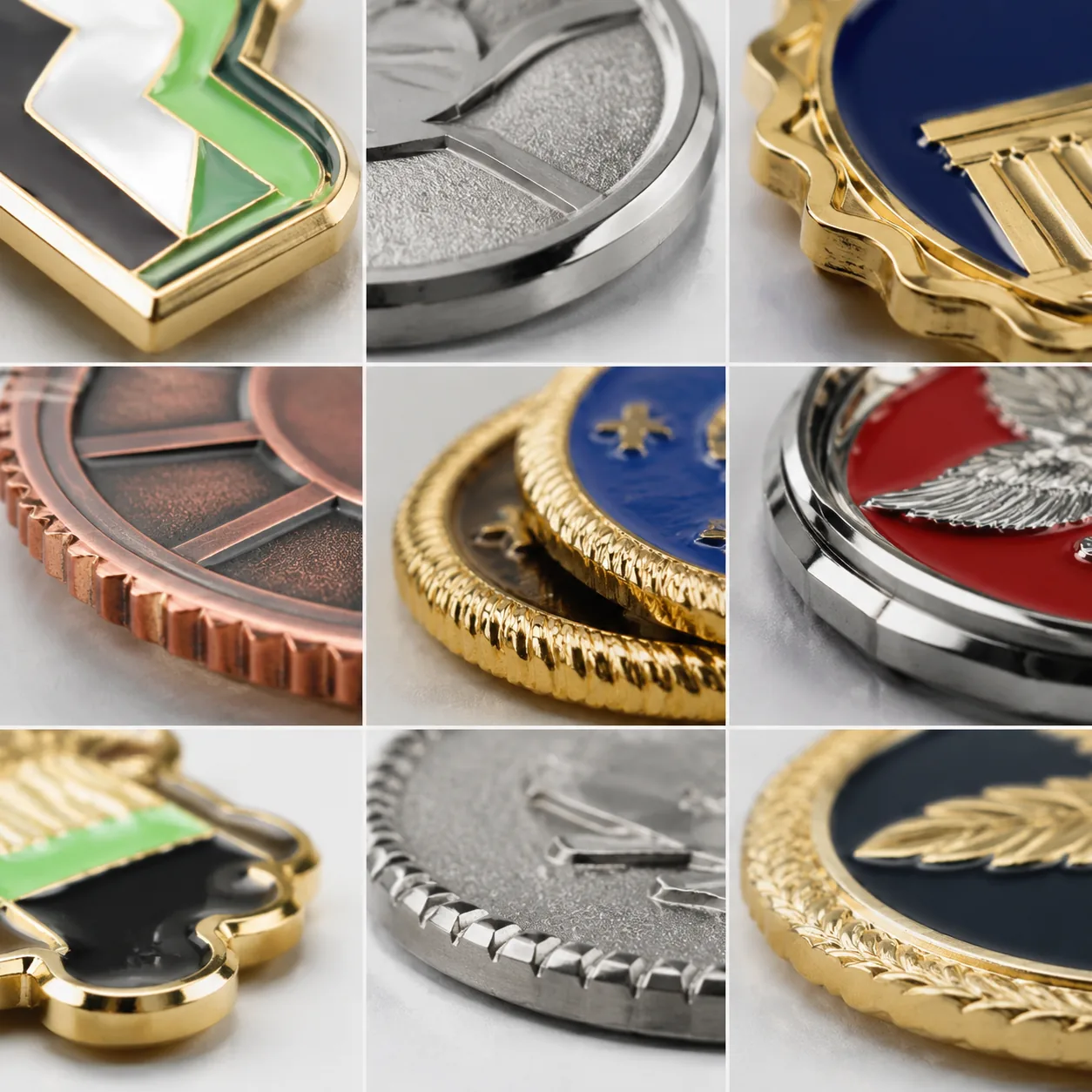
Q: Which sustainable swaps cut impact fastest without creating production risk?
Start with parts that change the material claim but do not force new tooling, geometry, or decoration methods. In 2026, the lowest-risk swaps are RPET webbing for lanyards, recycled polyester yarns for woven and embroidered patches, recycled paperboard for backing cards and sleeves, and recycled iron or recycled zinc alloy feedstock for metal bodies. These swaps usually keep the same finished dimensions, logo area, attachment hardware, carton count, and packing method, so the factory is adjusting inputs rather than rebuilding the process.
The buying error is asking for an "eco version" before ranking priorities. A usable RFQ states the goal in order: recycled content, packaging reduction, freight reduction, lower metal mass, plating reduction, or retail recyclability. Then it freezes the non-negotiables: finished size, Pantone target, attachment type, plating color, backing format, and ex-factory ship date. For example, if event timing and logo consistency matter more than the strongest possible claim, a 20 mm RPET lanyard with the same swivel hook and one-side sublimation is materially safer than introducing a bamboo-composite charm or a low-volume PLA accessory.
Claim scope also has to match the assembly. Lanyards and paper packaging are straightforward because the changed component is visible and can often be tied to a recycled-content declaration for that exact part. Metal goods require tighter language: the claim normally applies to the cast or stamped body only, not to plating, enamel, split rings, jump rings, magnets, adhesives, release liners, or clutch backs. If that distinction is missing from the spec, the marketing claim usually becomes broader than the factory evidence.
- Best first swaps: RPET lanyards, recycled paper backing cards in 300-400 gsm, recycled paper inserts, recycled iron for stamped pins and badges, recycled zinc alloy for die-cast keychains
- Higher-risk swaps: bamboo composites with thin brittle sections, cork laminates on small parts, low-grade PLA charms, weak magnetic closures sold as eco upgrades, unproven compostable films for ocean freight
- Set one primary metric before quoting: recycled-content percentage, plastic deletions per unit, lower item weight, reduced freight cube, or simpler pack-out
- Lock unchanged items in writing: dimensions, logo scale, Pantone reference, plating tone, hardware count, master-carton quantity, and target ex-factory date
Q: Which product categories accept material swaps most easily in 2026?
Lanyards remain the easiest conversion because the base structure is stable. Standard widths are still 15 mm, 20 mm, and 25 mm, with finished thickness typically 0.80 to 1.20 mm. RPET webbing runs reliably with dye sublimation, heat-transfer printing, woven labels, and one-color screen print. For a 20 mm RPET lanyard with one-side sublimation, safety breakaway, and standard swivel hook, MOQ is commonly 300 pieces, price breaks become meaningful at 500 and 1,000 pieces, lead time is usually 10 to 16 calendar days after artwork approval, and FOB pricing typically lands at USD 0.42 to 0.96 each. On very dark fills, expect black or navy to print about 5% to 10% softer than premium virgin polyester, so a strike-off is better than digital approval alone.
Patches are the next easiest. Recycled polyester yarns and threads perform well on moderate-complexity artwork with 2 to 6 spot colors. Woven patches hold finer detail; a practical minimum line width is about 0.30 mm for woven and about 0.80 mm for satin-stitch embroidery. Minimum readable text height is usually 3.0 to 3.5 mm depending on font weight and counters. MOQ often starts at 100 pieces, but 300 to 500 pieces is the more stable tier for backing options and color consistency. Lead time is typically 8 to 14 days. FOB pricing commonly runs USD 0.20 to 0.72 for woven patches and USD 0.26 to 0.98 for embroidered patches, depending on size, merrow border, laser edge, hook-and-loop backing, adhesive backing, or iron-on film.
Metal items also accept recycled feedstock, but the claim is narrower and the quality variables are different. A recycled-zinc keychain is still a plated product, and appearance depends more on die-casting density, polishing, plating thickness, enamel control, and inspection standard than on recycled percentage. MOQ often starts at 100 pieces, though 200 to 300 pieces is more efficient for plating runs and pack-out allocation. For a 40 mm die-cast keychain at 2.0 to 2.5 mm thickness with one short chain and split ring, lead time is usually 12 to 20 days and FOB pricing is commonly USD 0.72 to 1.85 each depending on plating, epoxy dome, cutouts, hardware count, and whether it is bulk packed or carded.
| Product type | Practical 2026 swap | Typical MOQ tiers | Lead time | FOB range USD | Key specs and trade-off |
|---|---|---|---|---|---|
| Lanyard | RPET polyester webbing with sublimation | 300 / 500 / 1000 pcs | 10-16 days | 0.42-0.96 | 15/20/25 mm width, 0.8-1.2 mm thick; dark fills can appear 5-10% less saturated than virgin polyester |
| Woven patch | Recycled polyester yarn | 100 / 300 / 500 pcs | 8-12 days | 0.20-0.72 | Best for fine text and 0.30 mm+ lines; small dye-lot variation can appear between repeat runs |
| Embroidered patch | Recycled polyester thread with recycled backing where available | 100 / 300 / 500 pcs | 8-14 days | 0.26-0.98 | Better for bold shapes; thread sheen is usually lower than premium rayon |
| Metal pin or badge | Recycled iron for stamping or recycled zinc alloy for die-cast shapes | 100 / 200 / 500 pcs | 10-18 days | 0.45-1.45 | Claim applies to base metal body; plating, enamel, and clutch hardware remain standard inputs |
| Keychain | Recycled zinc alloy body plus paper card or sleeve packaging | 100 / 200 / 500 pcs | 12-20 days | 0.72-1.85 | Freight still depends on thickness, hardware count, and pack-out density |
| Backing card | Recycled paperboard 300-400 gsm, FSC-certified if required | 500 / 1000 / 3000 pcs | 7-12 days | 0.03-0.16 | Uncoated board scuffs more easily; keep storage around 45-60% RH to reduce curl and edge wear |
Q: How sustainable can enamel pins, badges, and keychains realistically become?
They can improve materially, but not through a blanket claim. The practical route is to reduce process intensity while protecting appearance, attachment security, and retail presentation. In factory terms, that means choosing the right base metal, avoiding unnecessary thickness, limiting hardware count, deleting avoidable plastic packaging, and moving part of the sustainability gain into paper-based presentation rather than forcing every improvement into the plated assembly.
For flat artwork, stamped iron is usually the more efficient route. A 30 mm soft enamel pin in iron at 1.0 to 1.2 mm thickness with one butterfly clutch, standard nickel-tone plating, and no epoxy usually uses less metal mass and less finishing time than a 30 mm die-cast zinc alloy pin at 2.0 mm with cutouts, a spinner attachment, and an acrylic case. Stamped iron works best when metal lines are at least 0.25 mm, recessed enamel areas are shallow, and the design does not need rounded 3D relief. MOQ is normally 100 pieces, lead time is 10 to 15 days, and FOB pricing is often USD 0.40 to 0.86 each with a paper backing card.
Zinc alloy remains the better choice for irregular outlines, interior cutouts, curved profiles, and deeper sculpted surfaces because it handles complex geometry with lower manual rework and lower breakage risk. For common decorative finishes, the visible nickel-tone or imitation-gold top layer is often about 0.03 to 0.08 micron over copper or nickel underlayers, depending on the finish system and corrosion target. Buyers that need better shelf stability should specify anti-tarnish topcoat requirements and a salt-spray target, such as 24 to 48 hours for indoor promotional use, instead of assuming the finish name guarantees durability. Practical QC tolerances for pins and keychains are typically plus or minus 0.20 mm on overall size, plus or minus 0.15 mm on thickness, and plus or minus 1.0 mm on clutch or ring placement.
- Use stamped iron for flat designs, simple outlines, and limited cutouts
- Use zinc alloy when shape complexity or deeper relief would raise reject rates in stamped iron
- Delete epoxy domes unless the item includes printed surfaces or needs added abrasion resistance
- Use one clutch for pins under about 25 mm unless anti-rotation is required; move to two clutches only when function justifies it
- Shift the sustainability gain into packaging if the plated finish and premium look are non-negotiable
Q: What should the RFQ say, and which wording causes claim or compliance problems?
Good RFQ language is measurable, component-specific, and inspectable. Ask for a declared recycled-content target on the exact part that is changing and require the supplier to list excluded components. Example: "20 mm RPET lanyard webbing, one-side sublimation, black metal swivel hook, safety buckle, recycled paper belly band, no individual polybag." That gives the factory, packaging team, and inspection team a spec they can verify against the approved sample, BOM, and bulk photos.
Weak language creates both compliance and quality risk because it forces the supplier to guess the standard. Phrases such as "100% sustainable pin," "fully biodegradable metal keychain," or "green packaging" are not manufacturing specifications. A plated keychain is not biodegradable, and most promo products are mixed-material assemblies containing plating chemistry, enamel, adhesives, rings, magnets, release liners, or foam. If certification matters, define whether the request is about recycled content, certified fiber source, packaging reduction, or restricted-substance compliance such as REACH, CPSIA, or California Proposition 65 screening for the destination market.
QC language should be equally specific. On mixed-material orders, request a BOM or component list that identifies which parts are covered by the recycled-content declaration, plus packaging photos before mass production. For finished-goods inspection, AQL 2.5 for major defects and AQL 4.0 for minor defects is a common baseline. Claim-related major defects can include wrong-webbing substitution, undeclared virgin board, incorrect backing type, missing polybag deletion, or packaging that does not match the approved sustainable spec.
Q: How do sustainable swaps change price, MOQ, and lead time in factory terms?
Recycled options do not automatically cost more. Recycled paper cards, kraft sleeves, and folded inserts are often cost-neutral or cheaper than PET boxes, EVA inserts, or acrylic presentation cases. RPET lanyards commonly add only USD 0.02 to 0.08 per piece over standard polyester at the same width and hardware when the order is 500 pieces or more. On a 100-piece trial, the premium can widen to USD 0.06 to 0.15 because print setup, webbing sourcing, and raw-material batching are spread across fewer units.
The main cost drivers are still tooling, labor content, hardware count, plating quality, and packaging complexity. A sustainable swap can reduce FOB cost if it removes a rigid box, combines two inserts into one folded card, reduces zinc thickness from 2.5 mm to 2.0 mm, or replaces a molded plastic accessory with a woven or paper component. By contrast, custom compostable film, niche natural-fiber blends, and unusual molded bio-resins often add both cost and schedule risk because the supplier has to source through an outside converter or run a low-volume trial.
MOQ impact is usually low on metal products using recycled feedstock because tooling, casting, polishing, and plating still dominate the quote. MOQ impact is moderate on lanyards and custom paper packaging because roll minimums, print setup, and sheet utilization matter more. As a practical rule, if the replacement material is already in the supplier's regular purchasing program, lead-time impact is usually zero to four extra days. If it requires specialty laminated board, uncommon compostable film, or a nonstandard natural-fiber blend, add seven to twelve days and require a preproduction sample before bulk release.
Q: What quality failures show up when buyers switch materials too quickly?
The most common failure is approving the claim before approving the performance standard. RPET lanyards often print well, but buyers compare them against legacy virgin-polyester samples under different lighting and reject normal variation as a defect. If the art uses a large black or navy flood background, ask for a strike-off or signed sample because color density on recycled webbing can look slightly softer. For paper cards, uncoated 300 gsm recycled board can curl in humid storage, show edge wear faster than coated SBS board, and pick up rub marks if outer bags or carton liners are not specified.
On metal items, recycled feedstock is rarely the main quality problem. More common failures are porosity on low-cost die-cast lots, uneven polishing in recessed zones, plating adhesion issues, enamel overflow, and mismatched accessory hardware. Standard inspection criteria still apply: overall size within plus or minus 0.20 mm, attachment placement within plus or minus 1.0 mm, no visible blistering or bare spots at arm's length, color fills kept inside metal boundaries, and edges smooth enough for safe handling. For lanyard hardware, a practical durability check is 200 to 500 open-close cycles depending on clip style. For adhesive-backed patches or badges, specify the adhesive family and peel requirement instead of casually changing the adhesive in the name of plastic reduction.
Packaging still has to survive transport. If polybags are deleted, the substitute must provide the required transit function. A kraft sleeve is usually fine for carton-packed lanyards or flat patches, but it does not protect a mirror-polished coin or plated keychain the same way an individual pouch does. The right test is whether the replacement passes the same use-case checks: 24-hour odor check after packing, card rub test, assembled keychain drop test, and export-carton compression review for the intended stacking height.
Checklist: What should procurement confirm before approving a sustainable swap?
- Which exact component changes: base metal, webbing, yarn, board, sleeve, insert, liner, adhesive, or coating?
- Which specifications stay fixed: dimensions, Pantone target, plating finish, attachment hardware, unit weight, and carton pack-out?
- What is the measurable claim: recycled-content percentage, declared material family, certified fiber source, or packaging reduction count per unit?
- What are the MOQ tiers for both product and packaging, and where does the first meaningful unit-price break begin?
- What are the sample, preproduction, and mass-production lead times in calendar days, not vague business-day estimates?
- What appearance trade-offs are acceptable: color density, thread sheen, board texture, edge finish, surface marking, or hand feel?
- What QC plan catches substitution errors: BOM review, in-line photos, golden sample, AQL 2.5/4.0 inspection, and packaging audit?
- Which parts cannot realistically be converted, such as split rings, jump rings, magnets, plating chemistry, or some pressure-sensitive adhesives?
- Can freight improve too by reducing thickness, deleting rigid cases, increasing carton density, or removing nonfunctional inserts?
Q: When should buyers avoid the swap, and what is the safest pilot plan?
Avoid the swap when the delivery date is fixed and the design is already near process limits. If a pin uses 0.20 mm metal lines, multiple moving parts, translucent fills, and premium gift packaging, adding an untested material change at the same time increases remake and delay risk. In that case, keep product construction stable and make the first improvement in packaging, carton efficiency, or polybag deletion. The same caution applies to natural-fiber and bio-based substitutions when the item must survive humidity, abrasion, long storage, or mixed-temperature shipping.
For premium presentation pieces, finish stability should outrank marketing language. A buyer expecting a mirror-polished gold-tone coin or premium badge will notice weak plating, scuffed packaging, or poor insert fit much faster than a recycled-content story buried in the BOM. The better decision is to simplify where the end user will not perceive a loss and protect the visible specifications that drive brand value.
The safest pilot is narrow, comparative, and easy to inspect. Start with one product family, usually a 20 mm RPET lanyard program or a standard pin or keychain paired with recycled paper packaging. Keep the artwork identical to the previous version so procurement can isolate the material effect. In the RFQ, request three quote lines: standard spec, swap A, and swap B. Example: standard polyester lanyard versus RPET lanyard; polybag versus belly band; zinc-alloy keychain with PET box versus the same keychain on a 350 gsm recycled card with a kraft sleeve. Approve the version that balances cost delta, lead time, reject risk, and brand appearance, not simply the version with the broadest sustainability wording.
Have a project? Send your artwork and target quantity and we’ll reply with a detailed quotation within 12 working hours.
Ready to get this made?
Send your sketch, target quantity and ship-date. Detailed quotation in 12 hours.



