Sustainable Material Swaps for Custom Promo Products in 2026
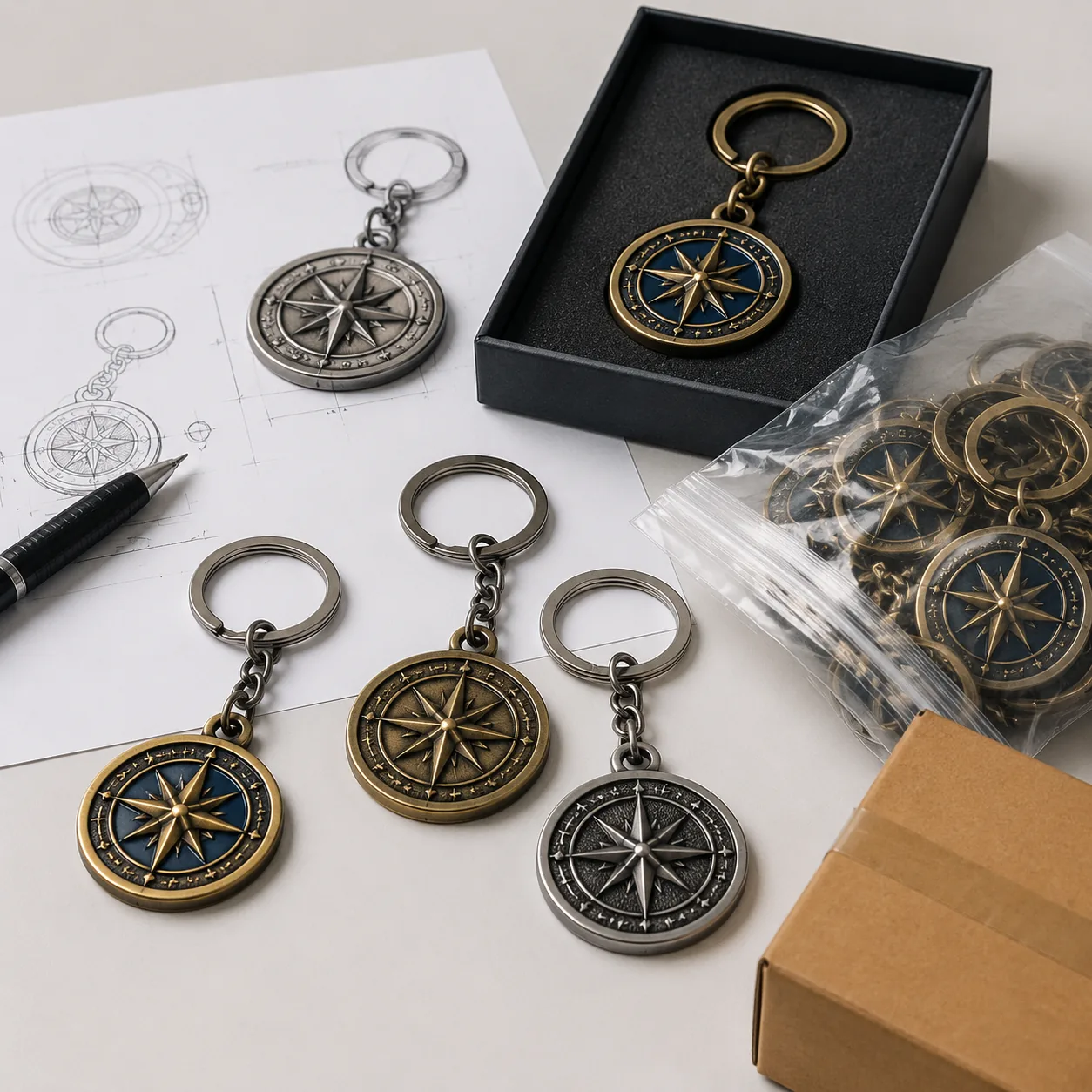
When sustainability goals collide with production reality
Most promo buyers do not struggle to find a greener concept. They struggle to replace a proven specification without creating a new failure point in cost, finish, delivery, durability or claim risk. A distributor may have sourced zinc alloy keychains for years, then a brand team asks for recycled content, less plastic packaging and a lower-carbon story while still expecting the same unit FOB, the same in-hands date and the same gift-level feel. The reset usually starts there: not with artwork, but with selecting a substitute that still fits the real use case.
The useful sourcing question is not whether a material sounds sustainable on paper. It is whether it survives the same handling cycle, accepts the same decoration method, meets the same attachment loads and can be produced inside the same event, retail or campaign calendar. For 2026 buying, the most reliable method is still a side-by-side comparison by product family. A smart swap for a lanyard is often a weak swap for a commemorative pin, and a packaging change that removes plastic may also increase scratch risk, moisture exposure or carton damage.
In practice, the goal is rarely perfect material purity across every SKU. The commercial goal is to remove the highest-impact or least necessary material first while protecting function and acceptance rate. That often means keeping premium metal where hand-feel and collectability matter, shifting fabric goods to RPET where color tolerance allows it, and stripping unnecessary unit polybags before forcing a hero item into a weak substitute. Buyers that approach the brief this way usually get a more credible sustainability improvement with fewer reworks.
Comparison table: material swaps that hold up commercially
| Standard spec | Lower-impact swap | Best use case | Typical MOQ | Lead time | USD FOB range | Key trade-off |
|---|---|---|---|---|---|---|
| Zinc alloy soft enamel pin, 1.2-1.5 mm | Stamped iron soft enamel pin, 1.0-1.2 mm | Event pins, flat logos, campaign runs under 50 mm | 100 / 300 / 500 pcs | 10-14 days | $0.34-$0.88 vs $0.27-$0.73 | Iron cuts cost and weight, but edges are less refined and deep 3D relief is weaker |
| Zinc alloy die-cast keychain, 3.0-4.0 mm | Stamped iron keychain, 1.5-2.0 mm + welded ring | Flat shapes under 60 mm, 1-4 spot colors | 100 / 300 / 500 pcs | 12-16 days | $0.68-$1.45 vs $0.54-$1.18 | Not suitable for sculpted forms, undercuts, hollow backs or heavy rounded profiles |
| PVC molded keychain, 2D/3D, 3-5 mm | RPET webbing key fob, 20-25 mm + split ring | Schools, travel, utilities, staff giveaways | 300 / 500 / 1000 pcs | 12-18 days | $0.42-$0.95 vs $0.36-$0.82 | Lower virgin plastic use, but a very different visual language from molded PVC |
| Virgin polyester lanyard, screen print or heat transfer | RPET lanyard with same hardware set | Events, staff ID, conference packs | 500 / 1000 / 3000 pcs | 10-15 days | $0.32-$0.78 vs $0.30-$0.74 | Small color shift risk on bright Pantones and full-bleed sublimation |
| Embroidered patch + polybag | Woven patch + paper backing card or belly band | Fine-detail logos, lower-bulk packing | 300 / 500 / 1000 pcs | 12-16 days | $0.24-$0.68 vs $0.21-$0.61 | Woven detail is sharper, but texture is flatter than embroidery |
| Virgin acrylic charm, 2.0-3.0 mm | FSC paperboard charm, 1.0-1.5 mm + 25-32 micron matte lamination | Short-life indoor campaigns, museum or school programs | 500 / 1000 / 3000 pcs | 8-12 days | $0.18-$0.42 vs $0.11-$0.31 | Lower durability, weaker water resistance and faster edge wear |
| Self-seal polybag unit pack | Glassine bag, paper sleeve or no individual pack | Bulk mailers, internal kits, retail bundles | 500 / 1000 / 3000 pcs | Adds 3-7 days if custom cut or printed | +$0.01-$0.06 per unit typical | Less moisture barrier and abrasion protection than PE polybags |
These categories are mixed on purpose because sustainability requests usually hit a full promo set, not one SKU in isolation. A buyer may get the fastest plastic reduction from packaging while the hero item still needs metal to carry gift value. In other orders, switching a cast zinc alloy keychain to stamped iron cuts metal weight, tooling complexity and FOB with almost no visible penalty if the artwork is flat, the linework is open enough and the size stays below about 60 mm.
Before quoting, experienced factories usually need three fixed inputs: actual service life, target unit FOB and the visual features that cannot be compromised. Without those, buyers tend to over-specify recycled or paper-based content on low-risk components while leaving the real failure point undefined, usually attachment strength, plating durability, color match or packaging abrasion.
Pins and keychains: simplify the metal process before replacing metal
For pins, badges, medallions and many keychains, the most practical lower-impact move is usually not replacing metal with non-metal. It is choosing a lighter or simpler metal process. Stamped iron is the first alternative to test against zinc alloy because it uses thinner sheet stock, suits flat or lightly raised artwork and typically lands 8 to 18 percent lower on FOB at common promo volumes. A typical iron pin runs 1.0 to 1.2 mm thick, while zinc alloy soft enamel often runs 1.2 to 1.5 mm, and die-cast keychains are commonly 3.0 to 4.0 mm depending on relief and back structure.
The swap works when line width stays above about 0.25 mm, enclosed text is not too fine, relief depth is modest and open areas are not so large that the part bends during stamping, plating or sea transit. If the design depends on rounded sculpted edges, deep recessed zones, undercuts, hollow 3D forms or a heavier premium hand-feel, zinc alloy still performs better. Brass remains relevant for imitation hard enamel or cloisonne-style builds where polished edges, smooth fills and premium presentation matter, but brass is rarely the first choice when the project is trying to lower both cost and material intensity.
Specs matter more than the sustainability label. For stamped iron items, buyers should define plating thickness at roughly 0.03 to 0.05 microns for standard nickel, black nickel or gold-tone finishes, with an anti-tarnish topcoat if transit plus storage may run 30 to 60 days in humid conditions. Dimensional tolerance of plus or minus 0.15 mm on overall size is normal for small stamped parts under 50 mm. Front-side enamel should stay within recessed borders without visible overflow at 30 cm visual inspection, and burrs should not catch on a cotton glove or poly sleeve. For keychains, the ring weld or jump ring closure should be checked by pull test, not approved on appearance alone.
A realistic quality plan is AQL 2.5 for major defects and 4.0 for minor defects. Major defects include wrong plating tone, missing attachment parts, sharp burrs, unreadable logo details, exposed base metal on the front or obvious enamel voids in the main graphic area. Minor defects usually cover light backside scratches, tiny dust points outside the primary visual zone or slight edge texture variation. That distinction matters because buyers sometimes approve a lower-impact process, then reject process marks that are normal for the lower-cost route they selected.
Replacing PVC and acrylic: use fabric or paper only when service life fits
The hardest swaps are usually visual rather than mechanical. Buyers often want to replace PVC or acrylic because those materials look less natural, but the replacement only works if the product does not depend on molded form, gloss, transparency or long-term scratch resistance. The most commercially reliable substitute is often not molded at all. An RPET strap key fob with a woven label, jacquard pattern or heat-transfer print can replace a PVC keychain when the buyer wants giveaway utility, lower virgin plastic use and simpler assembly.
Common RPET key fob specs are 20 mm or 25 mm webbing width, finished folded length of 100 to 130 mm, a 25 mm or 30 mm flat split ring and either box-stitch reinforcement or a metal clamp. For a useful benchmark, specify a 7 to 10 kg pull-force test on the strap-to-ring joint for light giveaway use and 12 kg or more if the item is expected to carry daily keys. That is far more actionable than writing durable attachment on a PO. If the fob includes a woven label, keep small text above roughly 1.2 mm cap height and line strokes above 0.3 mm to avoid detail loss.
Paperboard or laminated fiber charms can replace acrylic add-ons for museum shops, school campaigns, product launches and other short-life indoor programs. The limits should be stated clearly. Paper-based charms scuff faster, absorb moisture at exposed cut edges and lose crispness after repeated contact with keys, zippers or wet bags. If a visible scratch at day 30 would trigger a complaint, acrylic is still the safer specification even if the unit environmental story is weaker.
When paper is acceptable, ask for FSC-certified board around 1.0 to 1.5 mm, matte or soft-touch lamination of 25 to 32 microns if abrasion is a concern, hole-position tolerance within plus or minus 0.5 mm and an eyelet retention check before mass production if the board carries a ring. At 1,000 pieces, these items can run 10 to 25 percent below acrylic FOB and reduce freight weight, but they should be sold as campaign accessories or message carriers, not as long-life keepsakes.
RPET lanyards: usually the cleanest low-risk swap
Among standard promo products, the lanyard is often the easiest sustainability upgrade with the lowest commercial risk. RPET lanyards now perform well enough for conferences, schools, visitor IDs and most staff-use programs, and the cost premium versus virgin polyester has narrowed to near parity on many orders. Standard widths remain 10 mm, 15 mm, 20 mm and 25 mm, with webbing thickness commonly around 0.6 to 1.2 mm depending on weave and print method. At 1,000 to 5,000 pieces, production lead times of 10 to 15 days after artwork approval are still typical; a pre-production sample usually adds 3 to 5 days.
The main caution is color consistency. Bright oranges, saturated greens and some strong blues can reproduce slightly differently on RPET versus virgin polyester because of yarn composition, weave texture and print process. Dye-sublimated full-color lanyards show this most often. If exact brand matching matters across lanyards, inserts and metal accessories, do not approve from a digital proof alone. A physical sample at 1:1 scale is much cheaper than remaking a 3,000-piece event order that misses Pantone expectations.
Hardware specification matters more than the recycled yarn claim if the lanyard is functional. Define hook style, breakaway requirement, buckle option, stitch count at folded ends and swivel performance. Standard trigger hooks are adequate for badge holders, but heavier phone tabs or tool attachments may need a stronger dog hook, lobster clasp or upgraded swivel. Width tolerance should be called out at plus or minus 1 mm, finished length tolerance at plus or minus 10 mm, and the print method should be fixed on the approval sheet because screen print, heat transfer and jacquard all change appearance, hand-feel, lead time and unit cost.
For event programs, a solid working spec is 20 mm RPET webbing, sublimation print on both sides, black safety breakaway, detachable buckle and trigger hook, packed 50 pieces per PE bag or paper-banded bundle depending on hardware scratch risk. That kind of exact build sheet prevents vague approvals such as recycled lanyard, which still leaves too much room for substitution in yarn weight, hook quality or packing method.
Patches and packaging: the fastest way to cut plastic without changing the hero SKU
Buyers often start with the product body, but packaging is frequently the lowest-risk place to reduce plastic without changing tooling or artwork. A standard self-seal polybag can often be replaced by a glassine bag, paper sleeve, belly band, backing card or counted bulk pack. On internal kits, employee welcome packs and large corporate distributions, eliminating individual unit bags altogether can remove a meaningful amount of material with no change to the product itself and almost no MOQ penalty.
Woven patches are also worth comparing against embroidered patches when the brief is lower bulk, finer detail and cleaner packing. For logos with thin text, small outlines or tight repeat patterns, woven construction often reads more accurately than embroidery because thread build is flatter. Common finished thickness is around 0.6 to 1.0 mm for woven versus 1.0 to 1.8 mm for embroidery, which can improve packing density and reduce rub points in transit. The trade-off is tactile: woven patches look sharper, but feel less dimensional and less traditional.
Packaging trade-offs should be judged against finish sensitivity. Polybags still outperform paper for moisture barrier, dust control and scratch isolation, especially on polished metal surfaces, black nickel plating, mirror-finish coins or acrylic pieces that rub easily in transit. Paper-based unit packing is more forgiving for soft enamel pins, woven patches, embroidered goods and textile products where light contact marks are less visible. A smart downgrade reduces plastic and labor. A careless one creates rub marks, plating complaints and re-sorting work when cartons arrive.
For export orders, the factory should confirm inner-pack quantity, master-carton count, carton size, gross weight and whether desiccant is needed for sea shipment. A practical hybrid is common: paper-first presentation for retail or campaign messaging, combined with a thin protective sleeve only for finishes that truly scratch. That approach protects both the sustainability claim and the sellable acceptance rate.
Pre-approval checklist: the specs that prevent green-themed failures
- Match the material to real service life: one-day event, 90-day campaign, 12-month staff issue or multi-year retail item.
- Write the exact material on the PI and approval sheet, such as RPET webbing, stamped iron, FSC paperboard or recycled kraft sleeve, not vague terms like eco or green.
- Use realistic MOQ tiers by process: 100-300 pcs for many metal items, 300-500 pcs for strap fobs and patches, 500-1000 pcs for lanyards and paper conversions.
- Confirm whether the substitute adds 2-5 production days for sourcing, sampling, lamination, plating, drying or custom packing.
- Lock measurable specs: thickness, size tolerance, plating micron, lamination micron, pull force, hook type, stitch count and packing count.
- Apply shipment criteria such as AQL 2.5 major and 4.0 minor unless the retail program requires tighter limits such as AQL 1.5 major and 2.5 minor.
- Approve a physical pre-production sample when the swap changes sheen, texture, edge quality, stitch definition or Pantone appearance.
- Check packing early because paper-based unit packs can change carton quantity, freight weight, cube utilization and damage rate.
The most common sourcing mistake is approving a material story instead of a manufacturing specification. If the order says recycled lanyard but does not define width, hardware, print method and inner-pack count, the buyer has not actually controlled the product. The same logic applies to iron versus zinc alloy: the metal swap is only meaningful if thickness, finish, edge quality and attachment strength are documented in the final approval set.
For retail-facing orders, decide where visible variation is acceptable. Most buyers can tolerate slight weave variation on RPET webbing more easily than uneven plating on a commemorative pin or a scratched clear charm on a gift set. Put the tightest controls on the first-touch feature and relax controls where process variation is commercially acceptable.
How to quote lower-impact promo products in 2026 without hiding cost
Start by splitting the brief into hero items and support items. Keep premium metal where collectability, weight and edge finish drive value, then pursue reductions in lanyards, strap components, backing cards and packaging. That usually creates a more defensible sustainability claim than forcing every item into the same substitute material and then paying for remakes, rush freight or complaint handling.
When requesting quotes, ask suppliers for three versions side by side: the current build, a lower-cost lower-impact option and a balanced option. Each should list MOQ tier, production lead time in days, unit FOB in USD, tooling charge if any, packaging method and the expected performance compromise. For example, on a 1,000-piece campaign set, a supplier might quote a zinc alloy keychain at $0.92 FOB in 15 days with a $65 mold charge, a stamped iron version at $0.74 FOB in 13 days with a $45 die charge and an RPET strap fob at $0.46 FOB in 14 days with no mold charge. That format exposes trade-offs early and prevents the common problem of receiving only the one version a factory prefers to run.
If you are buying pins, keychains, patches and lanyards together, use one cross-item approval sheet that lists material, thickness, size, finish, attachment, packaging and carton plan for every SKU. That single view catches mismatches faster than separate approvals, especially when a sustainability request affects both product construction and packing assumptions. In most 2026 briefs, the practical sequence is simple: keep one item premium, downgrade one item intelligently and remove one unnecessary plastic component from packaging first.
Have a project? Send your artwork and target quantity and we’ll reply with a detailed quotation within 12 working hours.
Ready to get this made?
Send your sketch, target quantity and ship-date. Detailed quotation in 12 hours.



