Sustainable Material Swaps for Custom Giveaways: Where They Fail in Production
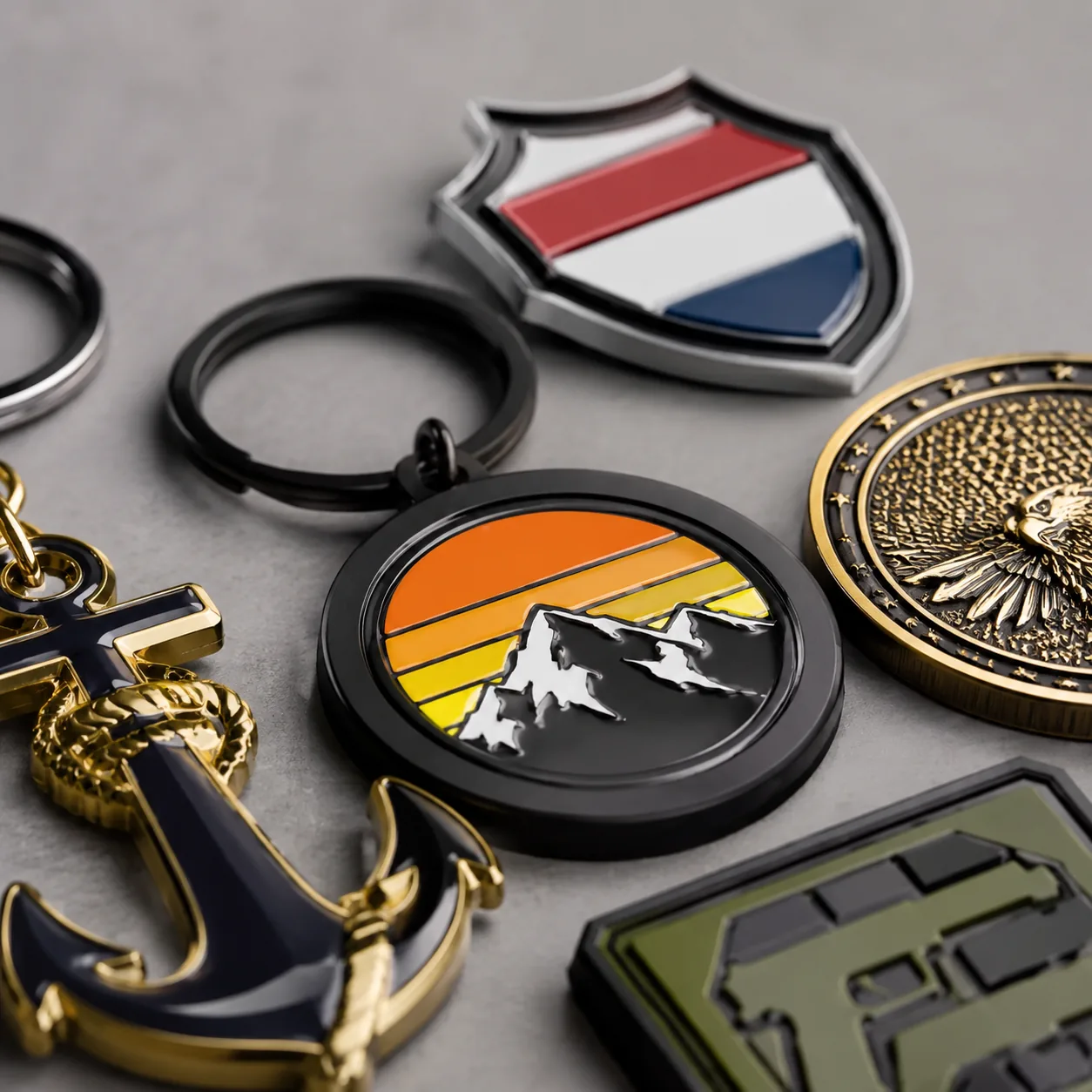
Why sustainable swaps fail before bulk production
Most failed material swaps are not caused by recycled or lower-impact materials being unusable. They fail because the part is still engineered to the limits of the original substrate. A buyer approves recycled zinc alloy, RPET webbing or recycled acrylic at quote stage, but the drawing still assumes virgin-material flatness, gloss, edge strength, print clarity and hole strength. The pre-production sample then shows porosity, shade drift, warpage, edge whitening, weak bridges or inconsistent polish, and the project enters rework before bulk production has even started.
The practical fix is to treat every sustainability change as a process-capability review before tooling release. That means revising minimum line width, recess depth, wall thickness, hole diameter, plating stack, print build, packaging method and inspection criteria at RFQ stage. If the drawing and QC target stay unchanged, the lower-impact version is judged against a production window it cannot reliably hold.
This matters most on campaign products where buyers expect close cosmetic consistency across multiple SKUs: lapel pins, keychains, badges, woven patches and lanyards. The right question is not whether a recycled material exists. It is whether the design can be adjusted to the real molding, stamping, weaving, printing and finishing limits of that specific material and process.
1. Recycled metals fail on porosity, flatness and over-specified finishes
Recycled brass, recycled iron and recycled zinc alloy are workable for pins, badges, keychains and coins, but they are less forgiving when the design depends on mirror polish, large blank metal fields or thin unsupported details. Mixed-source recycled feedstock usually has more inclusion variation and micro-porosity after die casting or stamping. At substrate level this may be minor. After bright nickel, bright gold or black nickel plating, it becomes visible enough to trigger cosmetic rejects.
For stamped recycled brass badges under 35 mm, keep finished thickness at 1.2 to 1.5 mm. Between 35 and 50 mm, 1.5 to 1.8 mm is safer if front-face flatness must hold within +/-0.15 mm. For die-cast recycled zinc alloy, use 1.2 mm minimum wall thickness, 0.25 to 0.40 mm recessed depth, and at least 1.5 mm thickness on unsupported tabs or projections longer than 6 mm. Below 1.2 mm overall thickness, edge wave, sink and pinhole exposure rise sharply, especially near jump-ring holes, clasp bosses and long outer contours.
Detail limits also need to open up. A practical minimum raised line width is 0.30 mm for stamped recycled brass and 0.35 mm for recycled zinc die casting. Enamel channels should be 0.40 mm minimum; 0.45 mm is safer where a boundary runs more than 12 mm without interruption. If a badge has a blank metal field above roughly 400 mm2, mirror finishes will magnify every substrate inconsistency. Satin nickel, matte gold, antique brass and light sandblast textures are usually more stable and can reduce cosmetic reject rates by several percentage points in bulk runs.
- Treat visible front-face porosity at 30 cm under 800-1000 lux as a major defect.
- Use appearance AQL 2.5 major / 4.0 minor, with functional AQL set separately for clasps, jump rings and moving parts.
- Avoid mirror-bright plating on recycled-zinc parts with broad flat fields unless the buyer accepts higher cosmetic fallout.
- If the design needs ultra-flat reflective metal, specify virgin brass stamping or change the finish target before tooling approval.
Indicative FOB for a 40 mm recycled-zinc keychain with standard plating and split ring is usually USD 0.72-1.10 at 500 pieces, USD 0.62-0.95 at 1000 pieces, and USD 0.54-0.84 at 3000 pieces. For a stamped recycled-brass badge with soft enamel and butterfly clutch, expect roughly USD 0.68-1.25 at 500 pieces and USD 0.58-1.05 at 1000 pieces, depending on plating, backing card and packaging. Sampling is commonly 7-10 days after artwork approval; bulk production is usually 15-22 days.
2. Recycled acrylic fails on haze, warpage and hole cracking
Acrylic keychains and bag charms are often the first SKU where buyers test a lower-impact material. The common swap is virgin PMMA to recycled acrylic sheet. The failure mode is rarely catastrophic breakage. It is cosmetic and structural instability: edge whitening after laser cutting, sheet bow after UV cure, hairline crazing around holes, and haze variation from lot to lot. These problems are most visible on transparent or lightly tinted parts where the buyer expects near glass-like clarity.
For recycled acrylic, 3.0 mm sheet is the practical baseline for most custom shapes. A 2.0 mm sheet is only dependable for parts under 40 mm with no narrow bridges, no acute inside corners and no large hardware holes close to the edge. Keep hole diameter at 3.5 mm minimum for standard keychain hardware, with 2.5 mm minimum edge margin and 3.0 mm preferred on parts above 50 mm. Long narrow bridges should stay at 6.0 mm minimum width; below that, bowing during print cure and cracking in transit become much more likely.
Print construction matters as much as sheet thickness. Specify whether the build is reverse print on second surface, two-face direct UV print, or a laminated sandwich structure. Recycled sheet normally shows more haze variation than virgin PMMA, so sandwich construction often gives a cleaner visual result, but total thickness rises to about 4.5-6.0 mm and unit cost typically increases 20-45 percent. UV ink adhesion should be checked by cross-hatch tape test after 24 hours cure. If dark transparent inks are used, ask for a heat-distortion review because localized curing heat can warp thinner recycled sheets.
A 50 mm recycled acrylic keychain in 3.0 mm sheet with one-side UV print and split ring typically runs USD 0.58-0.98 at 500 pieces and USD 0.48-0.82 at 1000 pieces FOB. A sandwich build, epoxy topcoat or layered acrylic construction usually moves pricing to USD 0.85-1.40 at 1000 pieces. MOQ is often 100-300 pieces for simple shapes, but defect rates and color stability improve once the run is above 500 pieces. Sampling is normally 5-7 days; mass production is usually 12-18 days after sample sign-off.
3. RPET lanyards fail on color approval, handfeel and hardware assumptions
RPET lanyards are often treated as a direct substitute for standard polyester, but the webbing does not behave identically. Dye uptake, surface smoothness and stiffness vary by yarn source, recycled-content ratio and weave density. The first complaint is usually corporate color mismatch. The second is handfeel. A Pantone shade that prints cleanly on virgin polyester can land duller, greener or grayer on RPET, and some RPET tapes feel firmer even when tensile performance is acceptable.
If color matters, approval has to be done on the actual RPET webbing lot. Paper proofs are not enough. For 15, 20 or 25 mm RPET lanyards, require a strike-off or lab dip on production webbing before mass production. A realistic instrumental target is Delta E 3.0-4.0 under D65 lighting with a 10 degree observer. If visual approval will control, write the viewing condition into the PO. Daylight, office fluorescent and warehouse lighting can each change the pass-fail decision.
Performance specs also need to be explicit. For event-use lanyards, webbing weight of 110-130 gsm is common. For ID holders, whistle attachments or heavier clips, 130-160 gsm is safer. A typical finished thickness is about 0.8-1.2 mm depending on weave and print method. Safety breakaways, trigger hooks and swivel clips should be pull-tested as assembled hardware, not treated as interchangeable with the previous polyester run. As a baseline, many buyers use a minimum 8 kgf pull force for standard hook attachment, 12 kgf for heavy-duty bulldog clip assemblies, and 2.5-3.5 kgf controlled release for breakaways depending on region and use case.
| Material swap | Typical failure mode | Preventive spec | Indicative FOB |
|---|---|---|---|
| Virgin polyester to RPET lanyard | Duller print, stiffer handfeel, shade drift | Approve strike-off on actual webbing lot; Delta E 3.0-4.0; 110-130 gsm event grade | USD 0.48-0.78 at 1000 pcs |
| Virgin acrylic to recycled acrylic keychain | Edge crazing, bowing, haze variation | 3.0 mm sheet; 3.5 mm min hole; 2.5 mm min edge margin; 6.0 mm min bridge width | USD 0.48-0.82 at 1000 pcs |
| Virgin zinc alloy to recycled zinc alloy badge | Porosity, sink marks, inconsistent polish | 1.2 mm min wall; 0.25-0.40 mm recess; matte or satin finish on large flat areas | USD 0.62-0.95 at 1000 pcs |
| PVC patch to RPET woven patch | Loss of relief, muddy small text | 3.0 mm min text height; 0.50 mm min positive line; 1.5 mm quiet margin to edge | USD 0.24-0.52 at 1000 pcs |
For a 20 mm sublimated RPET lanyard with standard swivel hook and safety breakaway, FOB is typically USD 0.48-0.78 at 1000 pieces and USD 0.42-0.68 at 3000 pieces. Sampling usually takes 7-10 days, with bulk production in 14-20 days. MOQ can be as low as 300 pieces, but color-lot consistency, hardware matching and unit economics are meaningfully better at 1000 pieces and above.
4. Replacing PVC changes the design language, not just the material
When sustainability briefs ban soft PVC for zipper pulls, patches and tags, buyers often keep artwork designed for molded PVC and move it directly into woven, RPET or silicone alternatives. That is where the sample fails. PVC handles bold relief, soft radius transitions, isolated color blocks and visible depth. Woven and recycled-textile constructions depend on thread count, weave structure, border control and backing stability. Small icons soften, reverse text closes up and the final sample looks weak even when the factory has produced it correctly.
For woven or RPET patches replacing PVC, keep readable text at 3.0 mm minimum height and positive line width at 0.50 mm minimum. Fine reverse lines should stay above 0.60 mm. Hold critical artwork at least 1.5 mm from laser-cut or heat-cut edges. For a 60 mm patch, a woven density of roughly 75-100 denier equivalent can hold standard logos well, but not microtext or very tight negative space. If the original design depends on visible depth, use a mixed build such as woven base with partial embroidery, twill plus merrow border, or layered sewn applique.
That usually adds 3-5 production days and raises FOB from about USD 0.24-0.45 for a simple 60 mm woven patch at 1000 pieces to about USD 0.42-0.78 for a layered construction. There are also cases where the sustainable substitute is simply the wrong technical choice. If the item needs molded 3D relief, strong dirt resistance and crisp edge definition for outdoor use, a PVC-free textile substitute may not reproduce the design intent. That conflict should be identified at quote stage, not after the brand team rejects the first sample.
5. Lower-impact finish stacks still fail under handling and abrasion
Another common error is simplifying the finish stack in the name of sustainability without changing the performance target. Buyers approve thinner plating, remove a clear topcoat or switch to an alternative coating without any abrasion testing. The problem does not show at line end. It shows after packing, shipping and use as tarnish, edge rub-through, black spotting, coating peel or ink lift.
For plated metal giveaways, specify thickness ranges rather than finish names only. Decorative gold-tone flash is commonly 0.03-0.05 microns. Decorative nickel or black nickel is typically 0.05-0.10 microns. These are cosmetic systems, not heavy-wear systems. If the item will sit loose with keys, raised edges will wear unless the design uses a recessed print area, a protective epoxy dome or a clear lacquer topcoat. On recycled substrates, antique nickel, antique brass and satin finishes usually hold cosmetic consistency better than mirror finishes because they hide small substrate variation.
QC should match the use case. A practical baseline is tape adhesion testing for printed areas, a 24-hour humidity hold at 40 degrees C and 85 percent RH for plated-part appearance review, and a dry-rub test of at least 50 cycles on exposed high points for pocket-carried items. If the product is a keychain or coin, cosmetic inspection should also be repeated after the part has been packed and unpacked from the real transit configuration. Many handling marks first appear there, not at the end of the plating line.
6. Paper-based packaging creates avoidable transit damage if it is under-specified
Switching from polybags or blister inserts to paper cards, glassine sleeves or molded pulp trays can reduce plastic use, but it also changes how parts move in transit. Pins scratch each other, keychains emboss into backing cards, coins rub through sleeves and recycled paper dust contaminates polished surfaces. These failures often appear after 25-35 days of ocean transit, when carton vibration, compression and humidity cycling have had time to work on the pack.
Packaging has to match product mass, finish and attachment geometry. A light enamel pin under 25 g can usually ship on a 350-400 gsm backing card with a glassine sleeve. A 60-120 g coin or heavy keychain generally needs individual wrap such as tissue, glassine or a thin protective sleeve inside the paper retail pack. Cards below about 300 gsm are more likely to crease around butterfly clutches or split rings. Inner cartons should be packed tightly enough to limit movement, and the supplier should run a drop test or internal transit simulation before locking mass-pack instructions.
A mixed-pack approach is often the technically sound option: recycled paper presentation plus a minimal protective sleeve only where surface damage risk is high. That is less attractive than a zero-plastic claim, but it prevents remakes and scrap. Inspection should separate packaging defects from product cosmetic defects so a scratched plated item is not accepted simply because the paper pack itself looks fine.
7. The RFQ must define production controls, MOQ logic and approval points
Most failed sustainable swaps trace back to weak RFQs. Buyers state recycled content, plastic reduction or alternative-material goals, but they do not rewrite the engineering brief around the new substrate. The supplier then quotes to old assumptions, tooling is made, and both sides discover too late that the material cannot hold the same sharp corners, gloss, shade accuracy or attachment stress.
A workable RFQ states the exact material target, the non-negotiable brand requirements and the dimensions or finish attributes that may be relaxed. For example: recycled zinc alloy acceptable; mirror finish not required; matte antique nickel preferred; front-face porosity visible at 30 cm not acceptable; backside cosmetic variation acceptable; jump-ring pull force minimum 8 kgf; virgin-plastic packaging to be reduced by 80 percent versus prior run. That gives the supplier an engineering brief instead of a sustainability slogan.
- State the exact swap: recycled zinc alloy, 3.0 mm recycled acrylic sheet, 20 mm RPET webbing or RPET woven patch base.
- Mark which features are mandatory and which can soften, especially gloss, flatness, edge sharpness and Pantone match.
- Set process minimums for the new material: thickness, line width, recess depth, hole size, text height and edge margin.
- Define appearance AQL separately from functional AQL, especially on items with clips, clasps, rings or moving parts.
- Request a pre-production sample from the actual material lot where lot-to-lot variation is meaningful.
- Ask the supplier to flag artwork below process minimums before tooling release, not after sample failure.
- Compare quotes on the same MOQ tier, hardware, packaging method, finish stack and inspection level.
- Use realistic MOQ tiers: 100-300 pieces for trial orders, 500-1000 pieces for stable costing, and 3000+ where color and material sourcing are more repeatable.
For next orders, start with one technically compatible SKU rather than an entire campaign set. RPET lanyards, recycled acrylic keychains with simple silhouettes, and recycled-brass or recycled-zinc badges with matte or textured finishes are usually safer first trials than mirror-polish coins or micro-detail molded parts. Sampling commonly runs 5-10 days for lanyards and acrylic items and 7-12 days for metal items with tooling. Mass production is typically 12-28 days depending on process, finish and packaging. The objective is not to buy the greenest-sounding option. It is to specify the most repeatable lower-impact option that can pass sample approval, survive transit and be reordered without avoidable surprises.
Have a project? Send your artwork and target quantity and we’ll reply with a detailed quotation within 12 working hours.
Ready to get this made?
Send your sketch, target quantity and ship-date. Detailed quotation in 12 hours.



