Split Shipments vs One Batch: Cost and Lead-Time Math
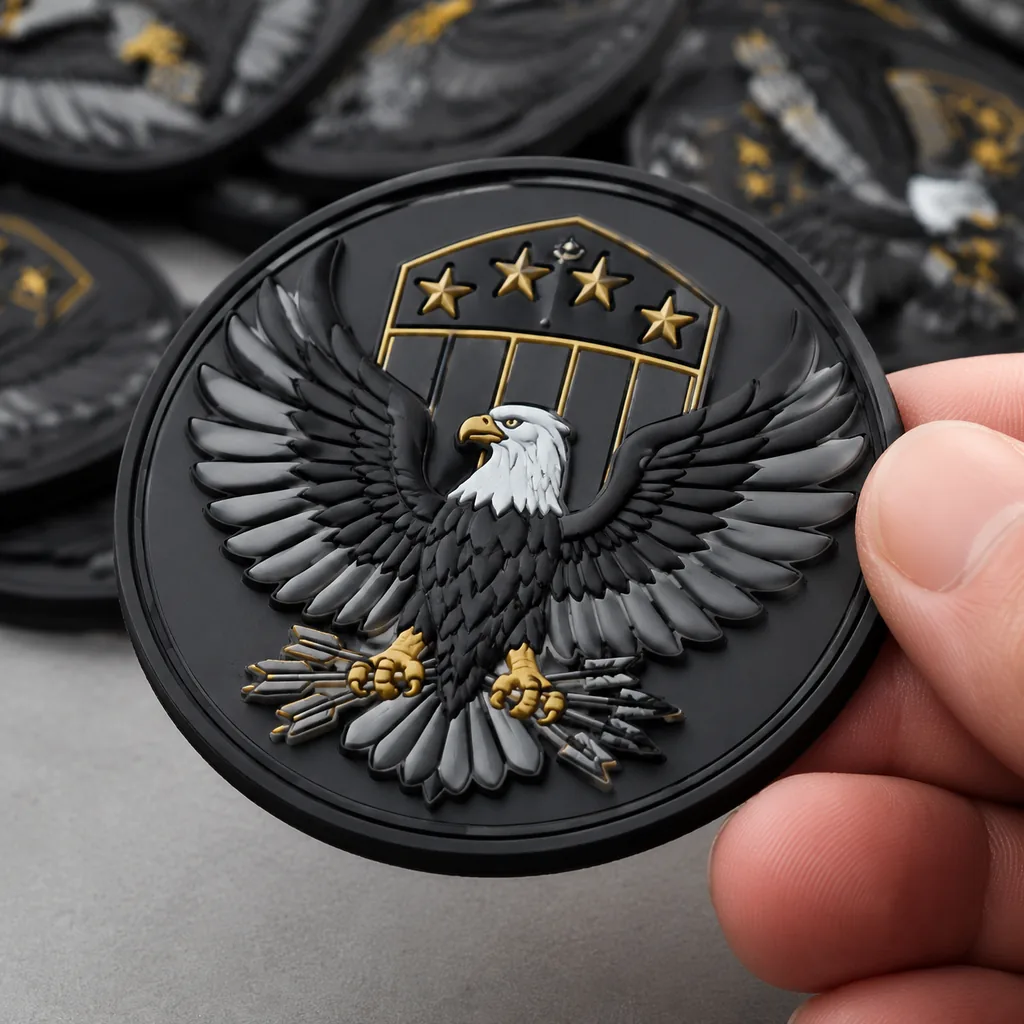
The real sourcing choice: split dispatches or split production?
For custom metal promos, the main 2026 decision is usually not whether a supplier can make the SKU. It is whether the buyer should manufacture once and release in waves, or run two separate production lots. The distinction matters because the cost drivers are different. A shipment split means one production lot, one tooling setup, one plating route, one main QC event, and two or more dispatch dates. A production split means two manufacturing runs that re-enter die loading, plating allocation, enamel filling, curing, packing, and inspection as separate jobs.
A typical requirement is concrete: 2,000 pieces needed in 18 to 22 calendar days for an event launch, 3,000 more required in 35 to 45 days for distributor inventory, and a possible replenishment only if first-month sell-through exceeds 70%. In that case, a one-lot production with staged shipment releases is usually the lower-cost structure, provided the product spec, packing method, and carton marks are fixed before mass production begins.
This is especially true for stamped soft enamel pins, die-cast keychains, challenge coins, embroidered patches, and sublimation lanyards sold as one global SKU with only minor regional packaging changes. If the buyer introduces the split after production has started, the economics worsen quickly. The factory may need to reopen cartons, re-sort loose units, reprint marks, rebook loading, or store finished stock longer than planned. Those are avoidable costs when the release schedule is written into the PO or PI from the start.
Where split costs actually show up
Buyers often assume split shipments are expensive because they see multiple freight movements. In practice, for FOB buying, the larger penalty usually sits in split production rather than split dispatch. If finished cartons are packed by destination from day one, the factory still runs the core process only once: one die or mold setup, one stamping or casting cycle, one plating bath sequence, one enamel color-mix schedule, and one finished-lot inspection.
For a common 1.2 inch stamped iron soft enamel pin, 1.5 to 1.8 mm thick, with butterfly clutch, polished edge, standard nickel plating, and individual polybag, a 5,000-piece order in 2026 typically lands around USD 0.42 to 0.68 FOB. If that same 5,000-piece quantity is produced once and released as 2,000 plus 3,000 within a 30 to 45 day window, the added FOB cost is often only USD 0.02 to 0.06 per piece. That uplift usually covers destination segregation, finished-goods storage, second dispatch paperwork, and an extra loading appointment.
If the same 5,000 pieces are divided into two separate 2,500-piece production runs, the total cost commonly rises by 8% to 18%. Below the efficient production tier, the increase can be 20% to 35% because die setup, plating line loading, enamel filling, color matching, and final QC do not scale linearly. A supplier may advertise a technical MOQ of 50 or 100 pieces, but for most metal promos the economics below 300 to 500 pieces are materially weaker unless the buyer accepts a high unit price.
Packaging is where many split plans fail. A shipment split stays efficient when the factory packs to fixed rules before the first carton is sealed: for example, 50 pieces per inner bag, 10 inner bags per export carton, net carton weight 8 to 10 kg, gross weight under 12 kg, and preassigned carton marks by region. Costs rise when loose goods must later be sorted by barcode card, language insert, or retail kit because manual fulfillment adds labor and increases errors such as mixed lots, wrong inserts, short counts, and mislabeled cartons.
| Scenario | Typical cost effect | Lead-time effect | Main risk | Best use case |
|---|---|---|---|---|
| One production, one shipment | Baseline FOB | Shortest total release cycle | Later region misses in-market date | Single destination or synchronized launch |
| One production, split shipments | Usually USD 0.02 to 0.06 per piece added FOB | Normally no production delay if planned at PO stage | Carton mix-up, storage overrun, relabel error | Same SKU for two or more regions within 45 days |
| Two production runs, same tooling | Usually 8% to 18% higher total cost | Often adds 5 to 10 calendar days in peak season | Lot-to-lot variation in plating, color, or fill | Demand uncertainty above 30% or artwork not locked |
| Multiple small runs below efficient MOQ | Often 15% to 35% higher total cost | Slowest, as each run re-enters queue | High unit cost, fragmented QC, unstable schedule | Pilot test, design validation, or channel trial only |
MOQ math: quoted minimum versus efficient tier
MOQ should be treated as a cost curve, not a single threshold. Most factories can technically make 50 or 100 pieces, but that does not mean those quantities sit at a rational cost point. In practice, custom promo items usually have three tiers: a quote-entry MOQ, an efficient tier where setup and handling are absorbed properly, and a scale tier where unit savings begin to flatten.
For stamped soft enamel pins, a supplier may quote from 100 pieces, but pricing usually becomes more defensible at 300 to 500 pieces. Die-cast keychains with cutouts, bottle-opener forms, layered relief, or spinner components also tend to reach better efficiency at 300 to 500 pieces. Challenge coins with 3D relief, edge text, dual plating, or sequential numbering often show the sharpest drop between 100 and 300 pieces, then a smaller decline at 500 and 1,000 pieces.
That is why buyers should aggregate identical metal goods into one production lot and vary only low-risk regional elements such as barcode stickers, backing cards, or outer carton marks. For example, a 2 inch zinc alloy die-cast keychain, 3.0 to 3.5 mm thick, with split ring and standard nickel plating may price around USD 1.05 to 1.60 FOB at 100 pieces, USD 0.78 to 1.20 at 300 pieces, and USD 0.62 to 0.98 at 1,000 pieces. A 1.75 inch challenge coin in brass or zinc alloy, 3.0 mm thick, with soft enamel on one side and sandblasted reverse, often moves from USD 2.20 to 3.40 FOB at 100 pieces down to USD 1.45 to 2.30 at 500 pieces.
The same principle applies to non-metal add-ons in bundled promo programs. A 20 mm x 900 mm sublimation lanyard may be quotable at 100 pieces, but the cleaner price break often appears at 500 pieces. A 3 inch embroidered patch with merrow border may work at 100 pieces, yet a 300-piece tier usually provides more stable output and fewer cost spikes from thread setup, trimming, and inspection labor.
| Product type | Low MOQ quote tier | Practical efficiency tier | Typical 2026 FOB at efficiency tier | Typical ex-factory lead time |
|---|---|---|---|---|
| Soft enamel pin, 1.2 inch, 1.5 to 1.8 mm | 100 pieces | 300 to 500 pieces | USD 0.48 to 0.78 | 10 to 15 days |
| Die-cast keychain, 2 inch, 3.0 to 3.5 mm | 100 pieces | 300 to 500 pieces | USD 0.78 to 1.20 | 12 to 18 days |
| Challenge coin, 1.75 inch, 3.0 mm | 100 pieces | 300 to 500 pieces | USD 1.45 to 2.30 | 12 to 20 days |
| Embroidered patch, 3 inch merrow border | 100 pieces | 300 pieces | USD 0.32 to 0.62 | 7 to 12 days |
| Sublimation lanyard, 20 mm x 900 mm | 100 pieces | 500 pieces | USD 0.38 to 0.72 | 7 to 10 days |
Lead time is a stack of stages, not one promise
A headline lead time hides where schedules actually move. For custom promo items, the fixed stages usually include artwork cleanup and proofing at 1 to 3 days, die or mold making at 2 to 5 days, and pre-production sampling at 3 to 7 days if a physical sample is required. Mass production then runs from about 5 to 18 days depending on process, order size, and line loading. Metal items with cutouts, multiple enamel colors, 3D relief, sandblasted backgrounds, or epoxy coating typically sit at the longer end.
The least flexible steps are often plating, enamel fill, curing, and final pack-out. Standard nickel, imitation gold, black nickel, and antique bronze are usually routine if the plating line has free capacity. Dual plating, transparent enamel effects, pearl pigments, glitter enamel, glow pigment, or dome epoxy often add 1 to 4 days. Sequential numbering, laser engraving, or individual barcode application may add another day or more when handled manually rather than inline.
Inspection is also a real time block. A third-party final random inspection at AQL 2.5 major and 4.0 minor generally needs 1 to 2 days including booking, sampling, physical inspection, and report issue. If the buyer tightens appearance criteria to AQL 1.5 major and 2.5 minor, the rework rate often rises and release slows. Air freight can recover transit time, but it cannot recover lost plating slots, failed QC, or enamel curing time.
For shipment-only splits, the factory completes one lot and holds sealed cartons. That preserves the shortest manufacturing path. A second production run does not resume where the first ended; it re-enters scheduling, plating allocation, and QC booking from the top. During pre-holiday gift peaks or trade-show rush periods, that restart commonly adds 5 to 10 calendar days even when tooling already exists and approved art is unchanged.
When split shipments save money and when they do not
A split-shipment structure normally works when four conditions are true: the product spec is locked, the packaging method is fixed, the gap between waves is short relative to the item life cycle, and demand visibility is reasonably reliable. Take a concrete case: 3,000 pins for North America needed in 24 days and 2,000 for EU stock needed in 40 days. One 5,000-piece production lot, packed by destination from day one, is usually lower risk and lower cost than running two separate lots.
Many suppliers will hold finished goods for 15 to 30 days at no charge if the release schedule is stated in the PI or PO. After that, a typical storage charge is around USD 3 to 8 per pallet per day, or a negotiated fixed fee per later dispatch. Those figures are modest beside the cost of repeating setup and QC for a second production run, but they stop being modest if the buyer repeatedly changes labels, inserts, or assortment rules after packing.
Split shipments are a poor fit when the design may change after wave one, retail packaging differs sharply by market, mandatory compliance text is unresolved, or the product is sold as a hand-assembled kit. For example, if a gift set includes one coin, one pin, one patch, and one lanyard, it is often more efficient to hold components separately and assemble each release wave to the latest confirmed kit bill of materials than to pre-kit all sets and later reopen cartons for region-specific changes.
The working-capital angle also matters. Paying USD 0.04 more per piece for staged dispatch can still be cheaper than carrying 8,000 excess units in the wrong region for six months. Once local warehousing, relabeling labor, inter-warehouse transfers, and obsolescence risk are included, the cheapest unit FOB is not always the cheapest landed-cost option. By contrast, paying 15% to 25% more for multiple small production runs usually makes sense only when demand is genuinely uncertain, artwork is not stable, or the channel is still being tested.
QC controls, tolerances, and storage rules for staged releases
If goods will be released in waves, the manufacturing controls need to be frozen before the first sample is approved. That means one approved vector file, one mold or die number, one plating code, one Pantone reference for each enamel color, one attachment specification, and one written packaging standard. For small metal promos, workable tolerances are usually overall size plus or minus 0.2 mm, thickness plus or minus 0.10 mm for pins and light keychains, attachment position within plus or minus 1.0 mm, and unit weight within plus or minus 5% unless the item is sold by declared metal weight.
Appearance standards also need to be objective. Terms such as bright gold, smooth edge, or deep red are not inspection criteria. Use a sealed sample or approved production sample to define plating tone, enamel fill level, edge polish, recessed texture, sandblast grain, and epoxy flatness. For enamel items, specify whether micro pinholes under 0.2 mm, slight enamel sink below the metal line up to 0.1 mm, or minor polish swirls visible only at under 30 cm are acceptable. Without written limits, the second release wave is often where disagreements surface.
Inspection should reflect the split method. For one production lot with two dispatches, the cleanest model is one final inspection on the full lot before storage, followed by carton-count and carton-mark verification before each later release. If later waves involve relabeling, insert swaps, barcode application, or repacking, add a second packing-focused inspection because the main defect mode has shifted from product quality to fulfillment accuracy.
For many appearance-sensitive promo items, a practical standard is AQL 2.5 major and 4.0 minor for product defects, with 0 critical allowed on barcode, destination label, carton mark, assortment ratio, and pack quantity. To keep plating and color consistent across regions, specify that all dispatch waves must ship from the same approved production lot. That avoids visible differences in nickel tone, antique wash depth, enamel gloss, or edge polish from one market to the next.
Storage conditions matter more than many buyers expect. Finished goods should remain sealed in polybags inside export cartons and be stored dry, ideally below 60% to 65% RH for plated metal items. If the hold period exceeds 30 days, bright nickel, polished brass, or silver-tone finishes may require anti-tarnish bags, VCI paper, or desiccant. A minor tarnish claim can erase the savings from an otherwise well-designed split-shipment plan.
- Freeze one production lot when plating tone and enamel color consistency matter more than saving a few cents on storage
- Use shipment splits instead of production splits when artwork, finish, dimensions, and pack-out are identical
- Write release quantities, hold period in days, carton marks, and dispatch trigger dates into the PO or PI
- Approve a sealed sample for plating tone, enamel fill, edge finish, texture, and epoxy surface before mass production
- Set inspection in writing, such as AQL 2.5 major and 4.0 minor, with 0 critical for labeling, count, and assortment accuracy
- Request per-wave carton summaries, pallet counts, and packing lists before each dispatch
- Specify whether relabeling, insert changes, barcode application, or repacking trigger extra QC and handling charges
A practical decision rule and quote format
A useful buying rule is simple. If total demand is known within plus or minus 15%, all regions use the same core product specification, and the second wave will ship within 45 days of the first, produce once and split shipments. For sub-USD 1.00 FOB promo items in particular, slight overproduction is often cheaper than duplicate production runs because tooling amortization, plating setup, and manual packing account for a meaningful share of total cost.
If second-wave demand is uncertain by more than 30%, compare the full carrying cost of extra inventory against the premium for a second run using actual numbers: warehouse cost per pallet per month, relabeling labor per carton, internal transfer cost, return risk, and write-down risk. Production splits become easier to justify when the wave gap stretches to 60 to 90 days, mandatory compliance content may change, or the design itself has not been fully market-tested.
The most useful quotation format is a three-way comparison: one full batch with one shipment, one full batch with split shipments, and two separate production runs. Each quote should break out tooling charge, pre-production sample charge if any, unit FOB, packaging cost, split-shipment handling fee, free hold period, storage fee after the free period, ex-factory lead time in calendar days, and inspection assumptions. Without that format, the lowest quoted unit price may simply be hiding later logistics cost, unrealistic lead-time assumptions, or omitted packing work.
Before releasing the PO, reduce the decision to three numbers: total demand, guaranteed first-wave demand, and the latest acceptable ex-factory date by destination. Then define what can vary between waves and what must remain fixed. In most cases the metal item itself should stay locked: same mold, same plating, same thickness, same attachment, same Pantone references, same AQL standard, and same inner-pack quantity. Regional differentiation is safer in lower-risk variables such as backing card language, barcode stickers, carton labels, or outer-carton assortment marks. That discipline turns split planning from a vague logistics idea into a manufacturing specification and is often the difference between a low quoted price and a genuinely low landed cost.
Have a project? Send your artwork and target quantity and we’ll reply with a detailed quotation within 12 working hours.
Ready to get this made?
Send your sketch, target quantity and ship-date. Detailed quotation in 12 hours.



