Split Shipments for Custom Promo Orders: Buyer Q&A Checklist
Q: When does a split shipment actually protect the deadline?
A split shipment is useful when one finished lot can arrive before a hard business date while the slower SKU continues through production. It does not shorten mold making, plating, embroidery, printing, or QC; it only changes which approved goods are released first. A common case is 5,000 soft enamel pins approved on day 3 and ready for final QC on day 18, while 5,000 woven patches need 28 to 34 days because thread matching, loom scheduling, merrow border sewing, heat cutting, and backing application add separate steps. Shipping the pins first by courier can protect a trade show kit date while the patches follow by economy air or sea LCL.
The split should be tied to a costed risk. If the early lot is only 200 keychains or 300 pins, separate courier handling may add USD 90 to 240 and save only 2 to 4 calendar days. ZheCraft usually recommends splitting when the urgent release is at least 1,000 small metal pieces, 300 challenge coins, 500 lanyards, 1,000 patches, or when a missed event, distributor penalty, retail chargeback, or launch delay is clearly more expensive than the added freight and documentation.
- Use a split when one SKU will pass QC at least 5 working days before the rest of the PO.
- Avoid splitting lots below 8 kg gross weight unless the delivery date is fixed and non-negotiable.
- Quote freight both ways: one combined shipment versus each split shipment, using chargeable weight.
- Confirm whether customs paperwork should reference one PO split into partial shipments or separate invoice values.
- Freeze urgent carton quantities before mass packing starts, not after cartons are sealed.
Q: What should be split: SKUs, quantities, destinations, or cartons?
The cleanest split is by full SKU. For example, 3,000 hard enamel pins ship first and 3,000 PVC keychains ship later. This keeps AQL sampling, packing lists, carton labels, invoice lines, and customs declarations simple. Splitting within one SKU, such as 2,000 pins now and 3,000 pins later, is workable but requires tighter traceability because plating tone, enamel leveling, epoxy height, card alignment, and accessory count can drift between production lots.
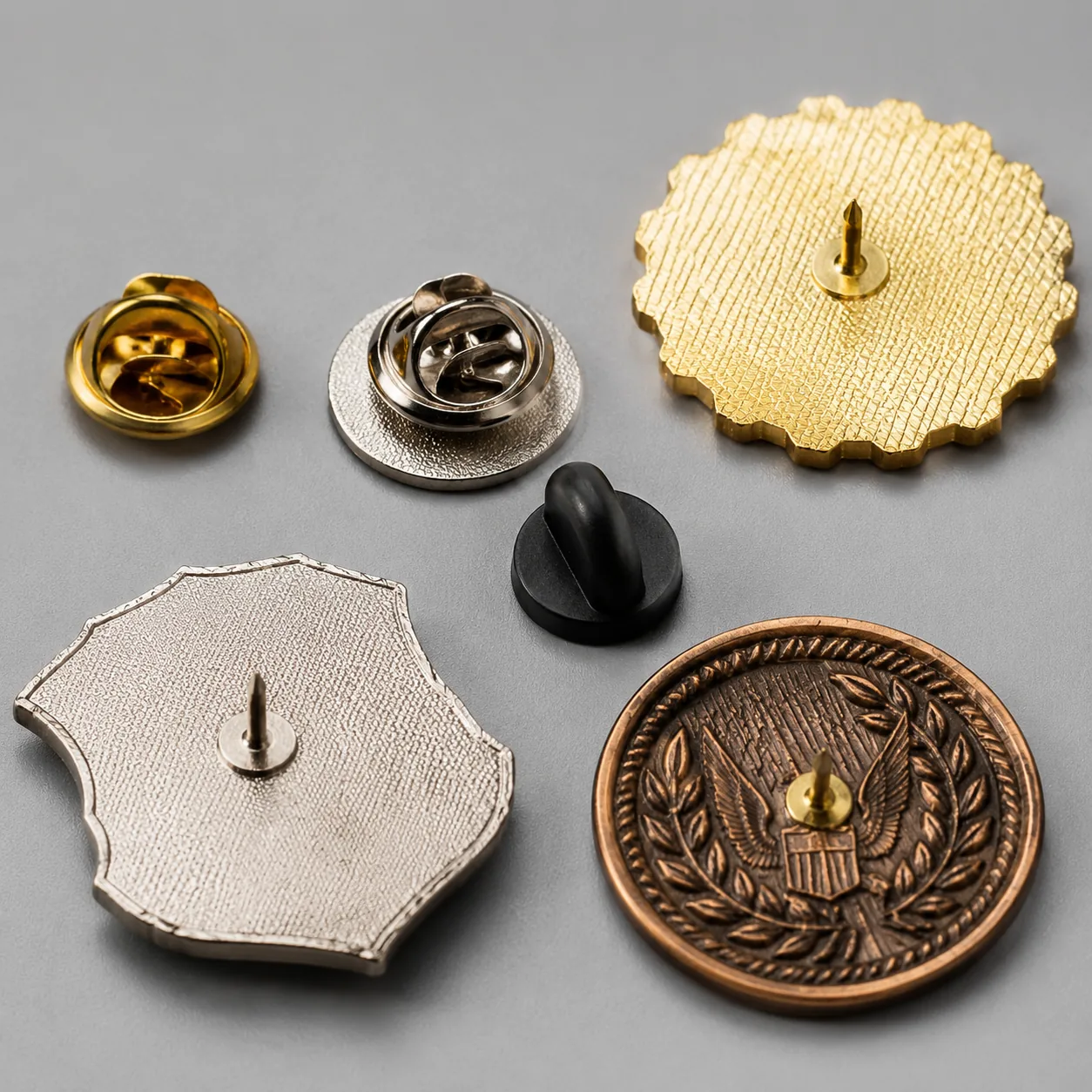
For pins, coins, badges, magnets, bottle openers, keychains, patches, and lanyards, release goods only after final QC, unit packing, and carton marking are complete. Carton-level splitting is safer than loose-piece splitting because it reduces mixed counts, missing clutches, wrong backing cards, and accessory shortages. A practical carton code is A01 to A08 for shipment one and B01 to B12 for shipment two, with SKU, PO number, quantity, net weight, gross weight, carton size, and destination printed on each carton mark.
| Split Method | Best Use Case | Risk Level | Specification To Lock |
|---|---|---|---|
| By full SKU | Pins first; patches, lanyards, or PVC items later | Low | Separate packing list, carton series, invoice line, and QC report per SKU |
| By quantity within one SKU | Event stock now; retail replenishment later | Medium | Same mold, plating bath target, Pantone standard, packaging, and approved limit sample |
| By destination | Goods sent to two warehouses, event sites, or distributors | Medium | Consignee, phone, tax ID, HS code, routing guide, and destination carton mark |
| By sealed carton after QC | Finished cartons released in stages | Low to medium | Carton numbers, quantity per carton, gross weight, seal photo, and pallet status |
| By loose pieces | Emergency replacements or sample support | High | Piece count, accessory count, open-carton photo, repacking approval, and recount record |
Q: How do lead times change after splitting?
Splitting changes the release calendar, not the production calendar. For 1,000 to 5,000 enamel pins, artwork confirmation and mold setup usually take 2 to 4 days, digital or physical sample approval takes 3 to 7 days, mass production takes 10 to 18 days, and QC plus export packing takes 1 to 3 days. If 2,000 pieces pass QC on day 18 and the balance finishes on day 23, the early courier shipment may arrive 4 to 7 days sooner than a combined release.
A useful split plan is dated, not verbal. It should list artwork approval, mold completion, sample approval cutoff, mass-production start, first in-line QC, first final QC, first pickup, second final QC, second pickup, and the latest buyer approval time for each step. If the buyer takes 3 extra days to approve a sample or barcode proof, the plan should state whether the first shipment loses priority or whether both shipments move together.
Logistics buffers should be written into the schedule. Courier pickup can often occur within 1 working day after carton dimensions, weights, invoice value, and consignee details are confirmed. Air freight usually needs 2 to 4 days for booking, export handling, and departure. Sea LCL normally needs 4 to 7 days before vessel departure for warehouse cutoff, consolidation, customs declaration, and loading. For event orders, the safe date is not the factory completion date; it is the estimated delivery date plus a receiving buffer of 1 to 3 days.
Q: What extra costs should the buyer budget?
The largest added cost is usually freight, not factory labor. Small metal items are dense, so courier charges often follow actual weight; lanyards, patches, plush add-ons, and boxed kits may trigger volumetric weight. Many couriers calculate volumetric weight as length x width x height in centimeters divided by 5,000 or 6,000. Two 18 kg courier shipments can cost more than one 36 kg shipment because each shipment carries its own minimum charge, pickup fee, fuel surcharge, remote-area fee, and customs handling.
Typical export cartons for pins and coins are 30 x 25 x 20 cm, 35 x 25 x 25 cm, or 40 x 30 x 25 cm. Gross weight is commonly held below 15 kg for pins and below 18 kg for coins to reduce carton tearing and handling claims. Factory split-handling fees are modest if planned before packing: extra carton labels, separate packing lists, shipment photos, and invoice drafts often add USD 10 to 45 per shipment. Repacking after sealing is more expensive because cartons must be opened, recounted, re-taped, re-marked, and reweighed, adding USD 20 to 90 and 0.5 to 1.5 working days.
| Cost Item | Typical Range | When It Applies | Buyer Control Point |
|---|---|---|---|
| Extra export cartons | USD 1.20 to 3.80 per carton | More cartons are needed to separate lots or destinations | Approve carton count and quantity per carton before packing |
| Split packing labor | USD 10 to 45 per shipment | Separate labels, packing lists, photos, and records | Provide destination details before final QC |
| Courier or air freight increase | USD 50 to 300+ | Two air shipments replace one combined shipment | Compare actual and volumetric chargeable weight |
| Invoice or bank admin | USD 0 to 35 | Separate invoices, payment records, or customs values are requested | Decide invoice structure before booking freight |
| Repacking after sealing | USD 20 to 90 | Split is requested after cartons are closed | Freeze split rules before carton closure |
| 3PL receiving surcharge | USD 25 to 150+ | Retailer or warehouse receives a partial PO | Confirm whether partial PO receiving is allowed |
Q: Which QC rules prevent mixed batches and shortages?
Each shipment needs its own inspection record, even under one PO. For custom pins, coins, keychains, magnets, badges, patches, and lanyards, ZheCraft commonly uses ANSI/ASQ Z1.4 general inspection level II, with AQL critical 0, major 2.5, and minor 4.0 unless the buyer specifies another plan. Critical defects include wrong logo, wrong attachment, unsafe sharp edges, loose magnet, missing clutch, incorrect barcode, incorrect country-of-origin label, or plating contamination that affects normal use.
The first shipment should not leave only because the event date is close. For enamel pins, QC should check length and width within ±0.20 mm for most 20 to 40 mm designs, thickness within ±0.15 mm, attachment position within ±1.0 mm, enamel underfill or overflow, plating pits, burrs, epoxy bubbles, and backing-card alignment. For challenge coins, check diameter within ±0.30 mm, thickness within ±0.20 mm, edge text orientation, antique wash consistency, enamel fill, capsule fit, pouch count, and coin weight against the approved sample.
A reliable split-shipment QC file includes sampling size, defect summary, open-carton photos, sealed-carton photos, carton weights, random sample photos, approved limit sample reference, and packed quantity per carton. If a golden sample exists, both split batches should be compared to that same sample, not to each other. This prevents gradual drift in black nickel tone, antique wash depth, soft PVC color, woven thread shade, sublimation registration, or epoxy clarity.
- Require one QC report per shipment, even when the PO number is unchanged.
- Use non-repeating carton numbers, such as A01 to A06 and B01 to B09.
- Check actual gross weight against the packing list within ±0.5 kg per carton.
- Photograph open cartons before sealing and all carton marks after sealing.
- Hold 5 to 20 spare pieces at the factory until the final shipment clears QC and receiving.
Q: How should pricing terms and customs paperwork be written?
The PO should state the trade term clearly: EXW Yiwu, FCA warehouse, FOB Ningbo, FOB Shanghai, CIF, DAP, or DDP. FOB unit prices vary by material, thickness, finish, size, packaging, and quantity. As planning ranges, 25 to 30 mm soft enamel pins at 1,000 pieces may run USD 0.45 to 1.20 FOB; hard enamel pins USD 0.65 to 1.85; zinc alloy keychains USD 0.75 to 2.30; 45 mm challenge coins at 3.0 mm thickness USD 1.80 to 4.90; woven patches USD 0.35 to 1.15; and 20 mm polyester lanyards USD 0.28 to 0.90. Splitting should change logistics and documentation cost, not the approved manufacturing specification.
Commercial invoices must match the physical shipment exactly. If 2,000 of 5,000 pins ship first, the invoice should show 2,000 pieces, correct unit value, HS code, carton count, net weight, gross weight, country of origin, and trade term. Do not show the full PO quantity on the first invoice; it can create customs value errors, import duty disputes, and receiving mismatches at the buyer's 3PL.
For multi-destination orders, each shipment needs consignee name, delivery address, contact person, phone number, tax ID, EORI, VAT, importer number where required, and any retailer routing guide. If the buyer needs neutral shipping for distributor resale, carton marks should use buyer SKU codes and PO references only, with no factory branding. Confirm this before packing because relabeling cartons at a forwarder is slow, error-prone, and rarely photographed well.
Q: Which specifications must be frozen before first pickup?
The main risk in a split order is releasing the first shipment before a specification mismatch is visible. Once goods are in transit, side-by-side comparison with the second batch is difficult. The safest approach is to freeze physical specifications, packaging specifications, carton specifications, QC rules, and documentation rules before the first courier or forwarder pickup.
For metal items, decorative plating thickness should be defined realistically, often 0.03 to 0.08 microns for gold, nickel, black nickel, copper, or antique finishes unless the project requires a heavier engineering coating. Epoxy dome coating should state clear dome, no dome, or partial dome, with 0.3 to 0.5 mm edge clearance to reduce overflow. For magnets, specify magnet grade where known, diameter or strip size, adhesive type, and pull-strength expectation instead of only writing "strong magnet." For lanyards, specify width tolerance, usually ±1 mm, print registration tolerance within ±1.5 mm for most repeating logos, clip type, safety breakaway, and whether metal accessories must pass a basic pull test.
Packaging also needs a freeze point. A pin with butterfly clutch in a 0.05 mm OPP bag packs differently from a pin mounted on a 300 gsm backing card with barcode and suffocation warning. Carton quantity may change from 500 pieces per carton to 200 pieces per carton, affecting freight, 3PL receiving, shelf presentation, and retailer compliance.
- Approve the artwork version number, dieline, mold file, and final size tolerance.
- Lock Pantone references, plating finish, surface texture, and approved limit sample.
- Confirm attachment type, magnet grade, keyring hardware, clip, clutch, safety pin, or breakaway.
- Approve packaging material, card size, barcode position, warning text, and bag thickness.
- Confirm carton quantity, carton dimensions, carton mark format, and destination label.
- State AQL level, defect definitions, photo report requirements, and release authority in the PO.
Q: What should be decided before issuing the PO?
Ask the supplier for two quotes before the PO is issued: one combined shipment and one split-shipment plan. The comparison should include unit price, tooling charge, sample charge, MOQ by SKU, first-shipment quantity, second-shipment quantity, target QC dates, pickup dates, carton count, net weight, gross weight, chargeable weight, freight mode, and estimated delivery window. Without both versions, the buyer cannot judge whether the split protects the deadline at a reasonable landed cost.
MOQ matters because the early lot may fall below an efficient production tier. Many custom metal factories can produce 100 to 300 pieces, but price becomes more stable at 500, 1,000, and 3,000 pieces because mold cost, plating setup, color mixing, and QC time are spread across more units. For lanyards and patches, 500 pieces is often the practical entry point, while 1,000 to 5,000 pieces gives better material utilization and carton efficiency. If the first shipment is below the normal tier, ask whether the supplier is splitting from one production batch or running a second setup.
For multi-item orders, identify the bottleneck before sample approval. Enamel pins and stamped badges often finish earlier than 3D coins, PVC keychains, woven patches, sublimation lanyards with metal accessories, or retail packaging with printed inserts. Knowing the bottleneck early lets the buyer approve an urgent SKU first, change freight mode, or decide that a complete kit is more important than a partial early delivery.
- State the business reason for splitting, such as event deadline, warehouse allocation, or phased retail launch.
- List first-shipment and second-shipment quantities by SKU, carton series, and destination.
- Confirm whether QC release is required separately for each shipment.
- Request carton photos, carton marks, packing list, and invoice draft before pickup.
- Compare total landed cost for combined shipping versus split shipping before approving freight.
- Keep a small factory-held reserve until the final shipment is accepted by the receiving warehouse.
Have a project? Send your artwork and target quantity and we’ll reply with a detailed quotation within 12 working hours.
Ready to get this made?
Send your sketch, target quantity and ship-date. Detailed quotation in 12 hours.



