Split Ring vs Lobster Clasp Keychains: B2B Spec Comparison
The buyer problem: good charm, weak hardware
A custom keychain can pass artwork approval, enamel color checks, plating inspection, and carton drop testing, then still disappoint users because the attachment hardware was treated as “standard.” In many RFQs, the logo charm is specified in detail while the ring, connector, and clasp are left open. That gives the factory room to select by lowest cost rather than actual use.
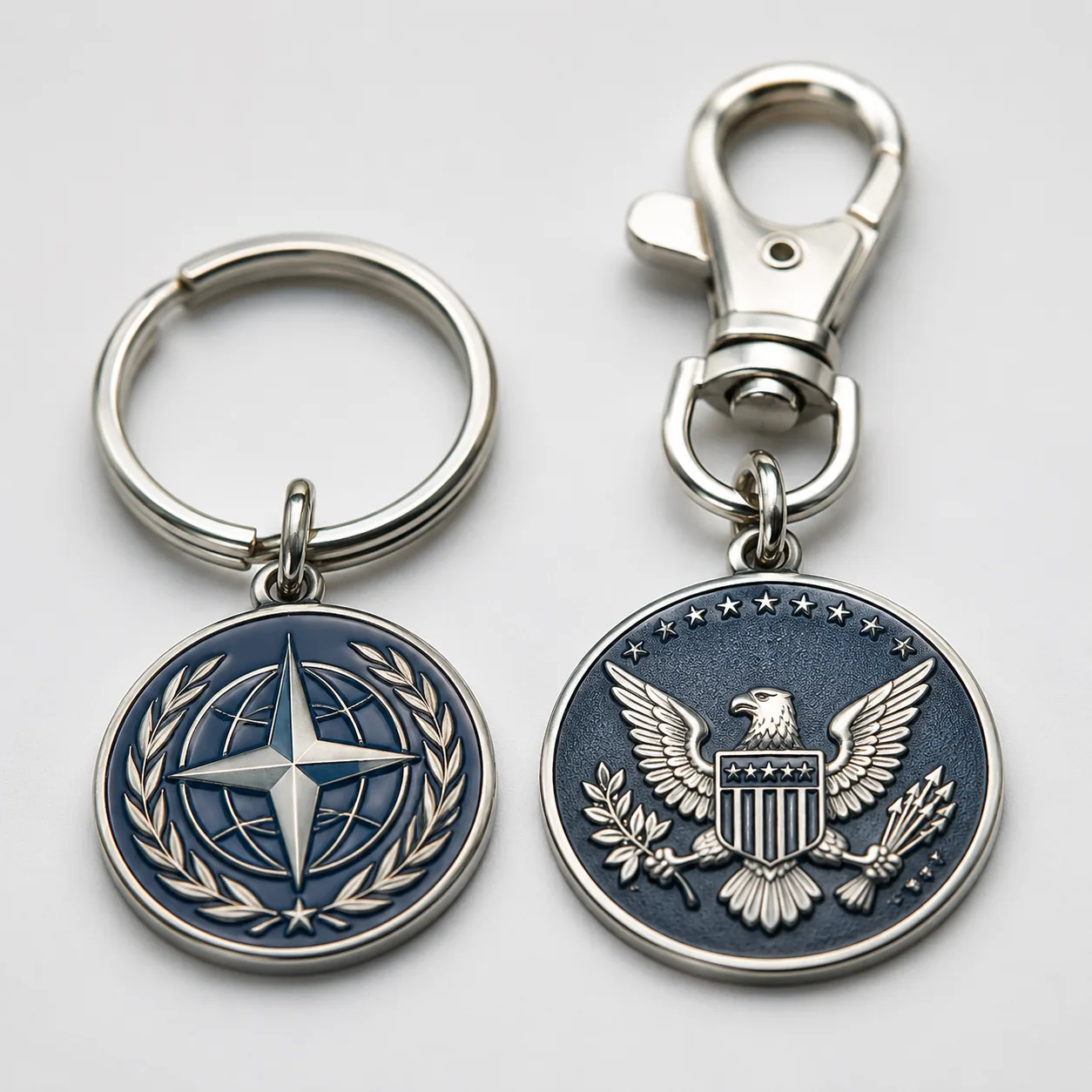
The main choice is split ring versus lobster clasp. Both work with die-cast zinc alloy, iron soft enamel, stainless steel, acrylic, PVC, leather, and wood charms, but they fail in different ways. A split ring is a spring component designed for semi-permanent key holding. A lobster clasp is a moving mechanism designed for repeated clipping and removal. One is not automatically better; the correct option depends on load, frequency of opening, attachment point, and acceptable inspection risk.
For B2B orders—retail souvenirs, hotel key tags, event badge sets, loyalty gifts, school merchandise, or corporate campaigns—the hardware should be specified as its own component. At minimum, define material, size, wire or body thickness, plating thickness in microns, connector gauge, load test, cycle test, and AQL level before approving a pre-production sample.
RFQ spec table: split ring vs lobster clasp
Use the table below as a practical starting point for quoting and sample approval. These ranges reflect common promotional and retail-grade keychain hardware, not luxury handbag hardware. Final pricing varies with charm size, plating, packaging, and order volume, but the hardware trade-offs are consistent.
| Spec item | Split ring keychain | Lobster clasp keychain |
|---|---|---|
| Typical use | General key holders, giveaways, school merchandise, tourist souvenirs, hotel tags | Bag charms, zipper pulls, lanyards, removable charms, retail gift sets |
| Common size | 25, 28, 30, 32 mm outside diameter | 25, 32, 38, 45 mm overall clasp length |
| Wire/body thickness | 1.4–2.2 mm spring steel or 304 stainless steel wire; 1.8 mm is a strong standard for 30 mm rings | 2.0–3.5 mm zinc alloy or brass body; 0.5–0.8 mm spring wire inside gate |
| Material options | High-carbon spring steel, 304 stainless steel, plated iron for low-cost orders | Zinc alloy for economy, brass for stronger spring seat, stainless steel for specialty production |
| Opening method | Manual prying of double coil; best for attach-once use | Thumb lever spring gate; best for repeated removal |
| Recommended working load | 1.0–2.5 kg depending on ring OD and wire diameter | 0.5–1.5 kg for zinc alloy; 1.0–2.0 kg for brass body with better spring retention |
| Suggested static load test | 1 kg for 24 hours on light promo items; 2 kg for 24 hours on heavier key bundles | 0.5–1 kg for small clasps; 1.5–2 kg for 38–45 mm brass clasps |
| Cycle test | Not normally cycle-tested; check closure after inserting/removing one 2.0 mm key blade 3 times | 500 open-close cycles for promo use; 1,000 cycles for retail, uniform, or membership programs |
| Common plating thickness | 3–5 µm nickel, black nickel, imitation gold, rose gold, or antique finish; 5 µm plus clear lacquer for better gold-tone wear | 5–8 µm recommended on gate, nose, and lever because these are friction points |
| Dimensional tolerance | Ring OD ±0.3 mm; wire diameter ±0.10 mm; end lift after assembly ≤0.2 mm | Overall length ±0.5 mm; gate gap ±0.2 mm; swivel hole ±0.2 mm; gate side play ≤0.3 mm |
| Connector recommendation | 1.0–1.2 mm jump ring for light charms; 1.2–1.5 mm for metal charms over 25 g | 1.2–1.5 mm jump ring or swivel loop; avoid thin 0.8 mm connectors on heavy charms |
| FOB hardware add-on | USD 0.02–0.06 per unit for standard ring plus jump ring at 1,000 pcs+ | USD 0.08–0.28 per unit depending on size, material, swivel, and plating at 1,000 pcs+ |
| Typical finished keychain FOB | USD 0.45–1.40 for simple acrylic, PVC, or metal charm with ring | USD 0.58–1.75 for similar charm with lobster clasp or swivel clasp |
| MOQ impact | Stock finishes often available from 300–500 pcs; 100–300 pcs possible for sample or trial runs | Stock finishes usually 300–500 pcs; custom plated clasp commonly 1,000 pcs+ to avoid plating-lot surcharge |
| Lead-time impact | Usually no added time if stock hardware; 12–18 days after sample approval for common mass production | Add 2–5 days if finish must match charm; 15–22 days after approval is typical |
| AQL recommendation | AQL 1.5 for function, AQL 2.5 for appearance under general inspection level II | AQL 1.0 for gate/spring/swivel function, AQL 2.5 for appearance |
| Common failure mode | Ring does not close flush, thin wire deforms, plating scratches during assembly | Gate sticks, spring weakens, plated nose wears, swivel pin pulls out |
| Best choice when | User attaches keys once and keeps them there | User clips, removes, repositions, or attaches to bags, zippers, fabric loops, or passes |
If two suppliers quote the same price for a split ring and a lobster clasp, check the clasp material and spring quality. A very cheap lobster clasp is often thin zinc alloy with a light spring and loose gate. It may look acceptable in a catalog photo but fail after a few hundred openings. At the same budget level, a split ring is usually more reliable for heavy key bundles because it has no spring gate or swivel pin.
Strength and wear: split ring for load, clasp for access
For daily house keys, office keys, or car fobs, a split ring remains the safer default. A 30 mm ring made from 1.8 mm high-carbon spring steel or 304 stainless steel handles normal pocket pulling, twisting, and key stacking better than an economy lobster clasp. The double-coil structure distributes force around the ring, and the user is not relying on a small gate spring to stay closed.
A lobster clasp is the better user interface when the keychain must be clipped to a bag, zipper pull, belt loop, lanyard, event pass, or retail pouch. Airline crew tags, gym membership charms, hotel staff identifiers, and fashion accessories often need that removability. In those applications, the clasp is not decorative; it is the functional attachment point.
The engineering risk is concentrated at the gate, hinge, spring seat, and swivel. Plating build-up around the hinge can make the gate feel sticky. A weak internal spring can stop returning fully after repeated cycles. A poorly staked swivel pin can pull out under load even when the clasp body looks strong. For retail or uniform programs, specify 1,000 open-close cycles with full gate return and no visible crack at the spring seat. For lighter promotional use, 500 cycles is a reasonable minimum.
Cost, MOQ, and lead time impact
On a 5,000-piece order, changing from a standard 30 mm split ring to a 32 mm lobster clasp typically adds USD 300–900 FOB before any packaging change. The increase looks small per unit, but it can move a budget giveaway outside its target landed cost. If the charm itself costs USD 0.45 FOB, a USD 0.10–0.18 clasp upgrade can raise the product cost by 20–40%.
Split rings are widely stocked in nickel, black nickel, imitation gold, rose gold, antique brass, and sometimes matte black. For common finishes, many factories can support 300–500 pcs trial orders and 1,000 pcs normal production without special sourcing. Lead time is usually unchanged when stock hardware is available: about 12–18 days after pre-production sample approval for simple acrylic, PVC, or metal keychains.
Lobster clasps create more MOQ pressure. Stock clasps in nickel or gold may be available from 300–500 pcs, but a custom finish matched to the charm often requires a 1,000 pcs or higher plating batch. If the clasp, jump ring, and charm are plated in separate lots, color variation is likely, especially in gold, rose gold, antique brass, and black nickel. Matching the hardware finish can add 2–5 days, bringing common mass-production timing to 15–22 days after approval.
Ask suppliers to separate the quote into charm, hardware, and packaging. A single line reading “custom keychain with clasp” can hide major differences: zinc alloy versus brass clasp, swivel versus fixed loop, 0.8 mm versus 1.5 mm jump ring, or stock plating versus custom plating. The cheapest line item is not comparable unless the hardware construction is identical.
Plating and color matching: specify microns, not just finish name
The charm and hardware may share a finish name but experience very different abrasion. A logo charm face is touched occasionally. A split ring rubs against keys in a pocket. A lobster clasp nose rubs against zipper teeth, bag loops, and metal eyelets. This is why decorative plating that looks fine on the charm may wear quickly on the hardware.
For promotional split rings, 3–5 µm plating is common. For gold-tone campaigns, 5 µm plus clear lacquer reduces early tarnish and finger staining. For retail or daily-use programs, stainless steel split rings are often worth the added cost when corrosion resistance matters, especially for outdoor, coastal, marina, travel, or sports-related products.
For lobster clasps, specify 5–8 µm plating on the gate, lever, and nose. These are the friction surfaces. If the supplier plates too heavily without controlling the hinge, the gate may stick; if the plating is too thin, the nose wears through early. For black nickel and antique finishes, approve both appearance and movement after plating, not before plating.
Color matching is not exact unless parts are plated in the same batch and base metals are similar. Zinc alloy, brass, steel, and stainless steel reflect finishes differently. If brand presentation matters, approve a physical hardware board or golden sample under neutral D65 or cool white light. Digital photos often hide the difference between yellow gold, pale champagne gold, and rose gold.
User experience and safety details
A split ring is secure but not user-friendly. Recipients may bend fingernails, scratch plating, or use a knife edge to insert keys. For welcome kits, trade-show packs, and membership gifts where users assemble the keychain themselves, this friction can generate complaints even when the hardware is mechanically sound. If keys must be added easily, include a small auxiliary jump ring or choose a clasp design.
A lobster clasp is easier to operate, especially for bag charms and temporary passes. For children, elderly users, gloved users, or staff who clip items frequently, avoid tiny 20–25 mm fashion clasps. A 38–45 mm clasp with a lever width of at least 5 mm is easier to press and less likely to pinch. If the clasp will attach to fabric, test it on the actual loop, zipper pull, woven label, or lanyard before bulk production.
Safety depends on finishing as much as strength. Sharp ring ends, jump ring cuts, and poorly polished clasp noses can snag polyester lanyards, scratch leather bags, or cut thin PVC loops. A simple cotton cloth wipe test is useful: the cloth should slide over the ring gap, gate, swivel, and connector without catching. For children’s items, also avoid small detachable accessories that could separate under low pull force unless the product is clearly not a toy and is labeled accordingly.
Inspection checklist for sample and bulk approval
Hardware approval should include functional checks, not only appearance. A clean-looking sample can still fail after twisting, pulling, or opening repeatedly. Add these requirements to the approval sheet so the buyer and factory inspect the same points.
- Measure ring outside diameter, clasp length, wire diameter, and jump ring thickness with calipers; do not approve hardware scale from photos.
- Confirm split ring end lift is no more than 0.2 mm after inserting and removing one standard key blade.
- For lobster clasps, open and close each approval sample 50 times by hand; the gate must return fully with no sticking, scraping, or side wobble.
- Run the agreed static load test: 1 kg for light promo items, 2 kg for heavier key bundles, or a higher value if the design requires it.
- Check connector strength separately. A strong clasp paired with a 0.8 mm soft jump ring is still a weak assembly.
- Inspect plating at contact points after assembly: jump ring cut, clasp nose, lever edge, swivel joint, and split ring edge.
- Use a cotton cloth wipe test to detect burrs on ring gaps, gate tips, and connector cuts.
- Confirm complete hardware drop length from charm top to ring or clasp end; common finished drops are 25–45 mm, but retail bag charms may need longer.
- Set inspection level before production: general inspection level II with AQL 1.0 for critical function and AQL 2.5 for appearance is a practical default for clasp orders.
Keep one approved pre-production sample at the factory and one with the buyer. This prevents silent substitutions such as changing a 1.8 mm ring to 1.4 mm wire, switching a brass clasp to zinc alloy, or replacing a 1.5 mm connector with a thinner jump ring. These small changes are a common reason bulk hardware performs worse than the approved sample.
When to avoid lobster clasp and choose split ring
Do not upgrade to a lobster clasp only because it looks more premium in a product photo. A clasp adds cost, moving parts, and inspection risk. If the product will carry several metal keys every day, a properly specified split ring is usually stronger and more predictable. Heavy coin keychains, bottle opener keychains, thick die-cast charms, and metal hotel tags also tend to hang better from a split ring than from a small clasp.
For budget giveaways under about USD 0.70 FOB, spending the same money on a thicker split ring, better plating, or stronger connector often gives better field performance than choosing the cheapest available clasp. A thin zinc alloy clasp with a weak spring can make the entire item feel low quality even if the logo charm is well made.
Choose lobster clasp only when removability is part of the product function. Examples include a charm clipped to a festival wristband, a zipper pull for a luggage pouch, a gym bag identifier, a hotel room card sleeve, or a retail accessory that the customer may move between bags. In those cases, specify the clasp large enough for comfortable use and test it on the real attachment point before mass production.
Recommended baseline specs for your RFQ
For a general key holder, start with a 28–30 mm split ring in 1.8 mm spring steel or 304 stainless steel, plus a 1.2–1.5 mm jump ring for metal charms. Specify ring OD tolerance of ±0.3 mm, wire tolerance of ±0.10 mm, end lift ≤0.2 mm after assembly, plating thickness of 3–5 µm or 5 µm plus lacquer for gold-tone finishes, and AQL 1.5 for function.
For a removable charm or bag accessory, start with a 32–38 mm lobster clasp. Use brass if spring feel and repeat use matter; use zinc alloy only for lighter promotional applications. Specify 5–8 µm plating on wear surfaces, 500–1,000 gate cycles, swivel pull strength, gate gap tolerance of ±0.2 mm, and AQL 1.0 for spring, gate, and swivel function.
When sending an RFQ to ZheCraft or any keychain factory, include charm material and size, estimated charm weight, expected use, target load, hardware finish, order quantity, packaging method, and whether the user will remove the item frequently. With those details, the factory can quote the correct hardware instead of the cheapest default. The ring or clasp is small, but it is the component your customer touches first and trusts to hold the product together.
Have a project? Send your artwork and target quantity and we’ll reply with a detailed quotation within 12 working hours.
Ready to get this made?
Send your sketch, target quantity and ship-date. Detailed quotation in 12 hours.



