Sourcing PVC Patches: RFQ to Bulk Without Warping
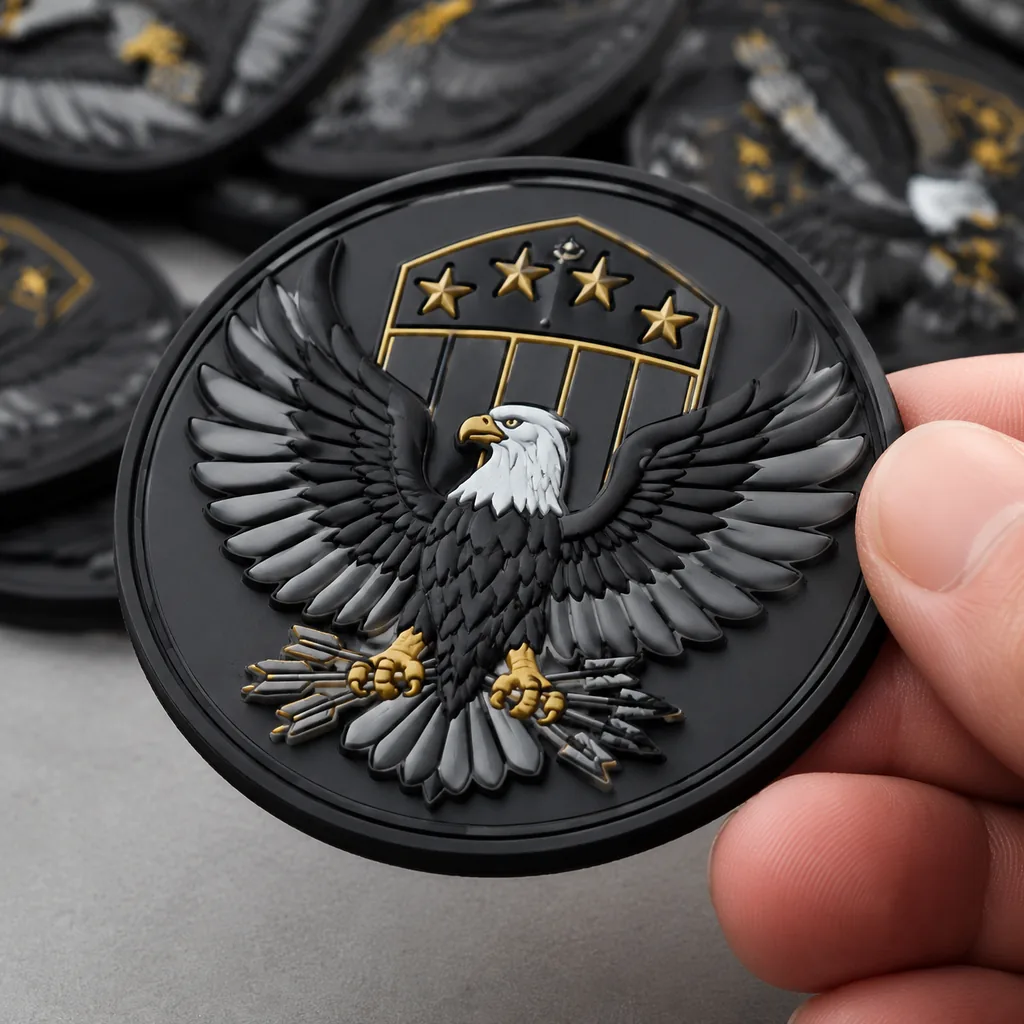
Step 1: Decide if PVC is the right patch before you ask for prices
The common buyer problem with PVC patches is not finding a supplier; it is discovering too late that the flexible rubber look does not behave like woven or embroidered fabric. PVC is excellent for outdoor clubs, tactical gear, luggage, kids’ merchandise and event staff uniforms because it resists water, mud and abrasion better than thread. It is a poor choice when you need very fine typography below 1.2 mm stroke width, a soft textile feel, or a patch that must bend sharply around a sleeve seam.
For most custom PVC patches, ZheCraft recommends a finished thickness of 2.5 mm for small logo patches under 60 mm, 3.0 mm for 60 to 90 mm uniform or bag patches, and 3.5 to 4.0 mm only for large morale patches or keychain-style rubber tags. A patch thicker than 4.0 mm looks substantial but can feel stiff on caps and light jackets. If the patch will be sewn onto thin fabric, keep the weight under about 18 g for a 75 mm patch and avoid raised borders higher than 1.2 mm.
| Use case | Better PVC spec | When not to choose it |
|---|---|---|
| Outdoor event staff patch | 70 to 85 mm, 3.0 mm thick, sew-on or hook backing, Shore A 55 to 60 | Not ideal for dress shirts or thin polos because edges may feel bulky |
| Luggage or backpack logo | 60 to 100 mm, 3.0 to 3.5 mm thick, recessed colors, strong border | Avoid if the design needs metallic thread or tiny gradients |
| Tactical morale patch | 75 to 90 mm, hook backing, matte surface, 2D relief | Avoid very glossy PVC; it scratches visibly and can reflect light |
| Kids’ merchandise patch | 50 to 70 mm, 2.5 mm thick, rounded corners, no sharp projections | Do not use detachable small parts for children under 3 years |
| Premium fashion label | Thin 2D rubber label, 1.5 to 2.0 mm, sew channel | Use woven or leather instead if a soft luxury hand feel is required |
Step 2: Send an RFQ that fixes size, relief and backing in one file
A usable RFQ for PVC patches should include more than a logo and quantity. The factory needs the maximum width and height in millimeters, target thickness, number of colors, whether the design is 2D or 3D, backing type, packing method and delivery term. If any of these are missing, two quotes that look 20 percent apart may actually describe different products.
For size, specify the outer dimensions with a tolerance such as 75 mm wide x 60 mm high, tolerance ±0.8 mm. For thickness, use a tolerance of ±0.3 mm because PVC flow, mold depth and cooling shrinkage make tighter limits impractical on many shapes. For colors, provide Pantone Solid Coated references and mark whether black outlines are raised, recessed or flush.
- Artwork file: AI, PDF, EPS or SVG with editable vector paths, plus a PNG preview for orientation.
- Size: maximum width and height in mm, not only inches; state whether the measurement includes the border.
- Thickness: 2.5 mm, 3.0 mm or 3.5 mm target; avoid vague words such as standard or heavy duty.
- Relief: 2D flat layers, 3D sculpted surface, or mixed 2D and 3D; identify the highest raised areas.
- Backing: sew-on, hook-and-loop, adhesive, magnetic, pin back or no backing for sewing by the buyer.
- Quantity tiers: ask for 100, 300, 500 and 1,000 pieces if you do not know final demand.
- Packing: bulk polybag, individual opp bag, retail card or set packing with other promo items.
- Inspection: state AQL level, critical defects and whether a pre-shipment photo report is enough.
Step 3: Compare quotes by mold, unit price and risk, not unit price alone
PVC patch pricing is driven by mold size, number of colors, thickness, backing labor and packing. A small 50 mm two-color sew-on patch can be straightforward, while a 90 mm seven-color hook-backed patch with 3D relief has a much slower injection and trimming process. At ZheCraft, typical MOQ starts at 100 pieces for paid custom molds, but the more economical production tier is usually 300 to 500 pieces.
For normal soft PVC patches, a realistic FOB China price range is about USD 0.55 to 1.10 for 50 to 60 mm simple designs at 500 pieces, USD 0.90 to 1.80 for 70 to 85 mm multi-color hook-backed patches, and USD 1.80 to 3.20 for large 100 mm patches with complex 3D relief or retail packing. Mold charges often range from USD 40 to 120 for common 2D patches and USD 100 to 250 for larger or 3D tooling. If a quote is far below this, check whether the backing, color count, mold fee or export packing has been excluded.
| Cost driver | Low-risk specification | Cost and lead-time impact |
|---|---|---|
| Patch size | Keep common shapes within 50 to 90 mm | Every 10 mm increase raises material use and mold area; large patches cool slower |
| Color count | Use 2 to 5 solid Pantone colors | Each extra color adds dispensing time and more rejection risk at borders |
| Thickness | 2.5 to 3.0 mm for most apparel and bags | 3.5 to 4.0 mm can add 10 to 25 percent material cost |
| Backing | Sew-on or hook backing | Hook-and-loop adds material cost and 1 to 2 days for stitching on larger orders |
| Relief | 2D raised and recessed layers | 3D sculpting increases mold cost and sampling time by about 2 to 4 days |
| Packing | Bulk 50 or 100 pcs per bag | Individual retail packing can add USD 0.05 to 0.25 per piece and more carton volume |
Step 4: Approve the digital proof before the mold is cut
The digital proof is where most PVC patch mistakes should be caught. It should show the final size, border width, color callouts, layer heights, backing, stitch channel if used and any text converted to outlines. Do not approve a proof that only shows a flat logo without relief notes; PVC is a molded product, so height relationships control the final appearance.
Minimum raised line width should normally be 0.8 mm, with 1.0 mm preferred for production stability. Recessed color gaps should be at least 0.6 mm wide and text height should be 4 mm or larger for block letters, 5 mm or larger for more decorative fonts. Rounded internal corners with at least 0.3 mm radius release better from the mold than sharp inside corners and reduce tearing during demolding.
For sew-on PVC patches, reserve a border or sewing channel of 2.5 to 3.5 mm. If the channel is too narrow, the needle may pierce the raised logo or distort the patch edge. For hook backing, the edge stitch should sit at least 2.0 mm from the patch edge, and the hook material should be trimmed within ±1.0 mm of the PVC outline to avoid visible overhang.
Step 5: Sample the mold and measure more than color
A PVC patch sample normally takes 7 to 12 days after artwork approval for 2D designs and 10 to 16 days for 3D or large patches. Rush sampling is possible on simple molds, but it increases the chance that color balance and trimming details are not fully optimized. For international buyers, the sample should be treated as a technical checkpoint, not a souvenir.
Check the sample against the approved proof using calipers, a scale and a flat surface. Measure outer width and height, total thickness, border width, backing alignment and any critical logo features. A reasonable approval tolerance is ±0.8 mm for outside size, ±0.3 mm for thickness, ±0.5 mm for border width and ±1.0 mm for hook backing alignment.
- Place the patch on a flat table; reject severe rocking or curled corners above 2.0 mm lift.
- Bend the patch gently 180 degrees once; small whitening is acceptable on some colors, cracking is not.
- Rub raised color borders with a white cotton cloth 20 times; visible transfer suggests under-curing or contamination.
- Check Pantone colors under daylight or D65 light; expect close visual matching, but avoid demanding paper-like precision on PVC.
- Inspect trapped bubbles, black specks and color overflow at 30 to 40 cm viewing distance.
- Pull the hook-and-loop backing by hand at one corner; loose stitching or peeling adhesive should be corrected before bulk.
- Confirm smell after airing for 24 hours; a strong solvent-like odor is a warning sign for material or curing issues.
Step 6: Lock the production standard after sample corrections
After the sample is approved, freeze a golden sample and a written production sheet. The sheet should include PVC hardness, color formulas or Pantone references, mold number, backing lot, stitch thread color, packing count and carton mark details. Without this, a reorder six months later may be close but not identical because small changes in PVC compound and operator settings affect color and flexibility.
For most patches, specify soft PVC in the Shore A 50 to 60 range. Shore A 45 feels softer but can deform on large patches, while Shore A 65 can feel hard and may not conform well to fabric. If the patch is used as a keychain or zipper pull instead of sewn apparel trim, Shore A 60 to 70 may be acceptable because shape retention matters more than garment comfort.
Color control should be realistic. PVC cannot match Pantone ink on coated paper perfectly because it has different opacity, gloss and thickness. A practical standard is visual approval against the golden sample, with no obvious color drift in the same production lot and a target color difference within about ΔE 2.5 to 4.0 where instrument measurement is available.
Step 7: Inspect bulk production before the cartons leave the factory
Bulk production for PVC patches typically takes 12 to 20 days after sample approval for 300 to 1,000 pieces, and 18 to 30 days for larger or complex orders. Add 2 to 4 days for individual retail packing or kitting with lanyards, cards, pins or other promotional products. Peak season before major trade shows, school terms or holiday campaigns should be planned with at least one extra week of buffer.
For B2B orders, use AQL inspection rather than checking only a few nice top samples. A common standard is General Inspection Level II, AQL 2.5 for major defects and AQL 4.0 for minor defects, with critical defects at 0. Critical defects include unsafe sharp protrusions, wrong backing, wrong logo, mold contamination that changes the brand mark, or materials that are visibly different from the approved sample.
Major defects include patch warping above the agreed limit, backing misalignment over ±1.0 mm, obvious color bleeding, missing colors, broken stitching, severe bubbles or incorrect thickness beyond tolerance. Minor defects include small specks outside the main logo, slight trimming burrs under 0.5 mm, or small surface marks not visible at normal viewing distance. ZheCraft can provide in-process photos and final inspection images, but for large retail or distributor orders, a third-party inspection before shipment is still a sensible option.
Step 8: Pack for the actual distribution route, then place the bulk order
PVC patches are tough, but bad packing still causes returns. Heavy patches in loose cartons can rub glossy surfaces, bend backing cards or deform hook edges. For wholesale distribution, pack 50 or 100 pieces per inner polybag, then into a 5-ply export carton under about 18 kg gross weight; for retail, use individual bags or backing cards with clear orientation and barcode space.
Carton marks should state item number, patch name, quantity, gross weight, net weight and carton number. If patches are shipped with uniforms, lanyards or metal pins, separate them by inner carton or labeled bag so the receiving warehouse does not have to sort mixed small items by hand. For sea freight or long storage, avoid compressing large PVC patches under heavy cartons because warm conditions can hold a temporary curve in the material.
What to do next: prepare one RFQ package with vector artwork, size, thickness, backing, quantity tiers, packing and inspection level, then ask suppliers to quote against exactly that package. Approve a digital proof only after relief and tolerances are shown, then use the physical sample as the golden standard for bulk. If you already have a patch design, ZheCraft can review the file for line width, moldability, backing risk and cost-saving changes before tooling starts.
Have a project? Send your artwork and target quantity and we’ll reply with a detailed quotation within 12 working hours.
Ready to get this made?
Send your sketch, target quantity and ship-date. Detailed quotation in 12 hours.



