Sourcing Lower-Impact Custom Pins in 2026: RFQ to Bulk
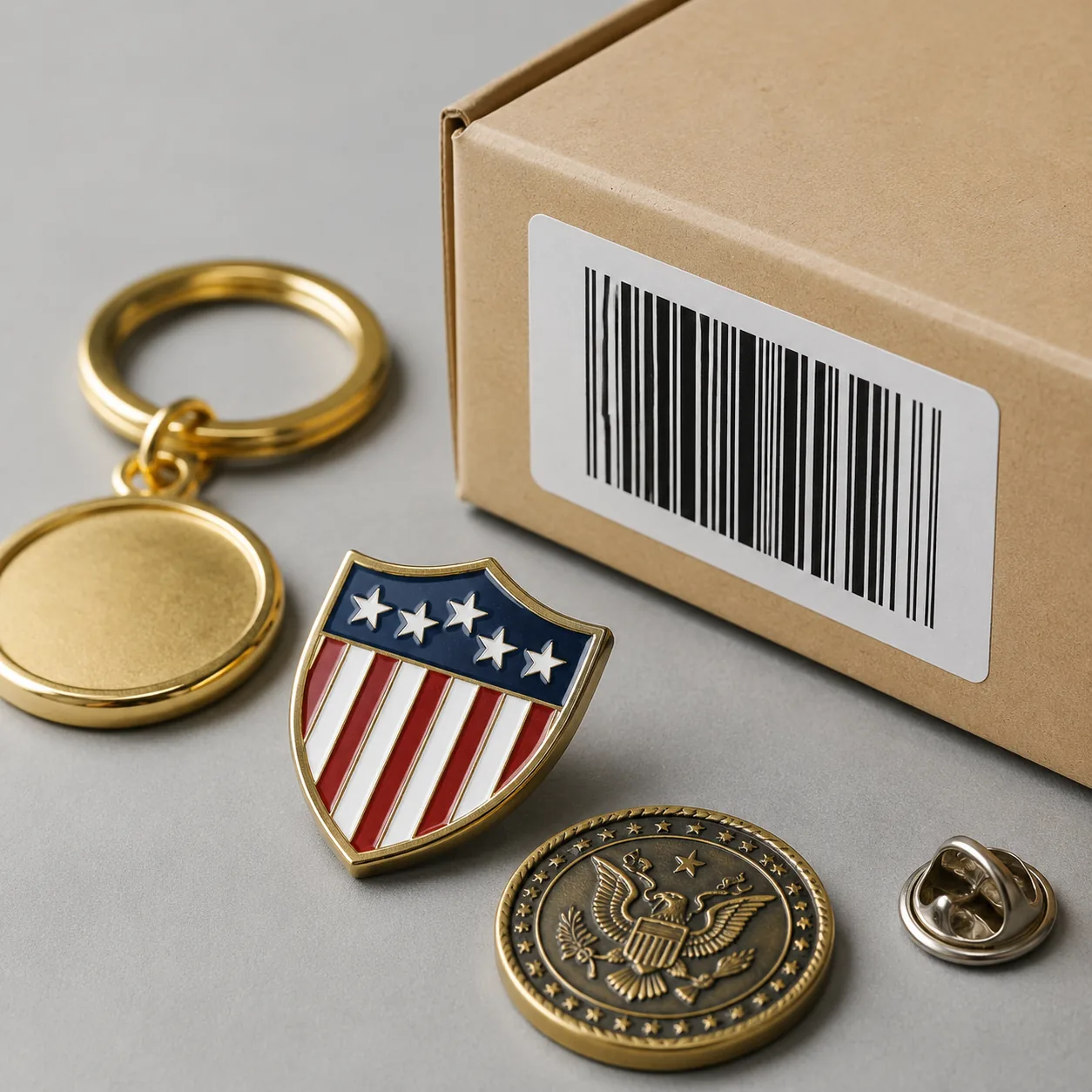
A common 2026 buying problem is straightforward: marketing requests a lower-impact custom pin, procurement needs a quotable specification, and the RFQ still says only "eco-friendly metal pin." That phrase is not actionable at factory level. It usually produces one of three avoidable failures. First, the supplier quotes a standard iron, zinc alloy or brass build with virgin SBS card because no approved alternative was defined. Second, the pre-production sample uses a packaging material or board grade that cannot be repeated reliably at bulk quantity. Third, the buyer changes materials after tooling approval, which adds rework, scrap, sampling delay and sometimes a second packing trial. If the goal is lower impact without losing plating quality, attachment security or delivery reliability, treat it as a controlled specification change from RFQ through final carton packout.
Define One Measurable Lower-Impact Target
Start with one primary objective that can be written into the build sheet and checked at receiving. On custom pins, the most practical change areas are packaging, paper content, unit weight and selected hardware. The least practical areas for aggressive sustainability claims are decorative plating chemistry, enamel chemistry and adhesive systems, because those directly affect finish consistency, color stability, corrosion behavior and production yield. Asking for "sustainable plating" without a named process, approved chemistry or verification method rarely improves the product and often creates quoting confusion.
For most programs, the lowest-risk path is to keep the metal-body process stable and improve the packaging system around it. A 30 to 32 mm die-struck soft enamel pin at 1.5 mm thickness can run in iron or brass; a cutout or relief-heavy design may run in cast zinc alloy. In all three cases, the fastest measurable gains are usually outside the body: FSC-certified or recycled backing cards, removal of unnecessary individual OPP bags, lower carton dead space, and tighter inner-pack counts. Recycled-content metal is possible, but buyers need to be explicit about evidence. At 100 to 300 pieces, many factories can provide a supplier declaration or mill statement for post-industrial recycled input; far fewer can support full chain-of-custody documentation for the finished pin body itself at that order size.
A practical priority order for small and mid-volume runs is: remove unnecessary virgin plastic first, switch backing card stock second, optimize hardware and accessories third, and change the base-metal route fourth. That sequence preserves tooling compatibility, plating stability and sample repeatability while still reducing material use in a way procurement can document.
- Set one primary target only: reduced virgin plastic, recycled paper content, recycled-content metal preference, or lower unit weight.
- Replace vague terms such as green, eco premium or sustainable finish with measurable specs and accepted evidence.
- Keep appearance-critical requirements fixed: Pantone references, plating finish, line detail, post count, clutch type and acceptable weight tolerance.
- State any declaration, compliance or material-origin paperwork requirement at RFQ stage, not after sample approval.
Build The RFQ With Fixed Specs And Approved Swap Zones
A quotable RFQ separates non-negotiable brand requirements from approved lower-impact swaps. Fixed specs should include finished size in mm, thickness, base metal, plating color, enamel type, minimum raised line width, minimum recessed area, number of colors, post count, clutch type, backing-card dimensions, target ex-factory date and inspection standard. Approved swap zones should define what the factory may change without forcing a full requote: for example, backing card from 300 to 350 gsm virgin SBS to 350 to 400 gsm recycled coated board, or mandatory individual polybag changed to optional subject to scratch testing.
A factory-ready RFQ line might read: 30 mm hard enamel pin, brass base, 1.5 mm thickness, polished nickel plating, decorative plating thickness target 8 to 12 microns, minimum raised metal line width 0.25 mm, minimum recessed fill area 0.40 mm, one 8 mm post with butterfly clutch, 38 x 60 mm backing card in 350 gsm recycled C1S board, no individual polybag unless pack test fails, export packing 100 pcs per inner, AQL major 2.5/minor 4.0. That level of detail prevents suppliers from making different assumptions about board grade, protection method or hardware. "Eco packaging preferred" does not.
Request two price columns from the start: standard build and lower-impact build, using identical artwork, tooling and plating assumptions. Ask for MOQ tiers at 100, 300, 500 and 1000 pieces. On a simple stamped pin, paper and packaging changes often move cost by only USD 0.02 to 0.08 per piece. A locking back, molded pulp insert, custom declaration set or FSC print certification can add USD 0.08 to 0.35 per piece and extend lead time by 3 to 7 calendar days.
| Component | Standard spec | Lower-impact swap | Typical MOQ effect | Typical FOB effect | Lead-time effect |
|---|---|---|---|---|---|
| Backing card | 300-350 gsm virgin SBS or C1S card | 350-400 gsm recycled coated board or FSC-certified board | Usually none from 100 pcs | +USD 0.02 to 0.05/pc | 0-2 days |
| Individual bag | 1 pc per OPP polybag | No bag, glassine sleeve, tissue wrap, or master-bag by 10 pcs | Usually none | -USD 0.01 to -0.03/pc | 0 days |
| Base metal | Virgin-content iron, brass or zinc alloy | Recycled-content preference with supplier declaration | Often none; paperwork easier at 500+ pcs | +USD 0.00 to 0.06/pc | 0-3 days |
| Attachment | Standard butterfly clutch | Silicone clutch or locking back only where function requires it | Usually none | +USD 0.03 to 0.20/pc | 0-2 days |
| Unit thickness | 1.8 mm stamped iron | 1.5 mm if rigidity remains acceptable | None | -USD 0.03 to -0.08/pc | 0 days |
| Retail pack | Rigid box with EVA or foam insert | Foldable paper carton, card mount, or paper insert | Often 300+ pcs | -USD 0.20 to +USD 0.10/pc | 0-5 days |
Choose Changes That Reduce Material Without Breaking Function
Not every reduction is a real improvement. Dropping a 40 mm openwork badge from 2.0 mm zinc alloy to 1.2 mm iron may lower unit cost, but it also raises the risk of bending, edge waviness after plating and post alignment drift. Replacing a proven metal butterfly clutch with a low-retention molded part may reduce metal content but create wear failures, especially on pins above roughly 10 to 12 g finished weight, on double-post badges, or on layered constructions. Returns, remakes and air reshipments erase the value of the claimed improvement quickly.
In most pin programs, low-risk changes are recycled-content paper cards, elimination of unnecessary inner bags, carton right-sizing, paper interleaving and modest thickness reduction on compact 25 to 30 mm stamped pins. Higher-risk changes include aggressive down-gauging on large badges, switching premium brass hard-enamel jobs to rougher substrates, or introducing composite bodies that have not been validated for plating and edge polish. Hard enamel typically needs tighter surface flatness, cleaner polish and better edge control than soft enamel, which is why brass remains common on premium retail programs even when the buyer is pushing for material optimization.
As a working guide, a 25 mm soft enamel iron pin with one post can often move from 1.5 mm to 1.2 mm if the shape is compact, the cutout ratio is low, the span between weak points is short and the finished weight stays below about 6 g. A 45 mm zinc alloy cutout badge with two posts should usually remain around 1.8 to 2.0 mm to maintain stiffness and plating consistency. Spinner pins, layered badges and challenge-coin-style pin badges with a flat presentation face should generally keep body thickness stable and look for packaging savings instead. A lighter pin that arrives bent, rocks on the card or loosens after first wear is not a better sourced product.
Sample The Changed Build, Not Just The Artwork
Sample approval should verify the changed specification itself, not only logo shape and Pantone match. If the objective is reduced plastic, the sample set should include the actual backing card stock, actual bagging method, actual interleave and actual inner-pack arrangement. If the objective is lower unit weight, ask the supplier to report measured thickness, unit weight in grams, base-metal route and post/clutch retention feel against the baseline sample.
Useful pre-production sample checkpoints for metal pins include finished size tolerance of plus or minus 0.30 mm, thickness tolerance of plus or minus 0.10 mm on stamped parts and plus or minus 0.15 mm on cast parts, post position tolerance of plus or minus 0.50 mm, plating coverage on face and edges, enamel fill evenness and clutch fit. Minimum raised line width below 0.20 to 0.25 mm on stamped soft enamel often causes inconsistent fill separation, especially across larger runs. Decorative plating of 8 to 12 microns is common on custom pins; premium finishes may go higher by agreement, but thicker decorative plating can soften fine detail if the artwork is already tight. For paper cards, ask for board GSM, caliper where available, size tolerance within plus or minus 1.0 mm, print rub resistance and a simple transit simulation to confirm that unbagged units do not mark the face finish.
Typical pre-production sample lead time is 7 to 10 calendar days after artwork approval and tooling payment for standard soft- or hard-enamel techniques. If the packaging format is new, allow 10 to 14 days so the factory can check dielines, folds, slot fit and scratch protection. If you are comparing two lower-impact options, approve both in the same sample cycle. A kraft-look recycled board may fit the marketing brief, but a white recycled coated board usually holds Pantone-critical branding more accurately and presents better in retail or event distribution.
Control Bulk Production With Tolerances, AQL And Packing Rules
Most lower-impact failures appear during bulk packing, not in the first photo sample. A supplier may quote no individual polybag, then quietly reintroduce bags because polished black nickel scratches in transit. Or the approved recycled board may be substituted because the original mill lot is unavailable. Prevent this by writing the changed materials into the purchase order, factory work order and inspection checklist. If the packaging choice matters, it must be a controlled production requirement.
For many B2B pin orders, AQL 2.5 for major defects and 4.0 for minor defects is a practical baseline, with critical defects at 0. Major defects include wrong plating color, wrong attachment, missing post, obvious enamel voids, exposed base metal on the display face, face scratches visible at about 600 mm viewing distance, missing packaging components or wrong board grade. Minor defects include slight backside marks, light burrs on hidden edges, small color drift within the approved sample range, slight post-angle deviation that does not affect wear, or minor print variation on the reverse of the card. Premium retail programs often tighten face-cosmetic acceptance while leaving standard tolerance on non-display backs.
Write packing rules precisely. Example: 500 pcs total, 1 pc mounted to backing card, no individual OPP bag, 10 pcs per tissue-wrapped bundle, 50 pcs per master bag, paper interleave every 10 pcs, maximum 200 pcs per export carton layer, outer carton gross weight below 12 kg. For mirror-polished gold, silver or black nickel finishes, specify micro-tissue, glassine or temporary protective film where the scratch-risk test shows contact marking. Lower-impact packaging does not mean zero protection. It means using only the protection required to prevent avoidable damage.
- Lock the approved packaging material in the PO: board grade, GSM, finish, bagging method, interleave material and inner-pack count.
- Set inspection sampling, defect definitions and appearance standards before production starts.
- Require photos of the first packed units before the full packing run continues.
- If no polybag is approved, request a scratch-risk check on 20 to 30 packed units after a simple carton shake test.
- Keep a golden sample for both the pin and the final packed presentation.
Price The Full Order, Not Just The Piece Cost
Piece price alone is a weak decision tool. A lower-impact version can cost slightly more per unit but still reduce total order cost by cutting carton volume, lowering packing labor or simplifying fulfillment. The reverse is also common: a premium recycled board with custom die-cut windows may sound responsible in a brief but cost more than the plastic it replaces, especially below 300 pieces. Compare tooling, unit price, packaging adders, freight cube and damage risk together.
For a standard 30 mm soft enamel pin in 2026, typical FOB pricing is roughly USD 0.75 to 1.20 per piece at 100 pcs, USD 0.55 to 0.95 at 300 pcs, USD 0.48 to 0.82 at 500 pcs and USD 0.38 to 0.70 at 1000 pcs, depending on size, color count, plating, carding and attachment. Hard enamel in brass usually runs about USD 0.12 to 0.28 per piece above a comparable soft-enamel build. A lower-impact version using recycled card and reduced plastic generally stays within about USD 0.03 to 0.08 per piece of the standard build. If you add locking backs, molded pulp inserts, custom retail cartons or extended declaration paperwork, the spread can widen to roughly USD 0.12 to 0.30 per piece.
Keep tooling separate on the quotation. A simple die-struck mold often sits around USD 50 to 120 whether or not the backing card changes, while a custom card die-cut, insert structure or paper carton may require a separate tooling charge of USD 30 to 90. Standard bulk lead time after sample approval is commonly 12 to 18 calendar days for 100 to 1000 pieces, with another 2 to 5 days if custom paper packaging needs a separate converting step. That distinction matters when the first PO is 300 pcs but the reorder is 3000 pcs. Metal-body cost usually scales predictably with volume; packaging development cost often does not.
Know When A Conventional Build Is The Better Decision
There are cases where the better sourcing decision is to keep the conventional build. If the order must ship in 12 to 15 days door-out from artwork approval, introducing a new paper stock, a no-polybag route or unfamiliar hardware raises approval risk. If the product is a high-polish commemorative badge for resale, removing protective packaging may increase scratch claims enough to erase both the material reduction and any cost saving. If the design is large, multi-layered, spinner-based or uses long pin stems, do not force lightweight construction where stiffness is structurally important.
A credible lower-impact pin program is usually incremental. Keep the proven manufacturing core, improve the packaging system, reduce avoidable material use and document exactly what changed. For most buyers, the most repeatable first step is simple: specify the pin in measurable terms, request standard and lower-impact quotes side by side, sample the changed packaging physically, and approve only after checking durability, packed presentation and inspection criteria. Once that route is stable, move to second-stage changes such as controlled weight reduction or documented recycled-content metal preference. That is how a lower-impact custom pin becomes a sourcing decision that can be quoted, inspected and repeated at bulk scale.
Have a project? Send your artwork and target quantity and we’ll reply with a detailed quotation within 12 working hours.
Ready to get this made?
Send your sketch, target quantity and ship-date. Detailed quotation in 12 hours.



