Sourcing Custom Brooches From RFQ to Bulk Production
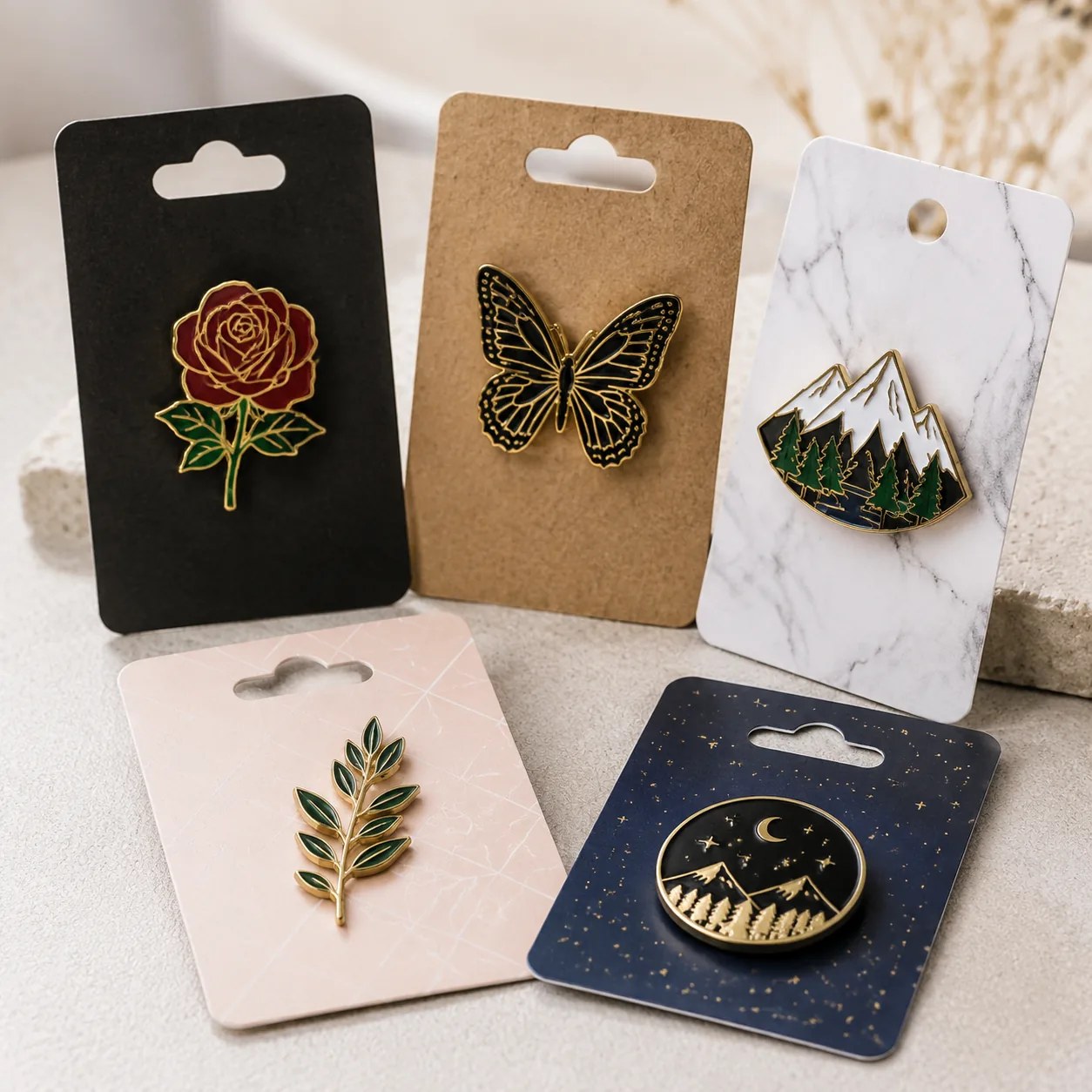
Step 1: Turn the brooch idea into a factory-readable RFQ
The fastest way to lose time on custom brooches is to send a vague brief such as “premium gold brooch with crystals.” A brooch is a small engineered product: weight, center of gravity, pin geometry, plating stack, and stone retention all affect whether it sits flat or droops on fabric. The RFQ should translate the concept into measurable specs before pricing starts.
For a corporate gift or retail brooch, define the finished size in millimeters, target thickness, base metal, plating color, stone type, attachment style, packaging, order quantity, delivery date, and inspection standard. A workable starting point for most styles is 35 to 60 mm wide, 1.8 to 3.0 mm thick, and under 28 g finished weight for jackets, shirts, or dresses. Once a design exceeds 50 mm or includes drops, chains, or layered petals, ask the factory to confirm center of gravity and pin placement before tooling is approved.
- Finished size, for example 48 x 36 mm, tolerance ±0.3 mm
- Target thickness, for example 2.2 mm body thickness and 1.2 mm minimum at narrow tips
- Base metal: zinc alloy for sculpted 3D shapes, brass for sharp stamped lines, iron only for budget flat pieces
- Plating stack: copper strike, nickel underplate 3 to 5 microns, top color plating, and optional clear lacquer
- Stone specification: glass rhinestone, acrylic stone, or imitation pearl, with size code such as SS6, SS8, or 3 mm pearl
- Back attachment: safety brooch pin, bar pin, double pin, magnet, or pin plus clip
- Packaging: OPP bag, backing card, velvet pouch, or rigid gift box
- Quality level: AQL General Inspection Level II, critical 0, major 1.5 or 2.5, minor 4.0
Step 2: Choose the construction before you chase the lowest price
Brooch pricing can vary sharply because two suppliers may build the same artwork with different metals, finishing steps, and assembly labor. Zinc alloy die casting is usually the safest route for floral, mascot, animal, or jewelry-style brooches because it supports 3D relief, recessed stone seats, and curved surfaces. Brass stamping works better for premium flat logos, crisp borders, and thinner profiles, but it is not the right choice for deep sculptural detail.
For a technical quote, the supplier needs to know whether the design is primarily 2D line work, 3D volume, or a mixed construction with separate ornaments. For raised petals, molded leaves, or mascot faces, a zinc alloy casting usually needs 0.25 to 0.35 mm minimum raised line width and about 0.4 mm minimum recessed channel to reproduce details cleanly. For a flat logo brooch with enamel fills and a sharp outline, brass or iron stamping can lower unit cost and reduce polishing time.
| Construction | Best use | Typical thickness | MOQ guidance | FOB unit range at 500 pcs | Main risk |
|---|---|---|---|---|---|
| Zinc alloy die casting | 3D brooches, stones, curved shapes | 2.0 to 3.5 mm | 300 to 500 pcs | $1.20 to $3.80 | Heavier weight if the design is oversized |
| Brass stamping | Premium flat logo brooches, sharp lines | 1.2 to 2.0 mm | 300 to 500 pcs | $1.50 to $4.20 | Higher metal cost than iron |
| Iron stamping | Budget flat promotional brooches | 1.0 to 1.8 mm | 500 to 1000 pcs | $0.75 to $2.20 | Less suitable for a jewelry-like finish |
| Mixed metal plus chain | Fashion brooches with drops or charms | 1.5 to 3.0 mm body | 500 pcs | $1.80 to $5.50 | Assembly variation and chain tangling |
| Metal with enamel and stones | Retail or gift brooches | 2.0 to 3.0 mm | 300 to 500 pcs | $1.60 to $4.80 | Stone loss if seats are too shallow |
Step 3: Lock stone, enamel, and plating specs before sampling
Decorative terms are where brooch projects usually go vague. “Crystal” can mean acrylic, generic glass rhinestone, or branded crystal, and those choices affect shine, MOQ, and lead time. For most promotional and gift orders, machine-cut glass rhinestones are the best balance of appearance and cost. They usually outperform acrylic on brilliance, while avoiding the premium cost and sourcing constraints of branded crystal.
Stone setting needs enough wall thickness to hold the stone without cracking the surrounding metal. As a rule, leave 0.15 to 0.25 mm metal wall around the seat, depending on the stone size and the construction method. For common SS6 to SS10 stones, a recessed glue cup of 0.3 to 0.5 mm depth improves retention. If the stones sit on a curve rather than a flat panel, ask the supplier for a pull check or tape test on the first article because the contact area is smaller and failure risk is higher.
Plating should be specified as a stack, not just a color name. A practical decorative finish is copper strike, nickel underplate at 3 to 5 microns, top color plating at 0.05 to 0.15 microns for gold, rose gold, black nickel, or antique tones, and a clear electrophoretic lacquer at 8 to 12 microns if tarnish resistance matters. If the market requires low nickel release or nickel-free compliance, state that in the RFQ. Changing that requirement after quoting can alter both the plating bath and the final color tone.
- Soft enamel fill tolerance: color edge variation of ±0.2 mm on small fields
- Hard enamel polishing tolerance: narrow lines below 0.3 mm may soften slightly after polishing
- Glass stone size tolerance: typically ±0.1 mm for small rhinestones
- Pearl or dome stone tolerance: ±0.2 mm is more realistic
- Plating approval: compare under D65 daylight or an agreed light source, not warm office lighting
- Epoxy or lacquer coating: state explicitly if needed, because many brooches ship without dome coating
Step 4: Quote with real MOQ tiers and lead-time assumptions
A useful brooch quote should show tooling cost, unit price by quantity tier, sample lead time, bulk lead time, packaging cost, and shipping term. For custom metal brooches, tooling is often $60 to $180 per design for simple 2D or low-3D work, and $150 to $350 for more complex 3D molds or multi-part assemblies. Very detailed sculpture, separate charm tooling, or multiple stone molds can push higher than that.
For planning purposes, practical MOQ is usually 300 pieces for simple die-cast or stamped styles, 500 pieces for stone-heavy or multi-part assembly, and 1000 pieces when the design uses special plating, custom chains, or nonstandard packaging. Sampling normally takes 7 to 12 days after artwork approval and tooling payment. Bulk production typically runs 12 to 22 days for 300 to 1000 pieces, or 22 to 35 days for larger orders, heavier stone setting, gift boxes, or extra plating tests.
Compare quotes by labor content, not only by unit price. A 45 mm brooch with 20 hand-set stones may not become much cheaper at higher quantity because setting and inspection remain manual. A flat stamped brooch with one enamel color and a standard safety pin scales better because polishing, plating, and packing are simpler and more automated.
Step 5: Approve artwork with engineering notes, not just a pretty render
A brooch drawing should always include front view, back view, side thickness, stone sizes, enamel colors, plating finish, pin location, and any assembled parts. A render alone cannot tell the factory where the load sits or whether the back hardware will tilt the piece. For long horizontal brooches, the pin should usually span 45 to 60 percent of the brooch width to reduce rotation on fabric.
Back attachment placement is a structural decision. A single safety pin positioned too low makes a top-heavy brooch fall forward; too high, and the piece can tilt upward and expose the pin. For brooches above 50 mm wide or above 25 g, a longer bar pin, double pins, or a pin plus stabilizing tack is safer, especially for uniforms and event staff clothing.
Ask the supplier to mark all revisions before tooling is cut. Minimum spacing between enamel colors should usually be 0.25 to 0.3 mm for stamped lines and 0.35 mm or more for cast raised borders. Sharp tips should be rounded to at least R0.3 mm for wearer safety and to reduce plating burn at edges.
Step 6: Sample approval should include wear behavior, not only appearance
When the pre-production sample arrives, inspect it as if you are the end customer after three weeks of use. Appearance matters, but returns usually come from loose stones, weak pins, rough backs, plating scratches, or sagging on thin fabric. Test the sample on the intended garment: suit lapel, knit sweater, cotton shirt, tote bag, or scarf.
Measure the sample with calipers and a scale. Finished size should usually stay within ±0.3 mm for small to medium brooches, thickness within ±0.2 mm, and pin alignment within ±1.0 mm unless the design is intentionally irregular. If the sample reaches 35 to 45 g, it may still look good in the hand but perform poorly on light fabric. For wear tests, the real question is not just whether it looks right, but whether it stays flat without rotating or pulling the cloth forward.
- Check front plating for pits, water marks, exposed base metal, and color inconsistency
- Rub raised edges with a white cloth to detect loose polishing compound or residue
- Apply clear tape over stones and pull at 180 degrees to screen obvious glue failure
- Open and close the pin 20 times; it should not loosen, bend, or scrape plating from the back
- Wear the brooch for 30 minutes on target fabric and check sagging or rotation
- Check the back for burrs; no sharp point should catch fabric or skin
- Drop one packed sample from 80 cm onto a hard surface to check stone and chain security
- Photograph and approve a sealed golden sample before bulk production starts
Step 7: Control bulk production with AQL and packaging details
Bulk brooch production has more manual steps than a basic lapel pin order: casting or stamping, polishing, plating, enamel or paint, stone setting, pin soldering or riveting, cleaning, assembly, and individual packing. Each step adds variation. The purchase order should state that bulk must match the approved golden sample in plating tone, stone placement, enamel color, attachment position, and packaging layout.
For B2B orders, AQL General Inspection Level II is a practical default. Use critical 0 for sharp hazards, broken pin points, toxic material nonconformance if specified, and severe attachment failure. Major defects are commonly set at AQL 1.5 for retail and premium gift orders or 2.5 for standard promotional orders; minor defects are commonly AQL 4.0. If the order is stone-heavy, tighten the defect definition for missing stones, off-center placement, and visible glue bleed.
Packaging protects the brooch in transit and affects the buyer’s first impression. Individual OPP bags cost roughly $0.02 to $0.05 each but offer limited protection for stone-heavy designs unless the brooch is also fixed to a card. A printed backing card with OPP bag is usually $0.08 to $0.18, a velvet pouch $0.20 to $0.45, and a rigid gift box $0.60 to $1.50 depending on size and insert. For brooches with protruding stones, specify foam pads or card positioning so the front surface does not rub against the bag or box lid.
What to do next before placing the order
Before you send the RFQ, decide whether the brooch is a low-cost promotional item, a premium corporate gift, or a retail accessory. That choice drives the metal, plating, attachment, packaging, and inspection level. If the target wearer will use it on thin clothing, keep the finished weight below 25 to 28 g or add double-attachment support.
Send the supplier a vector artwork file, target size, order quantity, required delivery date, market restrictions, packaging preference, and reference photos showing the intended quality level. Ask for one quote table with 300, 500, 1000, and 3000 piece tiers, plus tooling, sample lead time, bulk lead time, and FOB price. If you already have a sample from another campaign, send front, back, side, and weight photos so the factory can confirm whether the structure is stamped, cast, assembled, or better redesigned for production.
Do not release bulk production from a render alone. Approve a physical sample, seal one golden sample, and list the measurable acceptance points on the purchase order: size tolerance, plating stack, stone size, attachment type, packaging, AQL level, and defect definitions. That extra half page of specifications is cheaper than replacing a brooch order after stones fall out or the product sags on the first event day.
Have a project? Send your artwork and target quantity and we’ll reply with a detailed quotation within 12 working hours.
Ready to get this made?
Send your sketch, target quantity and ship-date. Detailed quotation in 12 hours.



