Soft Enamel vs Hard Enamel Pins: Which Spec Fits Your Order?
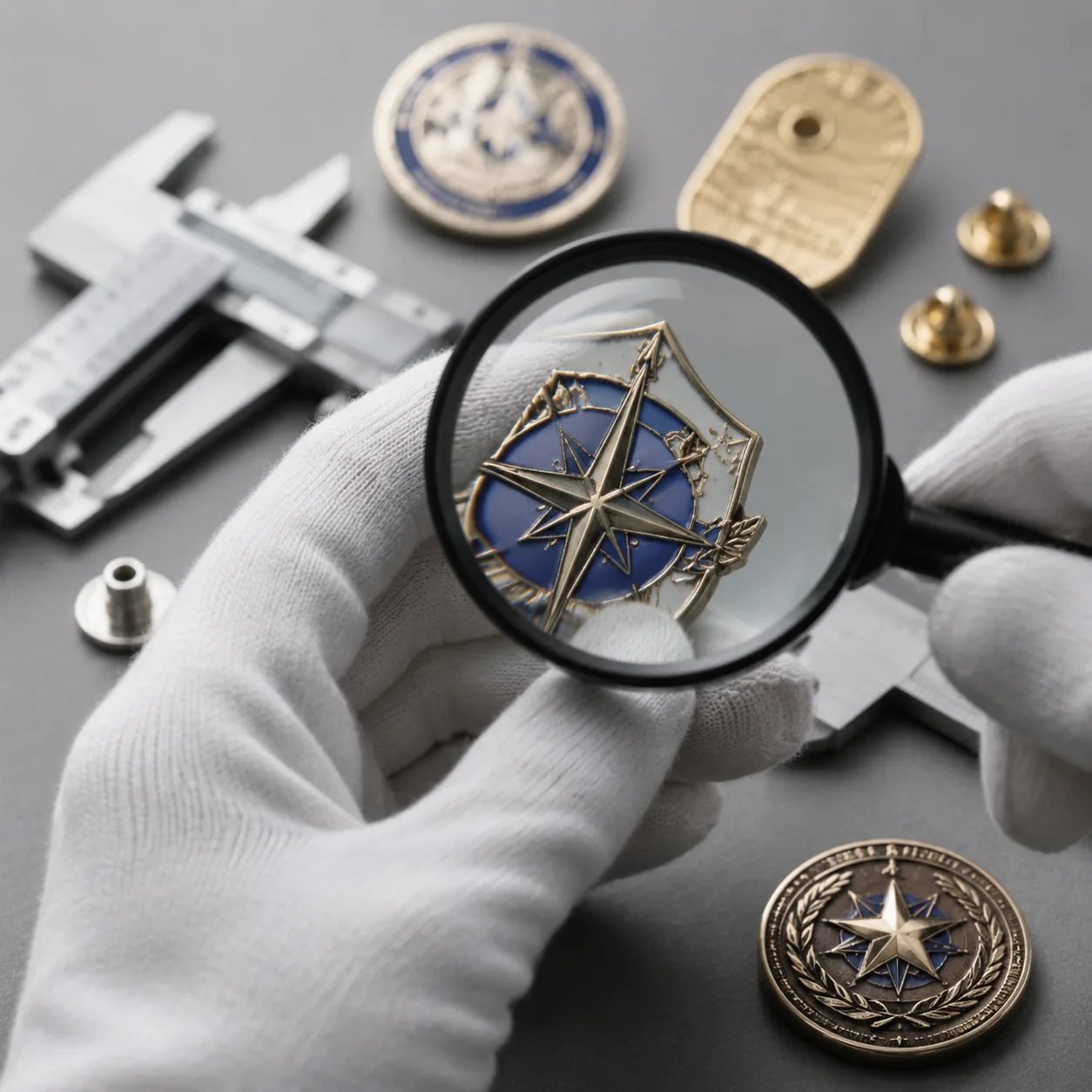
Start With the Sample in Your Hand
The fastest way to choose between soft enamel and hard enamel is to compare a finished sample under a finger, a loupe, and angled light. On paper, both can use the same die lines, outer shape, plating finish, and backing. In hand, the difference comes from fill height, polish level, edge definition, and how the pin wears after repeated contact on jackets, bags, hats, and uniforms.
That is why the first question is not “which looks better?” but “what surface does this order need to succeed?” A conference giveaway can tolerate a more tactile, textured face. A retail or executive gift pin usually needs a flatter, jewelry-like finish with tighter polish control. If the spec does not match the channel, the order may still ship, but the product feels wrong to the buyer.
At ZheCraft, we quote both versions on the same artwork so buyers compare like for like: same size, same line count, same plating color, same backing, and the same packaging option if needed. That keeps the discussion on cost, process, and finish instead of letting artwork changes hide the real difference. If a supplier cannot quote both builds side by side, the comparison is incomplete.
| Spec point | Soft enamel | Hard enamel |
|---|---|---|
| Fill profile | Color sits below the raised metal lines; visible depth and texture | Color is filled close to flush with the metal and polished smooth |
| Surface feel | Tactile, slightly dimensional, badge-like | Flat, smooth, jewelry-like |
| Typical metal thickness | 1.2-1.5 mm for standard die-struck pins; 1.6-2.0 mm for premium runs | 1.2-1.5 mm; thicker stock may be used when deeper polishing is required |
| Typical plating thickness | 0.08-0.12 micron for standard gold or nickel; 0.15 micron is common for premium finishes | 0.08-0.12 micron; polish quality matters more than plating thickness |
| MOQ | 50-100 pcs for standard sizes; 300+ pcs for complex shapes or multiple colors | 50-100 pcs; 200-300 pcs often gives better price stability because of extra polishing labor |
| Lead time | 10-15 days after sample approval | 12-18 days after sample approval |
| FOB price range | USD 0.45-1.50 per piece | USD 0.65-2.20 per piece |
| Best fit | Budget-sensitive branding, event giveaways, textured designs | Premium retail, executive gifts, uniform programs, polished logo pins |
What the Surface Actually Changes
Soft enamel is built so the metal lines remain raised above the color fill. The color sits below the line top, which creates a visible ridge and a more tactile finish. That ridge helps small shapes read clearly because the borders stay strong even when the color areas are busy. The trade-off is that the face is not flat, so it shows contact wear sooner on the highest points.
Hard enamel goes through a different finishing sequence. The color is filled, cured, and then polished down so the face becomes nearly level. The result is a smoother, cleaner surface with a more premium look. It is closer to a small piece of jewelry than a badge. The process takes longer because the factory must control fill height, bake shrinkage, and polishing depth without softening the line definition.
The result is not just visual. Soft enamel tends to catch light on the raised metal and appears more dimensional from a distance. Hard enamel reflects light more evenly and looks more refined in hand and on packaging. If the artwork must feel premium on first touch, hard enamel is usually stronger. If the design should feel lively, graphic, and slightly embossed, soft enamel often reads better.
A useful rule of thumb: choose hard enamel when the brand wants a flat premium finish and the artwork is clean enough to survive polishing. Choose soft enamel when the design benefits from contrast, texture, and sharper visual separation between zones. The best choice is driven by geometry and use case, not by habit.
Compare the Cost Drivers Before You Quote
The price gap is real, but it comes from process steps rather than arbitrary markup. Soft enamel usually finishes faster because there is no full leveling polish across the face. Hard enamel adds more labor: fill, cure, grind, polish, inspect, and sometimes rework if the surface is not even after the first pass. That extra work is why the same artwork can land in a different price band even before plating upgrades are added.
Size matters, but the shape of the artwork matters just as much. A 25 mm pin with two colors is straightforward in either build. A 40 mm pin with six colors, thin separators, and a cutout edge is more sensitive, especially in hard enamel where tiny cells can overfill or lose definition after polishing. If the design has many small compartments, the factory may raise the quote or recommend a spec change.
For RFQ planning, it helps to think in tiers. Pilot orders of 50-99 pcs are usually priced highest per unit because setup time is spread across a small run. Production orders of 100-299 pcs tend to be the standard procurement band. Repeat or retail programs at 300+ pcs often unlock better unit pricing and more consistent QC because the factory can justify tighter process control.
| Cost driver | Soft enamel impact | Hard enamel impact |
|---|---|---|
| Color count | Moderate; each added color increases fill time | Moderate to high; more colors increase fill and polishing risk |
| Tiny compartments | Usually manageable if line width stays above 0.25 mm | Higher risk of fill loss or blur after polishing |
| Polishing time | Low to moderate | High |
| Premium plating | Adds cost, but the process stays relatively stable | Adds cost and amplifies labor because the face must remain flat |
| Embossed detail | Easy to keep visible | Can lose sharpness if over-polished |
| Packaging impact | Works well on carded promo packs | Often benefits more from retail-style carding or boxed presentation |
Where the Quality Risks Differ
Soft enamel’s common defects are under-fill, uneven color height, and exposed edge wear on high-contact areas. These issues are usually easy to inspect because the surface is visibly dimensional. The bigger risk is consistency: if one color is more viscous than another or a cavity is shallow, one section may sit lower than the next. That does not always fail the part, but it can make the run look uneven.
Hard enamel has a different risk profile. The main problems are over-polishing, pinholes, color shrinkage after bake, and line definition loss when the artwork is too fine for the process. A bad hard-enamel batch is harder to hide because the finish is supposed to be smooth and even. If one area is off, the entire face can look inconsistent under light.
For buyers, the most useful technical check is line width. Thin text below about 0.25 mm is risky in either build and usually too fine for repeatable production. A safer minimum for most production lines is 0.30-0.35 mm for main separators and 0.40 mm or more for primary borders. Internal gaps should be wide enough to avoid color bleed after fill and polish.
Soft enamel is usually the safer choice if the artwork has very tight lettering, narrow partitions, or lots of tiny shapes. Hard enamel is safer when the artwork is simple, the linework is robust, and the buyer wants a more polished perception. In both cases, the factory should provide a 1:1 proof with line widths called out in millimeters before tooling starts.
- Ask for a 1:1 artwork proof with all critical line widths labeled in mm.
- Request the actual plating thickness and plating type, not just “gold” or “nickel.”
- Confirm the face-flatness target for hard enamel and the expected height variation in microns.
- Approve a pre-production sample for any order above 300 pcs or for retail use.
- Check hard-enamel polish under angled light to spot pinholes, haze, and uneven reflection before mass production.
Artwork That Works Best for Each Build
Soft enamel fits artwork that wants contrast and structure. Mascots, sports pins, event badges, campus programs, and recognition pieces usually benefit from the raised-metal outlines and the slight texture. Mixed finishes also work well here, such as sandblast backgrounds with glossy raised borders, because the process makes the metal play a visible role in the design.
Hard enamel works best when the artwork is built like a clean symbol. Brand marks, retail emblems, and premium souvenir pins are strong candidates because the flat finish supports a polished, elevated look. It also photographs well on product pages and on backing cards, which matters when the pin is sold as a collectible rather than given away as a freebie.
A simple test helps buyers decide: if the design still feels complete when the color areas are flattened into a smooth surface, hard enamel is viable. If the design loses its personality when the depth disappears, soft enamel is probably the better spec. That distinction matters because the wrong build can make a strong concept look generic.
Concrete examples help. A 30 mm mascot pin for a music festival with five bright colors and a textured background usually works better as soft enamel. A 22 mm logo pin for an executive welcome pack with two colors, polished gold plating, and a butterfly clutch usually benefits from hard enamel. Same category, different intent, different build.
Choose by Use Case, Not by Habit
For internal recognition, event giveaways, and broad promotional campaigns, soft enamel often delivers the best balance of cost, clarity, and turnaround. It scales well, is easier to inspect, and holds up well when the audience is wearing it casually. Buyers also tend to accept the tactile look because the item is intended to be distributed, not displayed under a microscope.
For retail, prestige gifting, brand launches, and programs where the pin itself carries the brand story, hard enamel usually supports the positioning better. It looks more finished in carded packaging and gives the buyer a stronger perception of value in hand. That premium impression matters when the pin is sold, collected, or used to anchor a higher-margin merch line.
Durability is also contextual. Hard enamel is generally better at resisting surface wear because the face is flatter and less exposed to abrasion at the color level. Soft enamel can still be durable, but raised edges will show contact marks sooner if the pin is worn daily on outerwear, backpacks, or lanyards. The right answer depends on how long the item will be seen, handled, and reused.
Attachment choice should match the spec. A premium hard-enamel pin with a weak backing undermines the perceived value, while a soft-enamel pin with strong line widths, good plating, and a secure clutch can outperform expectations in a large rollout. The pin is a system: artwork, build, plating, and backing all have to align.
What to Put in the RFQ and What to Do Next
Do not request “soft enamel” or “hard enamel” as a standalone instruction. Ask the factory to quote the same design in both specs with the same outer dimensions, thickness, plating finish, color count, backing type, and packaging requirement. That is the only way to compare real differences in price, lead time, and risk.
Your RFQ should include: outer dimensions in millimeters, target thickness, plating color, number of colors, required line width for key elements, attachment type, backing card or box requirement, and whether the sample must match a physical master reference. For hard enamel, also ask whether the quote includes face polishing, whether any area will be hand-filled, and what height tolerance the factory uses after polishing.
Useful tolerance targets make the quote easier to control. For standard die-struck pins, many factories hold outline size within ±0.3 mm on small pieces and ±0.5 mm on larger pieces. Thickness variation is often kept within about ±0.2 mm. For hard enamel, ask the supplier to state the allowed surface flatness variation in microns or at least in visual acceptance terms under angled light. If the supplier cannot define the inspection basis, the quote is not fully controlled.
For quality grading, ask whether the factory inspects to AQL 2.5 for major defects and AQL 4.0 for minor defects, or to another agreed standard. That gives procurement a clearer basis for rejection and rework. It also prevents disputes later when a slightly uneven polish or a small fill defect appears on a batch that was never tied to a measurable standard.
If you are still unsure, order two pre-production samples from the same vector file and compare them in the same lighting. Check edge feel, polish, plating color, and how the design reads at arm’s length and in close-up. That side-by-side test usually settles the decision faster than another round of render revisions and is the most reliable way to choose a spec that survives both procurement and real-world use.
Have a project? Send your artwork and target quantity and we’ll reply with a detailed quotation within 12 working hours.
Ready to get this made?
Send your sketch, target quantity and ship-date. Detailed quotation in 12 hours.



