Small-MOQ Spec Sheet for Mixed Custom Promo Orders
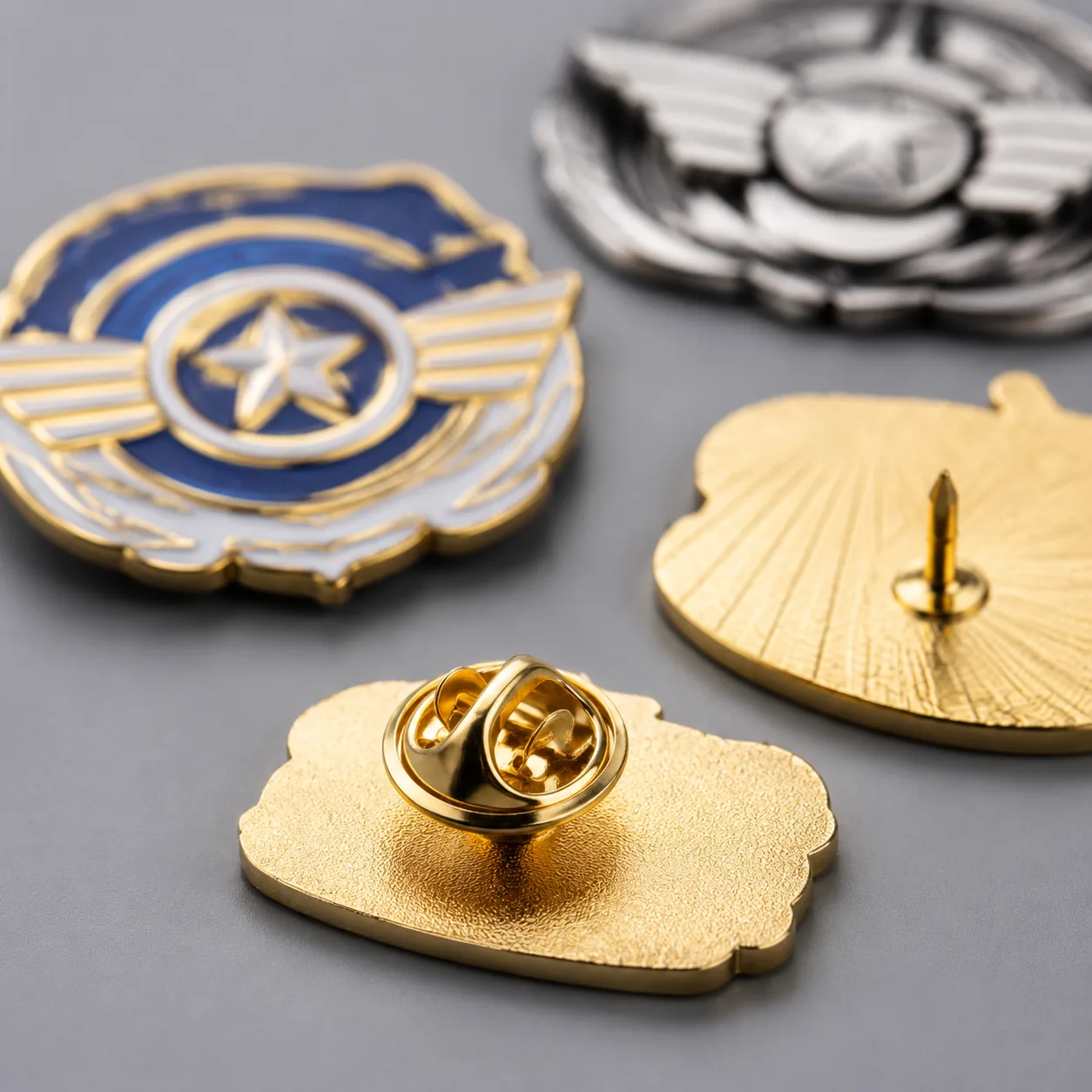
Use one control sheet before a mixed small order behaves like four separate projects
The main risk in a mixed promo order is usually not the headline unit price. It is unmanaged variation between SKUs. A buyer may need 150 soft enamel pins, 100 zinc alloy keychains, 100 woven patches, and 200 sublimation lanyards for one launch, conference, or dealer program, yet suppliers often receive four partial note sets, inconsistent dimensions, and vague pack-out instructions. At those quantities, one missing decision on plating, patch backing, lanyard breakaway, or backing-card format can erase the savings won during MOQ negotiation.
A single order-level spec sheet keeps the order in one engineering format before RFQ, proofing, sampling, and mass production. Each SKU should be defined line by line for process, finished size, thickness, material, color references, hardware, unit packaging, inspection standard, and approval route. That discipline matters more at 80 to 300 pieces than it does at 5,000 pieces because low-volume jobs cannot absorb ambiguity into setup efficiency. If the factory has to infer half the build, quotes spread widely, proofs multiply, and lead time slips.
For small-MOQ buying, the objective is not to maximize customization on every item. It is to remove nonessential variables. In practice, that usually means one plating finish across all metal SKUs, one Pantone reference list, one packaging standard, one AQL rule set, and one sign-off owner. That is what keeps a four-SKU order from turning into four unrelated custom jobs with four different assumptions.
Start with a SKU matrix, MOQ breaks, process callouts, and tolerances
Begin the sheet with a compact SKU matrix showing target quantity, minimum acceptable quantity, and likely repeat quantity. Small-order economics move quickly around breakpoints, so a supplier needs more than one volume number. A workable example is: soft enamel pin 150 target / 100 fallback / 300 repeat; keychain 100 / 100 / 250; woven patch 100 / 100 / 300; lanyard 200 / 100 / 500. With that matrix, the factory can quote actual break tiers instead of forcing one unit price onto volumes where the process no longer fits.
Next, lock the manufacturing process, not just the visual appearance. A 35 mm badge can be stamped soft enamel, imitation hard enamel, offset printed with epoxy dome, die-struck without color, or cast in zinc alloy with relief and cutouts. Those are different builds with different tooling, minimum line widths, edge quality, plating behavior, and scrap rates. If process is left open, the lowest quote may simply reflect thinner metal, shallower relief, lower fill accuracy, or a printed substitute for what you assumed was stamped.
Dimension rules should be explicit and all in millimeters. State whether the controlling dimension is diameter, width x height, or longest side. Add tolerances by process. For stamped metal promo items, a practical default is +/-0.20 mm on overall size for simple outlines and +/-0.30 mm for irregular contours. Stamped thickness is commonly 1.2 mm or 1.5 mm for pins; 2.0 mm is more suitable for heavier keychains or deeper relief. For woven patches, specify width x height at the finished edge with +/-1.0 mm tolerance. For lanyards, define webbing width and cut length before folding; a standard adult lanyard is often 900 mm cut length, yielding roughly a 450 mm finished drop after sewing and hardware installation.
| Spec line | Recommended 2026 small-MOQ default | When to change it |
|---|---|---|
| Soft enamel pin size | 25-35 mm, tolerance +/-0.20 mm | Increase to 40-50 mm if text must stay above 1.2 mm cap height or the logo has multiple icon elements |
| Stamped metal thickness | 1.2-1.5 mm brass or iron | Move to 2.0 mm or zinc alloy for large open areas, deeper relief, or a heavier hand-feel |
| Keychain body size | 38-45 mm body with 25 mm split ring | Use 50 mm body or 30 mm ring when grip and daily handling matter |
| Woven patch size | 60 x 60 mm to 80 x 80 mm equivalent, tolerance +/-1.0 mm | Simplify artwork below 50 mm; consider embroidery above 80 mm if texture matters more than fine detail |
| Lanyard width | 20 mm polyester, 900 mm cut length | Use 25 mm for sponsor-heavy graphics; use 15 mm only when budget or low weight is the priority |
Match material, plating, and artwork limits to the geometry you actually have
Material choice should follow detail requirements and part geometry. Brass remains the strongest default for fine stamped detail because it forms cleaner edges and holds thin raised lines better than iron. For stamped brass, minimum raised metal line width should generally be held at 0.25 to 0.30 mm, with recessed enamel cells at 0.35 mm or larger. Iron is cheaper and acceptable for simple 2D shapes, but edge finish is rougher and flatness control is less forgiving. Zinc alloy is the better choice for 3D contours, hollow sections, deeper undercuts, and thicker profiles, but mold cost and unit price rise more sharply below 300 pieces.
Plating should be standardized across the metal SKUs unless brand rules force a second finish. Bright nickel, black nickel, imitation gold, and antique bronze remain common. Decorative plating on promo metal goods is thin, often around 0.03 to 0.08 microns on the visible finish layer, so buyers should not assume industrial corrosion resistance. If inventory may sit for 6 to 12 months, specify a clear protective lacquer or anti-tarnish topcoat in writing. That matters especially for gold-tone and black nickel items stored in humid climates or shipped through long ocean transit.
Color control has to reflect substrate differences. Soft enamel, woven labels, dye-sublimated polyester, and offset print will not reproduce Pantone colors identically. The workable requirement is closest visual match to named Pantone references under D50 or neutral daylight conditions, not exact cross-process equivalence. For soft enamel, list Pantone numbers and allow normal batch variation against the approved sample. For woven patches, text below roughly 2.0 mm cap height softens quickly unless the layout is simplified. For dye-sublimation lanyards, avoid reversed microtext, fine knockouts, and hairlines below 0.20 mm because print registration and webbing texture will break them.
- Base metal: use brass for fine stamped detail, zinc alloy for 3D forms or large cutouts, and iron only for budget-driven simple shapes
- Plating: keep one finish across all metal SKUs unless branding requires a second finish
- Color control: attach Pantone references and specify closest visual match by substrate, not exact cross-process duplication
- Artwork limits: write minimum line width, text height, and minimum enamel cell or print knockout rules directly on the spec sheet before RFQ
Specify hardware, attachment coordinates, and orientation with measurements
Hardware is where many small mixed orders fail. Buyers approve the front artwork and leave the reverse side or hanging structure vague, which leads to rotation, crooked hang, weak closure, and rework. Hardware deserves the same discipline as the decorative face.
For lapel pins under 25 mm, one butterfly clutch or rubber clutch is usually acceptable. At 30 mm and above, or for horizontal shapes wider than about 32 mm, use two posts to reduce rotation. A common post diameter is 0.8 to 1.0 mm. Post spacing should be dimensioned from centerline, not described loosely. For example: two posts on horizontal axis, 18.0 mm center-to-center, each 4.5 mm from nearest side edge. That one note prevents a pin that technically functions but twists when worn.
For keychains, define body size, ring diameter, chain length, connector type, and whether a swivel is required. A common construction is a 25 mm flat split ring, 25 to 30 mm chain, and 5 mm jump ring. If the charm is double-sided, asymmetrical, or handled daily, a swivel reduces tangling and surface rubbing. For patches, specify border type and backing by use case: merrow border for standard rounded shapes, hot cut for sharp corners or irregular outlines, hook backing for reusable applications, iron-on for light decorative use, and sew-on for best wash durability. For lanyards, list attachment hardware such as swivel hook, bulldog clip, split ring, or detachable buckle, and state whether a safety breakaway is required at the neck. If breakaway is required, specify one rear neck breakaway unless there is a compliance reason to add a second.
Orientation should always be measured on the drawing. A keychain top hole offset by 1.5 mm can make the piece hang visibly crooked. A lanyard buckle placed off the fold center can twist the print presentation. Use coordinate notes such as 'top hole centered on vertical axis, hole diameter 4.0 mm, hole edge 3.0 mm from top contour' rather than relying on email wording.
Engineer packaging and carton rules before they absorb the margin
Packaging is often the least visible but most avoidable cost increase in small mixed orders. A plain polybag may add only USD 0.01 to 0.03 per piece, but a backing card, barcode label, individual bagging, and partitioned export carton can add more total cost than increasing a pin from 1.2 mm to 1.5 mm thickness. At 100 to 300 pieces, those handling steps do not spread well, so pack-out has to be engineered as tightly as the product itself.
Write packaging in four layers: unit pack, inner pack, carton pack, and shipping mark. For example: each pin mounted on 350 gsm coated card with Euro slot, inserted into clear OPP bag of 40 micron thickness; 50 pcs per inner bag; 500 pcs per export carton; gross weight not above 12 kg; outer mark one-color black with PO, SKU, quantity, carton number, and country of origin. For labels, define size, face stock, print source, and exact position. A 40 x 25 mm barcode label placed without coordinates can cover branding, legal copy, or the die-cut hole on the card.
For patches and lanyards, decide early whether presentation or freight efficiency is the priority. Individually carded patches reduce abrasion and look cleaner for retail packs, but they add labor and board cost. Rolled lanyards with header cards suit event check-in kits or store pegs, while bulk-bagged lanyards are cheaper and faster. If the program is a giveaway rather than a resale item, simple packaging is usually the right default.
| Packing option | Typical 2026 small-order FOB add-on | Best use case |
|---|---|---|
| Individual polybag only | USD 0.01-0.03/pc | Lowest-cost event distribution |
| Backing card plus polybag | USD 0.05-0.12/pc | Retail-ready pins or branded handouts |
| Velvet pouch | USD 0.25-0.60/pc | Recognition gifts, commemoratives, or executive kits |
| Barcode label application | USD 0.02-0.05/pc | Retail, 3PL, or distributor inventory control |
| Partitioned export carton | USD 10-25/carton | Mixed fragile SKUs that must avoid metal-to-metal rubbing in transit |
Use measurable sample approvals, inspection rules, and lead times
Small-MOQ buyers still need a formal approval route, but it should be proportional to risk. The fastest workable path is usually digital artwork proof for every SKU, then one physical pre-production sample for the highest-risk item only, such as a zinc alloy keychain with multiple attachments or a woven patch carrying small text. Requiring physical samples for all four items often adds 5 to 10 calendar days plus courier cost without reducing much practical risk.
Inspection language should be measurable. For commercial promo goods, AQL 2.5 major / 4.0 minor is still common. For image-sensitive retail programs, AQL 1.5 major / 2.5 minor is more defensible. Define defects directly on the sheet. Major defects typically include wrong plating, wrong hardware, unreadable text, missing enamel, broken attachment, incorrect backing, wrong barcode, wrong quantity per retail pack, or lanyard print flipped relative to the buckle. Minor defects usually include light backside scratches, slight edge marks not visible from 30 cm in front view, or small color variation within the approved sample range.
Lead time should be quoted in working days from final approval of the latest changed component. In 2026, realistic small-order windows are usually 7 to 12 working days for basic stamped soft enamel pins after art approval, 10 to 15 working days for zinc alloy keychains, 6 to 9 working days for woven patches, and 8 to 14 working days for sublimation lanyards with standard hardware. Printed backing cards, barcode application, and special pack-out usually add 2 to 5 working days. If packaging artwork changes after product approval, the production clock should restart from packaging approval date rather than the original design sign-off.
Request separated quote lines, MOQ tiers, tooling, and FOB adders
A useful mixed-order quote needs more than one blended unit price. It should break out tooling or mold charge, sample charge if any, unit FOB by SKU, packaging adders, carton estimate, and lead time by item. When setup and packaging are buried inside one rate, the buyer loses the ability to simplify the build later and recover cost.
As a practical 2026 FOB range, 25 to 35 mm soft enamel pins at 100 to 300 pieces commonly quote around USD 0.55 to 1.20 each with standard plating, one clutch, and simple polybag packing. Comparable metal keychains often land around USD 0.90 to 1.80 FOB depending on size, alloy choice, thickness, and attachment count. Woven patches usually fall around USD 0.35 to 0.90 FOB. Standard 20 mm sublimation lanyards are often around USD 0.45 to 0.95 FOB with a basic swivel hook and no premium retail pack. Tooling charges often range from USD 40 to 90 for simple stamped pin dies and USD 80 to 180 for zinc alloy keychain molds, depending on size, cavity count, and cutout complexity.
MOQ tiers matter because setup cost distribution is uneven. Many factories will accept 100 pieces for pins and keychains, but woven patches often quote more efficiently at 100 or 200 pieces, and lanyards usually improve sharply at 300 and 500 pieces because print, cutting, and sewing setups spread better. Ask for at least three tiers per SKU, such as 100 / 300 / 500 or the nearest workable breaks, and require the supplier to show whether sample fees, backing-card setup, barcode file setup, and partitioned-carton charges are one-time costs or per-order repeats.
Build the buyer-ready sheet that closes the common RFQ gaps
Before requesting pricing, reduce the entire order to one control sheet with no more than about 20 mandatory fields across all SKUs. At minimum, include quantity, process, size, thickness, material, plating, Pantone list, artwork limits, attachment, orientation coordinates, packaging, sample route, inspection level, and target lead time. Leave only one or two fields open for supplier recommendation, such as whether a specific openwork design should stay in stamped brass or convert to zinc alloy.
If production art already exists, put dimensions, text heights, hole sizes, and attachment points directly on the drawing before RFQ. If production-ready art does not yet exist, write the functional specification first and let the supplier convert it into an engineering proof. That sequence is faster for small buyers because it prevents late revisions caused by manufacturing assumptions surfacing after pricing and sampling are already underway.
- Use one order-level spec sheet covering every SKU in the mixed order
- Standardize plating, Pantone references, inspection level, and packaging format wherever practical
- Lock process, size, thickness, and hardware before comparing supplier prices
- Dimension attachment points and orientation with centerlines and offsets, not descriptive wording
- Request one digital proof per SKU and one physical sample only for the highest-risk item
- Ask for tooling, sample fees, unit FOB, packaging adders, and carton costs as separate quote lines
- Collect MOQ tier pricing at realistic breaks such as 100, 300, and 500 pieces where applicable
Have a project? Send your artwork and target quantity and we’ll reply with a detailed quotation within 12 working hours.
Ready to get this made?
Send your sketch, target quantity and ship-date. Detailed quotation in 12 hours.



